Read Before Monday
From the
Archive

#80 21 Sep 2025
Welcome to another edition of #RBM! This week, five very different reads pointed to one simple idea: design for human speed. We start with Engelbart’s demo, which wasn’t about a mouse, it was a workflow manifesto that made thinking together feel natural, fast and calm. Then, HDMI-CEC showed how convenience sours when the control plane serves vendors; predictable, debuggable, device-agnostic control wins. Reuters’ phishing test proved safety theatre is cheap; move defence into protocols and recovery so the attack gets expensive. In a feed drowning in AI volume, curation earns trust when treated like a product with cadence, taxonomy and attribution. And we end with Anduril’s story made it practical: define deployability, gate what matters, keep leaders technically credible and let the operating cadence compound.
#79 14 Sep 2025
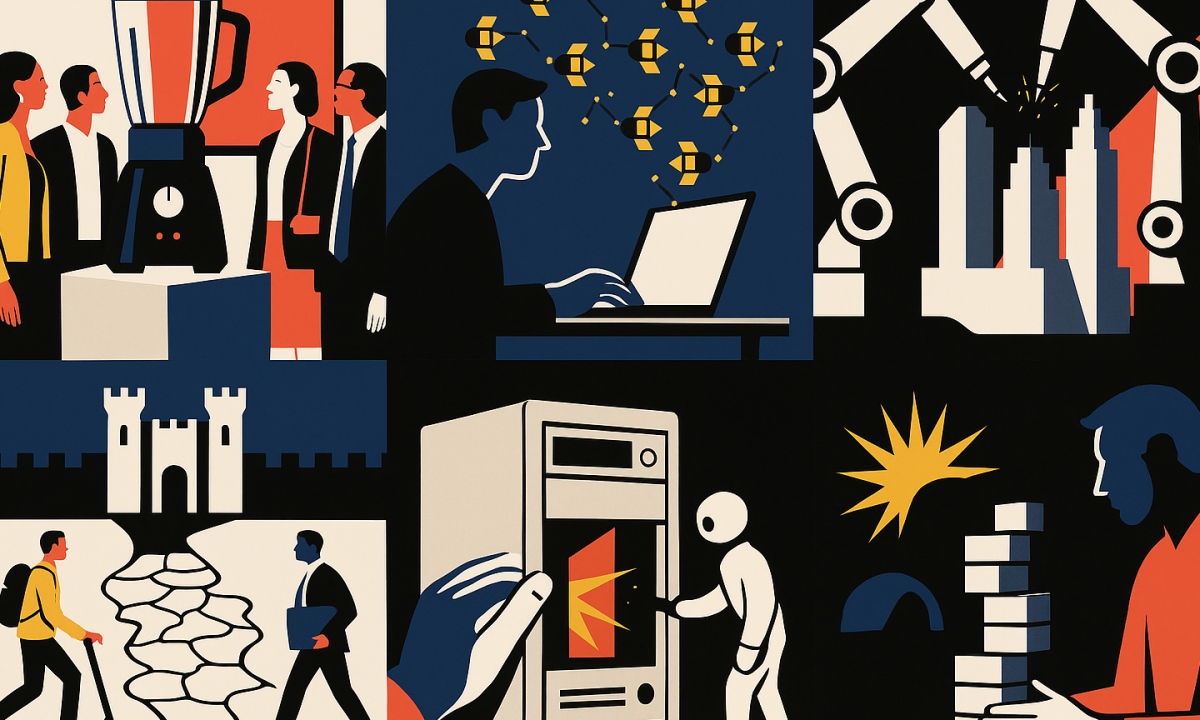
Lots of great stuff happened this week! We launched HARC Agents and was the first thing Hitachi Digital Services Centre for Architecture & AI is publicly launching. We still worked on a MVA (Minimum Viable Agent) framework that maybe will be released soon too. But this week we go from viral blenders to resurrected kernel drivers. Starting with SharkNinja, which shows how everyday appliances become cultural objects when engineered with hype and design. Then enterprise software is shifting from casual “vibe coding” to orchestrated swarms of AI agents that compress weeks into hours. Did you know that Monumental Labs uses robotics to revive stone as a sustainable building material? Ah! Let's review the Creative Technology’s rise and decline remind us how quickly moats vanish when ecosystems change; and finally, Dmitry Brant’s revival of a 25-year-old driver with Claude Code illustrates AI’s role as a skilled apprentice rather than replacement. Feels like bursts of ingenuity matter less than the discipline to turn them into durable impact.

#78 7 Sep 2025
Lots of stuff happened this week; starting with a new eBook that I co-authored called "Operationalizing GenAI and AI at scale for Enterprises", to talking about the UK’s AI assurance roadmap and why we need to certify the solution, not just people or processes. On the other hand, there's MCP Security which I detailed on my latest #NowAboutThis video. But for this week #RBM lets focus on ... colour which is never just colour; it’s a supply chain and a story. The same backstage logic runs through policy and products: China’s “AI Plus” reads like an attempt to turn novelty into plumbing, bold targets and all, while cheap Famiclones show how “education” becomes theatre when persistence and standards are missing. Attention itself has a half-life; search curves are a useful compass, not a constitution - pair them with first-party proof before steering the newsroom. And in LLMs, determinism is a nice idea that loses to floating-point reality; design for bounded drift with schemas, retries and telemetry, reserving strict control for audited stacks.
#77 31 Aug 2025
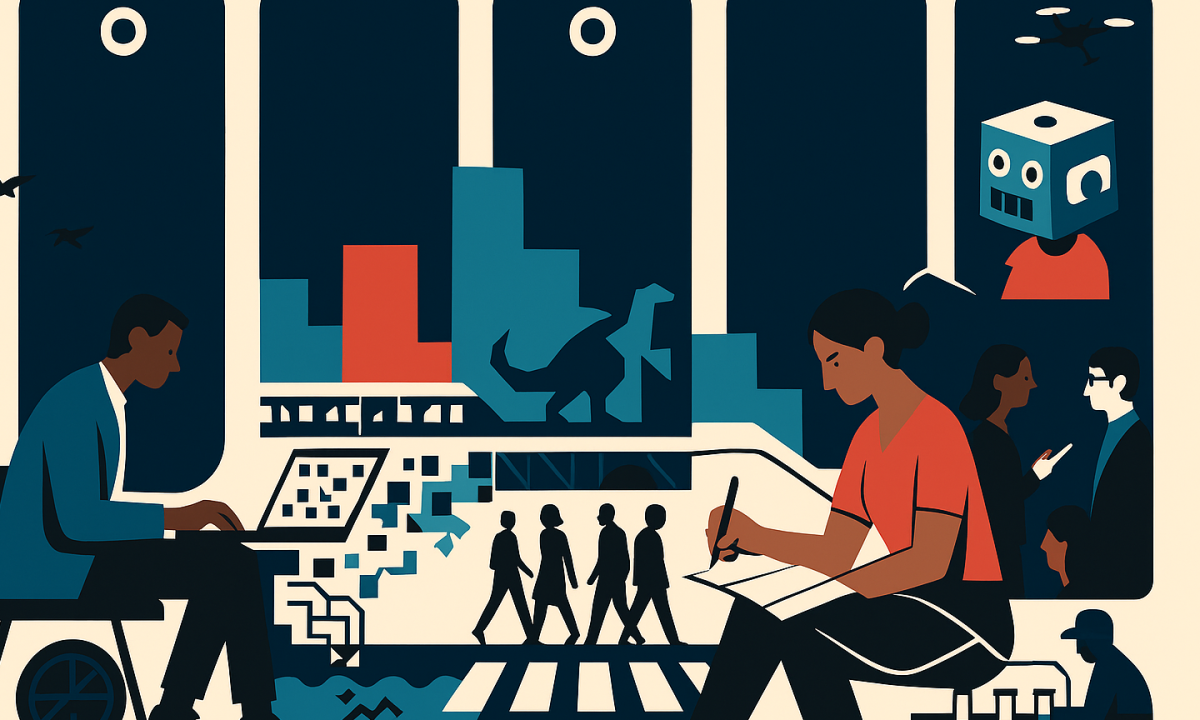
Welcome to another edition! So, what if your game could paint itself in real time; no art assets, no rendering pipeline, just raw code turned into visuals? That’s exactly what Jeff Schomay explored in his roguelike Thunder Lizard. By piping ASCII frames through fal.ai, he generates full graphical renderings in under 100 milliseconds, letting the world draw itself as you play. Them, as AI promises to write and code for us, Simon Späti argues for the enduring value of doing things manually. Writing an essay by hand or coding without shortcuts may feel slower, but it sharpens reasoning, creativity, and mastery in ways machines can’t replicate. But, what happens when five companies control the digital spaces we live in? Amnesty’s briefing argues that Big Tech’s dominance isn’t just about markets but about human rights; shaping privacy, speech, and even fuelling violence during crises. Oh! From medieval cesspits to Victorian London’s “Great Stink” and today’s wastewater epidemiology, Calum Drysdale traces the hidden history of sewage. We end up with, what If kids grow up believing AI “thinks,” we’ve failed at literacy. In their new episode, Kenya and Stefania dismantle the myth of “smart machines,” explaining models as prediction engines powered by data, not magic.

#76 24 Aug 2025
Hope everyone's summer vacation have been great! This week we're going from neuroaesthetics to digital alienation, where each article touches a different facet of how we design, judge, and interact with systems- artistic, algorithmic, or infrastructural. Starting with how Keyser reveals repetition, with variation, can rhythmically delight the brain; Eaton demands we ground concurrency education in practical system primitives like futexes. In sport, AI’s lens on gymnastics promises fairer scoring but risks eroding magic; Suleyman argues that AI that merely seems sentient could fracture human bonds altogether. And Humberstone, via The Net, reminds us that the cost of digital convenience is often human disconnection - now exacerbated by cognitive outsourcing and algorithmic capture.
#75 17 Aug 2025
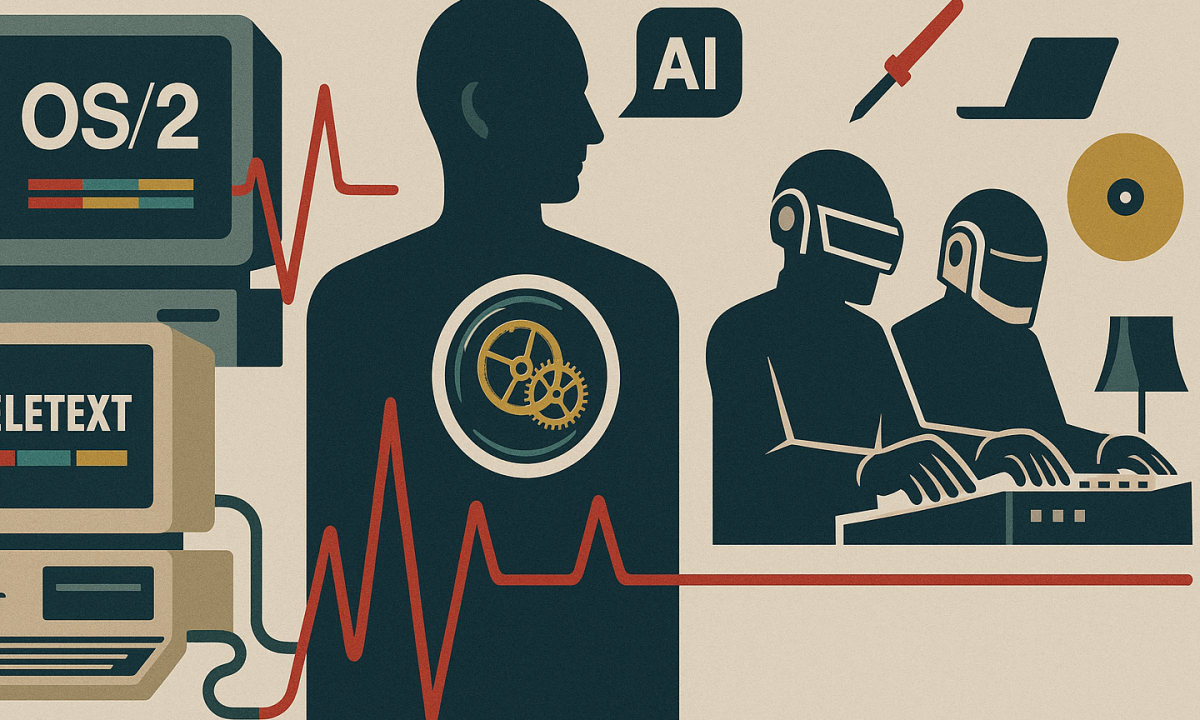
Looking back at these week's stories, I’m struck by how technology’s past, present, and future share the same heartbeat: ambition colliding with reality, then settling into something lasting. We start with OS/2, once promised a multitasking revolution but stumbled under its own weight, much like AI’s repeated hype cycles that Rodney Brooks reminds us to temper with pragmatism. Then Teletext, mocked as archaic, survives because reliability often trumps novelty. How about Fredrik Ellertsen’s resin-suspended watch gears? It shows how persistence can turn obsession into art! And then, finally, there’s Daft Punk, who remind us that innovation is rarely about one magic tool; it’s about the craft of choosing the right one, again and again.
What you need to read before your busy Monday, published every Sunday
Read Before Monday is a weekly newsletter from Vitor Domingos - with a handful of articles, essays and oddities collected over the week, annotated with a short opinion, and sent before Monday morning.
No breaking news. No ten-thousand-word think pieces. No affiliate links. Just a small, curated and considered list of things worth sitting with.
The next issue lands Sunday evening.
One email a week. No tracking. No ads. Totally free. You can leave any time.