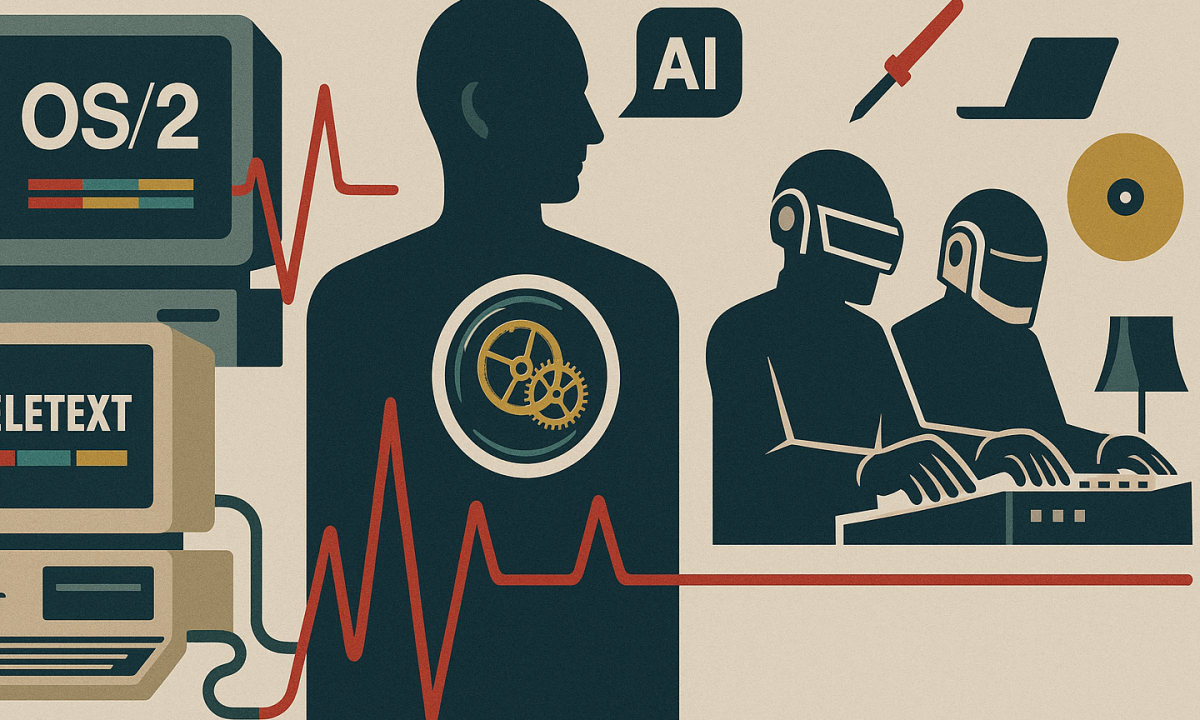
Looking back at these week’s stories, I’m struck by how technology’s past, present, and future share the same heartbeat: ambition colliding with reality, then settling into something lasting. We start with OS/2, once promised a multitasking revolution but stumbled under its own weight, much like AI’s repeated hype cycles that Rodney Brooks reminds us to temper with pragmatism. Then Teletext, mocked as archaic, survives because reliability often trumps novelty. How about Fredrik Ellertsen’s resin-suspended watch gears? It shows how persistence can turn obsession into art! And then, finally, there’s Daft Punk, who remind us that innovation is rarely about one magic tool; it’s about the craft of choosing the right one, again and again.
In this issue
5 piecesInside OS/2 walks readers through the architecture and core services of Microsoft’s then-new multitasking operating system, emphasising its three-layer design
- kernel, Windows Presentation Manager (WPM), and LAN Manager - and detailing offerings such as preemptive scheduling, dynamic linking, and compatibility with MS‑DOS. It then goes into deeper subsystems: memory (virtual memory, segment swapping, shared memory), multitasking (threads, process execution, async I/O), device services (video, keyboard, mouse), file management (32MB partition limits, async reads/writes), and interprocess communication (pipes, queues, semaphores).
I can’t help but smile at how strikingly futuristic OS/2 seemed in 1987. Threads, virtual memory, and dynamic linking weren’t just technical jargon, they promised a world where multitasking felt natural, not glitchy. And yet, the real world, buttressed by partitioned drives and CPU mode gymnastics - pulled things back to earth in a hurry. It’s a timeless lesson! Still, I admire how Microsoft tried to bridge legacy DOS and modern multitasking without turning everything upside down. The dream was there; the execution just had to catch up. Some grand ideas stay ahead of their time.
Rodney Brooks revisits an essay he wrote nearly 37 years ago , reflecting on recurrent cycles of AI hype and disillusionment - from robots and expert systems to the renewed fervour around neural networks.
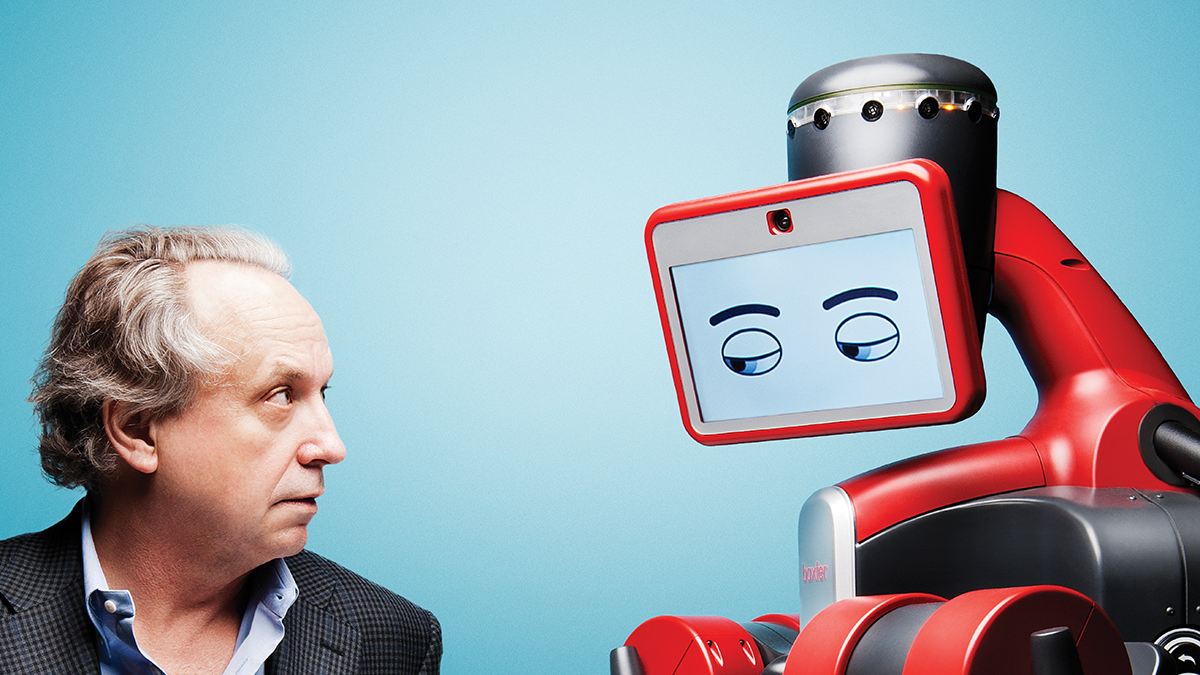
He underscores that past enthusiasms often faltered due to oversimplified models, inflexible systems, or unrealistic expectations. Brooks concludes that true progress in AI likely lies in unraveling intelligence one manageable process at a time, not through magical breakthroughs, but through cumulative, grounded advances.
This great reflection tells a critical caution for leaders and AI strategists: AI’s evolution is incremental, not meteoric. Historical patterns, overpromising and underdelivering, underscore the risks of overinvestment in “next-big-thing” technologies. The real value lies in identifying modular, manageable intelligence components and integrating them purposefully. Organisations should prioritize pragmatic deployment; robotic automation, expert systems with narrow scope, incremental neural methods, over sweeping, speculative initiatives. This disciplined, phased approach reduces risk, aligns expectations with actual readiness, and ensures AI becomes an enabler rather than a headline-seeking mirage. As he rightly highlights, intelligence probably isn't one magic switch; but a messy, beautiful quilt of many threads.
This article explores teletext , a seemingly outdated yet persistently popular technology in many countries, especially across Europe.
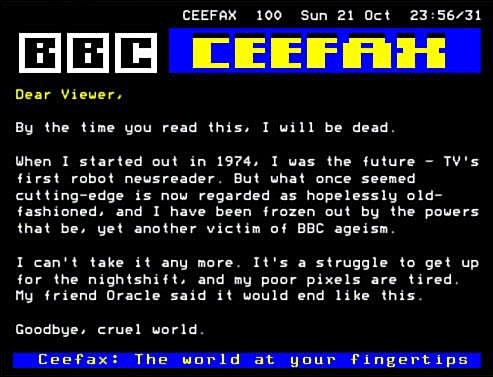
Originating in the UK during the 1970s, teletext used the vertical blanking interval (VBI) of TV transmissions to deliver subtitles and navigable text-based content via remotes, giving rise to systems like Ceefax (1974) and ORACLE (1978). The initial Teletext Level 1 standard featured a 40×24-character grid with rudimentary graphics (sixels) and a basic colour palette; Level 1.5 (1981) introduced national character sets and became the most widely adopted version.
Teletext is ridiculed today as archaic, yet it remains widely used in multiple countries, particularly where public broadcasters continue to support it. It does feels like a familiar relic that refuses to vanish. There was something charming about flicking through text pages with chunky graphics on a TV screen. Now, it’s low-fi comfort, really. This stubborn endurance in Europe speaks volumes: sometimes old tech sticks around not because it’s cool, but because it works and people trust it. Teletext thrived because it leveraged existing broadcast infrastructure, remained easy to use, and was backed by public broadcasters.
Fredrik Ellertsen embarked on an ambitious , hands-on project to create a real-world exploded view of a mechanical watch movement; a 3D printlike model you can hold, inspired by Bartosz Ciechanowski’s interactive visualisations.
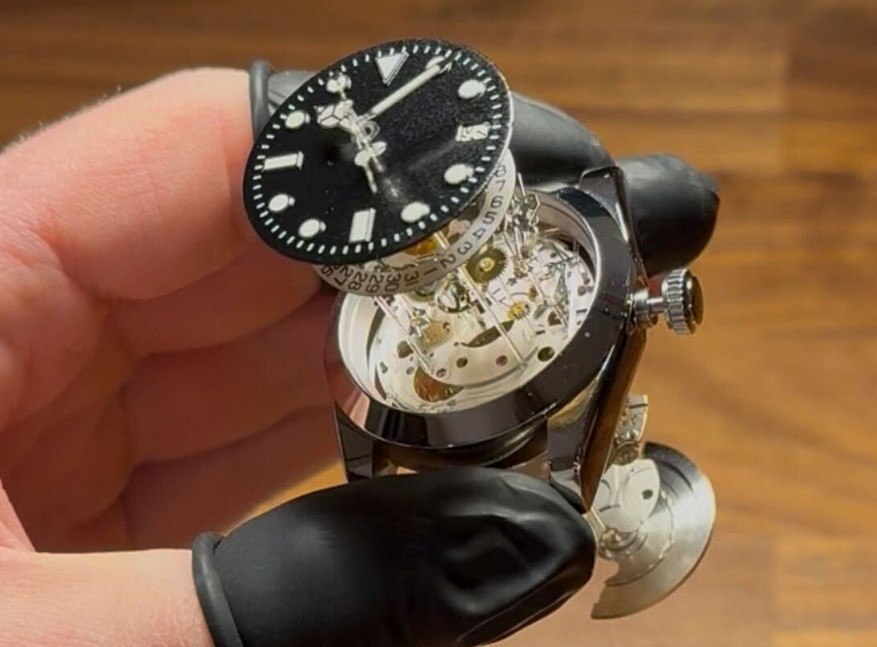
He tackled the engineering challenge by suspending each delicate component - ranging from gears to the hairspring - in clear epoxy resin using fishing line, experimenting through multiple prototypes to nail down alignment, bubble suppression, and structural clarity.
This is a beautiful, obsessive labour of love that marries mechanical precision with DIY ingenuity. Rendering invisible mechanisms visible - how cool is that? - bringing each tiny cog and spring into view as if you could almost hear them tick again. This use of resin, fishing line, and budget molds is wildly inventive, pure maker spirit. Ellertsen’s project exemplifies the power of perseverance in prototyping high-precision craftsmanship. His domain-blending approach, applying watchmaking techniques in a resin casting context, offers manufacturers valuable lessons in agile iteration. The enduring process speaks to industrial design: success often lies in embracing iterative refinements and small-scale experimentation to master intricately technical objectives.
This article by Bjango explores the wide array of vocal processing tools Daft Punk employed across their discography, informed by a rare 2001 interview
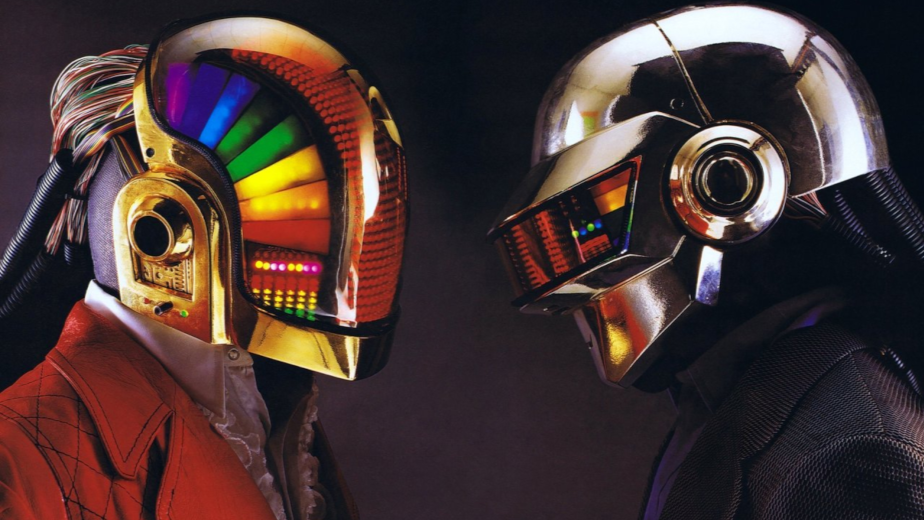
where the duo noted using “the old Roland one [SVC‑350], Auto‑Tune, and a DigiTech Vocalist.” The author tests various gear; including multiple DigiTech Vocalist units, to match songs to effects, producing a detailed breakdown of which devices likely shaped each track’s signature robotic vocals.
Bjango’s deep dive into Daft Punk’s vocal effects illuminates the duo’s disciplined yet experimental production ethos. Their evolving use of distinct processing tools; from the analogue warmth of Roland SVC-350 to the digital precision of Auto-Tune and DigiTech processors. Which speaks to a strategic flexibility rather than stylistic uniformity. By selecting the most fitting device per track, Daft Punk optimized both aesthetic and mood, demonstrating that technical artfulness, not brand name alone, crafts defining soundscapes. I love how it blends interviews, hardware sleuthing, and keen audio analysis to map each song to a piece of gear. It’s less about one magical machine and more about how creativity meets craft, and how choices evolve with context. For anyone curious about that iconic Daft sound, this is pure gold dust for the ears.
Last Week in AI
- Apple brings OpenAI’s GPT-5 to iOS and macOS | arstechnica.com
- Meet the early-adopter judges using AI | technologyreview.com
- Exclusive: US embeds trackers in AI chip shipments to catch diversions to China, sources say | reuters.com
- Why LLMs Can't Really Build Software | zed.dev
- Chatbots Can Go Into a Delusional Spiral. Here’s How It Happens. | archive.ph
- Why is AI so slow to spread? Economics can explain | archive.ph