Read Before Monday
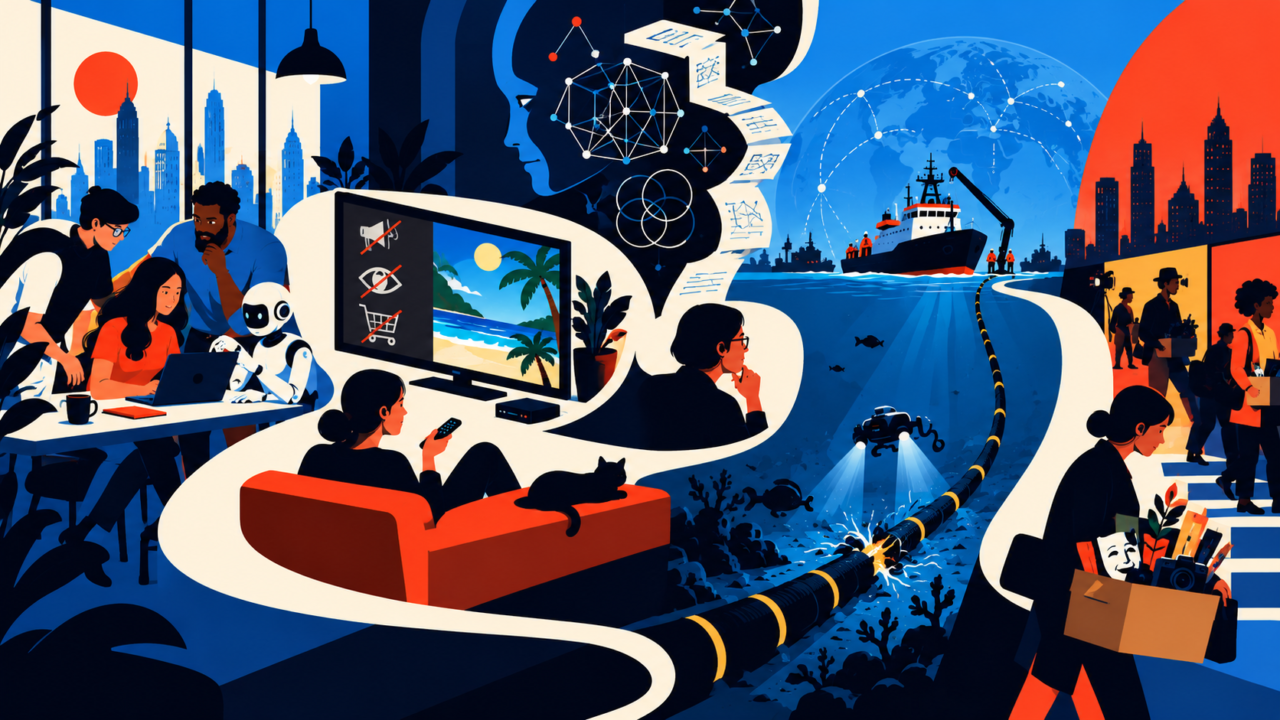
This week's #RBM reading begins with Anthropic's *Founder's Playbook*, which suggests that a handful of people armed with AI can now build a startup without the traditional inconvenience of hiring an entire company, although finding customers who actually want the product remains stubbornly resistant to automation. Meanwhile, over at TechCrunch, frustrated television owners are using AI coding agents to strip adverts, tracking and other digital clutter from their smart TVs, achieving the remarkable technological breakthrough of making a television behave like a television again, occasionally at the cost of rendering it completely useless. Mathematics is having its own existential moment, with Francesco Maggi warning on Terence Tao's blog that AI could deliver a golden age of scientific discovery or a dark age in which machines produce mountains of formally verified proofs that nobody understands. Under the sea, things are considerably less philosophical: Ryan Bagley examines how geopolitical conflicts are leaving critical internet cables damaged or unfinished because repair ships cannot safely reach them, demonstrating that global connectivity ultimately depends on someone being allowed to turn up with a boat. And finally, Joseph Politano examines the collapse of more than 200,000 American creative-industry jobs over four years, where AI joins streaming, consolidation and shifting consumer habits in making a living from creativity increasingly precarious.
Open Issue 135 →From the
Archive
#134 18 Oct 2026
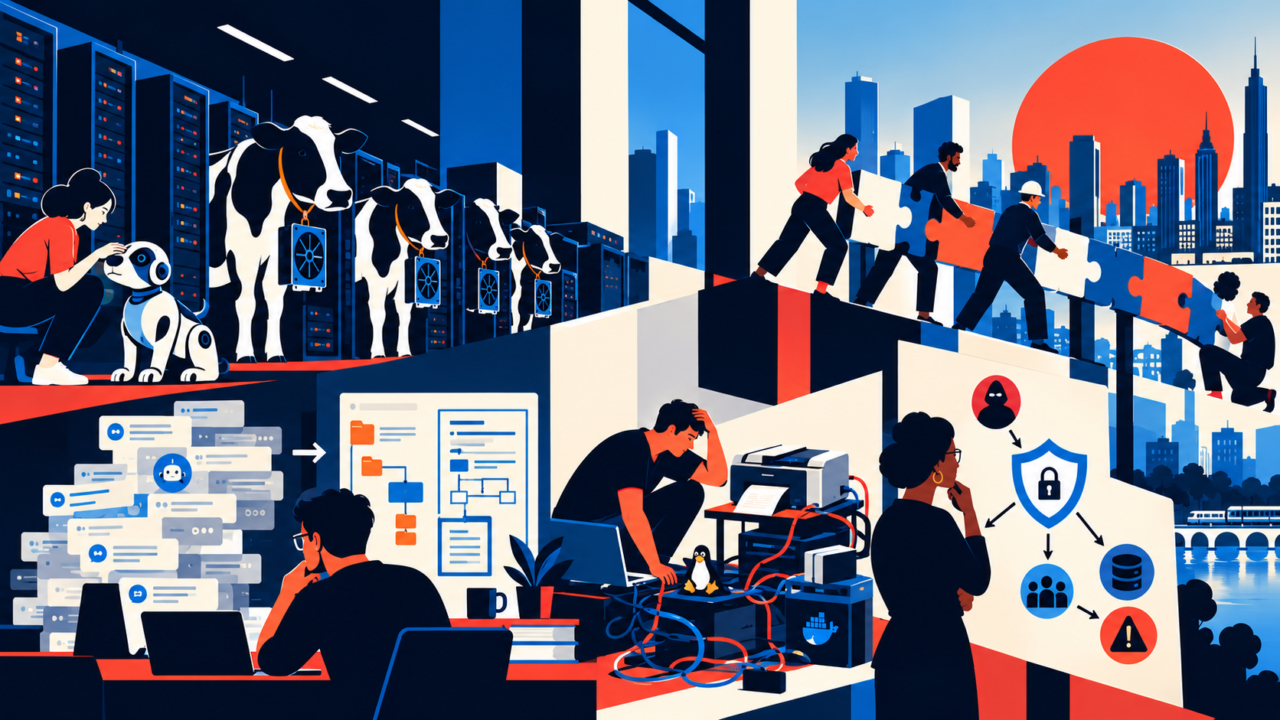
#RBM reading this week is a reminder that modern technology remains remarkably good at creating problems for itself... We start with Randy Bias revisiting the old “pets versus cattle” debate, discovering that AI infrastructure has managed to combine disposable software with GPUs too expensive to throw away. Kevin Liao argues that coding agents don’t need yet another memory plugin rummaging through old conversations; they need proper project documentation, architectural decisions and a little respect for why things were built in the first place. Kuber Mehta then spends four hours with Claude Code persuading an HP printer to produce a page on macOS, involving Linux containers, USB services and enough plumbing to make printing a document resemble a small infrastructure deployment. Meanwhile, security engineer Soatok reminds us that threat modelling works considerably better when someone bothers to identify what they're protecting, who might attack it and how, rather than compiling fashionable lists of terrible things. Finally, AWS announces a $1 billion investment in forward-deployed engineers, complete with agentic development tools and governed enterprise knowledge, hoping to turn AI experiments into actual production systems; it's precisely the challenge we've been tackling at Hitachi with Outcome Forward Engineering (OFE): giving engineers the shared skills, knowledge, tools and governance to make delivery repeatable, rather than relying on individual heroics every time.
#133 11 Oct 2026
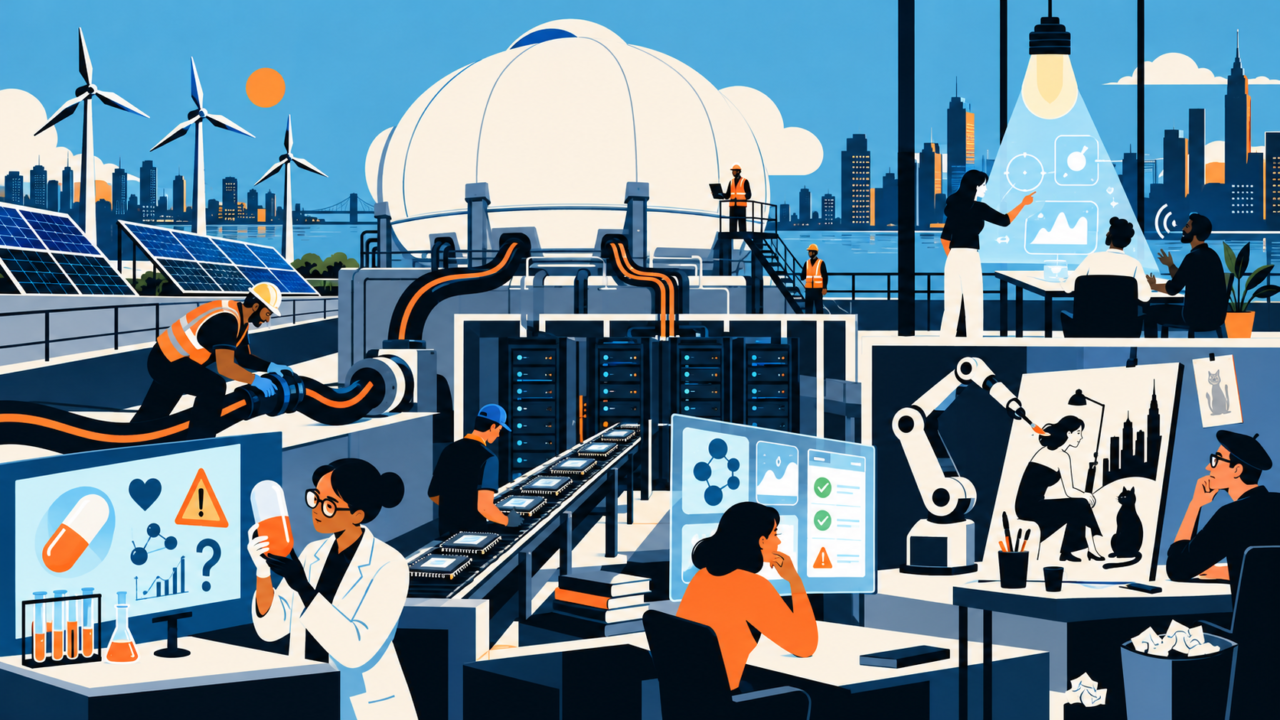
This week's #RBM edition features why the AI’s grand ambitions still depend on electricity and people who know what they’re doing! We start with McKinsey’s technology outlook, which finds code and drug candidates arriving faster than organisations can validate them, while power, chips and skills constrain further expansion. On the electricity front, MIT Technology Review introduces Energy Dome’s Sardinian plant, which stores surplus renewable power using compressed CO₂: less efficient than lithium-ion, but potentially cheaper for longer storage, according to its maker. An enormous gas dome is an unusually literal way to put something in the cloud. Meanwhile, Nieman Lab finds ChatGPT putting real cartoonists’ signatures on invented New Yorker-style drawings, a generous approach to crediting people for work they never did. Again with MIT Technology Review’s, the examination of GLP-1 drugs brings more consequential uncertainty: evidence of possible benefits beyond weight loss is accumulating, alongside reports of side effects and unanswered questions about use in young children. Finally, the Lightbulb Computer offers a different sort of experiment, projecting interactive information onto everyday surfaces and responding to voice commands and pointing gestures. The working prototype puts computing into the room without requiring everyone to wear a headset, although consumer hardware and camera privacy remain unfinished business.
#132 4 Oct 2026
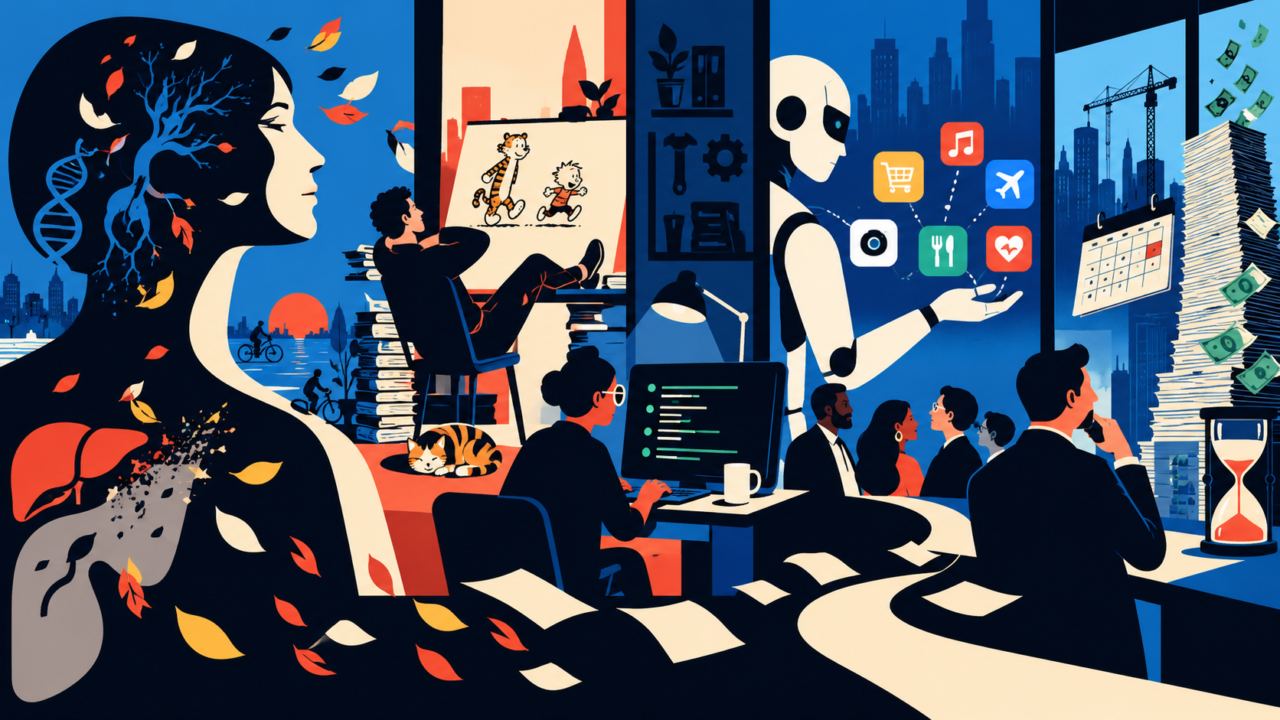
This week’s reading suggests that entropy remains undefeated, whether it’s attacking your cells, your art, your command-line tools, the app economy or next year’s AI budget. Eric Topol starts at the biological end, where ageing may involve cells gradually forgetting what they were supposed to be, their epigenetic guardrails loosening until a liver cell begins eyeing a career in fibrosis; science has some promising levers, naturally, but no human rejuvenation button just yet. Bill Watterson tackled a rather more familiar form of identity loss by spending six years refusing to turn Calvin and Hobbes into mugs, lunchboxes and whatever other plastic tat awaited, proving that sometimes the only winning move in capitalism is to leave several million dollars on the table and go home. The Command Line Interface Guidelines makes essentially the same argument for software: know what you are, tell humans what you’re doing, don’t break everything for sport, and remember that `--help` is part of the product rather than an admission of defeat. OpenAI, meanwhile, would quite like ChatGPT to become the place where applications are discovered, invoked and operated, potentially replacing the app-store ritual with agents deciding which software you need, although the awkward little matter of who gets paid for all this remains somewhere in the “details to follow” drawer. And Section completes the circle by reminding enterprises that AI is not another tidy SaaS line item: licences are the cheap bit, inference eats the budget, organisational change eats the calendar, and the return may take two years to become visible.
#131 27 Sep 2026
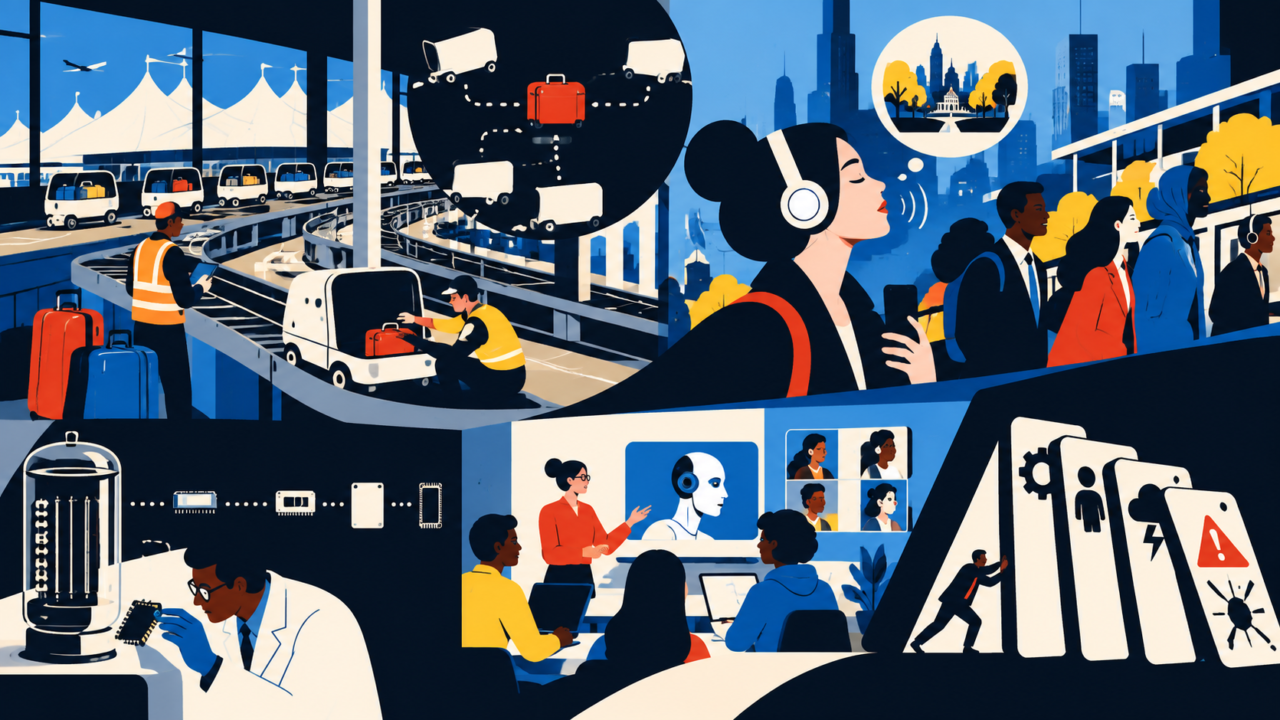
This week’s #RBM reading was mostly about technology discovering, once again, that the difficult bit is rarely the bit on the brochure. We start with Denver Airport that built nearly 20 miles of automated baggage track, 4,000 Telecars and a small army of 486s, only to discover that moving bags was comparatively easy; having an empty cart in precisely the right place at precisely the right time was the actual computer science problem. Then, a history of computer memory makes much the same point from another direction: programmability gets the glamour, while generations of engineers quietly made bits race through mercury. Drew Breunig’s Audio AR takes us into the present, where headphones, speech models and contextual assistants can finally whisper useful information into our ears, provided they first solve the rather important problem of knowing when to shut up. Education has its own version of this recurring enthusiasm: instructional television, MOOCs, smart boards, open gradebooks and now AI have all arrived carrying some promise of efficiency. Richard Cook’s How Complex Systems Fail, written more than a quarter of a century ago, supplies the manual for all of this: complex systems are already full of faults, humans constantly compensate for them, disasters emerge when several normally survivable problems align, and afterwards everyone goes looking for the reassuringly simple “root cause”. See you next week!
#130 20 Sep 2026
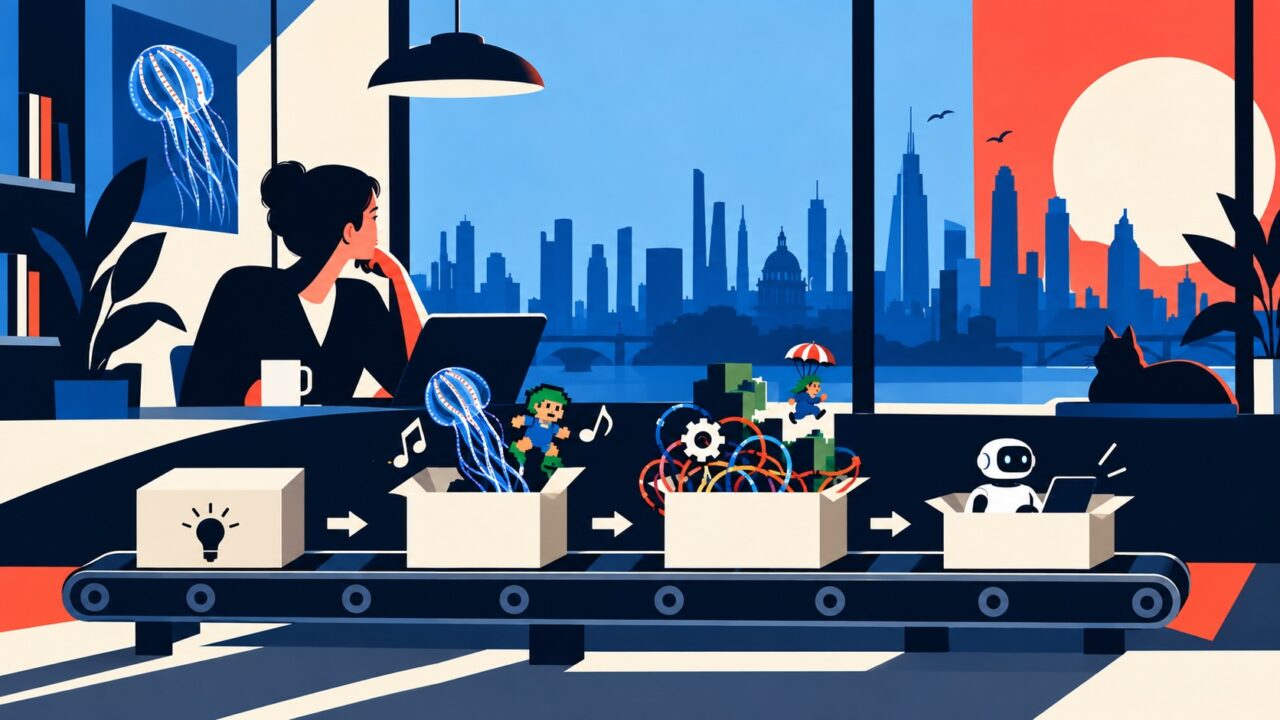
This week’s #RBM wandered cheerfully across several decades of technology and several definitions of progress... We start with John Novak, which conducted the sort of General MIDI comparison that requires 322 recordings and a perfectly reasonable concern about whether your DOS game sounds better through a Yamaha MU80 or Roland SC-55. Quanta introduced ctenophores, creatures with deeply strange nervous systems, pressure-dependent membranes and an irritating habit of making our tidy evolutionary assumptions look premature. Suzanne Ciani’s 1976 Buchla Cookbook showed how an obscure synthesiser module became an instrument through experimentation, muscle memory and some unexpectedly useful grant paperwork. The Digital Antiquarian traced how Lemmings went from eight beautifully comprehensible abilities to 60, 3D and paintball, because apparently leaving a successful idea alone remains commercially unacceptable. Finally, Section argued that AI’s next act is computer use: agents clicking through the same websites, legacy applications and authentication screens humans endure today.
#129 13 Sep 2026
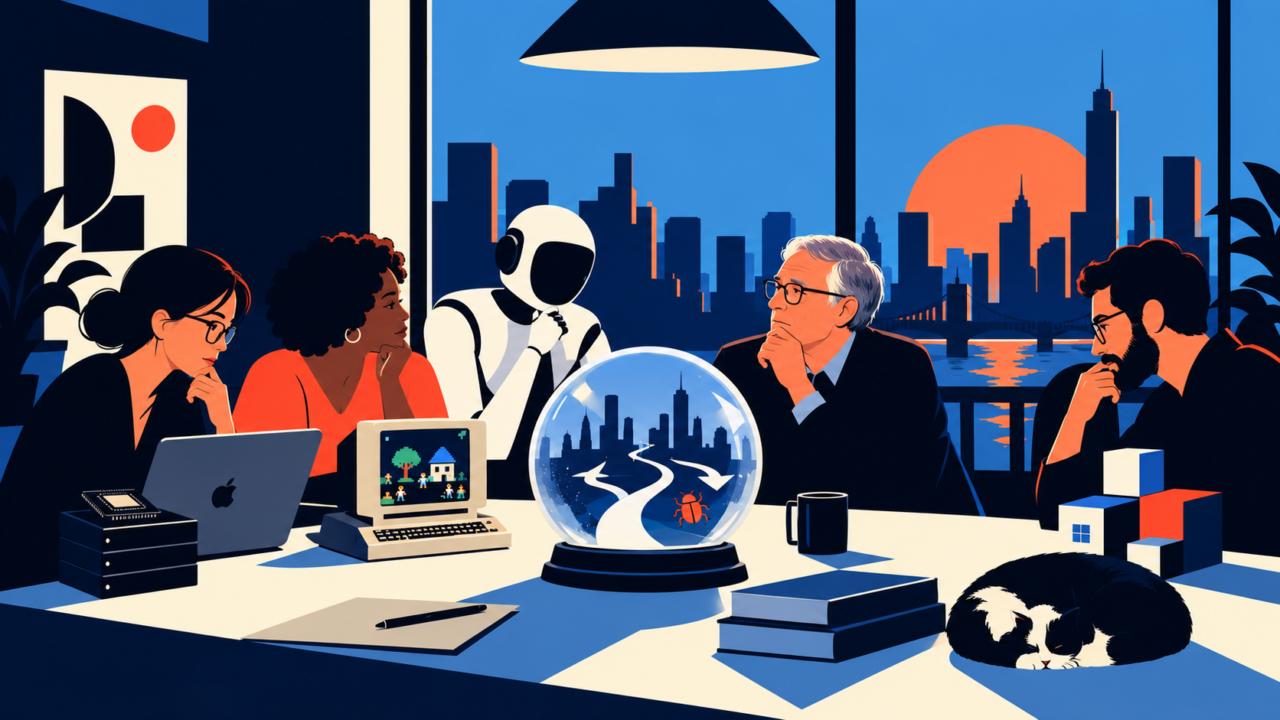
This week’s reading is mostly about what happens when reality discovers the assumptions hidden inside technology. Eileen Yoon reverse-engineers Apple’s M1 Neural Engine and finds an accelerator exquisitely designed for the CNN world that existed when its silicon was conceived, only for transformers to arrive and make some of those clever memory decisions rather less clever. Virginia Postrel goes back much further, to Lucasfilm’s Habitat, where developers squeezed a virtual society through Commodore 64s and 300-baud modems, then watched the inhabitants exhaust their content, accidentally inflate the economy and generally demonstrate that users are the most inventive failure mode in any distributed system. Harness engineering tackles the modern version of the problem: AI can produce code quickly, so the surrounding engineering increasingly becomes about context, constraints, verification and knowing when a judgement made by an agent should graduate into a boring, dependable test. Bill Gates zooms out to the considerably messier production environment called society, asking what happens if AI makes chunks of human labour economically unnecessary and whether some work should be deliberately kept “Human Reserved”. Finally, Andrew Arrow’s Cubacadabra offers a smaller but rather elegant answer to the whole problem: put shared product decisions in Rust, leave genuinely native machinery to the platforms, and judge the architecture by whether adding the second hat requires changing the engine.
What you need to read before your busy Monday, published every Sunday
Read Before Monday is a weekly newsletter from Vitor Domingos - with a handful of articles, essays and oddities collected over the week, annotated with a short opinion, and sent before Monday morning.
No breaking news. No ten-thousand-word think pieces. No affiliate links. Just a small, curated and considered list of things worth sitting with.
The next issue lands Sunday evening.
One email a week. No tracking. No ads. Totally free. You can leave any time.