
Welcome to another edition! So, what if your game could paint itself in real time; no art assets, no rendering pipeline, just raw code turned into visuals? That’s exactly what Jeff Schomay explored in his roguelike Thunder Lizard. By piping ASCII frames through fal.ai, he generates full graphical renderings in under 100 milliseconds, letting the world draw itself as you play. Them, as AI promises to write and code for us, Simon Späti argues for the enduring value of doing things manually. Writing an essay by hand or coding without shortcuts may feel slower, but it sharpens reasoning, creativity, and mastery in ways machines can’t replicate. But, what happens when five companies control the digital spaces we live in? Amnesty’s briefing argues that Big Tech’s dominance isn’t just about markets but about human rights; shaping privacy, speech, and even fuelling violence during crises. Oh! From medieval cesspits to Victorian London’s “Great Stink” and today’s wastewater epidemiology, Calum Drysdale traces the hidden history of sewage. We end up with, what If kids grow up believing AI “thinks,” we’ve failed at literacy. In their new episode, Kenya and Stefania dismantle the myth of “smart machines,” explaining models as prediction engines powered by data, not magic.
In this issue
5 piecesJeff Schomay demonstrates an innovative technique of transforming ASCII-based game frames into full graphical renderings in real time fal.ai
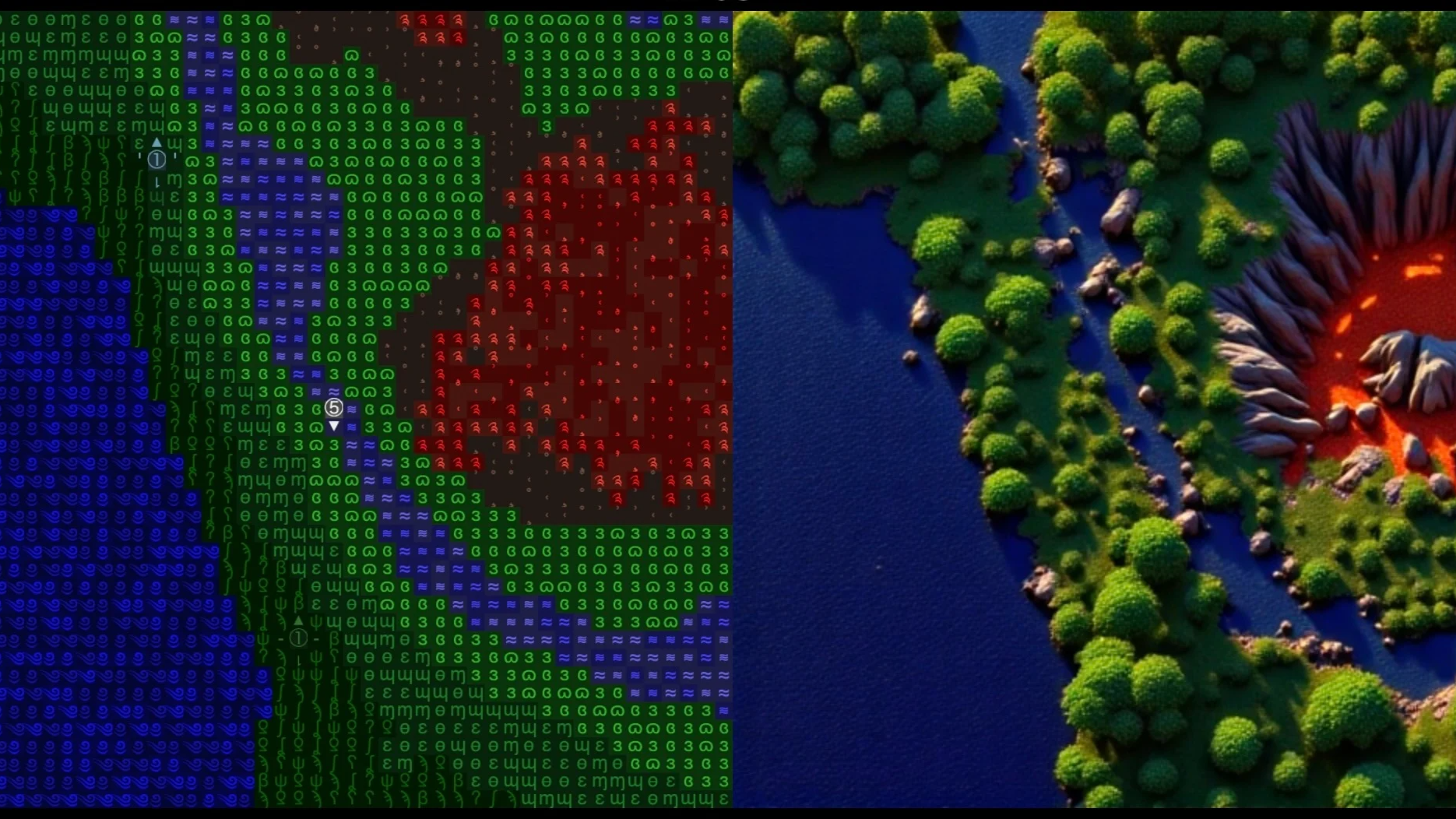
using , achieving render times under 100 milliseconds - essentially live AI-generated visuals for a procedural roguelike game. This experiment explores the potential for AI-driven visual rendering to replace traditional asset pipelines, enabling dynamic, instant visual feedback directly from game logic.
This post feels like a window into the future of indie game development, where code isn’t just logic but the brush that paints your visuals live. It reminds me of the early days of modding, when glitchy visuals became beautiful in their raw spontaneity. Is the instant AI render too fragile, too dependent on cloud bursts and external services? Still, watching your game world draw itself from ASCII in real-time is a kind of magic. Let’s keep pushing this; code as art, render as performance. But “fun, but sounds expensive” is an understatement: continuous inference at frame rate remains a resource drain and a cost-driver. For now, this remains a fascinating experiment, ideal for prototyping or visual debugging, less so for shipping polished, offline-ready titles. Still, it highlights how AI could remix development workflows: code becomes canvas, and every keystroke is an image prompt.
Simon Späti’s essay explores whether artificial intelligence will replace human thought, focusing on the importance of preserving manual practices such as writing and coding

. He argues that while AI tools are increasingly capable, relying on them uncritically risks eroding essential cognitive skills. By working through tasks manually, individuals sharpen reasoning, creativity, and understanding - capacities that are not easily replicated by machines. The piece situates this debate within broader societal anxieties about AI’s influence on work, education, and knowledge.
I found this article a thoughtful reminder that while AI dazzles with convenience, the act of “doing it yourself” is irreplaceable. Still remember handwriting essays at school - the slowness forced me to think harder and all my current notes are all handwritten. Today, tools like ChatGPT can churn out drafts instantly, but the risk is that we skip the mental wrestling where true learning happens. So, Späti’s essay speaks to this challenge, his warning against over-reliance is timely, as organisations experiment with AI-assisted coding, writing, and decision-making. While productivity gains are evident, there is a parallel risk of deskilling, where staff lose intuition and mastery. The real strategic asset is not AI output, but the human capacity to question, adapt, and create.
Amnesty International’s briefing, “ Breaking Up With Big Tech ” argues that the global dominance of the “big five” tech companies

- Alphabet (Google), Meta, Microsoft, Amazon, and Apple -poses a serious threat to fundamental human rights such as privacy, non‑discrimination, freedom of opinion, and access to information. It highlights how their control over digital infrastructure, services, and norms enables opaque moderation, biased algorithms, and unchecked expansions, particularly in AI, with real-world harmful consequences. Evidence includes documented complicity in ethnic violence during crises such as the Tigray conflict in Ethiopia and the Rohingya crisis in Myanmar.
This briefing makes a very strong case for seeing Big Tech not just as economic giants, but as human rights actors with outsized influence over our lives, so yes, we must break up their unchecked rule. I recall the first time I stumbled into these new echo chambers on social media -powerful, addictive, chilling - reminding me that digital platforms shape emotions just as much as algorithms. But change is tricky: dismantling empires risks unintended chaos. What matters most is not just preserving competition, but ensuring that digital spaces restore trust, dignity and democratic values. The future of freedoms offline may hinge on this.
This compelling Long Read by Calum Drysdale explores the often-overlooked journey of human excrement

- from medieval cesspools and early urban waste disposal to modern sewers and the evolving view of sewage as a resource rather than mere waste. The essay maps centuries of public health crises, engineering breakthroughs, and changing mindsets, culminating in contemporary practices like wastewater-based epidemiology and resource recovery that recast sewage as a source of materials, energy, and crucial data.
Sewage... you weren't expecting this on this newsletter, right? An universal and ridiculous byproduct of life, is now illuminating our societies in ways our ancestors could scarcely imagine. We once shunned sewage as foulness to be hidden; now, we must embrace it for its hidden value, and that shift isn’t merely technical, it’s philosophical. Drysdale’s richly researched essay reframes sewage not as disposal, but as a mirror of urban civilisation and a reservoir of untapped value. His historical arc, from London’s 19th-century cholera-choked streets to sophisticated wastewater-based epidemiology, underscores sanitation’s evolution from crisis response to proactive infrastructure.
AI Literacy Series

The second episode of the AI Literacy Series by Turing Post, hosted by Kenya and Stefania, focuses on demystifying AI for young people. It frames AI literacy as more than technical understanding - incorporating skills, attitudes, and critical perspectives needed to thrive in an AI-driven world. The hosts highlight the danger of anthropomorphic language, stressing that machines don’t “think” but operate on statistical methods. They unpack classification, diffusion, and transformer models in accessible terms, recommending interactive teaching strategies like “explain it to me like I’m five.
This episode resonated with me because it frames AI literacy as a matter of mindset as much as mechanics. I’ve often seen friends describe AI as “thinking,” and while it feels harmless, it sets up false expectations about autonomy and agency. The episode insistence on interactive learning reminds me of the first time I tinkered with a simple chatbot; less magical once I peeked behind the curtain, but far more empowering. So, by stressing the risks of anthropomorphic framing, Kenya and Stefania understand the importance of precise language in shaping realistic expectations of emerging technologies. Their call for interactive “playgrounds” reflects the need for experiential learning environments, where abstract models are made tangible. Yet, the structural gap remains: a lack of comprehensive, scalable curricula that integrate theory with daily applications.
Last Week in AI
- Microsoft tests MAI-1-preview AI model boost to Copilot, rival OpenAI | CNBC | cnbc.com
- Introducing Gemini 2.5 Flash Image, our state-of-the-art image model | developers.googleblog.com
- Rendering a Game in Real-Time with AI | blog.jeffschomay.com
- Generative AI reshapes U.S. job market, Stanford study shows | cnbc.com
- The Delusion Machine - What happened when I fed my soul into an LLM. | hedgehogreview.com
- AI Models Need a Virtual Machine | blog.sigplan.org