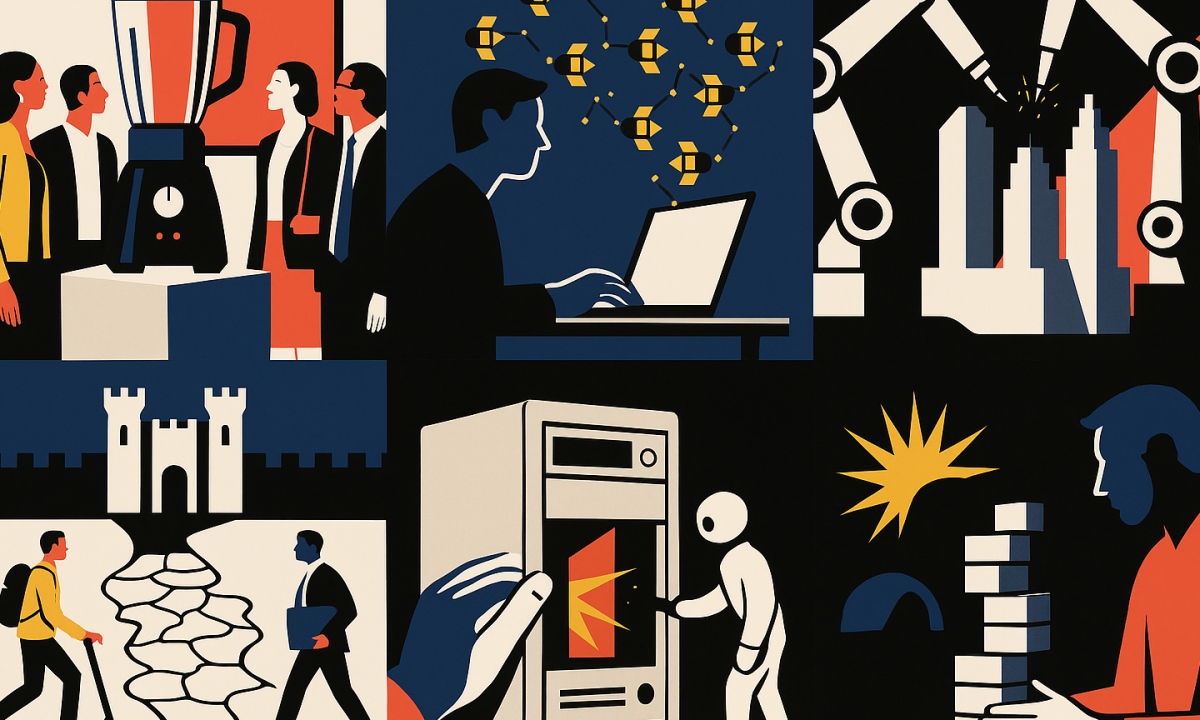
Lots of great stuff happened this week! We launched HARC Agents and was the first thing Hitachi Digital Services Centre for Architecture & AI is publicly launching. We still worked on a MVA (Minimum Viable Agent) framework that maybe will be released soon too. But this week we go from viral blenders to resurrected kernel drivers. Starting with SharkNinja, which shows how everyday appliances become cultural objects when engineered with hype and design. Then enterprise software is shifting from casual “vibe coding” to orchestrated swarms of AI agents that compress weeks into hours. Did you know that Monumental Labs uses robotics to revive stone as a sustainable building material? Ah! Let’s review the Creative Technology’s rise and decline remind us how quickly moats vanish when ecosystems change; and finally, Dmitry Brant’s revival of a 25-year-old driver with Claude Code illustrates AI’s role as a skilled apprentice rather than replacement. Feels like bursts of ingenuity matter less than the discipline to turn them into durable impact.
In this issue
5 piecesSharkNinja, the company behind brands like Shark vacuums and Ninja kitchen/household appliances, has mastered turning everyday utilitarian devices into viral must-haves.

They combine strong engineering, design testing (including home trials), social-media-friendly aesthetics, and messaging that frames the product not just as useful but as something consumers didn’t realize they were missing. The implication is that the appliance market is shifting: it’s no longer enough to make something that simply works. Consumers increasingly expect aspirational design, social shareability, ease of use, and a sense of novelty. SharkNinja appears to be capitalising on that shift by launching a large number of new products each year, investing in R&D/engineering, and using pre-launch hype (waitlists, demos) to build desire.
I’m impressed by how SharkNinja doesn’t just build “better vacuums or blenders” but builds stories around them. It reminds me of when Apple stopped selling just hardware and started selling design + status. So the more you lean into virality and novelty, the more you risk creating products that are loved briefly, then abandoned or dumped. People will always share what looks cool, but they’ll keep what works day in, day out. The devil’s in the durability (and follow-through). But executing this model at scale demands operational discipline: quality control, customer support, and supply-chain flexibility must keep pace with marketing hype. For anyone trying to emulate this approach, the take is not just to sparkle in launch trailers and social feeds, but to deliver consistent value across product lifespan.
This article argues that “vibe coding" - where developers casually prompt models in exploratory, often informal ways - is giving way to “agentic swarm coding,” especially for serious enterprise-software work

. Agentic swarm coding is when multiple AI agents, each specialised (e.g. planners, coders, critics), are orchestrated to build production-ready applications, not just prototypes, including all the supporting infrastructure like CI/CD pipelines, security checks, and testing. The shift is being driven by improved foundation models (higher accuracy on real tasks), more mature agent architectures, and more skilled human oversight (the “agentic engineer”). Enterprises are seeing that these swarms can collapse timelines of work: what used to take many developer-days can now be done in hours. The new competitive advantage (“moat”) for companies is speed of execution, domain expertise, and effective orchestration of AI agents rather than just writing manual code.
In enterprise software, agentic swarm coding represents a strategic escalation: not just adopting AI tools, but reorganizing development workflows around them. With foundation models hitting new benchmarks, architectures enabling decomposition into specialist agents, and humans acting more as orchestrators and validators, we may be seeing a paradigm shift. So, agentic swarm coding has huge promise: the idea that a well-structured team of agents plus a skilled orchestration can do what once took many human days in a few hours is powerful. Yet, if you move too fast without proper guardrails, you risk accumulating debt - technical, security, or reputational. Leaders should experiment, but also build the scaffolding (process, oversight, roles) to catch errors early. Because while swarm power is seductive, trust is won only when outputs survive real-world use.
Monumental Labs is a startup using robotics and AI to modernise stone carving - producing decorative facades, museum-grade sculptures, and ornate architectural detail.

The company has raised US$8 million to build a large facility in Brooklyn with multiple seven-axis robotic arms capable of processing large blocks of marble, limestone, and granite. Currently much work is decorative and finished by hand, but the aim is to scale to structural stone, enabling stone-built facades and even whole buildings. The startup believes that by using AI (including reinforcement learning for tool-path optimisation) and robotics, the cost of building with stone could drop significantly (perhaps to about 25% of the cost of concrete alternatives). They also see benefits in embodied carbon reduction, longevity, and aesthetic / cultural value. But there are engineering, logistics, cost, and infrastructure hurdles still to overcome.
This feels like one of those rare moments when craft, tech, and purpose converge. Monumental Labs’ work touches on multiple disruptive vectors in construction: material innovation, industrial automation, carbon reduction, and aesthetic value. If they succeed in cutting costs dramatically while meeting structural, safety, and regulatory standards, they could shift a part of the building sector away from concrete and steel toward stone - not for ornament alone but core structure. I remember seeing crumbling historic façades that were discarded because rebuilding by hand was prohibitively expensive - here, there’s hope of preserving artistry and longevity. For builders, architects, city planners, this could matter not just for beauty, but for how we build sustainably for decades. It may turn out that the character of our cities depends on whether facilities like this go mainstream.
Tracing the rise, peak, and subsequent decline of Singaporean company Creative Technology , best known for its Sound Blaster sound cards.
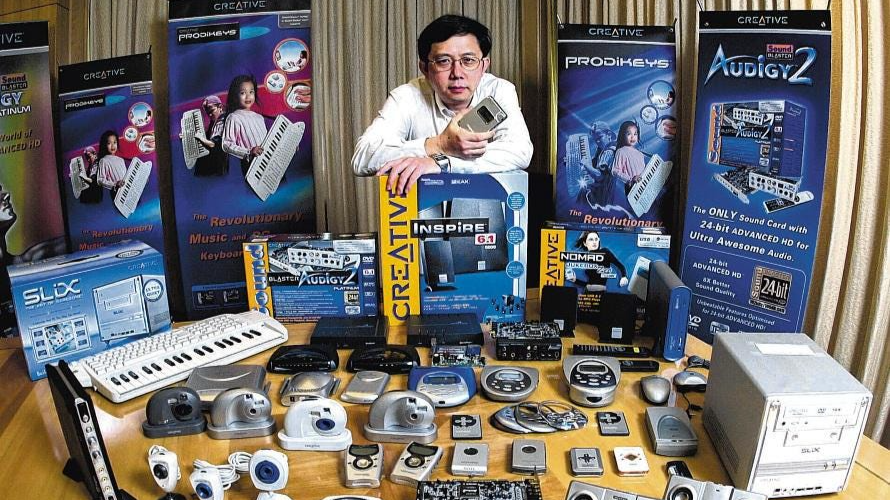
Founded in 1981 by Sim Wong Hoo and Ng Kai Wa in a small shop, Creative first sold parts and repaired computers, then built up to designing its own hardware. It broke out internationally by focusing on multimedia PC add-ons, building strong software partnerships, licensing, and leveraging compatibility with popular games and formats (e.g. CD-ROMs, MP3s). It also describes Creative’s struggles: efforts to diversify (into video cards, optical drives, portable media players) often ran into strong incumbents (e.g. Apple); shifting PC form factors (laptops vs desktops), declining sound card demand, and market saturation weakened its dominance. As of 2024, Creative continues to sell sound and audio gear but operates on a far smaller scale than its heyday. The article also reports financials (2024 net sales ~$62.8 million, loss ~$11 million) and notes the nostalgia and loyalty of retro-tech enthusiasts for its classic products.
At its peak, Creative owned sound, innovating precisely when PCs lacked integrated audio. I had a few back int he day - the AWE32 being the most awesome. But wave after wave of hardware commoditisation, shifting ecosystems, and rising competitors eroded that advantage. It reminds me of when Kodak clung to its film dominance despite digital photography’s rise. Creative’s path shows how critical it is for a company to anticipate platform shifts, not just the next hardware leap, but the broader changes in how consumers, games, devices, and operating systems integrate. Revenue alone does not insulate a company from obsolescence; profitability, cost structure, product relevance, and the ability to pivot matter more. Reinvention is harder than invention, but often more essential. Longevity lies not just in what you create, but in what you are ready to become.
Dmitry Brant recounts how he used Claude Code (an AI code-assistant) to bring an unmaintained 25-year-old Linux kernel driver, namely ftape , up to date so that it compiles and runs on modern Linux kernels
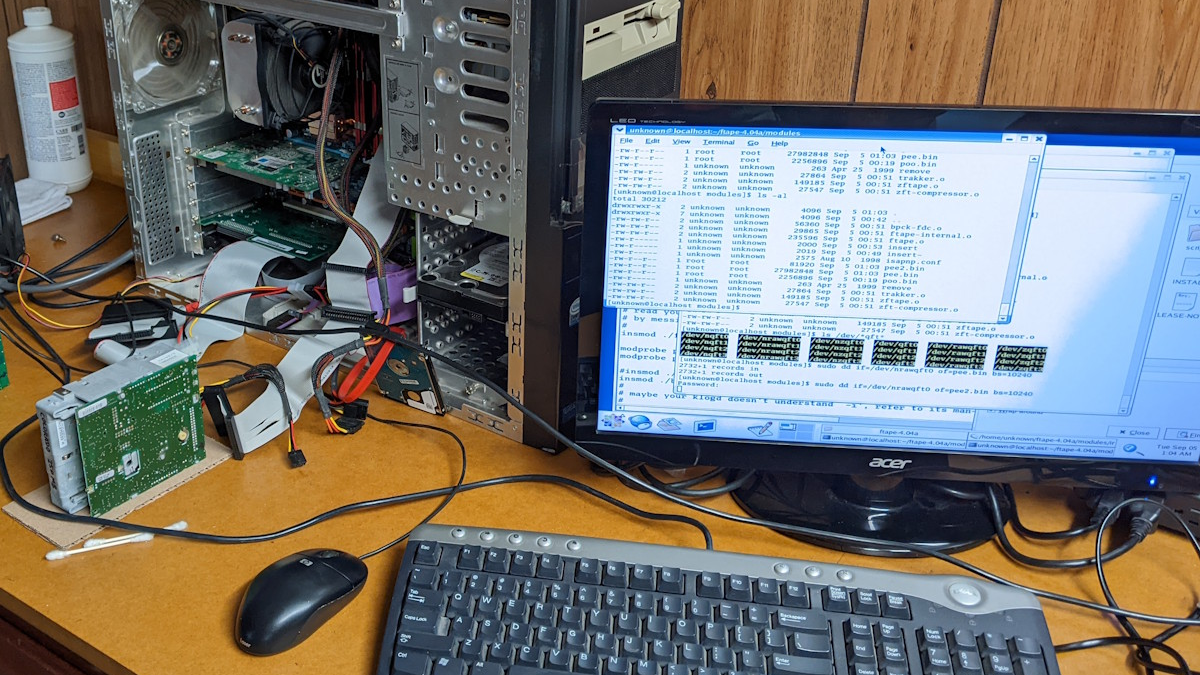
. The driver is for legacy tape drives (connected via the floppy controller), and had requirements like deprecated kernel APIs, outdated structures, and being tied to old kernel versions (2.4). Using a back-and-forth approach with Claude Code, feeding error outputs, asking for replacements for deprecated functions, building an out-of-tree module, etc, he got it compiling, loading, detecting hardware, and even dumping tape contents under a modern distro (Xubuntu 24.04) in a couple of evenings.
There’s something deeply satisfying in seeing a piece of computing history “wake up” under modern OSes. But it also underlines that AI tools are more like skilled apprentices than full substitutes: the human still needs to lead, guide, correct, and integrate. For anyone dealing with legacy systems, or wanting to learn deep systems work, this is a convincing example of what’s possible now. Dmitry Brant’s account is a concrete demonstration of how AI programming assistants (in this case Claude Code) are transforming maintenance and legacy modernisation tasks. From replacing deprecated APIs, handling kernel-version shifts, to designing build systems that allow out-of-tree compilation, many traditionally tedious errors were navigated via iterative prompt feedback. Modernisation projects, often deferred, now have a lower barrier. The companies that invest intelligently here can unlock value (security, maintainability, reuse) with less friction.
Last Week in AI
- Qwen3-Next: Towards Ultimate Training & Inference Efficiency | qwen.ai
- Musk's XAI Just Laid Off Hundreds of Workers Tasked With Training Grok | businessinsider.com
- AI-created videos are quietly taking over YouTube | sherwood.news
- UK workers wary of AI despite Starmer’s push to increase uptake, survey finds | theguardian.com
- The six key elements of agentic AI deployment | mckinsey.com
- Adobe Announces General Availability of AI Agents for Businesses to Transform Customer Experience Orchestration | news.adobe.com