Read Before Monday
From the
Archive

#74 10 Aug 2025
Manflu! That's what I got at the end of this week! But this week's stories could share a single table: Novartis in 2002, betting on an untested Harvard cardiologist to run R&D and birthing breakthrough drugs before market pressures reclaimed the wheel; Tor, born from Cold War military secrecy yet transformed into a shield for privacy; newsrooms embracing AI tools like FOIA bots and investigative algorithms that promise speed but risk eroding trust without human oversight; a product design world chasing only senior talent while quietly starving its own future; and, to end on a gentler note, Kilopixel; a six-year labour of love that flips 1,000 wooden cubes one by one, pixel art unfolding at a snail’s pace, reminding us that innovation can be as much about patience and play as about speed or profit.

#73 3 Aug 2025
What a great reading we have before Monday! This week’s reads explore the messy mechanics and ethical pivots behind how we build and scale tech. We start with Evan Hahn, which breaks down fast, effective software development with a focus on clarity over polish, while Ankit Jain urges teams to ditch vanity metrics in favour of developer flow and tooling. Then Eleanor Berger introduces context engineering as the real backbone of LLM performance, beyond prompt engineering, while Alberto Romero voices growing distrust in AI’s corporate storytelling, comparing it to past tech bubbles. We end with Karen Hao’s deep dive into OpenAI lays bare the human and environmental costs behind its rise, framing it as a cautionary tale of ambition wrapped in empire.

#72 27 Jul 2025
A great reading week tracing how tech reshapes trust, quality, and creativity. First we unpack vehicle simulation in games, showing how controlled cheats build better play. At Recurse Center, LLMs are embraced with nuance; useful for shipping, set aside for learning. Then podcasts now play to the camera, chasing lo-fi intimacy and virality. Meanwhile, El País mourns the decline of durable goods, as disposability becomes the norm. And finally, the EFF flags a deeper concern: police AI tools that draft reports and delete their footprints, eroding transparency where it’s most needed.
#71 20 Jul 2025
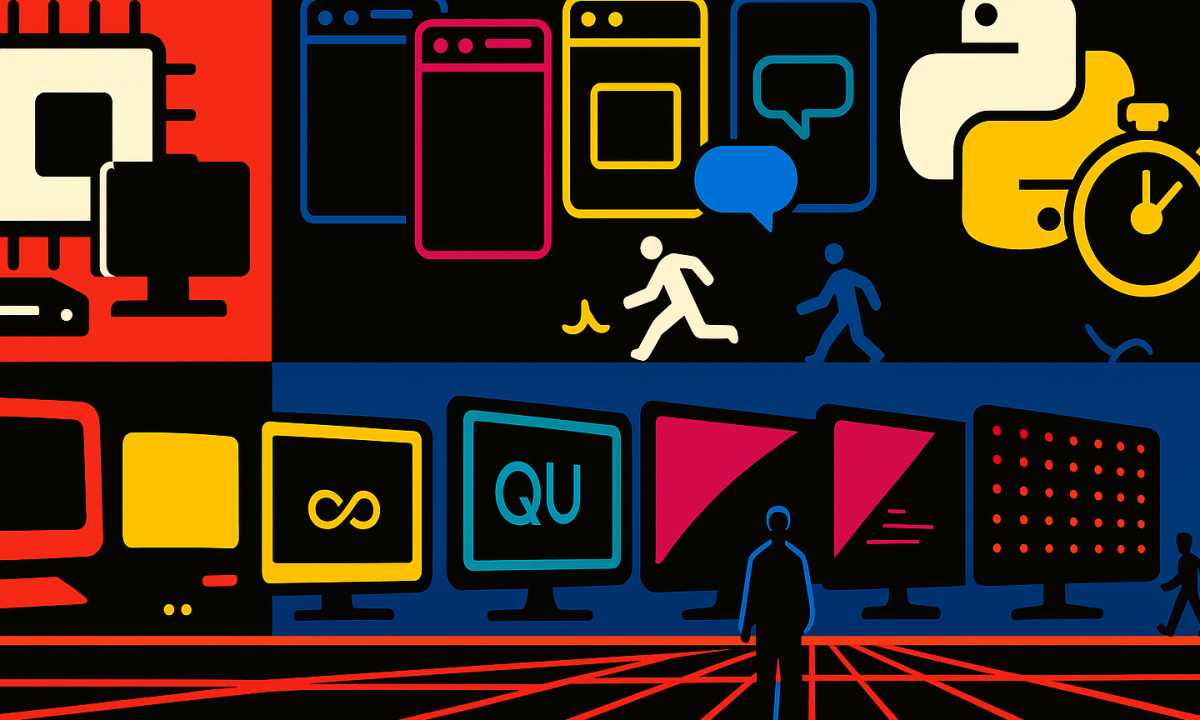
Another week full of interesting things to share with a twist down the memory lane. We'll be marvelling at how John Hennessy’s humble MIPS project rocked the CISC world with its lean, pipelined R2000 cores, powering everything from SGI workstations to PlayStations, only to crash, regroup around RISC-V and now eye a GlobalFoundries revival. Then it's a flashback to 1998’s neon-lit portal frenzy, where Yahoo!, Excite and Lycos vied for your eyeballs until Google slipped in, Netscape threw open its browser, and the Web Standards Project rallied for sane design. Fast-forward to today’s OpenAI labs, where a Python monorepo on Azure and a seven-week Codex sprint prove that real breakthroughs thrive on messy Slack pings and serendipitous pivots. Meanwhile, display tech has danced from the warm hum of CRT phosphors through liquid-crystal twists and quantum-dot glow to OLED’s perfect blacks and the Micro-LED promise, each evolution a lesson in co-optimized materials and circuits. And through it all, Gibson’s Neuromancer reminds us that our neon-soaked, AI-driven worlds still mirror his gritty “Matrix,” where algorithmic power and human agency collide on every screen.
#70 13 Jul 2025
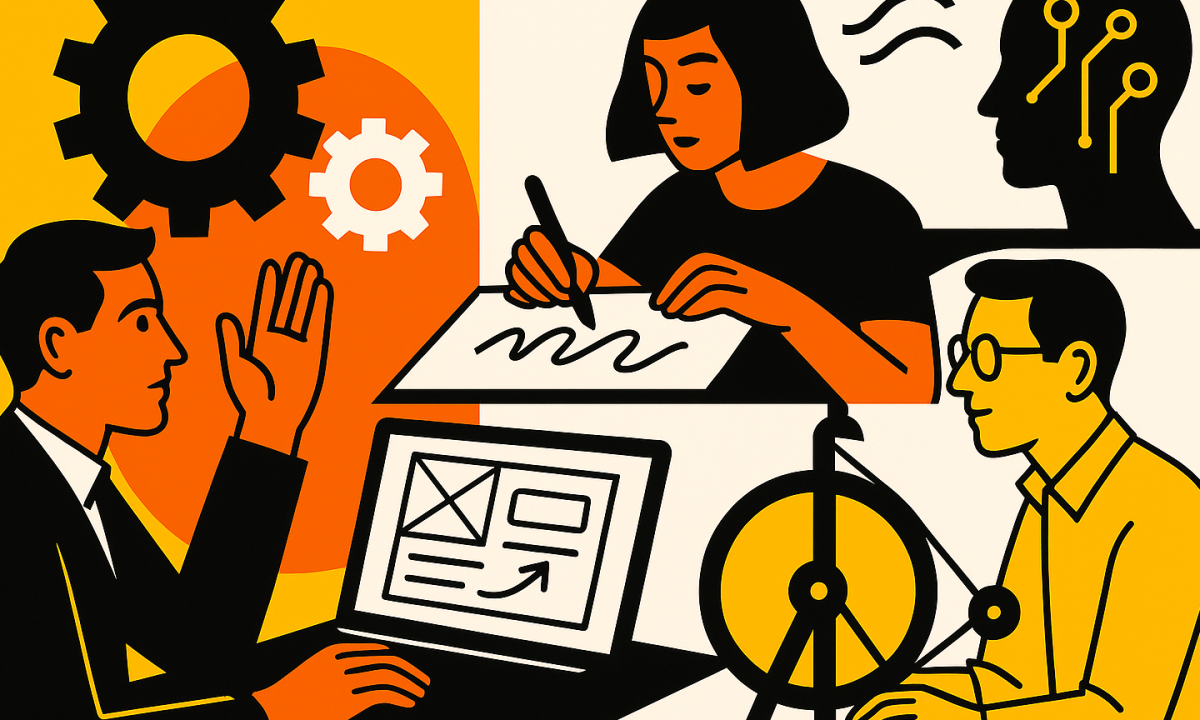
This week is about assorted articles that were piling up :) At the OCD conference in San Francisco, Andrew Kay captures something quietly radical: exposure therapy as both cure and metaphor. In a world obsessed with control, pure thoughts, clean hands, curated feeds, OCD might be less pathology, more mirror. That need for control shows up elsewhere too. Figma’s polished workflows make it easy to jump to tidy outputs, but at what cost? We’re losing the messy sketches that spark true creativity. Meanwhile, Merel Karhof’s wind-powered knitting machine spins wool at the whim of urban breezes, a poetic reminder that not all productivity has to be optimised. And in AI, Yiding Jiang argues, growth won’t come from stacking parameters, but from letting models explore, err, and learn like we do. Whether it’s design, tech, or healing, maybe it’s time we all made more room for play, for awkward beginnings, for the beautifully unfinished.
#69 6 Jul 2025
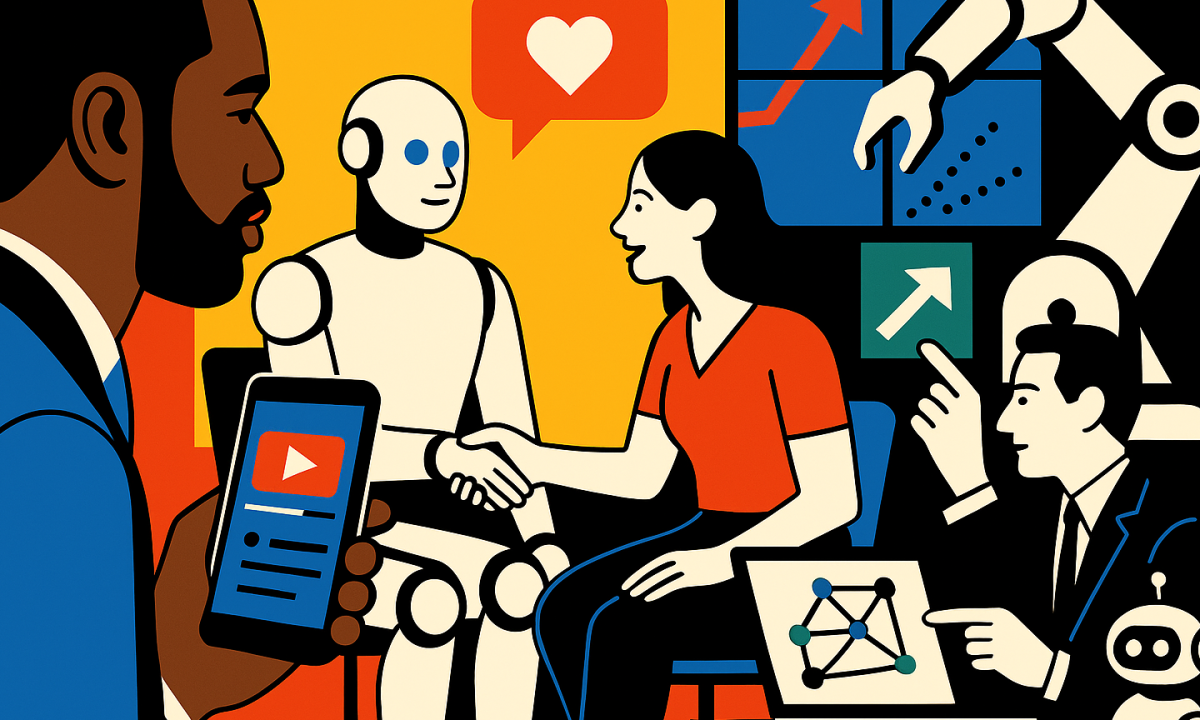
Here we are, in another week, and welcome to my new subscribers! This is a newsletter that goes out to you every Sunday, just in time for you to Read Before Monday :) So... across industries, 2025 reveals a deeper truth: scale alone won’t save us. Social video may have overtaken traditional news, but trust and context still matter more than clicks. Biotech dreams of mood-boosting bots, yet happiness continues to hinge on messy, human connections. In healthcare, outdated AI evaluation fixates on explainability while ignoring real-world breakdowns, something a new framework finally begins to fix. A breakthrough algorithm promises smarter data sorting with fewer moves, but it’s elegance in design, not brute force, that makes it sing. And in robotics, grand visions of scaling stumble against the hard limits of physical reality. Finally, if you missed it, I also wrote about how to turn autonomy into advantage by leveraging Agentic AI, which is quietly reshaping enterprise strategy.
What you need to read before your busy Monday, published every Sunday
Read Before Monday is a weekly newsletter from Vitor Domingos - with a handful of articles, essays and oddities collected over the week, annotated with a short opinion, and sent before Monday morning.
No breaking news. No ten-thousand-word think pieces. No affiliate links. Just a small, curated and considered list of things worth sitting with.
The next issue lands Sunday evening.
One email a week. No tracking. No ads. Totally free. You can leave any time.