This week is about assorted articles that were piling up 🙂 At the OCD conference in San Francisco, Andrew Kay captures something quietly radical: exposure therapy as both cure and metaphor. In a world obsessed with control, pure thoughts, clean hands, curated feeds, OCD might be less pathology, more mirror. That need for control shows up elsewhere too. Figma’s polished workflows make it easy to jump to tidy outputs, but at what cost? We’re losing the messy sketches that spark true creativity. Meanwhile, Merel Karhof’s wind-powered knitting machine spins wool at the whim of urban breezes, a poetic reminder that not all productivity has to be optimised. And in AI, Yiding Jiang argues, growth won’t come from stacking parameters, but from letting models explore, err, and learn like we do. Whether it’s design, tech, or healing, maybe it’s time we all made more room for play, for awkward beginnings, for the beautifully unfinished.
In this issue
5 piecesShadow of a Doubt: How OCD Came to Haunt American Life
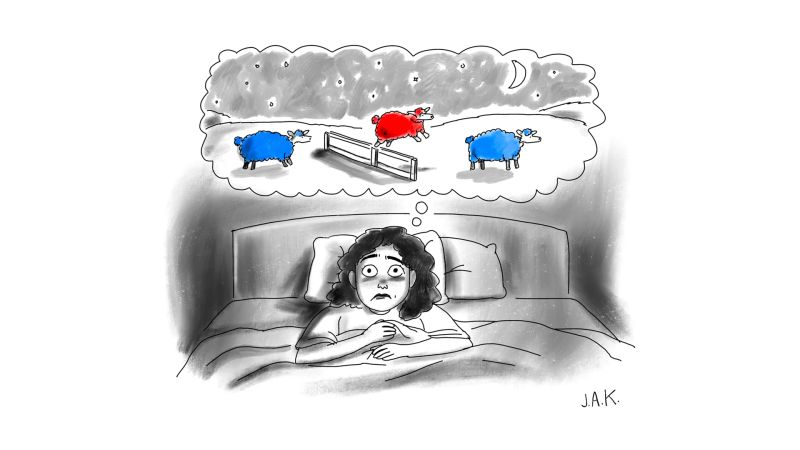
Andrew Kay’s “Shadow of a Doubt: How OCD Came to Haunt American Life” tracks his immersion in the 2023 Annual OCD Conference in San Francisco, revealing the disorder’s multifaceted presence, from contamination anxieties to identity fears. Through interviews and lived narratives, he portrays OCD as a pervasive “doubt disorder", rooted in fear of self-loss, yet deeply influenced by modern life’s obsession with purity and control.
This report felt like stepping into a vortex where intimacy and exposure fracture both soul and shame. The vivid conference scenes, holding hands with a homeless man, licking dumpster residue, remembered me that recovery isn’t sterile. It’s raw, awkward, human. And yet, this deeper call resonates: we’ve created a society that weaponises control. In an era where purity is commodified, and digital lives are curated to death, perhaps OCD is not just a disorder but a signal; an alarm bell. The path forward may lie less in balancing brain chemicals, and more in rewilding our relationship with mess, unpredictability, and each other. The striking exposures in San Francisco exemplify therapeutic innovation but also underscore a broader assertion: mental health must be decoded not only neurologically, but contextually. America’s focus should shift toward integrating social design, environmental texture, and communal resilience into psychiatric practice, lest psychological disorders remain rooted in, and reinforced by, the systems that spawned them.
Wind Knitting Factory
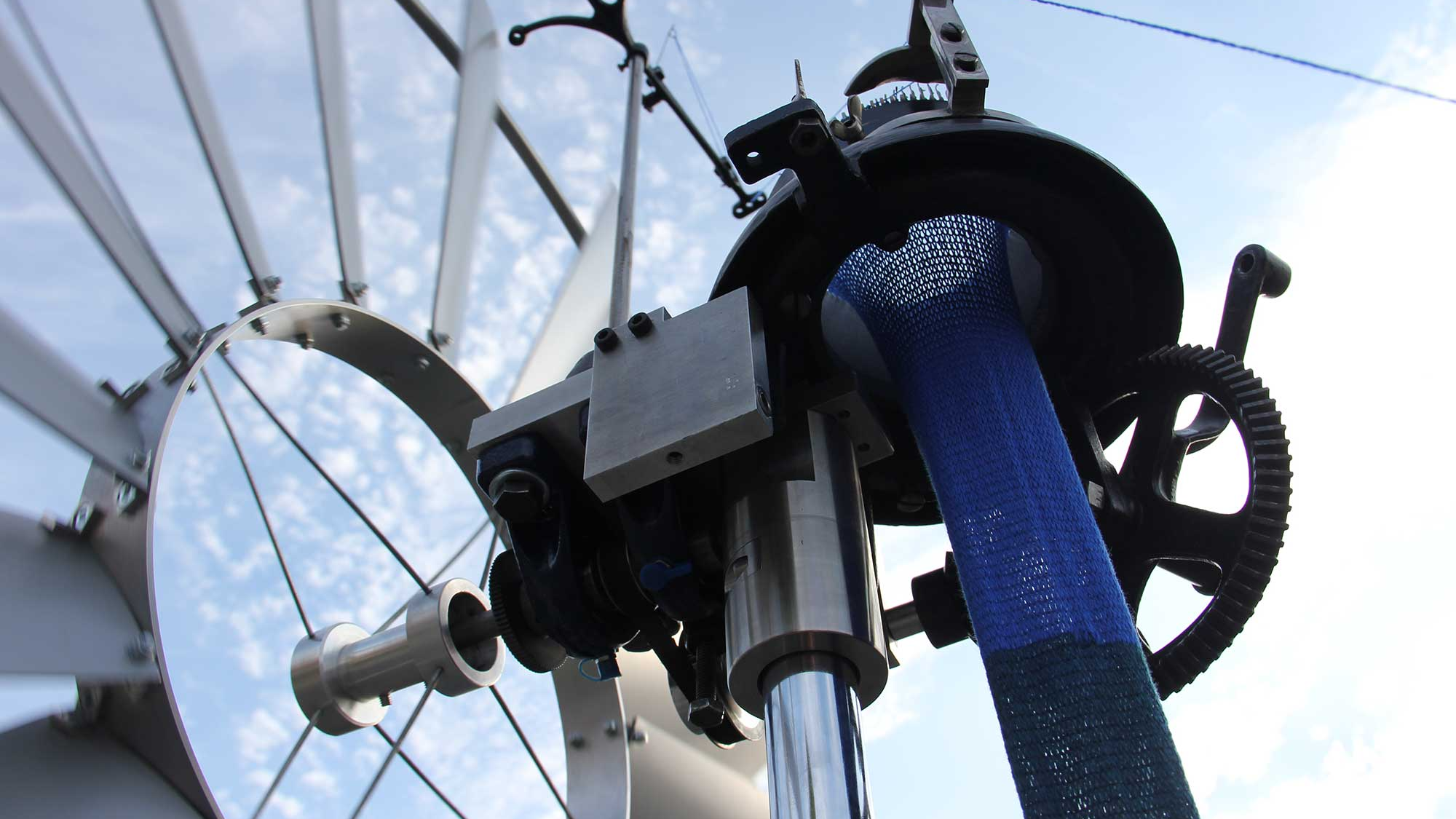
Merel Karhof’s is a wind-powered knitting machine mounted on buildings or tripods that uses urban wind to knit long tubes of wool, later harvested and crafted into scarves, cushions, or furniture upholstery. The rate of production visibly fluctuates with wind strength, making natural energy flows tangible and poetic. Karhof expanded the concept into Windworks, a full furniture line made entirely with wind power: wood cut by windmills, fabrics dyed at pigment mills, and upholstery knitted by the wind machine - each piece labeled with the time it took to make.
So... replacing silent consumption of energy with something we can see, feel, and touch - feels like a gentle rebellion. Watching a scarf grow thread by thread in the wind turns an abstract concept like “renewable energy” into a real moment, slow, imperfect, intimate. This clearly presents a compelling case for grassroots renewable innovation, shifting the focus from megawatts to moments. In a world fixated on grid-scale deployment, the project underscores how localized, visible applications of wind energy can reframe public perception. By tracing a product’s lineage from breeze to bench cushion, it crafts a narrative that can nurture grassroots demand for clean energy, turning passers‑by into advocates. Though scale remains limited, this project exemplifies how micro‑energies can shape macro‑conversations, and suggests a fertile frontier for combining craft, sustainability, and public engagement.
This essay introduces the "moat of low status"

This essay introduces the "moat of low status": the uncomfortable initial phase when learning a new skill where you're inept and overlooked. The author argues that this moat is a barrier most avoid, yet confronting it deliberately fosters growth, resilience, and actual competence. It’s a rite of passage for genuine progress. Framed as both challenge and opportunity, the moat filters out the hesitant and rewards those who tolerate embarrassment. Embracing low status isn’t about accepting failure forever, but using it as leverage. Cross it, and you gain confidence, status, and mastery others will struggle to match.
This piece felt like a pep talk I needed. We glamorise hustle but skip the awkward scramble at the beginning, when you're the one asking dumb questions or messing up tutorials. Embracing that phase feels like accepting you won’t look like a genius overnight, and that's okay. It reminded me of every cringe moment that actually taught me something; stumbling over code, mispronouncing words in a new language. I’m starting to treat that moat like a badge of courage - and maybe that’s exactly the point: if progress was comfortable, everyone would do it. So, leaders should normalize the low-status period, particularly in onboarding and talent pipelines. If they signal that initial failure as both safe and expected, organizations can foster experimentation and resilience. Cultivating cultures that honour moat-crossing reduces impostor syndrome and accelerates skill acquisition. Structurally embedding this mindset, through mentorship, narrative framing, and reward systems, transforms what often feels like risk into a predictable engine of growth.
The Era of Exploration"

In "The Era of Exploration", Yiding Jiang argues that as LLMs mature, the next leap in AI will rely less on scaling parameters and more on generating its own high-quality experience through exploration. He views pretraining as an “exploration tax” that equips models with a richer data distribution, allowing later RL to be effective. Jiang emphasises that the right kind of exploration - costly in compute, synthetic data, and human oversight - is crucial for models to generalise well beyond training tasks. The post outlines two dimensions for scaling exploration: the diversity and informativeness of data gathered, and the investment (in “flops”) to collect it. Jiang suggests future AI research should prioritise mechanisms that strategically explore state spaces - across RL and broader learning systems, rather than just stacking parameters or datasets.
This framing of exploration as the pivotal axis for scaling AI aligns with emerging trends in machine learning engineering. While parameter and data scaling have driven recent progress, orchestrating strategic data acquisition, whether via environment interaction, synthetic generation, or curriculum curation, offers potentially superior generalisation capabilities. From an engineering standpoint, this necessitates new architectures and systems that can plan, budget, and execute exploration under resource constraints. Adopting such exploration-aware frameworks could pivot ML workflows from static training toward dynamic learning systems, integrating model, data, and compute budgets in unified design. I remember things not from reading tons of info but from trying, failing, discovering. Maybe AI needs that too. It’s exciting to imagine future models choosing their own experiments, stumbling into insights like we do. It reminds me: growth isn't about consuming more, but exploring differently.
This article reflects on how Figma
This article reflects on how Figma, over the past decade, has gradually shaped design practices, pushing designers toward engineering-like workflows that prioritise structure and efficiency too early. The author emphasises that features like Auto Layout and Dev Mode, while useful for consistency and code handover, constrain creative exploration by nudging designers to make finalised decisions prematurely. He warns that such early optimisation risks creating a monoculture in digital design, where spontaneity and play are sidelined in favour of polished, engineering-ready outputs. He argues for preserving the messy, explorative beginnings of design - playing with ideas before locking them into rigid systems - and calls for tools that support this freedom.
I’ve lost count of times a “quick sketch” in Figma morphed into a rigid layout before I even had time to scribble all over it. It’s like building the frame before knowing what walls, or doodles, it might hold. The article astutely highlights a growing tension in design management: balancing the need for structural efficiency with preserving creative exploration. While tools like Auto Layout and Dev Mode strengthen cross-functional workflows and consistency at scale, they risk embedding early-stage constraints that narrow strategic innovation. Cultivating such dual-track design processes will leverage Figma’s ecosystem, yet preserve the divergent thinking foundational to breakthrough solutions. Ultimately, organisational maturity lies in choreographing freedom and form, ensuring tools empower creativity rather than confine it.
Last Week in AI
- Positive review only: Researchers hide AI prompts in papers | asia.nikkei.com
- Bad Actors are Grooming LLMs to Produce Falsehoods | americansunlight.substack.com
- Why AI could eat quantum computing’s lunch | technologyreview.com
- Trial Court Decides Case Based On AI-Hallucinated Caselaw | abovethelaw.com
- An OpenAI Acquisition Turns Into a Google 'Hackqusition' | spyglass.org
- A language model built for the public good | ethz.ch