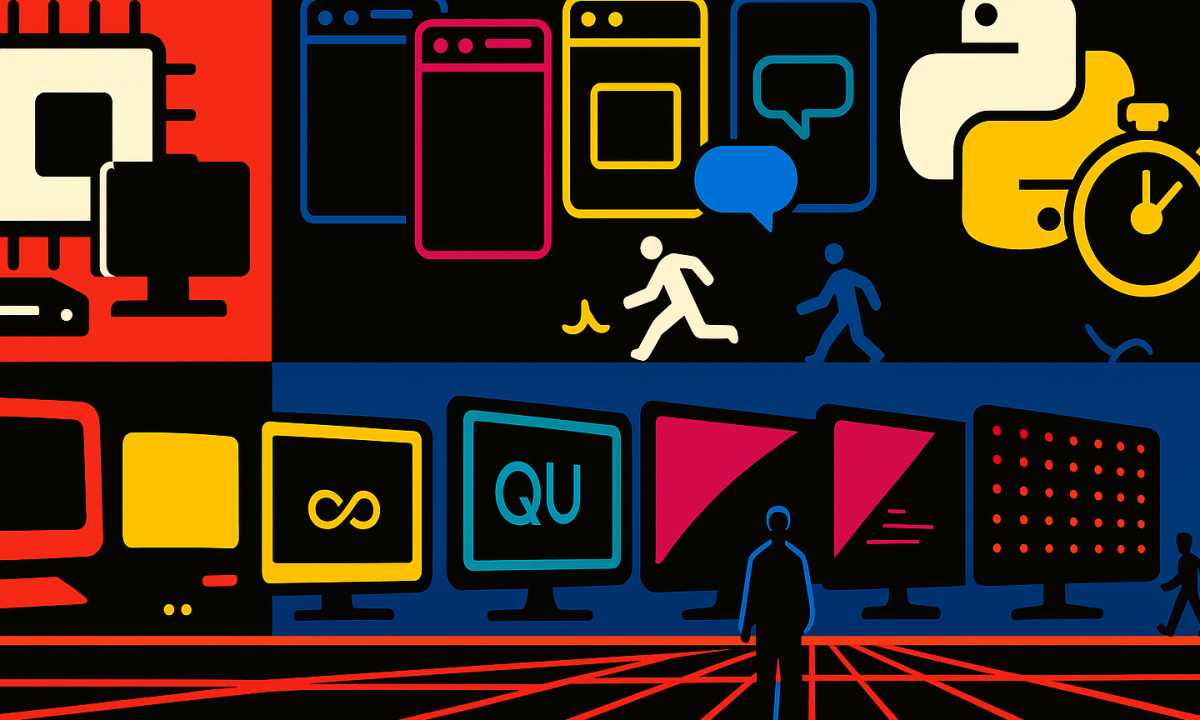
Another week full of interesting things to share with a twist down the memory lane. We’ll be marvelling at how John Hennessy’s humble MIPS project rocked the CISC world with its lean, pipelined R2000 cores, powering everything from SGI workstations to PlayStations, only to crash, regroup around RISC-V and now eye a GlobalFoundries revival. Then it’s a flashback to 1998’s neon-lit portal frenzy, where Yahoo!, Excite and Lycos vied for your eyeballs until Google slipped in, Netscape threw open its browser, and the Web Standards Project rallied for sane design. Fast-forward to today’s OpenAI labs, where a Python monorepo on Azure and a seven-week Codex sprint prove that real breakthroughs thrive on messy Slack pings and serendipitous pivots. Meanwhile, display tech has danced from the warm hum of CRT phosphors through liquid-crystal twists and quantum-dot glow to OLED’s perfect blacks and the Micro-LED promise, each evolution a lesson in co-optimized materials and circuits. And through it all, Gibson’s Neuromancer reminds us that our neon-soaked, AI-driven worlds still mirror his gritty “Matrix,” where algorithmic power and human agency collide on every screen.
In this issue
5 piecesMIPS began in 1981 as John Hennessy’s Stanford project on Reduced Instruction Set Computing and commercialised in 1984 with the R2000
, followed by the successful R3000 and 64-bit R4000 series. Its simple, high-performance cores powered SGI workstations, DEC systems, the Sony PlayStation, and countless embedded devices through a thriving licensing model. After turbulent ownership changes and bankruptcy, MIPS refocused on the open-source RISC-V standard in 2021, launching the Atlas family of real-time and AI-edge cores. In July 2025, GlobalFoundries agreed to acquire MIPS to integrate its IP with GF’s process technologies, positioning MIPS as a standalone IP unit targeting automotive, industrial, and datacenter markets.
I’ve always admired MIPS as the underdog that dared to challenge CISC orthodoxy. It’s the architecture that showed me the power of elegant design, simplicity that scales. Watching it ebb through SGI buyouts, bankruptcy, and now a RISC-V renaissance feels like cheering for your favourite indie band finally headlining Wembley. So, this journey, I think, it encapsulates the evolution of processor architecture from academic curiosity to commercial IP powerhouse. The R2000 through R4000 series pioneered deep pipelining and hardware implemented interlocks, setting benchmarks for performance-per-gate that still inform modern microarchitecture. GlobalFoundries’ integration of MIPS IP into its 22nm and 12nm platforms could yield optimized silicon stacks, reducing design cycle time through co-optimization of process and architecture. We'll see...
Sooo... 1998 marked the height of the dot-com boom, with portals like Yahoo!, MSN, Excite and Lycos battling for attention through aggressive advertising

Sooo... 1998 marked the height of the dot-com boom, with portals like Yahoo!, MSN, Excite and Lycos battling for attention through aggressive advertising. Netscape, losing ground to Internet Explorer, open-sourced its Communicator suite in January, while Amazon diversified into CDs and major IPOs by GeoCities and eBay signalled investor fever. Google filed for incorporation in September, laying groundwork for a seismic shift in search. Web technology matured as CSS2, XML and the DOM standards finalized in 1998, and advocates led by Jeffrey Veen and Jeffrey Zeldman pushed “form follows function” design. The Web Standards Project launched in August to combat browser incompatibility. By year’s end, Microsoft’s bundling of IE won the browser war, and portals began ceding ground to search-centric models.
Looking back at 1998 feels like rifling through a mixtape of neon-lit homepages and dial-up screeches - who never?! There’s a kind of romantic chaos in the portal wars, everybody shouting, “Pick me, pick me!”, only to watch Google creep in quietly and swat the competition aside. It's like that in tech, flash often trumps substance…until it doesn’t. So, what began as a frenzied land grab among portals quickly yielded to the efficiencies of algorithmic search, underscoring the limits of vertically integrated directory models. Netscape’s decision to open-source its flagship browser marked both an admission of defeat and a strategic recalibration toward community-driven development. Meanwhile, Amazon’s foray into music retail demonstrated the value and risk of aggressive expansion amid mounting losses. Then we can't forget the regulators antitrust challenge to Microsoft’s browser bundling, which highlighted the tension between market consolidation and innovation. As the internet moved from novelty to necessity, 1998 set enduring precedents for platform dominance, open-source collaboration and the primacy of search economics. Those were the days :)
Calvin French-Owen joined OpenAI in May 2024 and left in early July 2025 , offering a firsthand look at a rapidly scaling research lab turned consumer-tech powerhous
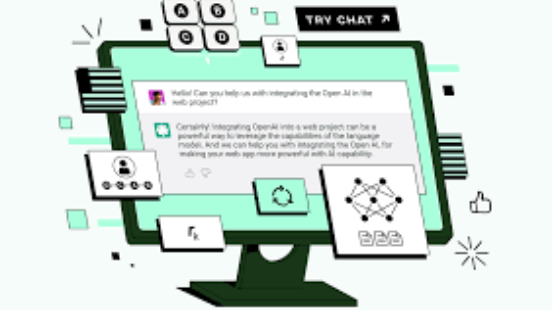
e. He describes a bottoms-up, meritocratic culture driven by Slack, rapid pivots, and a commitment to open access and safety He dives into engineering realities: a monolithic Python-centric codebase in Azure, rapid team fluidity, and the seven-week sprint to launch Codex. He highlights challenges of scale, from CI fragility to GPU cost math, and celebrates OpenAI’s ethos of distributing AI benefits broadly.
So, the reliance on a Python monorepo and Azure services reflects strategic trade-offs between developer velocity and operational robustness. The meritocratic, bottoms-up research model accelerates proof-of-concepts but raises questions about codebase cohesion as teams duplicate libraries. The rapid Codex launch exemplifies engineering prowess: integrating custom container runtimes, fine-tuned models, and novel API surfaces in seven weeks is a testament to streamlined workflows. Yet sustaining this pace demands tooling improvements, automated CI, unified style guides, and scalable GPU-math forecasting. For engineers and architects, OpenAI’s experience offers a case study in aligning infrastructure design with hyper-agile product cycles in AI development. Breakthroughs don’t come from pristine plans but from messy sprints, serendipitous Slack pings, and people empowered to just get stuff done. Here’s to cherishing the chaos that fuels real innovation.
Dan Hollick traces the evolution of digital displays from bulky cathode-ray tubes to cutting-edge micro-LEDs.
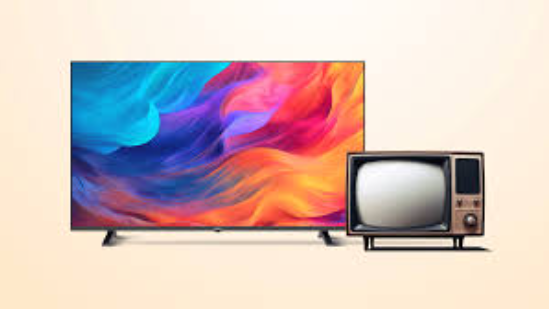
He explains how CRTs use electron guns to excite red, green, and blue phosphors line by line, and how early vector displays bypassed pixel grids for specialized applications. Transitioning to flat panels, Hollick details liquid-crystal displays: backlit panels whose polarized light passes through voltage-controlled crystals and colour filters, with variants like TN, IPS, and VA optimized for cost, viewing angle, or contrast. He then covers quantum-dot backlights for higher brightness and efficiency, self-emissive OLEDs with perfect blacks, tandem-OLED stacks for boosted luminance, and Micro-LEDs promising long life and unrivalled contrast. Hollick positions this as the first in a series on software-adjacent hardware fundamentals.
There’s something endlessly charming about old CRTs, those cathode-ray behemoths with flickering phosphors and the reassuring hum of the electron gun. This article is like understanding how every display is a delicate dance between light and control: crystals twisting, quantum dots glowing, and organic molecules fighting entropy - very poetic, I know! The shift from electron-beam-scanned CRTs to voltage-modulated liquid crystals shows how semiconductor scaling enabled pixel-level control. The quantum-dot enhancements illustrate nanotechnology’s role in spectral efficiency, whilst OLED architectures and emerging Micro-LED arrays reflect co-optimization of device physics and fabrication methods. For engineers, the critical takeaway is the importance of end-to-end system design, balancing optical stack complexity, driving electronics, and thermal management, to push display performance forward. As Hollick positions this chapter within a broader series, his approach models how hardware fundamentals inform software optimization in next-generation computing platforms.
Reading Neuromancer for the first time in 2025 ; the reviewer is struck by how shockingly prescient Gibson’s vision of artificial intelligence and networked worlds remains, describing the AI constructs as “downright uncanny” in light of today’s AI debates.

It praises Gibson’s terse, fragmented prose for evoking a gritty, corporate-dominated dystopia that laid the groundwork for the cyberpunk genre. But also acknowledge the novel’s period quirks, archaic computer lore, 1980s pop-cultural references, and the occasional narrative obscurity, as endearing artifacts that highlight the gulf between Gibson’s imagined “Matrix” and our current metaverse experiments. Ultimately, it affirms Neuromancer’s status as a foundational work that still challenges and inspires new readers.
Gibson’s world is equal parts neon-lit alleyway and cold server room, where the hum of data traffic is as alive as any street fight. I kept pausing to marvel at how an idea born in the Reagan era nails today’s AI anxieties, then chuckling at the relics of rotary-dial dreams. His portrayal of a decentralized “Matrix” prefigures the challenges facing regulators as they grapple with platform monopolies and AI’s opacity. While some technical details have aged, the broader themes; power structures mediated by code, the fragility of human agency in data-driven ecosystems, remain sharply relevant. It feels like technological leaps may outpace our ethical and institutional frameworks, demanding vigilance as we architect the next frontier of digital governance.
Last Week in AI
- OpenAI goes for Microsoft’s jugular — its Office productivity suite | computerworld.com
- Context Rot: How Increasing Input Tokens Impacts LLM Performance | research.trychroma.com
- The Open-Source Toolkit for Building AI Agents v2 | aitidbits.ai
- The upcoming GPT-3 moment for RL | mechanize.work
- Meta Superintelligence – Leadership Compute, Talent, and Data | semianalysis.com
- OpenAI’s Windsurf deal is off — and Windsurf’s CEO is going to Google | theverge.com