Read Before Monday
From the
Archive
#86 2 Nov 2025
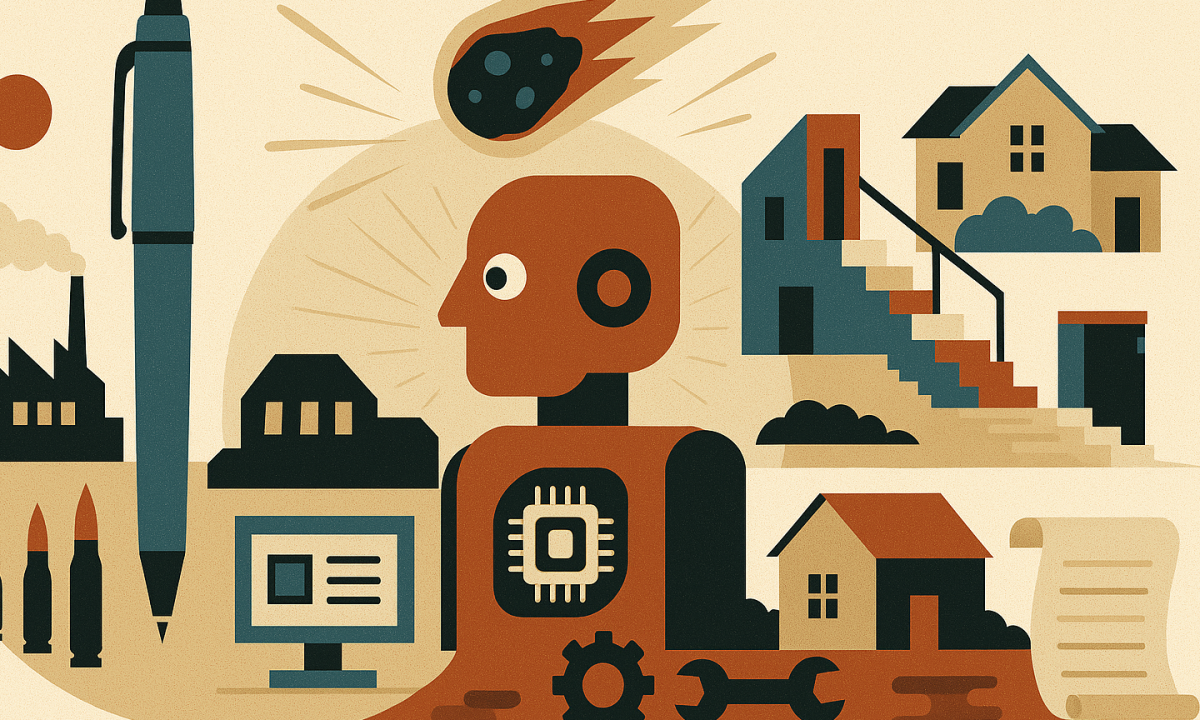
Welcome to November! This week is about biros to bots (I know, weird! where reliability, incentives, and governance decide who wins. Starting with how the ballpoint triumphed not for cleverness alone but because wartime demand de-risked it, process engineering made it boringly dependable, and scale murdered cost. Then today’s AI plays rhyme: Microsoft–OpenAI’s refreshed pact is partnership theatre with sharp edges (API exclusivity, long IP tails), so build portability, price exit ramps, and assume Azure gravity. In real estate, synthetic walk-throughs and “stairs to nowhere” shift savings to sellers and verification costs to buyers; label edits, show originals, and set MLS-level guardrails or watch trust evaporate. Have you heard about the Deloitte AI episode? It shows what happens when cheap drafts outrun provenance. Finally, the ancients had a core method: small observations, hard constraints, public tests. Translate that to now; engineer away failure modes, design for manufacturability, disclose modifications, verify sources, then scale.

#85 26 Oct 2025
Lots of great stuff this week to catch up with! First of all, welcome to the new subscribers to the #RBM weekly newsletter! Deep diving into this edition: Microsoft’s Copilot Mode in Edge screams “agents-in-the-browser,” and Satya’s “SaaS is going to die” line is starting to look prescient; we’re looping back to net PCs with a browser, only now they’ve got AI. I’d wager we’ll see a unified agent platform across Teams, Microsoft 365 and Edge soon; the scaffolding (Agent framework, Power Platform, Copilot Studio) is already peeking through. Elsewhere, a superb OS/2 display-driver history is a reminder that smart architecture beats heroics - start generic, optimise surgically. On energy, second-life EV batteries look like “don’t tear down, translate and deploy,” with the economics to prove or disprove. Then Biomed delivered cautious excitement with a retina implant enabling functional, if coarse, vision. And sleep science says transitions matter; design for the in-between, not just the endpoints.
#84 19 Oct 2025
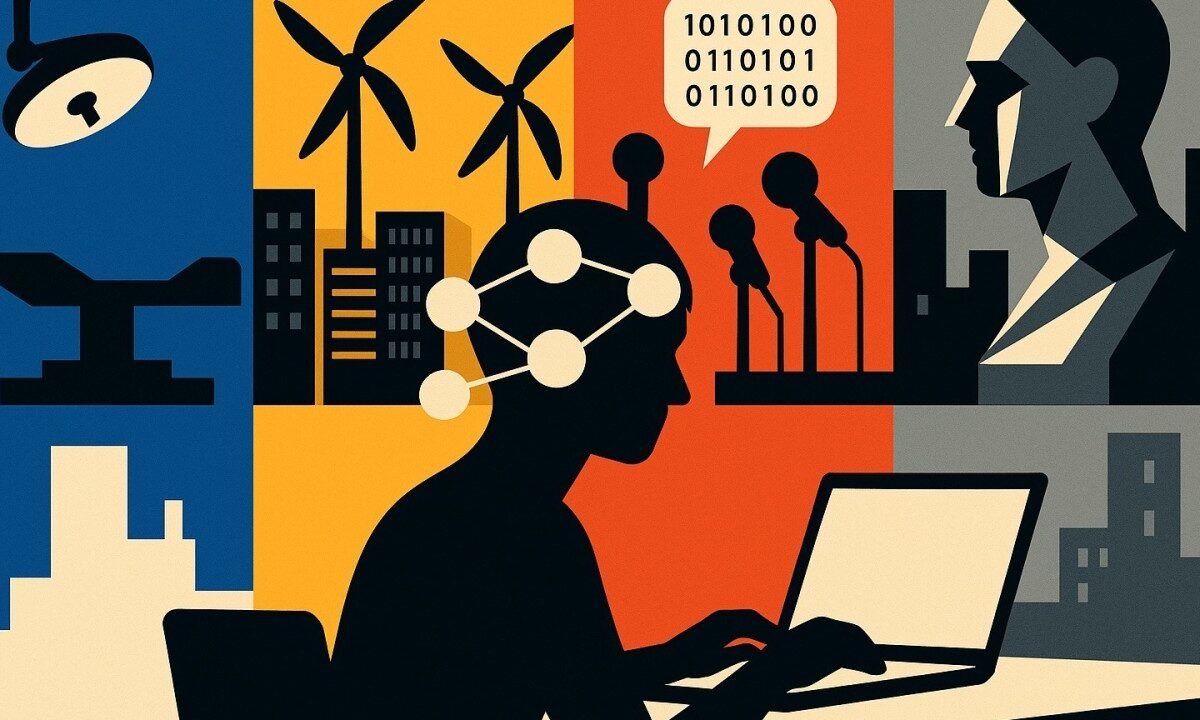
This week was busy with a big event at Hitachi EMEA where we presented our HARC Agents and then I wrote a blog article about agentic skills launched by Anthropic. But elsewhere, where’s the resume of this week interesting stuff to read: a scalpel-sharp dispatch from the operating theatre where Donna Vatnick trails a donor liver from midnight procurement to dawn rebirth, stitching together medicine’s craft with policy’s messy trade-offs; Felix Stocker’s candid field note on “talent” that nudges us to pick games our wiring can actually win; a Wall Street Journal reality check on AI’s compute hunger outpacing America’s wires, pushing data centres into a duct-taped “bring your own power” era of turbines, fuel cells and contingency planning; Bruce Schneier’s sober map of political actors arming up with AI - from fundraisers to citizen bots - while regulation naps; and John Messerly’s crisp Frankfurt refresher reminding us that confident ignorance corrodes faster than lies, so organisations need truth-first habits before the volume knob goes to eleven.

#83 12 Oct 2025
This week felt like one big lesson in engineered environments. We start with Atlas Obscura’s Irv Teibel, who couldn’t capture the sea he heard, so he built one and sold calm at scale. How about beavers, oysters, and mangroves as real infrastructure that works? Maybe if we industrialise deployment and finance... Then, Gregory Gundersen reminds me LLMs aren’t a rupture but compounded traditions, so plan around evaluation, safety, and data. Also, Lea Verou nails UX as effort economics: kill “usability cliffs” and push complexity inward. We end with Geoff Huston, that meanwhile, shows Starlink breaking country-centric geolocation, turning certain dashboards into fiction. Threaded together: design the environment and you shape behaviour; ignore the bill and it arrives later as authenticity debates, procurement friction, governance gaps, UX debt, or broken KPIs.

#82 5 Oct 2025
Another week and welcome to October! The past week I wrote about TimeSeries, but focused on a new project that aims to integrate medical data and text-to-timeseries. Also, I published my view on MCP security and AI-first CxO’s. Worth reading :) But with this #RBM edition, across all five pieces, the pattern is the same: progress follows distribution, not invention. Whether it was 1977’s “Trinity” turning computers into consumer goods, early email systems doubling as proto-AI interfaces, or modern hiring shifting from degrees to durability, the through-line is context beating complexity. The same logic applies to cataract surgery and robotics; mature tech still constrained by access and practicality. So, real impact happens when design meets delivery, when logistics outthink hype. In every field, the work that lasts isn’t the flashiest - it’s the work that reaches people.

#81 28 Sep 2025
Welcome to another edition! We’ll start at Silicon Valley’s romance with dissent looks spent: Steven Levy charts a turn from ideals to transactional politics, where regulatory favours trump principle. Meanwhile, OpenAI’s own data says the real action in AI isn’t wizardry but workaday help; answers, decisions, better drafts... useful, yes, but only if accuracy keeps pace. Then, down at the metal, an Embedded piece reminds us identity beats integrity: if your device leaks keys, the cloud can’t tell real from clone. Also, Blaise Agüera y Arcas pushes the lens wider, treating life as computation and pointing to resilient patterns - local rules, noisy parts, global order. And finally, Quanta’s knot story kills a comforting assumption: complexity doesn’t add up neatly; composition can undercut intuition.
What you need to read before your busy Monday, published every Sunday
Read Before Monday is a weekly newsletter from Vitor Domingos - with a handful of articles, essays and oddities collected over the week, annotated with a short opinion, and sent before Monday morning.
No breaking news. No ten-thousand-word think pieces. No affiliate links. Just a small, curated and considered list of things worth sitting with.
The next issue lands Sunday evening.
One email a week. No tracking. No ads. Totally free. You can leave any time.