
Lots of great stuff this week to catch up with! First of all, welcome to the new subscribers to the #RBM weekly newsletter! Deep diving into this edition: Microsoft’s Copilot Mode in Edge screams “agents-in-the-browser,” and Satya’s “SaaS is going to die” line is starting to look prescient; we’re looping back to net PCs with a browser, only now they’ve got AI. I’d wager we’ll see a unified agent platform across Teams, Microsoft 365 and Edge soon; the scaffolding (Agent framework, Power Platform, Copilot Studio) is already peeking through. Elsewhere, a superb OS/2 display-driver history is a reminder that smart architecture beats heroics – start generic, optimise surgically. On energy, second-life EV batteries look like “don’t tear down, translate and deploy,” with the economics to prove or disprove. Then Biomed delivered cautious excitement with a retina implant enabling functional, if coarse, vision. And sleep science says transitions matter; design for the in-between, not just the endpoints.
In this issue
5 piecesMicrosoft announces Copilot Mode in Edge as an “AI browser” experience that anticipates, assists, and accelerates tasks with user permission.

New capabilities include Copilot Actions driven by chat or voice to complete simple and complex tasks, and Journeys, which groups past browsing into topics and resumes projects. Copilot can optionally use browsing history for richer, more contextual responses. Microsoft emphasises user control, privacy protections, and clear visual cues whenever Copilot listens, views, or takes action.
Damn Microsoft, this is a smart direction! I’m biased toward tab-taming tools, I hoard tabs like receipts, so journeys lands. We might soon need to build agents for the browser; if Satya’s “SaaS is going to die” framing holds, the action shifts client-side. Outside context: Satya Nadella has argued the SaaS model will fade in an agentic era. We’re going full circle to low-end “net PCs” with a browser - only now they’ve got AI. The upside is fewer manual hops: say it once and let the agent drive. The downside is trust; history, email and bookings need hard boundaries. My guess? Within a month Microsoft launches a unified agent platform across Teams, O365 and Edge. Will people accept automation in the browser, not the OS? I’m cautiously in.
This article surveys the evolution of OS/2 display drivers from OS/2 1.x through Warp 4, anchoring the story in DDK samples and manuals.

It explains how early 16-bit assembler drivers mirrored Windows 2.x, then tracks the shift to a 32-bit Graphics Engine in OS/2 2.00.1/XR06055, the advent of SOFTDRAW in Warp 3, and the GRADD model in Warp 4. The author quantifies sample code sizes and documents IBM’s shifting driver references, while highlighting practical options for writing modern high-resolution drivers.
The architecture story matters. OS/2’s pivots from per-driver rasterisation to SOFTDRAW plus GRADD mirrors a classic consolidation: centralise complexity, expose narrow hooks, and stabilise behaviour. The measured benefit was maintainability and predictability; one software rasteriser, fewer vendor quirks, simpler Win-OS/2 coexistence. Then documentation drift (editions mislabelled, updates scattered) was an operational risk; engineering teams need a curated toolchain and pinned references. So, architectural minimalism: start generic, profile, then selectively hook blits/cursors; treat anything beyond 8-bit depth as a scoped project.
This conversation between David Roberts and Colin Campbell , CTO of Redwood Materials, about “second life” EV batteries providing grid-scale storage before eventual recycling is quite interesting
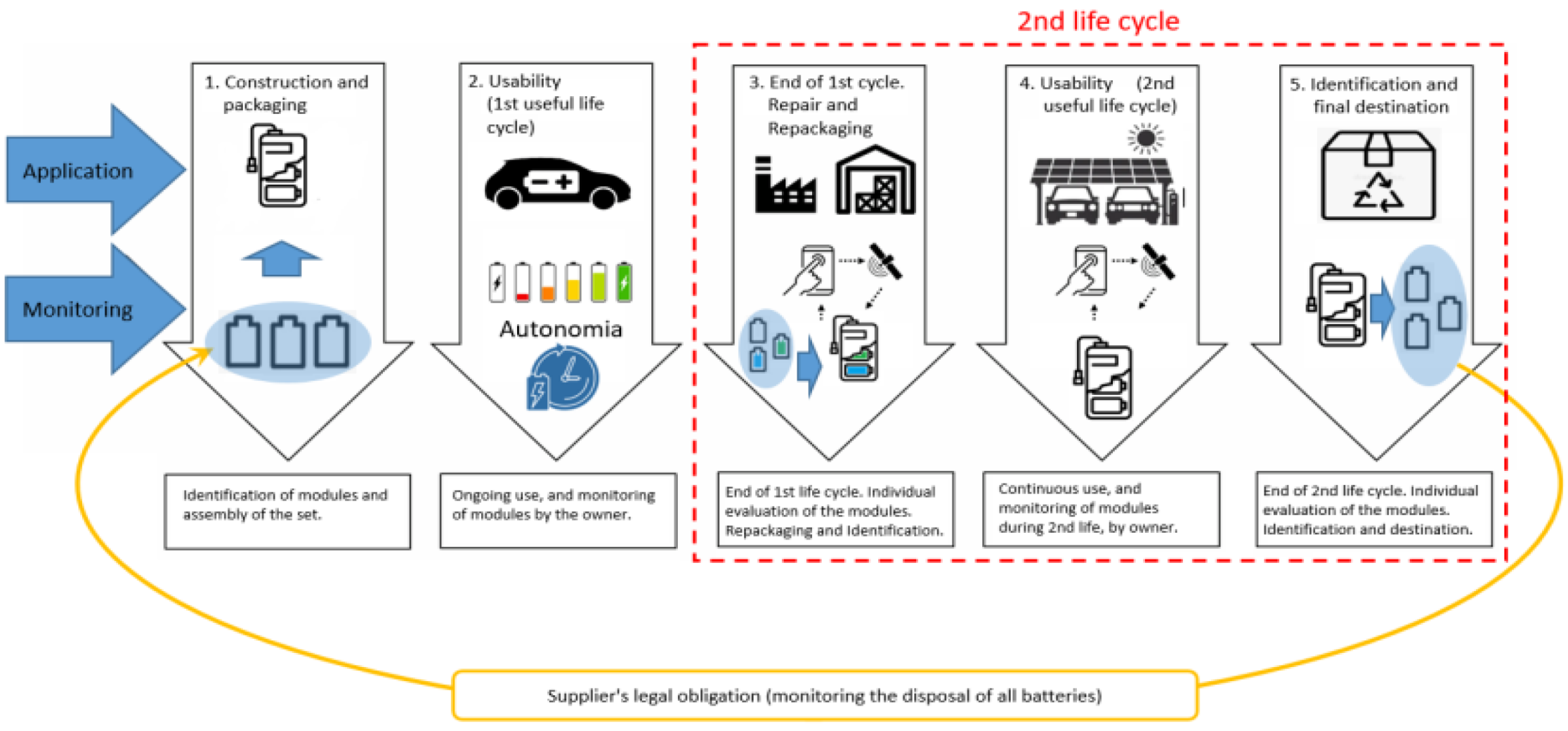
. Campbell says Redwood has formed a new division, Redwood Energy, and already built an off-grid site using 20 MW of solar and 63 MWh of used batteries to power two 1 MW data centres. A “universal translator” power-electronics box lets heterogeneous packs (200–900 V, multiple chemistries) operate together without disassembly, after a sub-minute accept/reject test. Their conversation is that EV packs are mechanically robust and that grid duty is comparatively gentle, enabling low-labour repurposing by keeping packs intact.
I’m bullish, with caveats. I love elegant reuse, my bias is squeezing value from “spent” kit, so keeping packs intact and letting a translator do the heavy lifting feels savvy. The big upside is labour avoidance: no teardown, faster throughput, fewer fiddly parts. The obvious downside is the missing maths; without LCOE and balance-of-plant costs, belief does the lifting. If I were running ops, I’d pilot behind-the-meter loads where interconnection pain is lower, then scale. One question: can they maintain pack data quality as volumes spike? Promising approach, now show the numbers ...
This MIT Technology Review piece reports on a new subretinal implant that, when paired with camera-equipped glasses, restores a form of “artificial vision” for people with advanced macular degeneration.
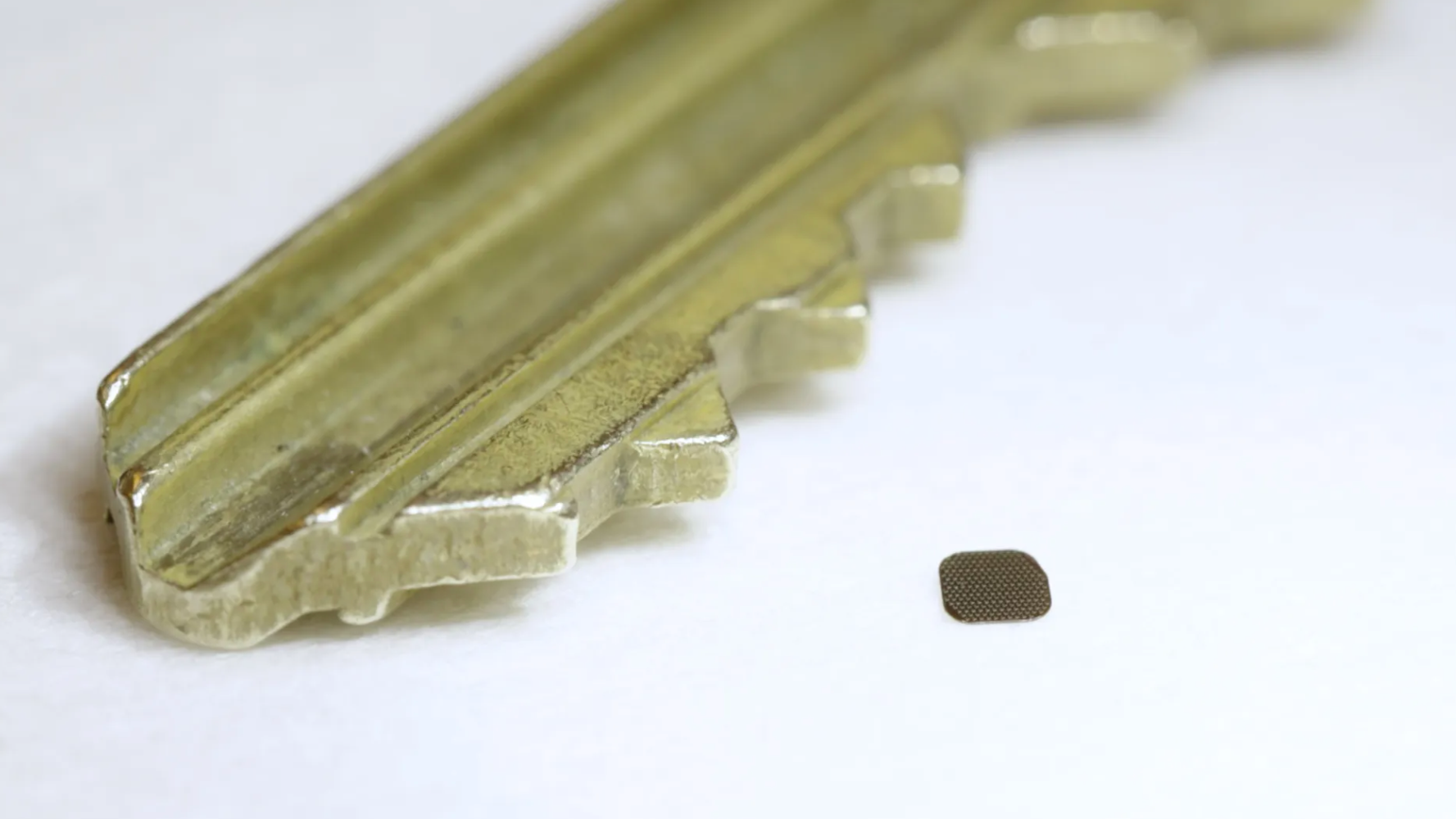
The system bypasses damaged photoreceptors by sending encoded signals to the retina, enabling some users to read text and even complete crossword puzzles. The article points to a peer-reviewed clinical report and frames the result as a step change for prosthetic vision. The story situates this advance within a decade of mixed outcomes for retinal prostheses, highlighting that the latest approach keeps most hardware in the eye minimal and shifts image processing to external wearables. It emphasises that results remain partial; vision is coarse and grayscale, but functionally meaningful for daily tasks.
This is a sensible split; tiny photovoltaic or electrode array in-eye, with image sensing and processing handled ex vivo. That reduces surgical complexity, eases iteration, and enables firmware upgrades without re-implantation. The technical risks are familiar, with information bottlenecks from low channel counts, limited contrast sensitivity, and the need for robust encoding pipelines tailored to prosthetic vision. Operationally, adoption hinges on a reproducible clinical protocol, accessible rehabilitation, and clear payer policies. Without quantified endpoints (reading speed, error rates, hours of effective daily use) and multi-year safety data, bankability for health systems remains tentative. The near-term best fit is tightly run centres with integrated low-vision services and research support; broader rollout will require standardised training curricula, device telemetry for remote support, and evidence that outcomes persist beyond controlled trials. Cautious, technically credible progress, but not turnkey yet.
Quanta surveys new research on the liminal states between wakefulness and sleep, arguing that transitions are gradual, not binary

. Drawing on EEG history from Loomis to modern staging, the piece describes how neurons synchronise as sleep begins, how subcortical arousal circuits quiet cortical areas, and how hypnagogic imagery emerges. Researchers including Laura Lewis, Adam Horowitz and Thomas Andrillon characterise these shifts; studies suggest creativity peaks when people are briefly held in N1 sleep, and that daytime experiences can surface in early hypnagogia.
The spectrum view of sleep makes convincing sense. Sleep transitions aren’t a switch, so we can design gentler hand-offs, but much here is early-stage and ripe for over interpretation. One question: will consumer wearables ever detect these fleeting states reliably? Cautious enthusiasm, useful narrative, promising leads. For clinical technology, the bottle-drop paradigm hints at new closed-loop designs: brief stimuli to sample near-sleep brain states without full arousal. Until specificity and sensitivity are pinned, treat transition targeting as exploratory adjuncts to established sleep staging, not replacements.
Last Week in AI
- New updates and more access to Google Earth AI | blog.google
- Anthropic's Claude Code Comes to Web and Mobile | thenewstack.io
- When trusted AI connections turn hostile | helpnetsecurity.com
- How Sam Altman Played Hollywood With OpenAI's Sora 2 | hollywoodreporter.com
- Codex is Live in Zed | zed.dev
- Nvidia unveils its vision for gigawatt 'AI factories' based on its Vera Rubin architecture | siliconangle.com