Read Before Monday
From the
Archive
#92 13 Dec 2025
2025 in Review for #RBMWelcome to the end of the year review for Read Before Monday! This is the last edition before the two weeks that I won’t be posting. So, here’s our year in recap :) If there’s one thing this year reinforced, it’s this: technology doesn’t fix systems. It exposes them. The ones that held up in 2025 weren’t the most advanced, they were the ones that remembered their constraints. Despite the pressure points, the year closed with something quietly reassuring: systems still respond to care, not hype, where constraints were understood, progress held and where people chose stewardship over speed, the future remained workable. See you in 2026 with year predictions!
#91 7 Dec 2025
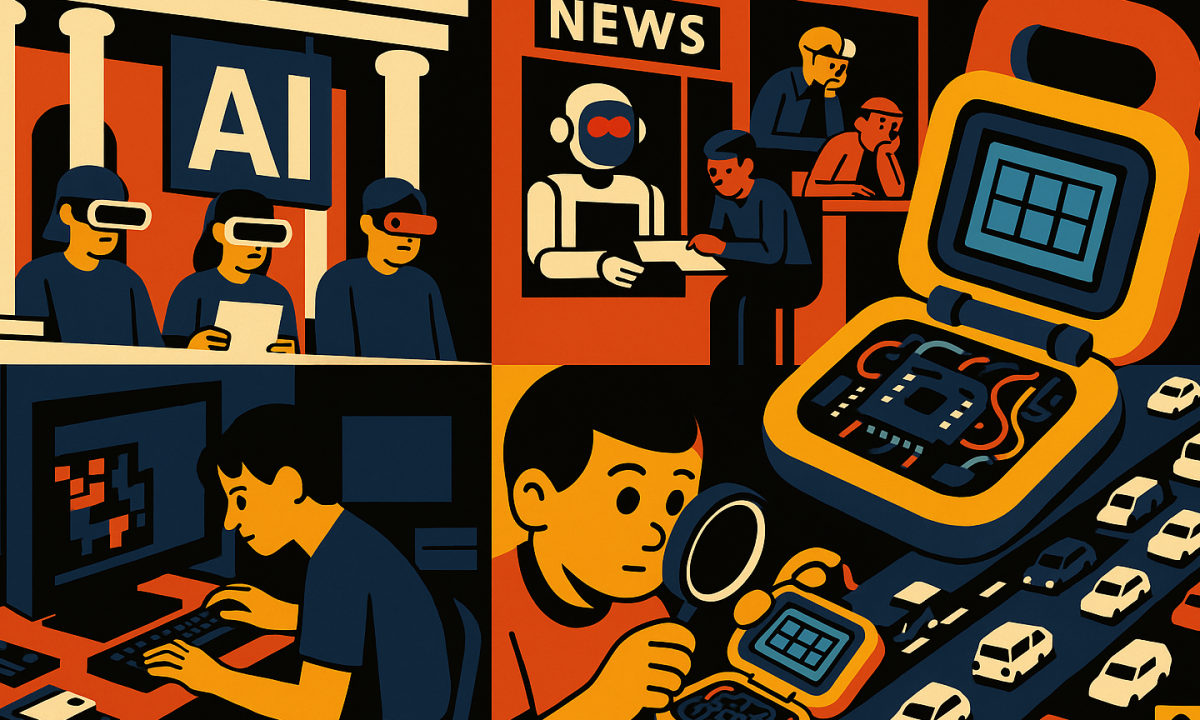
Ahhhh Xmas is just around the corner and that’s when #RBM stops for 2 weeks for balance :) So lets make the most out of the next 2 editions - which the next one is going to be a resume of the year and the final of the year will be my predictions for 2026. Anyway, for this week we have a lot to cover :) First we have an interview with Greg Kuperberg, which reminded me how much elegance you can wring from lousy hardware, hand-rolled assembly, video RAM tricks, and teenage grit producing PC classics that still feel crisp. Over on re/Palm, a Fisher-Price toy becomes a PalmOS 5 handheld through disciplined sleuthing, bus spelunking, tiny boot headers, and “ship what the pins allow” compromises. Meanwhile, higher education’s AI moment looks messy: budget cuts meet glossy licences, shortcuts masquerade as innovation, and the risk is credentials without competence. On the other side, newsrooms aren’t immune too, with UK journalists leaning on AI for the grunt work, but trust and governance lag, so adoption outpaces confidence. And finally, for anyone stuck in traffic during this season, a back-to-basics explainer lands the punchline: throughput, not speed, rules the road; lights and bottlenecks beat lane fantasies every time.

#90 30 Nov 2025
Edition #90 of the #RBM - wow! Anyway.. this week’s choice is very eclectic! We start with wealth that looks fat on paper but rests on thinning surplus energy; Morgan’s reminder that money is a claim, not the cake. Then swing to cities: Hughes shows how political economy, not planning poetry, locked-in low density and throttled growth. Zoom out to chips and the moat wars: SemiAnalysis has Google turning TPUs into a merchant system, pressuring CUDA’s rent with power-and-supply caveats. Meanwhile, “technical deflation” makes shipping cheaper tomorrow than today, which is great for fast followers, deadly for dithering... so architect for portability and sell like you mean it. And for anyone optimising kernels, that GPU primer nails the playbook: rooflines, fuse-or-tile, coalesced loads - mechanics that turn big talk into throughput. Scarcity, incentives, execution; same trilogy, five stories for you before Monday.

#89 23 Nov 2025
It’s been quite a busy week on this side, with lots of travelling for me, but managed to get some interesting articles for you! First lets start with Claude Code, showing what happens when you keep the scaffold thin and meet the model where it’s strongest; TypeScript/React/Ink, Yoga, Bun, then ship relentlessly; the result is eye-popping traction, tempered by enterprise questions on controls, auditability and endpoint risk. Staying with pragmatic engineering, Bluetooth Channel Sounding looks like BLE’s sober upgrade: PBR+RTT, more channels, real accuracy - so long as SNR, calibration and coexistence get adult supervision. Zooming out, Microsoft’s AI strategy reads as a 2024 pause that ceded ground followed by a hard pivot to vertical integration, compelling on paper, still bounded by power, permits and partner risk. In a different corner of the attention economy, The Telepathy Tapes reminds us why evidence - not vibes - should steer education and care: moving stories, weak methods, high stakes. And closing the loop on provenance, Anil Dash’s take on Atlas spotlights a browser that keeps users inside the garden; strong link-outs, clear modes and strict local boundaries could fix it, but the incentives point inward.

#88 16 Nov 2025
Welcome to another busy week! Across this week articles, I see the same playbook for building with intelligence and intent: anchor on human agency, then design systems that respect it. Lets start with Nietzsche, which sets the stakes: AI disturbs work, intimacy and norms, so leaders must pair human agency with governance that can actually bite. Then, the microcomputer history shows how usefulness really takes off when complements win; VisiCalc pulled Apple II into offices, so strategy should reward ecosystems, not hardware theatre. There’s a modularity essay that turns that lesson into method: start with a disciplined monolith, protect boundaries, and only distribute when non-functional needs force your hand. Koster’s framework adds the craft: design learnable uncertainty with tight feedback, vary situations, and treat loops as composable systems. Finally, the documentation piece tackles the knowledge plumbing: let AI draft and index, but make humans record intent, decisions and invariants, and gate releases on freshness.
#87 9 Nov 2025
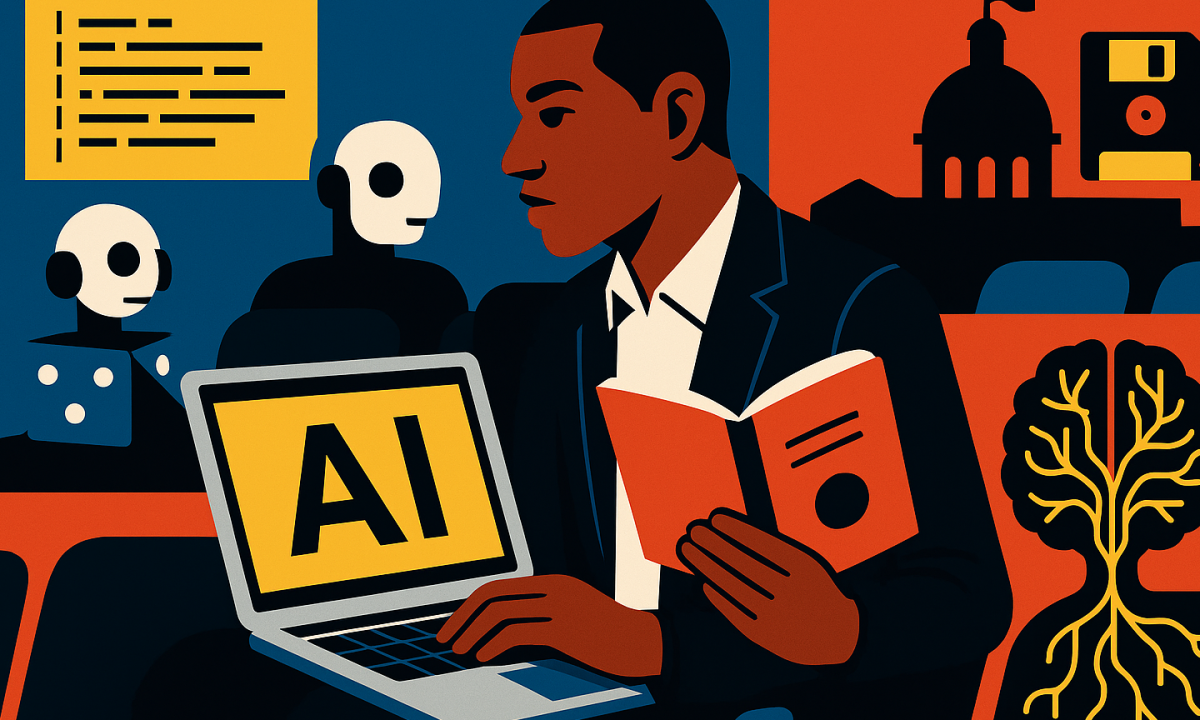
Busy week this one! I've been to the Lisbon AI Week to showcase some of Hitachi’s Agentic capabilities and we had some great conversations out there. Between sessions, I caught up on a few standout reads for you this week; one likened today’s AI rush to the internet’s dial-up years - chaotic but formative - arguing that real winners will be those who treat AI as a cost-curve shifter, chasing unmet demand rather than automating for its own sake. Another, stripped the hype from “agents” with a 15-line Python loop that does more to teach autonomy than any platform pitch; build your own, keep it narrow, own your loop. Then came a clever detour through Florence: the Medici as proto-venture capitalists turning wealth into legitimacy through patronage, a neat reminder that reputation compounds faster when tied to public good. We move then to the vintage hardware; deep dive on floppy disks scratched the engineer’s itch - formats, holes, notches, all mapped like an archaeological chart of data history. And finally, the Circulatronics paper from Nature, that wireless brain implants hitching rides on immune cells, proof that the line between systems design and biology is blurring fast.
What you need to read before your busy Monday, published every Sunday
Read Before Monday is a weekly newsletter from Vitor Domingos - with a handful of articles, essays and oddities collected over the week, annotated with a short opinion, and sent before Monday morning.
No breaking news. No ten-thousand-word think pieces. No affiliate links. Just a small, curated and considered list of things worth sitting with.
The next issue lands Sunday evening.
One email a week. No tracking. No ads. Totally free. You can leave any time.