It’s been quite a busy week on this side, with lots of travelling for me, but managed to get some interesting articles for you! First lets start with Claude Code, showing what happens when you keep the scaffold thin and meet the model where it’s strongest; TypeScript/React/Ink, Yoga, Bun, then ship relentlessly; the result is eye-popping traction, tempered by enterprise questions on controls, auditability and endpoint risk. Staying with pragmatic engineering, Bluetooth Channel Sounding looks like BLE’s sober upgrade: PBR+RTT, more channels, real accuracy – so long as SNR, calibration and coexistence get adult supervision. Zooming out, Microsoft’s AI strategy reads as a 2024 pause that ceded ground followed by a hard pivot to vertical integration, compelling on paper, still bounded by power, permits and partner risk. In a different corner of the attention economy, The Telepathy Tapes reminds us why evidence – not vibes – should steer education and care: moving stories, weak methods, high stakes. And closing the loop on provenance, Anil Dash’s take on Atlas spotlights a browser that keeps users inside the garden; strong link-outs, clear modes and strict local boundaries could fix it, but the incentives point inward.
In this issue
5 piecesThis Pragmatic Engineer profiles how Anthropic’s Claude Code was conceived, built, and iterated.
It reports the tool reached over $500M annualised run-rate after general availability in May, with usage growing more than 10× in three months. The origin story traces a CLI prototype by Boris Cherny, expanded after adding filesystem and batch command access. The article outlines a deliberately simple architecture: a lightweight shell exposing tools and UI hooks while the model does most of the work. Claude Code runs locally rather than in a VM, relying on a permission system with per-project, per-user, and company-level settings to gate risky actions. Engineering velocity is highlighted: ~60–100 internal releases per day, around five PRs per engineer daily, and near-daily external releases. Reported impact includes a 67% rise in PR throughput as headcount doubled.
This is a vendor play that optimises for developer throughput with minimal platform friction! Anthropic’s choices; TypeScript/React/Ink, Yoga, Bun, all reduce impedance with the model’s strengths and the npm distribution channel, but implicitly bias teams towards a JS/TS toolchain. I find the decision to run locally simplifies architecture and avoids cloud costs, yet shifts risk to endpoints; the permission tiers and static checks help, though enterprise buyers will ask about auditability, policy enforcement, and recovery. Netting out, Claude Code looks like a fast, console-native agent harness with credible traction; adoption at scale will hinge on controls, ecosystem fit, and proof that speed doesn’t erode reliability. Product overhang meets disciplined engineering - and it shows.
Embedded explains how Bluetooth Channel Sounding , introduced with Bluetooth Core Specification 6.0, is a higher-accuracy,
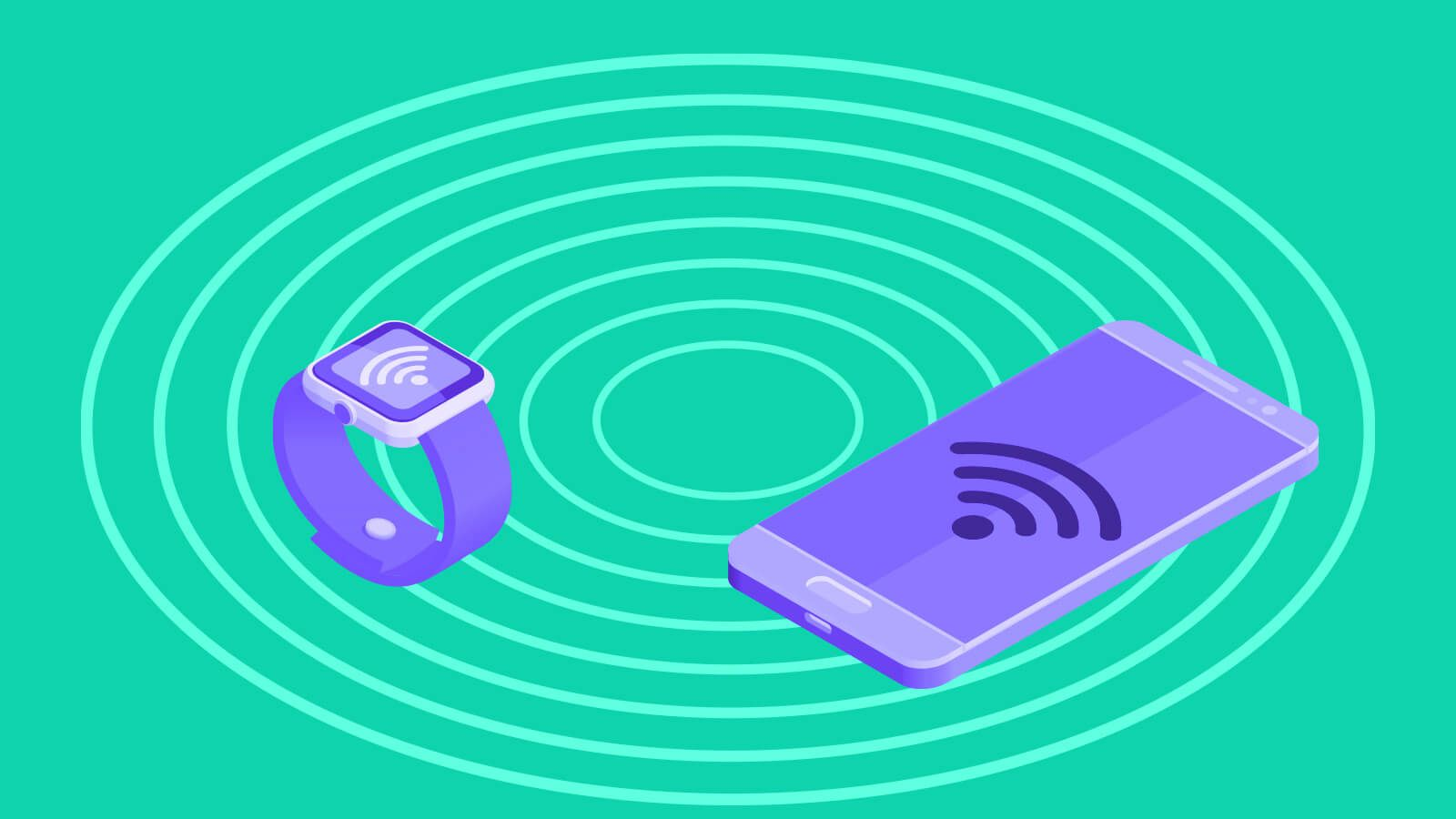
more secure method for distance measurement than traditional RSSI-based approaches. It describes two complementary techniques; phase-based ranging (PBR) and round-trip time (RTT), that estimate distance between an initiator and a reflector device. Channel Sounding extends operation to up to 72 channels at 1-MHz spacing in the 2.4-GHz band, improving robustness in multipath environments. Example applications include secure car entry and precise indoor localisation across warehouses and hospitals.
I appreciate the concreteness here: two physics-rooted methods, more channels, and a clear design sketch for AP automapping. It’s a sensible evolution beyond RSSI hand-waving. Still, the impressive ±20 cm claim lives or dies on SNR, calibration, and antenna care; easy to botch in busy warehouses and hospitals. The security angle is compelling; beating both PBR and RTT simultaneously isn’t trivial. I’d watch real deployments for coexistence headaches in 2.4-GHz and integration costs around new SoCs. Bottom line; it’s promising, practical, but no magic wand....
This article argues that Microsoft executed a sharp “pause” in AI infrastructure during 2024, slowing datacentre builds and tempering OpenAI commitments

, before reversing course in 2025. It says OpenAI diversified compute supply across Oracle, CoreWeave, Nscale, SB Energy, Amazon, and Google. The piece claims Microsoft has now resumed aggressive investment, helped by a newly announced OpenAI deal, and forecasts Azure growth acceleration using SemiAnalysis’s tokenomics model. The thesis: Microsoft aims for deeper vertical integration across chips, systems, cloud and applications. The report details the earlier buildout; Fairwater training clusters and vast campuses, then the halt, and renewed activity. The authors frame Microsoft’s goal as capturing more of the “AI Token Economic Stack.
Microsoft’s “pause” ceded supply to challengers just as model demand surged; the about-face reflects both competitive pressure and the economics of selling tokens at hyperscaler scale. Vertically integrating, from custom silicon to AI PaaS to apps, targets margin recapture now accruing to Nvidia and select lessors. Yet execution is bounded by infrastructure realities: multi-hundred-megawatt halls need stable grids, cooling, water rights, and community consent. Access to OpenAI chip IP offers leverage, but also concentrates vendor risk in a single research partner with diverging incentives. The tokenomics thesis for Azure growth is coherent, albeit model-driven. Ultimately, Microsoft’s returns hinge on synchronising capacity ramps, product attach, and pricing discipline faster than peers while avoiding stranded capex in a volatile demand cycle. If they execute, Microsoft regains narrative and margin; if not, they bankroll capacity for others. Gravity still wins - power, permits, and price.
Asterisk Mag examines the podcast The Telepathy Tapes , which claims some nonspeaking autistic people can telepathically communicate
. It recounts the show’s rise, briefly topping Spotify’s charts in early 2025, and its use of staged “tests” with letter boards, UNO cards, and off-screen word prompts. The article traces modern “Spelling” techniques, like Typing to Communicate, RPM, S2C, to their roots in Facilitated Communication (FC), reviewing decades of double-blind studies and case histories. It describes high-profile abuse allegations that collapsed under controlled testing, and explains the ideomotor effect as a mechanism for unintentional facilitator influence. They argue “Spelling” largely rebrands FC while keeping its core risks, note social media’s role in spreading persuasive clips, and contend the podcast appeals to broader anti-materialist, countercultural currents beyond autism advocacy.
What stuck with me is how hope, spectacle, and platform incentives tangle. This is empathetic to families yet unsparing on method, exactly what this topic needs. The FC history and ideomotor walkthrough are sobering; once you see board-nudging and cueing, you can’t unsee it. I do wish it paused on where rigorous, independent AAC does work, so readers don’t throw out the baby with the bathwater. As a read, it’s clear-eyed: faith makes good radio; evidence makes good practice. Tough medicine, well delivered.
Anil Dash critiques OpenAI’s Atlas as “anti-web”
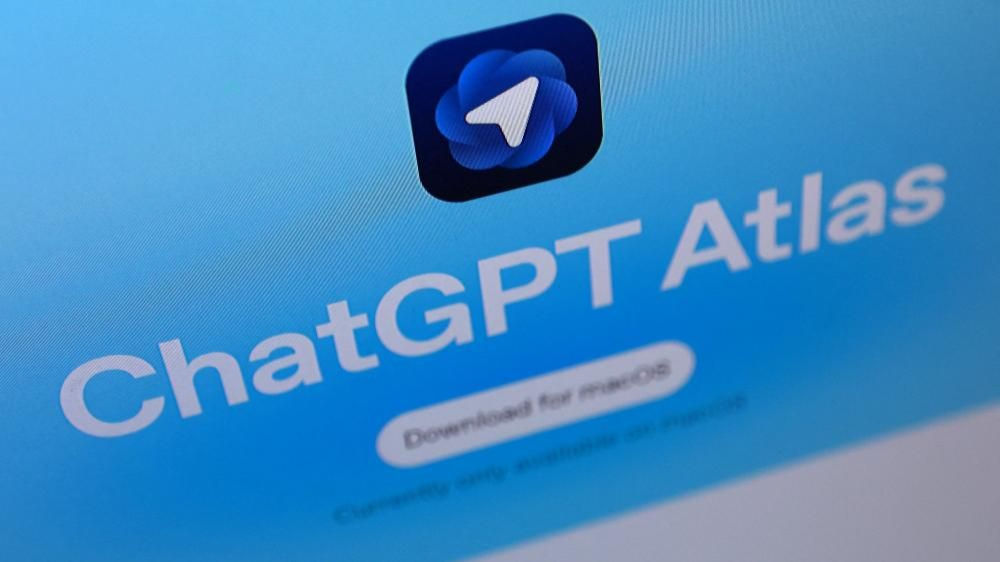
Anil Dash critiques OpenAI’s Atlas as “anti-web”: a browser that defaults to AI-generated pages which resemble web results but avoid linking out, keeping users inside a walled garden. He recounts a Taylor Swift query that surfaced summaries without linking to her site, and argues Atlas’s warning language obscures the substitution. He identifies three problems: AI output masquerading as the web, a command-line-like interface that sacrifices discoverability, and a data-hungry “agent” model that benefits the vendor more than users. Dash says Atlas nudges users to enable “memories” and “Ask ChatGPT,” allowing pervasive capture of browsing and document context; he calls this surveillance-adjacent and strategically useful as publishers block scraping. A flight-booking test shows brittle autonomy, changing dates despite precise instructions; a conventional search proved faster and correct.
I’m sympathetic to the core worry: a “browser” that doesn’t really browse is picking a fight with the web’s DNA. The Taylor Swift example is damning because it’s so basic, no link out? That’s not a rough edge; that’s a value choice. The agent pitch also feels upside-down: users ferrying data back to the model, not the other way around. Still, some of this could be first-version clunkiness. If Atlas adds strong outbound linking, clearer modes, and strict local-only controls, the heat would drop. Atlas captures intent and attenuates referral economics, disadvantaging publishers and severing the web’s incentive loop. Technically, Atlas could reconcile AI assistance with web principles: deterministic link surfaces, declared trust states, and strict on-device execution. Commercially, the temptation is to keep users inside the garden.
Last Week in AI
- Microsoft Agent 365: The control plane for AI agents | microsoft.com
- Microsoft, NVIDIA and Anthropic announce strategic partnerships | blogs.microsoft.com
- Control LLM Spend and Access with any-llm-gateway | blog.mozilla.ai
- Europe is scaling back its landmark privacy and AI laws | theverge.com
- How Google Pulled Off Its Stunning, Rapid-Fire AI Turnaround | bigtechnology.com
- The great AI buildout shows no sign of slowing | reuters.com