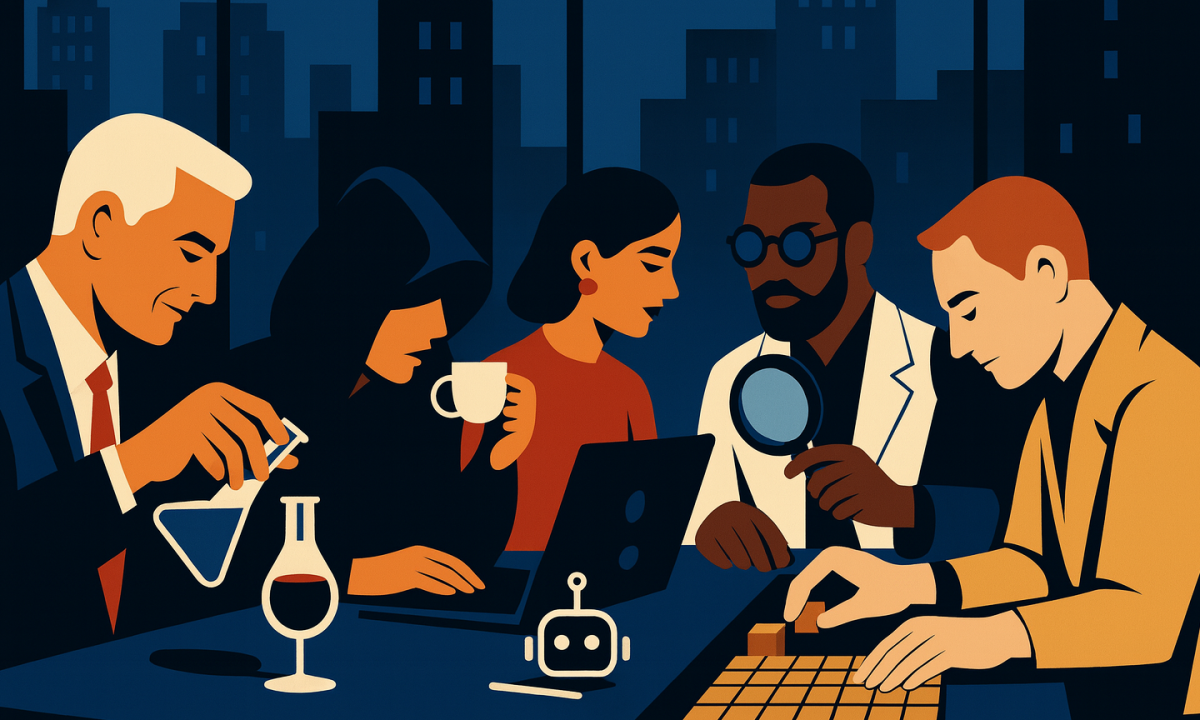
Manflu! That’s what I got at the end of this week! But this week’s stories could share a single table: Novartis in 2002, betting on an untested Harvard cardiologist to run R&D and birthing breakthrough drugs before market pressures reclaimed the wheel; Tor, born from Cold War military secrecy yet transformed into a shield for privacy; newsrooms embracing AI tools like FOIA bots and investigative algorithms that promise speed but risk eroding trust without human oversight; a product design world chasing only senior talent while quietly starving its own future; and, to end on a gentler note, Kilopixel; a six-year labour of love that flips 1,000 wooden cubes one by one, pixel art unfolding at a snail’s pace, reminding us that innovation can be as much about patience and play as about speed or profit.
In this issue
5 piecesIn 2002, Novartis’s CEO Daniel Vasella made an audacious move: he appointed Harvard cardiologist Mark Fishman, an academic with no pharma or business experience,
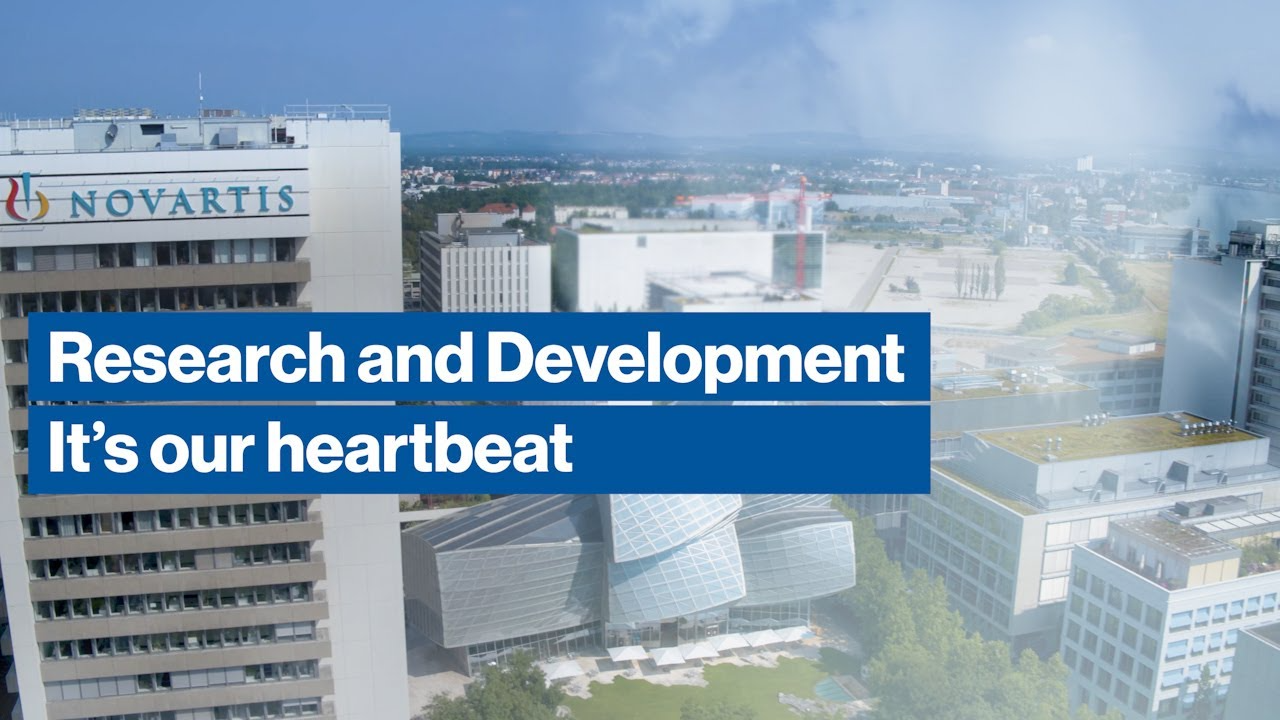
to helm the company’s drug discovery efforts and relocated its research headquarters from Basel to Cambridge, MA. Under Fishman’s leadership, the Novartis Institutes for Biomedical Research (NIBR) adopted a science-first approach - eschewing commercial pressures, focusing on mechanistic understanding and unmet medical needs, and delivering fast proof-of-concept trials in rare or extreme diseases. This strategy led to 65% of Novartis’s new drug approvals stemming from internal discovery, with blockbusters like Gleevec and Entresto delivering massive revenues.
I find this story deeply human. The kind where a daring CEO bets on an unorthodox academic to do something radical: trust curiosity over spreadsheets. Love it! That grit; the pursuit of genuine biological insight, delivered the drugs that changed lives. Breakthrough innovation demands placing bets on long-term scientific vision rather than near-term profitability. NIBR showed how a culture insulated from market pressures can yield outsized returns, validating the potential of patient capital. But the fall of NIBR illustrates how vulnerable such ventures are to shifting financial mandates. Organisations must balance the discipline of commercial rigor with protected zones of exploratory R&D, otherwise, they risk eroding their innovation engine altogether...
In The Secret History of Tor: How a Military Project Became a Lifeline for Privacy , Ben Collier explores the unlikely journey of To

r, from its origins as a U.S. Navy initiative during the Cold War to its transformation into a symbol of digital freedom. The piece highlights how libertarian hackers and military researchers forged an uneasy alliance, ultimately crafting a technology that reshaped how power, surveillance, and privacy intersect in the digital realm.
A network that began under the cloak of military protocols and now shields activists pushing back against those very powers - isn't all technology like that? Technology isn’t moral until we give it a soul, and in Tor’s case, a soul built from both paranoia and hope. This post tells of the same lesson as the previous article: innovation can emerge from unexpected collaborations, even among adversarial sectors. Tor demonstrates that technologies designed for control can evolve into instruments of empowerment, provided they are stewarded by communities with aligned values. For us, invested in privacy, dissent, or civic resilience, the imperative is to nurture such adaptive capacity, even when it arises in unlikely partnerships.
In this article , Axelrod explores how newsrooms are deploying retrieval‑augmented generation (RAG) tools to enhance accuracy and efficiency in journalism.
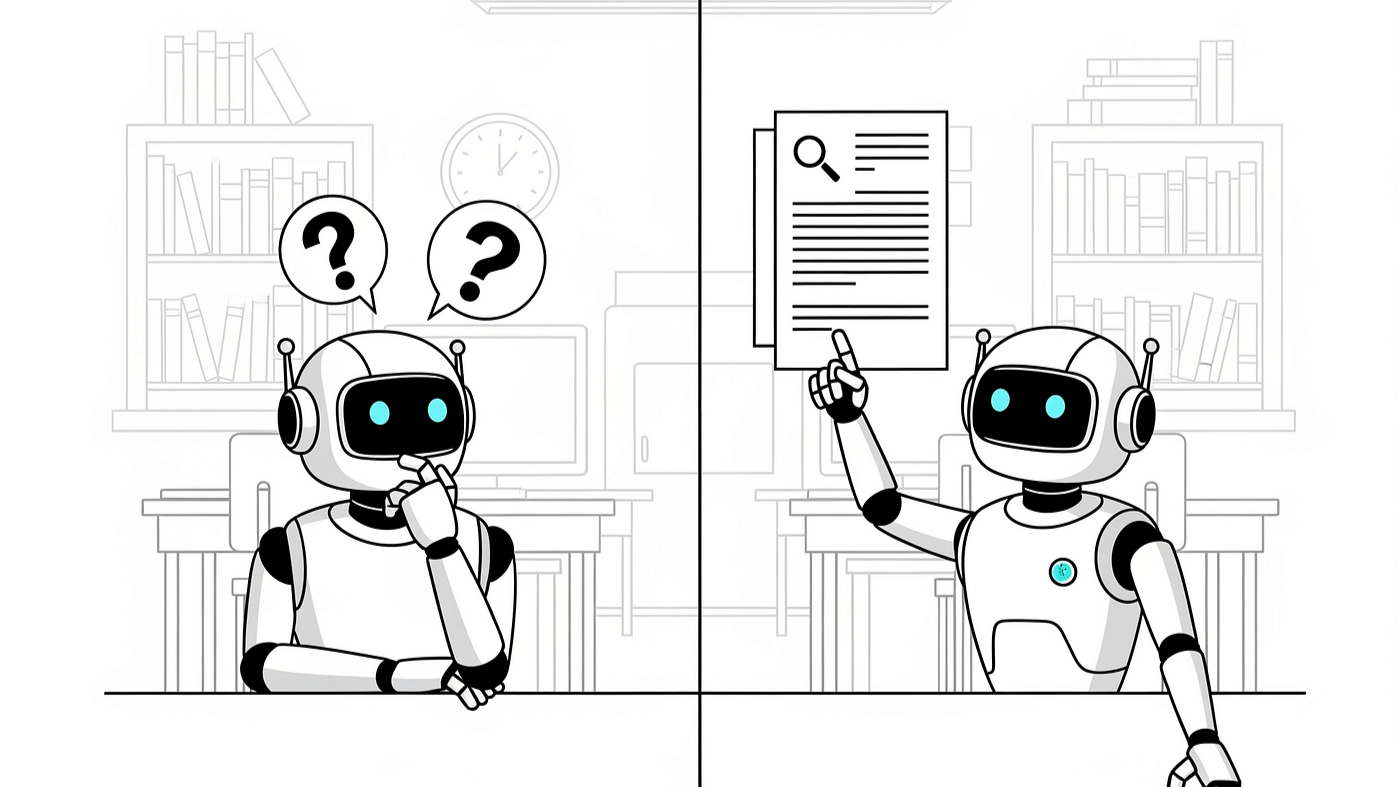
Examples include Verdens Gang’s FOIA Bot in Norway, which drafts legal responses in a fraction of the time it used to take, and iTromsø’s AI-assisted investigative work that helped uncover crucial public health stories by “smelling the data” in vast document troves. At the same time, concerns loom large: AI systems still hallucinate, struggle with nuanced language, and risk oversimplifying vital details through summarization. News organizations like the Financial Times and DPA are implementing guardrails, stress‑testing, and citation systems to maintain credibility. Yet skepticism persists, with technologists warning that unless users clearly understand AI’s reliability limits, these tools may threaten trust in journalism rather than reinforce it.
Reading this, I feel both excited and a little spooked. Yes, FOIA Bot sounds like the dream coworker for overwhelmed reporters, and discovering a four-second-review doctor via AI makes you smile at tech’s potential. But - just but - what if we’re leaning on AI until we forget how to spot the slips ourselves? This article highlights that pivotal shift: news organizations are wisely adopting RAG-based AI tools to enhance journalistic productivity and maintain accuracy under pressure. However, the key strategic takeaway is the need for balanced integration, embedding AI into workflows with clear guardrails, rigorous evaluation, and editorial oversight. Trust in journalism will hinge not on eliminating human judgment but on amplifying it responsibly through technology.
In recent years, product design has faced a worrying shift : companies are only hiring highly experienced “super ICs” (individual contributors) and neglecting junior roles.

For example, Airbnb, once famed for its design leadership, is currently hiring just one senior designer and demanding over a decade of experience. Over the past five years, demand for senior designers has surged, pushing required experience levels to around eight years on average - and even up to fifteen for some jobs. Meanwhile, entry-level postings in the U.S. have plummeted 43% since 2022. Of over 600 job listings studied, only 1% were internships and a mere 5% accepted two years or less of experience.
Matthew's analysis reveals a critical leadership imperative: orgs must balance short-term performance with sustainable capability development. The current talent crisis reflects a systemic failure in leadership decision-making; organizations optimize for immediate output but neglect long-term investment. Establishing structured apprenticeship programs, rotational roles, and mentorship-driven onboarding could reverse this decline. The result: fewer opportunities for mentorship and skill development, risking stagnation in the field. Addressing this crisis requires breaking such loops by reinvesting in the next generation of designers, drawing inspiration from other disciplines. Just as product innovation adapts to market demand, talent strategy must evolve to nurture the next generation, ensuring the field remains vibrant, resilient, and innovative.
Ben Holmen spent six years building Kilopixel , a whimsical yet deliberately inefficient display made from 1,000 wooden cubes arranged in a 40 × 25 grid
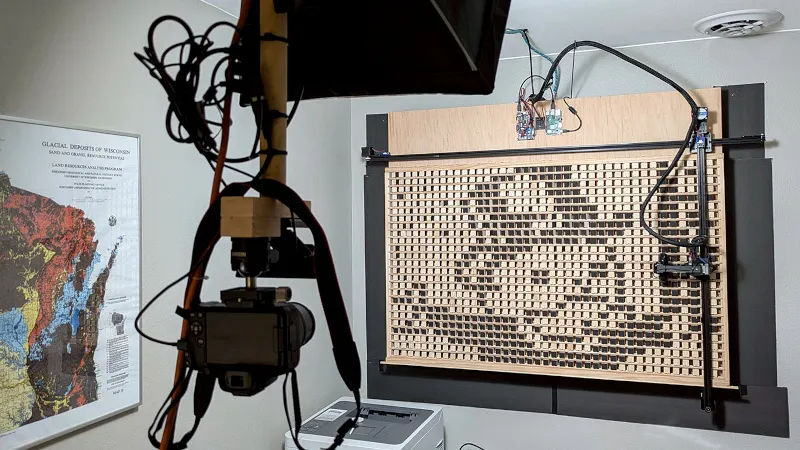
. Rather than updating millions of pixels per second, Kilopixel flips one block at a time - about ten pixel changes per minute - using a converted CNC machine controlled via G‑code, a Raspberry Pi, and a custom web interface. Users worldwide can submit and vote on pixel art, which appears gradually on the physical display, now accessible to interact with at.
Nothing like ending this week edition with something really cool! I love the joyful absurdity of Kilopixel; this gloriously slow, wood-flipping contraption that asks us to sit with creation, pixel by pixel. In our era of instant gratification, here’s something that makes you wait, but also watch. There’s a kind of magic in slowness, in making art that unfolds over time and invites human patience. It’s utterly ridiculous, and utterly wonderful.
Last Week in AI
- OpenAI's new open-source model is basically Phi-5 | seangoedecke.com
- The current state of LLM-driven development | blog.tolki.dev
- OpenAI launches GPT-5, nano, mini and Pro — not AGI, but capable of generating 'software-on-demand' | venturebeat.com
- Securing Agentic AI: How Semantic Prompt Injections Bypass AI Guardrails | developer.nvidia.com
- AI Agents and A-ready data top Gartner Hype-Cycle | electronicsweekly.com
- Google’s new AI model creates video game worlds in real time | theverge.com