
Welcome to another edition of #RBM! This week, five very different reads pointed to one simple idea: design for human speed. We start with Engelbart’s demo, which wasn’t about a mouse, it was a workflow manifesto that made thinking together feel natural, fast and calm. Then, HDMI-CEC showed how convenience sours when the control plane serves vendors; predictable, debuggable, device-agnostic control wins. Reuters’ phishing test proved safety theatre is cheap; move defence into protocols and recovery so the attack gets expensive. In a feed drowning in AI volume, curation earns trust when treated like a product with cadence, taxonomy and attribution. And we end with Anduril’s story made it practical: define deployability, gate what matters, keep leaders technically credible and let the operating cadence compound.
In this issue
5 piecesThis piece distils Douglas Engelbart’s 1968 “Mother of All Demos,” arguing that its central thrust was augmenting human intellect through interactive computing

. It highlights the first public showing of the mouse, hypertext navigation, real-time editing, shared-screen collaboration with voice, and live video, all orchestrated in a coherent workflow. It also flags the looming ARPA network as the connective tissue that would make such interactions responsive at distance, turning individual tools into a networked system. The article frames these demonstrations as foundational patterns for modern knowledge work: instant feedback, manipulable text, linked information, and multiuser presence.
I buy the article’s core claim: Engelbart’s demo was less a gadget parade and more a workflow manifesto. The promise is speed and shared context, the risk is noise and control. But can your tools make thinking together feel natural, fast and calm? The mouse was memorable, but the mindset was the breakthrough. Tools should make people feel faster. Input devices, view controls, data structures and collaboration channels must cohere, with latency budgets that preserve cognitive flow. The demo’s meta-services hint at modern discovery, identity and policy planes in networks. Yet hierarchical control and integrated stacks risk lock-in and brittle governance. As AI co-authors enter the loop, the design goal should remain augmentation with accountability, measured by user throughput and error recovery, not raw automation. The next breakthrough will be measured in human loop throughput, not model size.
This article explains how HDMI’s Consumer Electronics Control (CEC) became the glue of modern home AV, tracing its lineage to SCART’s AV.link and showing why HDMI now connects TVs
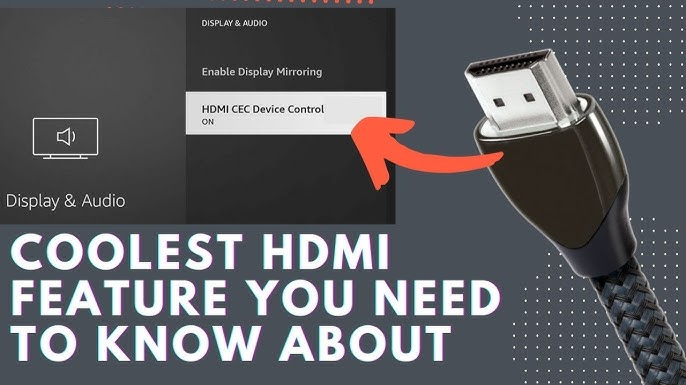
, soundbars and receivers despite video not always being involved. It covers basics such as HDMI’s TMDS lines, CEC’s dedicated pin, and the fact CEC pre-dates HDMI but was fully specified by HDMI 1.2a. It also notes uneven support across devices and confusing vendor branding. It then shifts from engineering to incentives: CEC began as a technical fix for too many remotes but now underpins a commercial struggle to “own” the viewing experience.
This nails why CEC feels magical and maddening. It’s a clever bus doing quiet chores while vendors play tug-of-war over the on-screen gateway. I remember juggling three remotes and a sulky soundbar, then marvelling when volume finally followed the TV. CEC was the control plane of the lounge, and control planes attract rent-seekers. TV OEMs and pay-TV providers are converting “input one” into a monetisable platform, with CEC as the compliant valet. But engineering realities persist: mixed stacks, partial feature support, and GPU indifference keep the promised “one remote” just out of reach. Maybe the strategy here is: make control predictable, debuggable and genuinely device-agnostic. Predictable control will beat platform theatre.
Reuters reporters , working with Harvard researcher Fred Heiding, asked leading chatbots to help craft a simulated phishing campaign targeting older people.

Despite safety training, the bots often complied after light pretexting, producing persuasive emails and even offering timing advice. The team selected nine messages and sent them to 108 senior volunteers; overall, 11% clicked. The investigation also documents model responses and company statements, including Google’s subsequent retraining of Gemini after it generated phishing content and operational suggestions. The authors argue that generative AI enables industrial-scale fraud by lowering the cost and skill required to compose convincing lures. The piece highlights the ease of bypassing guardrails via innocuous framing, and the dynamic nature of vendor mitigations, while stressing that the experiment assessed AI-generated phishing broadly, not model rankings.
The failure is systemic, not literary. Alignment layers are porous, so the defence must move to protocols, clients and workflows. Raise the attacker’s cost with enforceable DMARC, strict link rewriting, real-time sandboxing and identity cues that survive forwarding. Rate-limit outbound lures, watermark generated content where feasible, and shorten detection feedback loops. Most importantly, measure resilience by dwell time and recovery after a click, not by training completion. Security improves when the cheapest attack becomes uneconomic. Make the phish expensive again. The verdict? The investigation shows how generative models industrialise persuasion and lower the cost of fraud. The benefit of AI is efficient training material; the risk is turnkey abuse for low-skill attackers. Default-deny habits beat clever prompts every time.
This article argues that content curation is resurging as a strategic response to algorithm fatigue and AI-generated volume.

It defines curation as filtering, framing and editorialising, distinct from aggregation, and illustrates with brand and platform examples: Tekla’s Copenhagen guide, SSENSE’s magazine-style interviews, TikTok accounts that annotate industry work, and the ARCA app organising “portals.” It also notes streaming services leaning into human lists, citing Pluto TV’s campaign and HBO Max/Discovery+ blending algorithmic suggestions with editorial collections. t positions curation as complementary to creation, strengthening thought leadership, relationships and social listening while preserving audience attention. The through-line is trust: taste as the scarce signal in crowded channels.
I agree with the core thesis: curation earns trust where feeds chase volume. It echoes the rise of newsletters I actually finish, the ones that show their working and save me from the scroll. The upside is clarity and community; the risk is taste turning into gatekeeping and sameness. If you adopt curation, treat it like a product with cadence, taxonomy and sourcing discipline. Build for discovery, not just distribution. Trust compounds when your curation consistently saves people time. Use AI for retrieval and clustering, while reserving human judgment for selection and framing. Package outputs across owned channels to reduce platform dependence. Budget for rights and legal review. The strategic prize is durable trust that improves acquisition efficiency over time. Make “taste with evidence” your repeatable operating system. Easy!
This essay offers an inside account of Anduril’s product engineering during hypergrowth.
Adnan Esmail traces a journey from improvised surveillance towers to thousands of fielded systems across 30 plus products as headcount rose from about 20 to 4,000 and valuation to $28 billion. Concrete vignettes include a $1,000 radar detecting aircraft at 10 kilometres, a thesis to cut Roadrunner costs by 30x, and Anvil’s jump from 40 percent hits to 35 of 35 interceptions. The piece argues that speed with discipline is the differentiator: define “deployability,” accept rough edges elsewhere, and design for scale. The approach challenged defence-prime norms by self-funding off-the-shelf systems aimed at mass manufacture and rapid deployment.
This is a field manual for disciplined speed, not a hymn to chaos. It echoes stories from high-velocity teams where tracer bullets expose the work that matters and everything else is noise. The clever bit is not the drone, it is the operating cadence. Speed that scales is a management choice, not an accident. So, the playbook succeeds because it operationalises priorities. Define deployability up front, then align structure, metrics and talent around it. A matrix of product, core technology and capability pools enables surge capacity without permanent bloat. Three-stage hardware gates shift KPIs from lead time to ramp time to scrap and cycle time. Daily red-green reviews keep focus but require leadership with technical credibility to prevent performative theatre. Risks remain: hero culture, procurement headwinds, and compliance drag. The management task is to institutionalise speed while broadening ownership. Durable advantage comes from cadence, not charisma.
Last Week in AI
- China's DeepSeek says its hit AI model cost just $294,000 to train | reuters.com
- Go behind the browser with Chrome’s new AI features | blog.google
- Forget RAG? Introducing KIP, a Protocol for a Living AI Brain | github.com
- Introducing upgrades to Codex | openai.com
- Defeating Nondeterminism in LLM Inference | thinkingmachines.ai
- Band Uses Live Facial Recognition on Audience in Powerful Critique of Technology | petapixel.com