Read Before Monday
From the
Archive
#116 14 Jun 2026
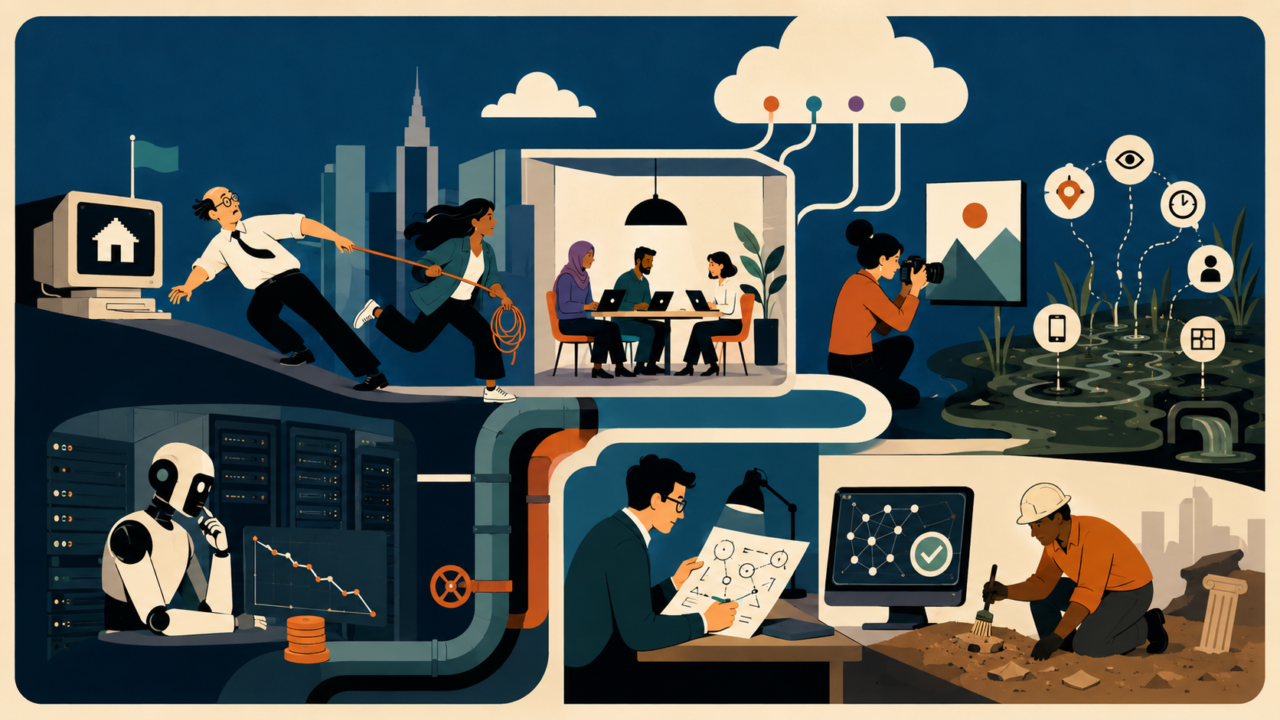
Welcome to another #RBM week, where a DEC Professional gets dragged onto the modern web with a hand-rolled SLIP stack, GeoCities is reclassified from design crime scene to early identity platform, JPEG Exif turns out to be the usual metadata swamp of leaky assumptions and hidden footguns, AI discovers that GPUs are less useful once the good training data cupboard starts looking bare, and Terence Tao’s proof-checking adventures suggest mathematics may be edging towards open-source collaboration with sterner compilers. So, sure, the future is still mostly plumbing, incentives and archaeology, just now with better TLS proxies and a larger cloud bill...
#115 7 Jun 2026
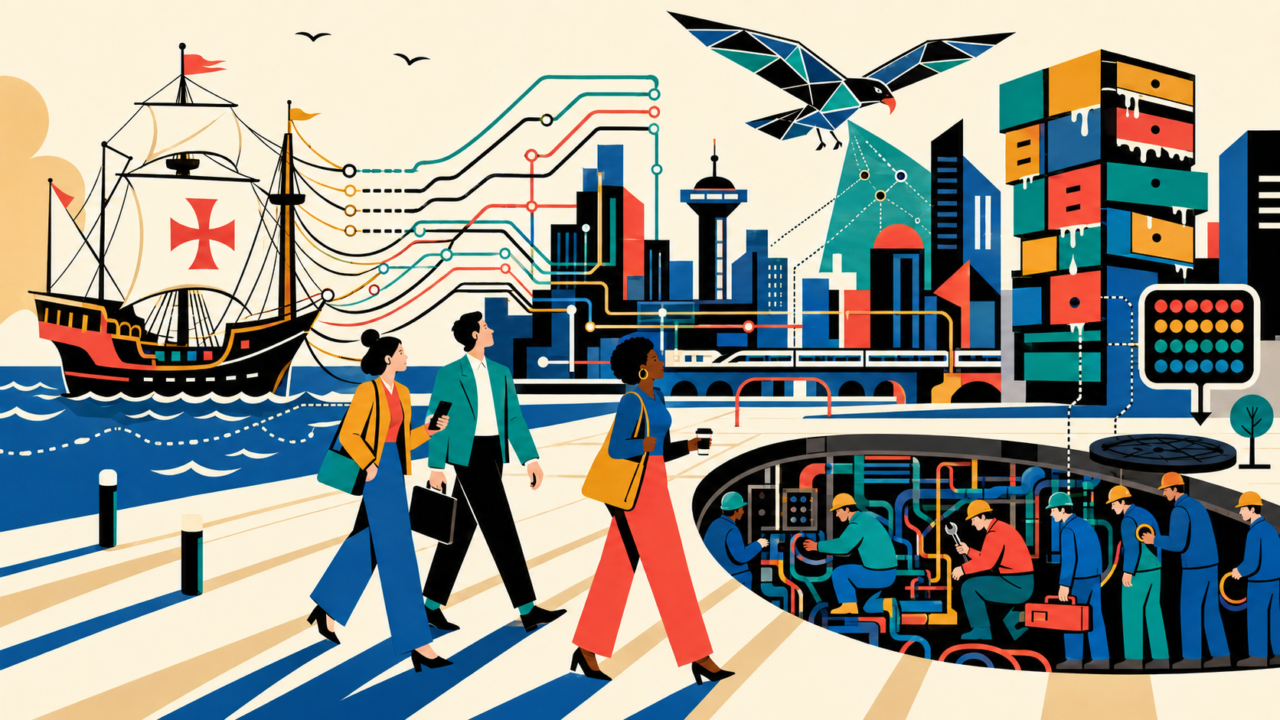
Another eclectic week, with a lot to discuss and read; like somewhere between Vasco da Gama, Win16 memory segments and Claude Mythos, humanity’s greatest talent is building a clever network and then acting surprised when it needs governance... So, this week we have Anthropic’s Project Glasswing pointing to real defensive leverage, but critical infrastructure turns model capability into governance debt fast; detection is glamorous, remediation is where optimism queues. The MIT Technology Review usefully punctures the AI jobs apocalypse by asking for labour-market proof, though lagging data can miss the quieter squeeze on junior roles and contractors. OS/2 Museum’s Win16 archaeology shows that clever abstractions always leak eventually, and developers inherit the ritual as “the API”. Alvaro Videla’s LLM arithmetic piece does the rare honest thing: it lowers the claim, separating readable internal structure from a dependable calculator. Finally, Crowley’s Vasco da Gama essay widens the frame: networks change the world, but they rarely arrive innocent.

#114 31 May 2026
What a tropical week here in London it was... and the reading list felt appropriately overheated. Where Microsoft’s early DOS source code showed that software history is really a record of constraints, not just invention. Then the Project Management piece made the obvious point sharper: AI won’t replace product judgement, but it will expose weak product work. “After Automation” pushed the argument further, suggesting that once execution becomes cheap, taste, framing and maintenance become the scarce skills. Ah, the Griffin iMate story, now that is a tiny hardware parable about hidden dependencies and fragile assumptions. And finally, Pope Leo XIV’s *Magnifica Humanitas* widened the frame: AI is not only an efficiency question, but a dignity, power and responsibility question.
#113 24 May 2026
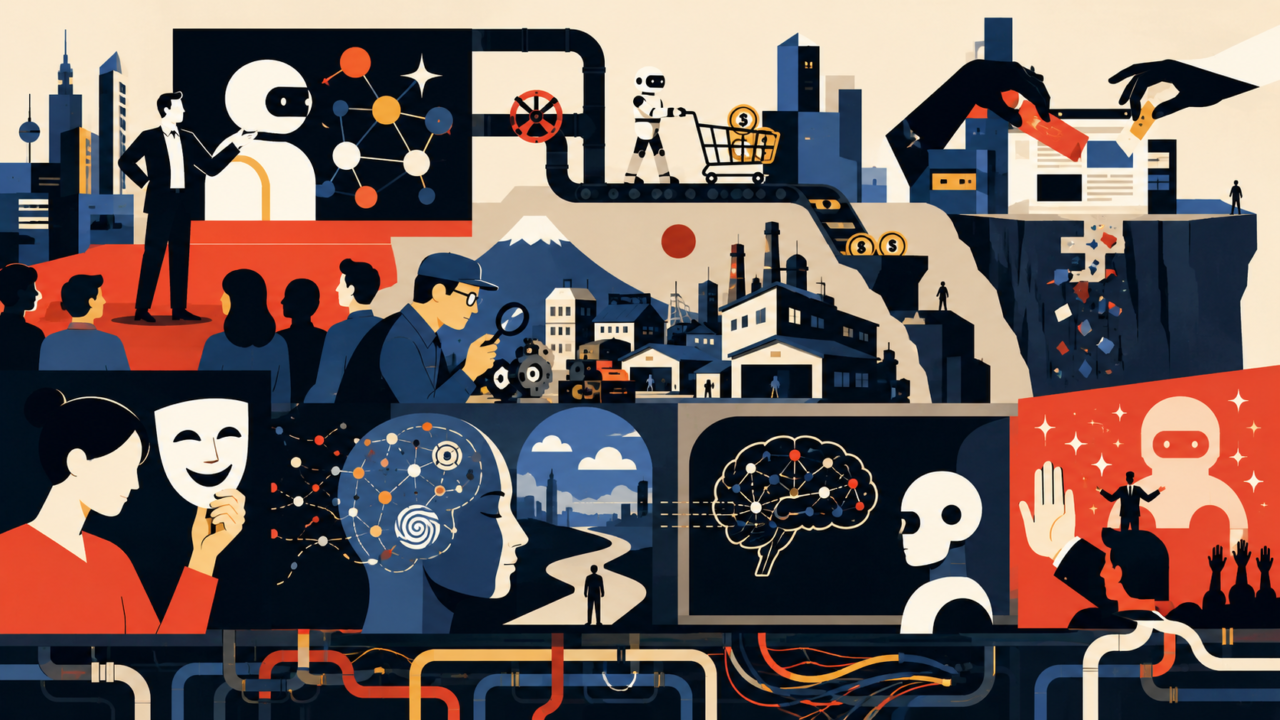
Across this week’s edition of #RBM, the same pattern keeps turning up: clever systems only look clever until the incentives, interfaces and plumbing arrive! We start with at Stratechery, which argues that the agentic web will need payments baked in, not another round of platform hand-waving and publisher-thinning “innovation”. Then, David Oks shows why Japan’s supposedly odd corporate sprawl can preserve obscure industrial capabilities that suddenly matter when the AI supply chain comes calling. Thoughtbot reminds us that making software “human” often means making it smug, vague and faintly unbearable. Whilst Vox’s conversation on predictive processing adds that healthy minds need some uncertainty, not just the productivity cult’s endless smoothing of edges. Finally, Quanta’s piece on the brain’s language network lands the sharpest warning for the AI crowd: fluent output is not the same thing as thought. Put together; architecture matters, incentives matter and tone matters. And no, slapping “agentic” on the slide deck doesn’t make the hard parts disappear...

#112 17 May 2026
This week's #RBM feels like watching modern systems quietly betray their own marketing! Elena Verna says the real status move now is abandoning management to become an AI-augmented IC shipping actual work; MIT Technology Review argues “human in the loop” warfare may reduce humans to liability-shaped approval buttons; a debugging story about a self-cancelling streaming subscription showed how two perfectly functional platforms can combine into total nonsense; and John Perry Barlow’s old cyberspace frontier dream reads differently now that the frontier is owned by clouds, payment rails and app stores. Even Quanta’s bird-eye piece fit the pattern: evolution removed retinal blood vessels for cleaner vision, then built an absurd metabolic workaround to compensate.
#111 10 May 2026
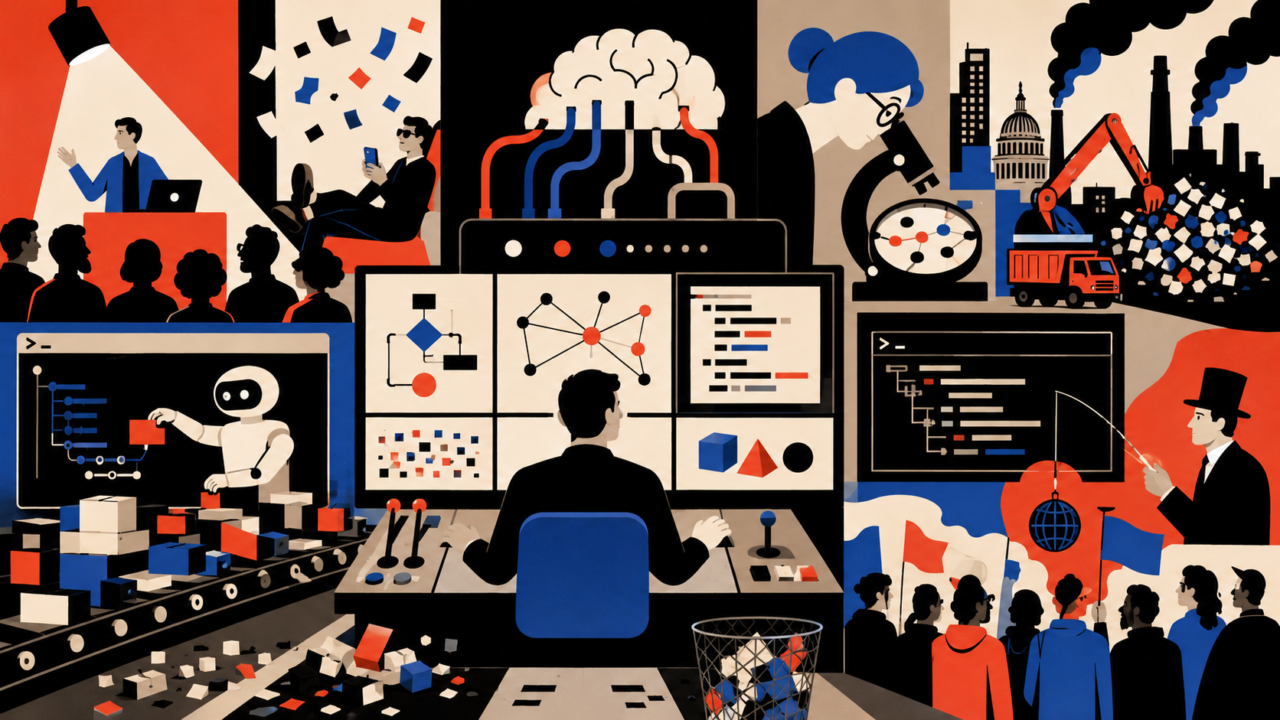
Another week of #RBM and this time is all about control: who owns the workflow, who owns the context, who owns the mess, and who gets paid while pretending none of that matters. The No One’s Happy piece warned that AI now lets people look productive without the judgement to verify their own output, turning competence into theatre with a monthly salary attached. Mario’s Pi talk pushed the same anxiety down into the tooling layer: coding agents are useful, but once the harness starts silently changing prompts, hiding context, spraying abstractions and flooding open source with clanker sludge, the developer is no longer driving so much as supervising a very confident forklift. Anthropic’s Natural Language Autoencoders offered a more polished version of the same problem, promising a microscope into model behaviour while reminding us, awkwardly, that vendor research about trust is also part of the trust business. Alcides Fonseca’s argument for TUIs made the interface angle plain: terminals are not back because everyone wants to cosplay 1986, they are back because native GUI ecosystems have made serious work feel flaky, inconsistent and over-managed. And finally, Mat Duggan’s cyberlibertarianism critique then supplied the ideology underneath it all: call deregulation freedom, call extraction innovation, outsource the cleanup, and act surprised when the commons rots. Slop is not just bad content or bad code. It is what happens when speed outruns responsibility, interfaces hide the cost, and institutions reward output before understanding. The useful response is not nostalgia, panic or another dashboard. It is slower judgement, sharper tooling, fewer features, better proof, and the unfashionable habit of reading the damn code.
What you need to read before your busy Monday, published every Sunday
Read Before Monday is a weekly newsletter from Vitor Domingos - with a handful of articles, essays and oddities collected over the week, annotated with a short opinion, and sent before Monday morning.
No breaking news. No ten-thousand-word think pieces. No affiliate links. Just a small, curated and considered list of things worth sitting with.
The next issue lands Sunday evening.
One email a week. No tracking. No ads. Totally free. You can leave any time.