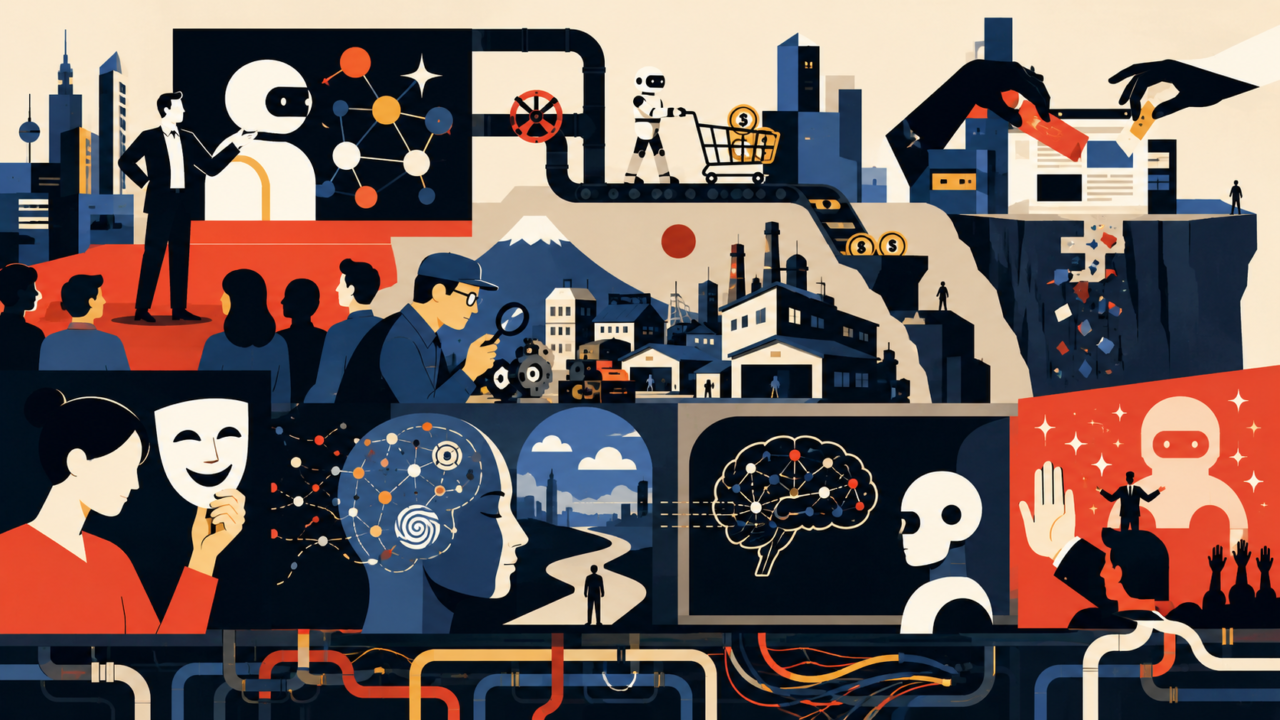
Across this week’s edition of #RBM, the same pattern keeps turning up: clever systems only look clever until the incentives, interfaces and plumbing arrive! We start with at Stratechery, which argues that the agentic web will need payments baked in, not another round of platform hand-waving and publisher-thinning “innovation”. Then, David Oks shows why Japan’s supposedly odd corporate sprawl can preserve obscure industrial capabilities that suddenly matter when the AI supply chain comes calling. Thoughtbot reminds us that making software “human” often means making it smug, vague and faintly unbearable. Whilst Vox’s conversation on predictive processing adds that healthy minds need some uncertainty, not just the productivity cult’s endless smoothing of edges. Finally, Quanta’s piece on the brain’s language network lands the sharpest warning for the AI crowd: fluent output is not the same thing as thought. Put together; architecture matters, incentives matter and tone matters. And no, slapping “agentic” on the slide deck doesn’t make the hard parts disappear…
In this issue
5 piecesBen Thompson argues that advertising was not the web’s original sin, but the workable economic model for a human-attention web
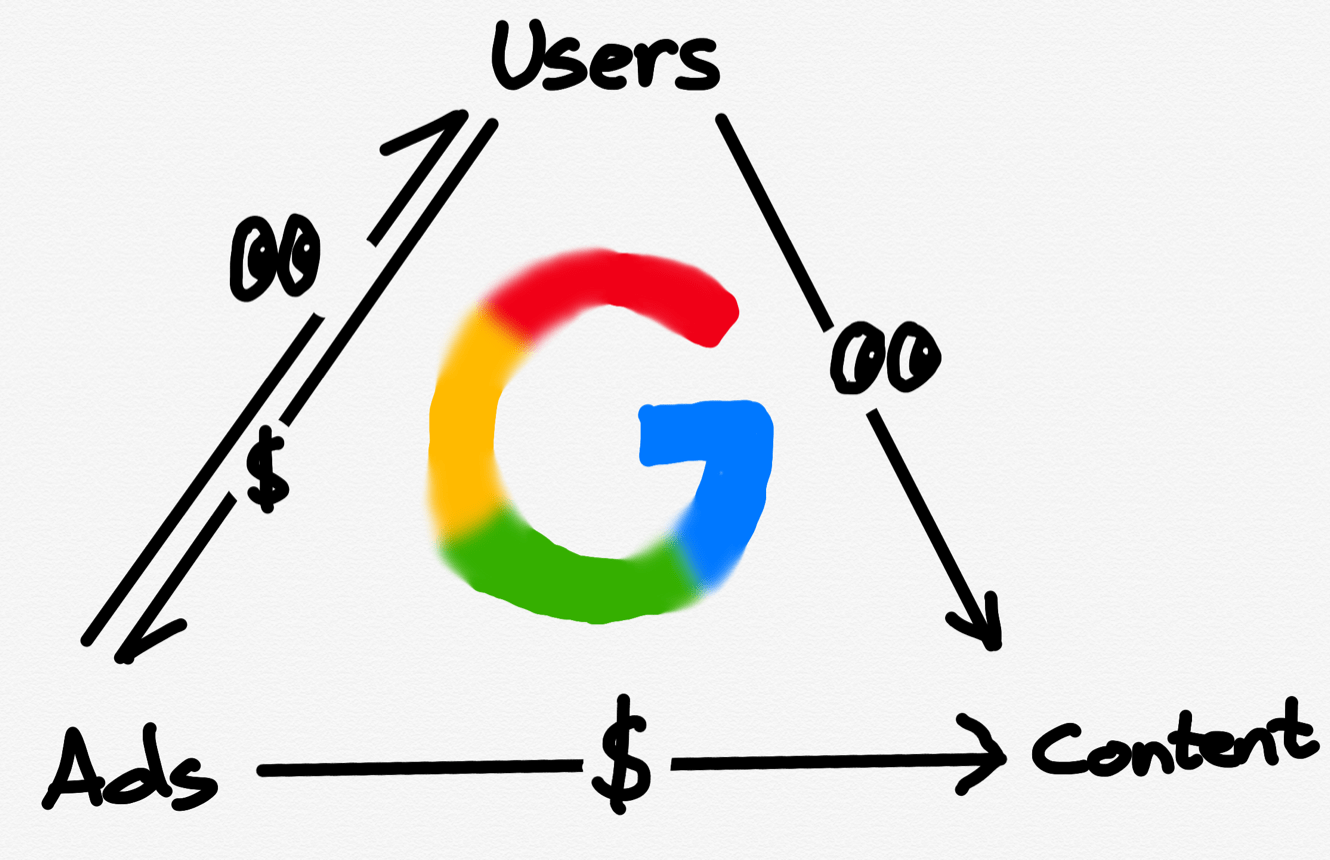
He contrasts Ethan Zuckerman’s critique of advertising with Marc Andreessen’s regret that payments were not built into browsers, then says micro-transactions failed because they were anti-human. The central claim is that AI agents change this equation: software can make payment decisions without human friction. Ben says Microsoft’s Build 2025 vision for an open agentic web, centred on MCP and NLWeb, is promising but incomplete without native payments. He argues that ad-supported text sites are already under pressure from Google, walled gardens, SEO spam and AI answers. Stablecoins, in his view, could enable agentic micro-transactions, auctions and citation-based payouts, creating a new marketplace for content that sustains AI supply and open competition.
The surprising thing here is that the web’s original sin wasn’t advertising. It was failing to add payments at the exact moment when payments suddenly mattered. That’s a neat inversion, and Ben makes it land because he separates the human web from the agentic one. Humans hate tiny payment decisions. Software doesn’t. Fair point. Now, if AI agents consume the web without sending humans back to pages, the old bargain collapses. No page view, no ad auction. No ad auction, no business model for a lot of text. Google becomes less a villain twirling a moustache and more the ageing utility that kept the pipes pressurised longer than anyone liked admitting. Sure, Microsoft is the useful foil. MCP and NLWeb sound like sensible plumbing, but plumbing without money is just a very elegant way to drain value from publishers. As always, open protocols are lovely until the largest platforms decide where the tollbooths go. Ben's stablecoin-and-auction proposal is interesting because it tries to make the tollbooth native rather than negotiated through private content deals. But it also asks for a lot. Who audits citation value? Who stops gaming? Who decides whether an agent used a source, paraphrased it, or merely absorbed its general shape? The digital ads ecosystem is proof that micro-auctions can scale. It’s also proof that scaled micro-auctions become a swamp faster than vendors can say “alignment”. The piece’s best insight is that agents may make micro-transactions psychologically viable. Its weakest leap is assuming that viable means fair.
David Oks argues that Japanese companies diversify so widely because they operate through a coherent corporate “bundle”

It's all about building around lifetime employment, horizontal coordination, patient capital and weak shareholder pressure. He uses Toto’s shift from toilets into electrostatic chucks for memory-chip manufacturing as the opening example, then compares Kyocera, Yamaha, Hitachi and Oji to show that broad diversification is a repeated Japanese pattern, not an isolated corporate oddity. The article says this structure helped Japanese firms excel in domains requiring incremental refinement, deep process knowledge and moderate volatility, from automobiles to precision materials. David contrasts the Japanese “J-firm” with the Western “H-firm”, arguing that Japan’s model was superb for postwar catch-up growth but weaker at frontier invention. American-style entrepreneurship still depends on Japanese-style industrial depth in semiconductor supply chains.
David gets the corporate sociology right first: Japanese diversification isn’t just executives throwing darts at a wall after too much karaoke. It’s the product of a system that promises employment, rewards patience, rotates people through functions, and reinvests earnings because shareholders are not the main character. That explanation is much better than the usual lazy “Japan is weird” shrug. The sharpest move is Toto; a toilet company becoming an AI semiconductor supplier sounds like a punchline, then turns into the whole argument. Deep ceramics knowledge, tolerated for decades inside a sprawling firm, suddenly matters when high-bandwidth memory does. That’s the counterintuitive claim worth sitting with: inefficiency can look wasteful until the world needs exactly the obscure capability it preserved. But, there’s a risk of making every outcome look inevitable after the fact: Sony missed the smartphone because J-firms can’t do discontinuity; Toto caught the AI wave because J-firms nurture tacit process knowledge. Both can be true. Both also deserve harder evidence than a clean contrast with Apple. Frontier innovation and boring industrial mastery are complements, whilst Japan may still own the part without which the keynote doesn’t ship.
Elaina Natario argues that snarky, over-familiar interface copy often undermines clarity rather than making products feel more human
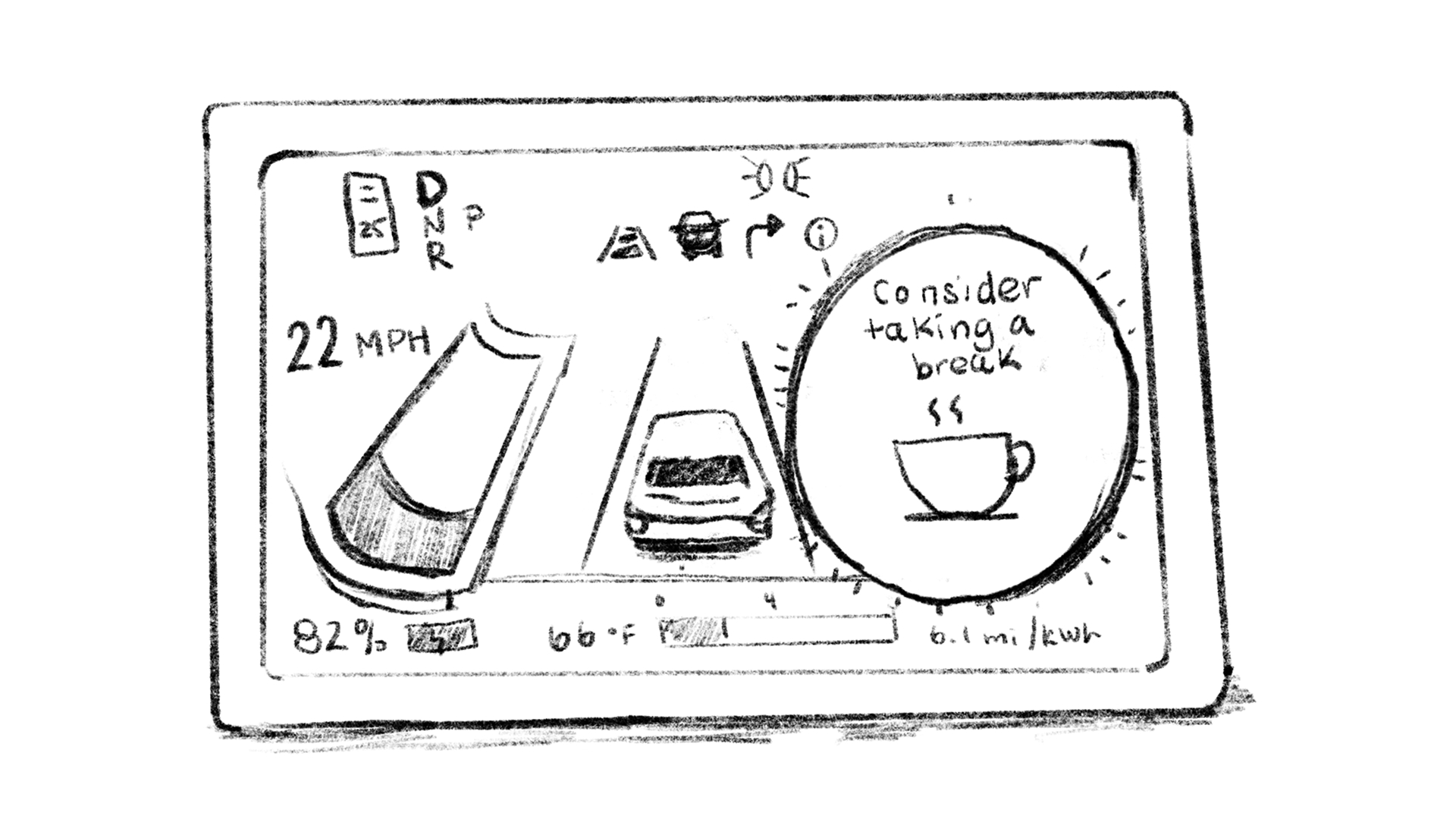
She begins with a Hyundai IONIQ dashboard alert saying “Consider taking a break”, which required research to understand as part of a driver-attention system. Elaina says the irritation came less from the notification itself than from its condescending tone and failure to state the actual behaviour being flagged. The article broadens that complaint into examples including confirmshaming, paused reminders from apps such as Duolingo and MyFitnessPal, and excessive praise from smart watches. Elaina's point is that humour, encouragement and conversational copy can become hostile when they obscure what users need to know. Tone is not decoration. It changes whether people understand, trust or delete the product.
Put vague, cutesy language into a safety system and the user has to decode the machine at exactly the moment the machine wants attention. That’s bad interface design wearing a novelty hat. I think Elaina gets one thing very right: personality is not the same as usefulness. A product voice can be warm, funny or lightly odd, but it still has a job to do. The Hyundai example works because the message fails twice. It sounds faintly patronising, and it doesn’t explain the underlying behaviour. The driver is left wondering whether they’re tired, speeding, drifting or being haunted by a coffee cup. This is less about hiring wittier UX writers and more about governance; who gets to decide that a refusal button should insult the customer? Who reviews copy in high-stakes contexts? Who checks whether “human” has quietly become “passive-aggressive intern”? Some brands can use playful copy well, especially in low-risk moments. But the default should be boring clarity. Boring scales. Snark creates support tickets.
Oshan Jarow interviews philosopher of cognition Mark Miller about predictive processing

The theory that experience is the brain’s best model of reality rather than direct access to raw sensory data. Miller argues that prediction is central to human life, but too much certainty can become pathological. Depression and addiction are framed as “sticky” predictive loops that persist even when external conditions change. The article says creativity, art, horror films, meditation and psychedelics can all introduce useful uncertainty by pushing the mind towards the “edge of informational chaos”. Miller’s distinctive claim is that uncertainty is not merely a problem to reduce, but a resource for learning, adaptation and well-being. Jarow presses the reductionism risk, and Miller replies that creativity can still be intrinsically valuable as uncertainty generation and management.
The wellness industry issues that nobody quite says out loud is awkward: a calmer mind may not always be the healthier one, right?! Miller’s claim is that mental well-being needs managed disorder, not permanent serenity. That’s usefully irritating for me... A lot of modern self-care sells predictability, routine and friction removal, but this piece argues that the mind also needs the occasional controlled wobble and chaos. Sure, predictive processing can become metaphysical fog very quickly, but the examples given help: depression as a sticky model, horror as safe uncertainty, meditation as disciplined investigation rather than scented-candle relaxation. The best point is the Goldilocks one. We don’t learn much in total routine. We also don’t learn much in chaos so deep we can’t find the door. Yet, a horror film is one thing, psychedelics are another. Depression is not a puzzle box waiting for a clever ambiguity injection, it's the same mechanism that sounds elegant in a conversation can become slippery in practice, especially if people start treating destabilisation as automatically therapeutic. Brains, teams and software all face versions of that problem. Too much rigidity and the model goes stale. Too much volatility and the system thrashes. Miller’s account is compelling because it treats creativity as maintenance for prediction, not decoration on top of cognition.
John Pavlus interviews cognitive neuroscientist Ev Fedorenko about her 15 years of work identifying a specialised “language network” in the adult human brain

Fedorenko argues this network stores mappings between words and meanings, plus rules for combining words, but does not itself perform high-level thought. She compares it to a physical system, almost like an organ, consistently found across typical adult brains. The article’s insights reach into debates about language, thought and large language models. Fedorenko says the brain’s language network resembles early LLMs in some ways: fluent, specialised and shallow, but not equivalent to reasoning, memory or social cognition. Her work challenges older assumptions around Broca’s area and around language as the core of thought, suggesting instead that language is an interface between perception, expression and meaning.
This strawberry-sized parser is the detail that sticks for me! A system small enough to visualise as fruit may be responsible for the machinery that lets us turn thought into shareable code. That’s beautifully deflating. It also punctures a lazy kind of AI discourse: fluent language doesn’t automatically imply deep thought, because our own brains may use a fluent, shallow language subsystem too. The framing is right by resisting the obvious sensationalism. This isn’t “your brain is ChatGPT”. The article is more careful, and better for it, as the language network stores mappings and rules, parses inputs, prepares outputs, and hands off the interesting stuff to systems concerned with memory, reasoning and social life. The language bit is plumbing. Glorious plumbing, but plumbing. “Pretty much” having an LLM in the head is memorable, but it’s also a trap. Brains are embodied, social, damaged, adaptive and personal in ways the analogy only partly captures. We keep arguing about whether language models “think” because language feels like thought from the inside, but this work suggests that the interface may be masquerading as the engine. That matters for AI safety and product design: a system can sound as though it has grasped the world while mostly manipulating form-to-meaning correspondences.
My Week in AI
- Project Glasswing: An initial update | anthropic.com
- What’s next for Chinese open-source AI | technologyreview.com
- Microsoft starts canceling Claude Code licenses | theverge.com
- OpenSCAD LLM Benchmark: Building the Pantheon | modelrift.com
- An OpenAI model has disproved a central conjecture in discrete geometry | openai.com
- Gemini 3.5: frontier intelligence with action | blog.google