
This week’s #RBM begins in 1984, when Andy Hertzfeld gave the Macintosh the ability to switch between applications without making users restart their work, only to discover that doing it almost instantly was apparently too confusing, so the computer had to slow down and put on a little show. Fast-forward four decades and Moderna is attempting something considerably more ambitious with mRNA: turning each patient’s tumour into the specification for a personalised cancer vaccine, with promising melanoma results and the minor complication of manufacturing medicine one person at a time. Meanwhile, Devon Estes is reconsidering 15 years of software engineering wisdom because AI coding agents are making previously questionable practices, from dropping mandatory peer reviews to rewriting entire systems, look rather less expensive than they used to. Over at MOND←TECH, things become more existential, with a speculative theory suggesting that age and the prospect of missing out on AI-powered immortality could make some people rather enthusiastic about accelerating superintelligence, even if the rest of humanity hasn’t agreed to the risk assessment. Finally, Robot Girl Gang reminds us that good product development rarely fits neatly into departmental boxes: Product, Design and Engineering need to interfere constructively in one another’s business, particularly when software can be changed tomorrow but hardware has already been sent to the factory.
In this issue
5 piecesAndy Hertzfeld recounts developing the Macintosh's first application-switching environment after seeing John Markoff use Memory Shift on an IBM PC in October 1984
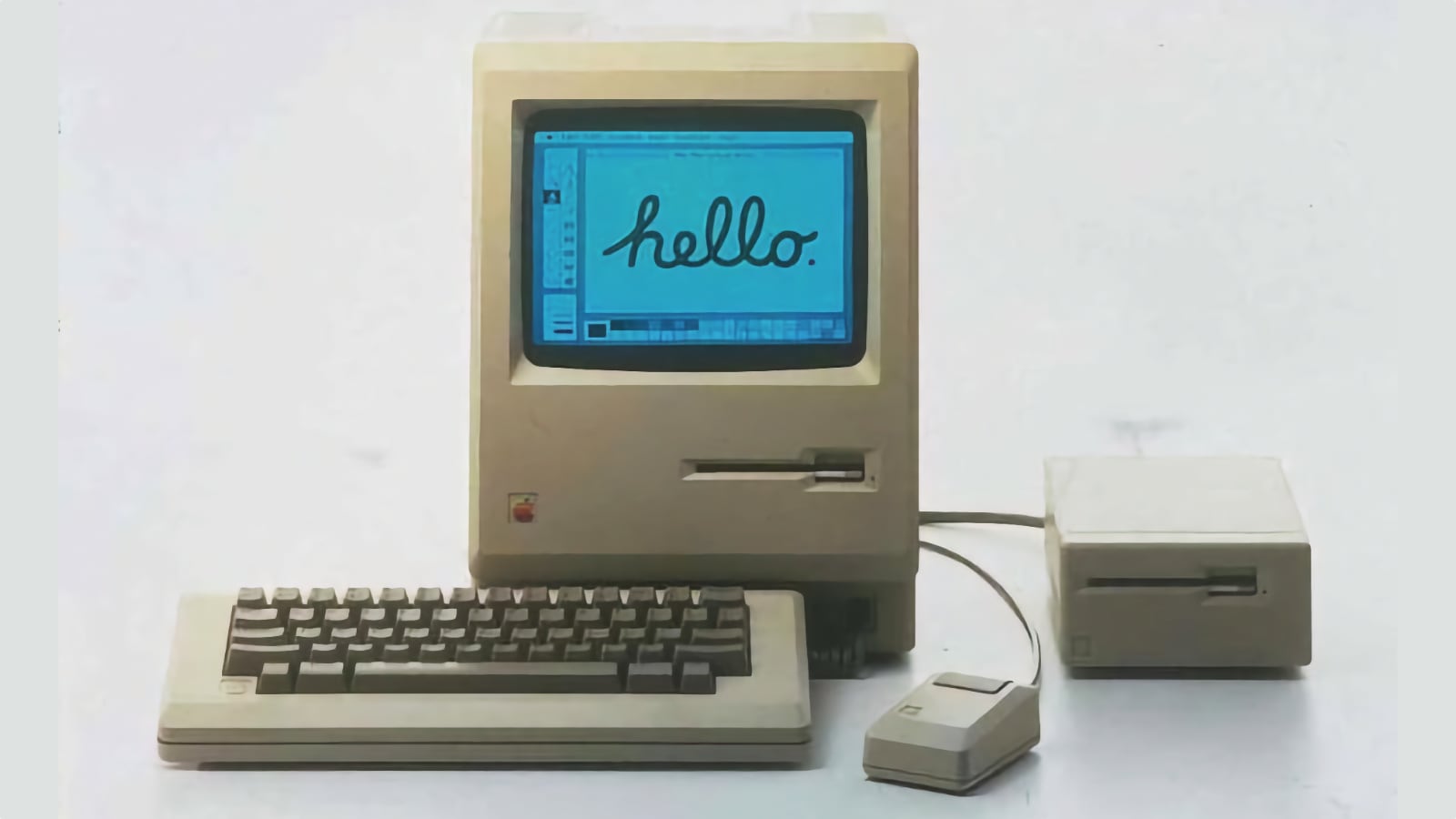
The new 512K Macintosh made retaining several applications in memory plausible, but required careful handling of per-application state. Hertzfeld describes patching system calls, assigning separate heap zones and swapping low-memory globals, then gradually debugging crashes. His account traces Switcher from an experimental prototype to an Apple-bundled release in April 1985. The account also shows how design, bargaining and compatibility shaped the result. Bud Tribble suggested horizontal animation because instantaneous switching could confuse users. Bill Gates sought a development arrangement that would preserve the advantage of Microsoft's compact Macintosh applications, while Steve Jobs later proposed Apple's $100,000 acquisition. Hertzfeld also secured a royalty on separate sales. Microsoft's pseudo-code complicated debugging, and an emergency abort shortcut collided with Word. Switcher preceded MultiFinder, developed by Phil Goldman and Erich Ringewald in 1987.
I love the Folklore - actually, last year tried to launch something similar with some 'oldschool' guys from Portugal to cover what others already forgot... anyway.. Tribble's complaint that Switcher was too fast is the line I'd pin above a product team's monitors. Andy had managed to get MacPaint, MacWrite and MacDraw changing places almost instantly. From a programmer's perspective, job done. From a user's perspective, the entire screen had just vanished and been replaced. The sideways scroll made the applications feel like positions on a Lazy Susan. You could mentally follow the movement rather than simply trust that the machine had kept everything intact. It's a wonderfully awkward lesson in interface design: sometimes the fastest action produces the slowest understanding. The 512K Macintosh imposed severe constraints, so spending precious computation on a transition looks indulgent until you realise it tells the user what has happened. The animation did functional work. It made the feature comprehensible, turning an impressive technical trick into something people could intuitively navigate. There's a useful restraint buried in the anecdote, too. Bud proposed motion because users needed feedback. Making the screen look impressive was secondary. That's a better test for visual flourishes than whether they look spectacular in a demo. If removing an animation leaves users uncertain about where their work went, the effect is carrying information. If nothing becomes less clear, it may just be making the computer perform a little dance.
Alice Park examines Moderna CEO Stéphane Bancel's attempt to turn mRNA into a reusable platform for medicines beyond vaccines

The immediate evidence is a company-reported 42% reduction in melanoma recurrence when personalised cancer vaccine intismeran was combined with Merck's pembrolizumab. The approach sequences each patient's tumour, selects mutations and encodes targets in mRNA to direct an immune response. Park places the result alongside Moderna's COVID vaccine success and its longer effort to overcome mRNA delivery and immune-response problems. The article describes how Moderna's cancer-vaccine manufacturing capability helped it respond to COVID, while the pandemic accelerated development of its underlying technology. It also records setbacks: cancelled US government funding, declining COVID vaccine sales, layoffs and an unsuccessful cancer-vaccine trial at competitor BioNTech. Bancel anticipates seeking regulatory approval for intismeran, potentially in 2027, while research expands into other cancers and rare diseases. Whether personalised treatments can be manufactured affordably and reliably at scale remains unresolved.
One patient in Alice Park's story had 80 identifiable tumour markers. Intismeran can encode 34! That small mismatch is more revealing than the familiar promise of a platform that can manufacture almost anything. Personalised medicine still has a budget. Here it's the maximum reliable length of an mRNA message, and someone must decide which mutations deserve a place in it. A software engineer might call that a ranking problem. A clinician has to live with the consequences of the ranking. The process starts with a biopsy, then sequences the tumour, selects candidate targets, manufactures a batch for one person and gets it to them while treatment still matters. Each step introduces another potential source of delay or error. Moderna can reuse chemistry and production methods, but every patient provides a different biological specification. I find that a more useful way to think about the technology than the analogy to software platforms. Replicability at the manufacturing level is compatible with uncertainty at the individual level. The headline recurrence reduction is encouraging, but the article provides no per-patient turnaround time or manufacturing failure rate, and the study had yet to be published.
AI is changing the economics behind practices he once considered sound engineering judgement
After 15 years in software, he describes a team retrospective that challenged his instincts. His team has stopped requiring colleagues to review pull requests: Claude writes the code, the responsible engineer reviews it, and CI and Greptile provide additional checks. He also finds that AI-assisted onboarding makes parallel, individually owned workstreams less troublesome than expected. Devon extends the argument to career development, favouring architectural judgement, domain modelling and product understanding over narrow mastery of a framework. He is reconsidering large rewrites, custom internal tools, competing implementations and unfamiliar programming languages because AI can reduce their initial costs. His examples are based mainly on recent experience, including a month without traditional peer review, rather than long-term results. For engineering leaders, his proposal is to revisit the costs underlying established rules and test previously rejected approaches.
If your Claude opens the PR, you as the ticket owner check it, CI and Greptile pass, and the change merges. Now, Devon calls that a second set of eyes. So, technically, yes, but socially, something has disappeared. A colleague no longer has to encounter a decision they didn't make, ask an awkward question or learn why the system works that way. That's an acceptable trade in some teams, especially when reviews had become a queue of rubber stamps. But Devon's other experiment compounds it: people now work in separate streams, using Claude to catch up when necessary. AI can make individual engineers remarkably self-sufficient while reducing the routine moments in which they become a team. Knowing where the code lives is easier than knowing which colleague will challenge your assumptions before a design settles. I'd be tempted to keep the fast merge process, then deliberately create a different forum for cross-cutting design discussion: brief architecture reviews, incident walkthroughs, rotating ownership of sensitive areas. No need to drag every minor PR through a committee. The experiment worth running is whether shared technical judgement survives when shared code review no longer creates it by accident.
Age and expectations about AI takeoff may shape whether people favour accelerating superintelligence despite catastrophic risks
The essay constructs a Pascal's-wager-style payoff table: someone fearing death before a technological breakthrough might see a chance of immortality as outweighing the prospect of earlier death. Mond argues this reasoning applies to a narrow range of ages and expected takeoff dates rather than everyone, explicitly labelling the argument as loose speculation. Using a graph called the "Hill of Accelerationism", Mond predicts that shortening AI timelines could move younger people towards safety concerns while bringing some older people into the pro-acceleration window. The political concern is that powerful, older decision-makers may have personal deadlines that diverge from society's appetite for risk. Mond cites a reported conversation between Vladimir Putin and Xi Jinping about longevity as an illustration, without establishing that either leader's AI policies reflect this motivation.
There's this strangest thing about Mond's Hill of Accelerationism.. which is that nobody has to build a better AI for someone to cross it. Change their estimate of when takeoff will arrive and the same person may move from scepticism to an urgent desire to accelerate, then towards caution. The hill is a map of expectations, rather than capabilities. That makes it an unusually volatile basis for deciding how much risk other people should bear. An infinity sign does a lot of work in Mond's wager. Once the possible reward is living forever, losing forty years rather than five can appear negligible on a spreadsheet. Humans don't generally experience forty years as a rounding error. And the same calculation applied to everyone else becomes nastier still: your private hope for an escape hatch could be paid for with somebody else's entire remaining life. The author is openly speculating, and we have no evidence that particular leaders secretly reason this way. Sure.. more urgent predictions may encourage more urgency, even before their accuracy is tested, but If a proposal for rapid AI deployment is justified by a supposedly closing window, then I'd want to see the dates, the uncertainty and a clear explanation of who accepts the downside. Existential panic is an excellent way to stop checking the arithmetic.
Dani argues that effective product development depends on permeable boundaries between Product, Design, Systems, Engineering and Program, rather than sequential hand-offs
Drawing on robotics experience, Dani describes teams with distinct expertise collaborating on requirements, experience and feasibility. Hardware must commit to drawings, suppliers and tooling earlier than software must settle implementation details, so imposing one planning rhythm across every discipline creates artificial certainty and unnecessary friction. The proposed alternative is to agree on shared integration milestones while letting teams work backwards on their own schedules. Product and Design may take turns leading, requirements should grow more specific as delivery approaches, and demonstrations should expose incompatible assumptions early. Dani argues that milestones earn their place by generating evidence for decisions, including decisions to delay or redesign. Trust matters because colleagues need permission to question another function's assumptions without taking over its responsibilities.
There's always that moment somebody cuts a tool, and the planning debate changes character. Sure, a software team can keep a screen flow tentative for weeks; a mechanical team that has paid for tooling has converted an assumption into metal. Dani's point about different clocks is more useful than the usual Agile-versus-Waterfall argument because it starts with the cost of reversing a decision. It also explains why a single beautifully aligned roadmap can conceal a terrible plan. Ok... consider a robotics team deciding where a physical control belongs; product might still be testing whether customers need it, UX might be trying alternatives, and Mechanical Engineering may be about to freeze the enclosure. A shared milestone could require evidence for that decision before tooling, while leaving less consequential interface details open. The result is deliberate unevenness: certainty where mistakes are expensive, experimentation where they are cheap. I'd want to see that principle made explicit in planning: which decisions become costly to reverse next, what evidence justifies them, and which disciplines must participate before commitment. Dates tell you when work is expected to finish. This tells you when a hypothesis is about to acquire a purchase order. That's the meeting worth having.
My Week in AI
- Scaling AI agents with open standards Kurtis Van Gent on MCP and Agent Skills joining the AAIF | opensource.googleblog.com
- How Agent Anomaly Detection scores on benchmarks we didn't write | developers.googleblog.com
- Eliminating Nondeterminism in LLM Inference with Integer-Only Arithmetic | nathan.rs
- Introducing Claude Meetings, now in beta | claude.com
- Agent First Development for Enterprise Teams | debarshibasak.github.io
- Gemini Decisions API Fast, calibrated multimodal decisions | blog.google