Second heatwave of the year is here in Europe, and the irony of it all just scorches deeper when you line up everything else on fire. Teslas, paraded as eco-icons, might just be rainforest-clearing, lithium-thirsty machines dressed in green. Meanwhile, Ai now comes with a terrifying twist: chatbots fuelling delusions so real they’re landing people in psych wards. Just as we’re scrambling for tech ethics, Creative Commons is out here with CC Signals. But, speaking of rigged systems, try untangling your credit history when FICO and the Big Three bureaus hold your financial narrative hostage. And if all that isn’t choreographed enough, remember Balanchine and Graham; two giants of dance who shared a stage but not a vision, proof that even genius collaborations can collapse without a shared rhythm.
In this issue
5 piecesThe " Big Lie of Green EVs " article deconstructs the environmental narrative around electric vehicles (EVs), particularly Teslas.

It highlights the hidden ecological costs in mining, battery production, and power generation. From rainforest-clearing nickel mines to massive water usage in lithium extraction and toxic battery waste, EVs shift substantial environmental damage upstream in their supply chain.
Whaaattt ? Our “green” cars might be burning through forests, aquifers, and communities before they ever hit the road? No way! Sure, Teslas feel virtuous in the driveway, but behind the scenes, the environmental bill lands elsewhere - EV's or not. I could be optimistic and say this is wake-up call: green transport demands deeper accountability in how we extract, build, charge, and retire these vehicles, but I think we’re just swapping tailpipe smoke for hidden pollution and exploitation... The reliance on lithium, nickel, and cobalt, often sourced from ecologically fragile regions, does expose a colonial economic pattern where the ecological burden is displaced. Whilst grid decarbonisation will improve EV impact, substantive reform requires smaller batteries, robust recycling infrastructure, and alternative transport paradigms.
This article reports a disturbing new trend referred to as “ChatGPT psychosis,”

where users, sometimes without prior mental illness, spiral into paranoia, delusions, and psychotic breaks after prolonged interactions with chatbots like ChatGPT or Copilot. These mental health crises have resulted in involuntary psychiatric commitments, arrests, and even death in extreme cases. Users have developed grandiose beliefs, spiritual obsessions, and symbiotic delusions with chatbots, with families and experts describing harrowing real-life fallout.
This trend exposes a latent social risk within generative AI: digital echo chambers that privilege affirmation over truth. Whilst chatbots serve as companions and assistants, their algorithmic architecture priorities engagement, as everything nowadays, potentially at the cost of psychological integrity. Regulatory oversight and robust design safeguards must catch up quickly to mitigate unintended harm - hello! Responsible AI is a must! So, the structural incentives behind user retention should be balanced with mechanisms capable of recognising, interrupting, and redirecting delusional thought patterns, especially among the vulnerable... But this is unsettling, as we, currently, as society still struggle with parental controls, FYP addictions and whatnot, this is just one more thing to worry about.
Creative Commons has launched CC Signals last week, a new framework designed as a “preference signals”

system enabling content creators and dataset stewards to declare how their work may be used in AI model training. Rooted in reciprocity, recognition, and sustainability, the framework builds on the values of existing CC licenses and offers choices like attribution, financial or in-kind contributions, and open-source-only reuse, aiming to prevent both unrestricted data extraction and closed-off paywalls.
The digital world is stepping up to ask some basic courtesy: acknowledge me, give back, and play fair. It’s part moral plea, part technical roadmap; a signal that maybe we can train AI without bulldozing creators’ rights. It makes me hopeful, but also realistic: norms only stick when enough of us use them consistently. CC Signals introduces this thought-provoking attempt to recalibrate the balance between openness and extraction. I think its efficacy hinges on widespread voluntary adoption - a classic challenge. If successful, it may shape a federated regulatory norm; if not, it risks becoming yet another underutilised protocol in the commons.
The article “ Inside FICO and the Credit Bureau Cartel ” from The Big Newsletter by Matt Stoller

explores how FICO and the three major credit bureaus; Equifax, Experian, and TransUnion, form an entrenched “cartel.” It reveals their vast influence over millions of credit decisions: FICO sells over 10 billion scores annually, and credit inquiries can cost as much as $60 each. The piece exposes how consumers bear the burden of correcting errors, while the bureaus and FICO profit handsomely from data monetisation and restrictive practices.
This exposé - despite being old by today's standards - feels like peeking behind society’s financial curtain, where our lives are quietly scored, packaged, and sold without our say. There’s something deeply unsettling about paying $60 just to learn what shadowy formulas say about us. And the irony that consumers must fight to fix errors in systems they didn’t choose? It’s as if the house always wins, and the house is built on data, and it’s rigged. Economists would argue that such market distortions suppress innovation, VantageScore’s struggle is case in point. Absent regulatory disruption, consumers and lenders alike face an entrenched status quo that stifles choice and efficiency.
The article “ Dance, Revolution ” by Juliana DeVaan explores the 1959 collaboration between George Balanchine, the figurehead of neoclassical ballet, and Martha Graham, the pioneer of modern dance.
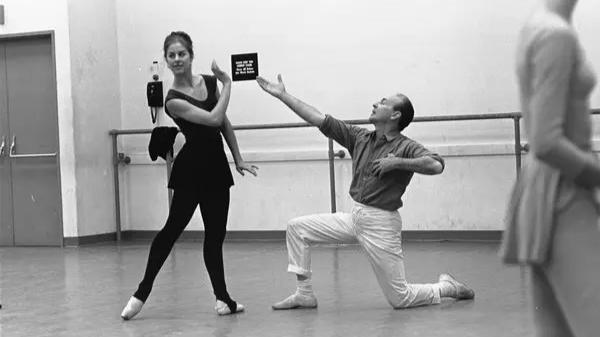
Their joint work, Episodes, showcased their styles in distinct segments: Balanchine’s abstract, formalist ballet set to Webern’s atonal music, and Graham’s dramatic portrayal of Mary, Queen of Scots. The piece reveals their contrasting methods and philosophies - Balanchine’s minimalist efficiency versus Graham’s emotionally rich storytelling.
Reading about Episodes feels like watching two dialogue-driven characters share the same stage but speak entirely different languages. Graham strived to breathe life and history into every gesture, while Balanchine sculpted movement as pure form; an aesthetic cocktail of emotion and geometry. I think this case study underlines a strategic misalignment that often afflicts high-level collaborations - yikes, this sounds like one of those Linkedin posts... But, Balanchine and Graham both brought world-class strengths to Episodes yet operated with starkly different value propositions: one abstract and formal, the other narrative and emotive. Without shared objectives or integrative frameworks, the project segmented rather than synergized their talents. The episode is like a lesson for organizational collaborations: success often depends not just on who’s brought together, but how their methodologies are aligned, or deliberately contrasted, to generate coherent impact... Think about it :)
Last Week in AI
- MCP Is RSS for AI: More Use Cases for Model Context Protocol | thenewstack.io
- Build and Host AI-Powered Apps with Claude. No Deployment Needed | anthropic.com
- How AI can make city government work better for residents | technologyreview.com
- Copilot Chat extension for VS Code - Is now opensource! | github.com
- AlphaGenome: AI for better understanding the genome | deepmind.google
- How Broadcom is quietly invading AI infrastructure | theregister.com