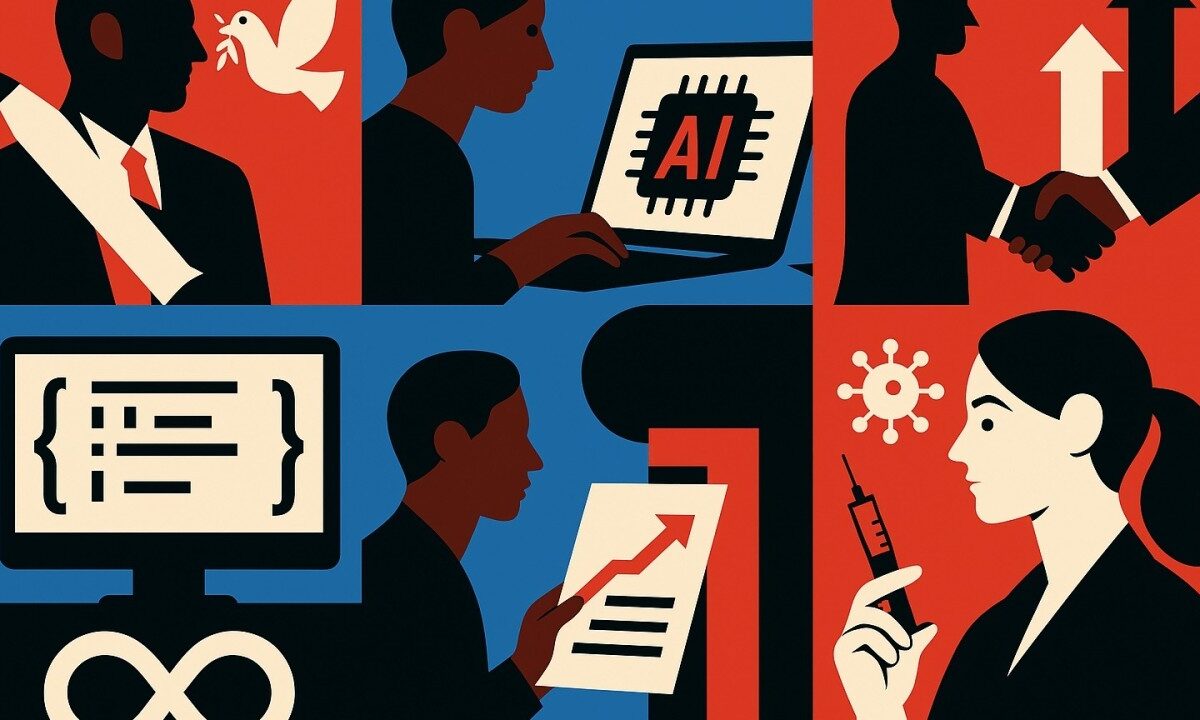
War is peace. Freedom is slavery. Ignorance is strength. Orwell’s slogans are now a reality, but the contradictions we navigate in tech, business, and science feel just as twisted. Phil McKinney’s webOS tale shows how visionary tech can be strangled by chaotic leadership. Leif Weatherby argues that clinging to “human-only” intelligence limits our understanding of language itself. David Crawshaw reveals how humble little agent loops, nine lines of code, can quietly rewire software development. Bram Adams reminds us that software is built on promises, not features, and that trust scales better than code. And then Beata Halassy: a virologist who injected herself with lab-grown viruses and lived. Each of these stories confronts a system, corporate, symbolic, or clinical, and rewrites the rules not by waiting, but by building. Progress, it seems, often begins with a refusal to play by inherited scripts.
In this issue
6 piecesIn his Substack post , Phil McKinney, former CTO at HP, recounts how he led technical due diligence and successfully persuaded HP’s board to acquire Palm in July 2010 for $1.2 billion,

convinced webOS’s multitasking capabilities represented the future of mobile. However, after CEO Mark Hurd’s departure and McKinney’s sudden eight-week medical leave, HP launched the TouchPad tablet in July 2011 without sufficient polish, priced it too high, and lacked vital app support - leading to only 25,000 units sold versus 9 million iPads that quarter.
This really feels bittersweet. I was a sucker for Plam and Handpsring - even had a few, in particular the Visor that costed me a hand and an arm from the US to Portugal. So this it’s like watching a brilliant athlete accidentally benched right before the finals. He clearly saw the promise of webOS; the multitasking, sleek UI, but HP’s fast-shifting leadership and management upheaval pulled the rug out at every turn. It’s easy to imagine that with a little patience, developer goodwill, and coherent sponsorship, webOS might have carved out a niche. Instead, it became a case study in how innovation dies when there’s no champion to nurture it. It’s a reminder that in the corporate world, timing, continuity, and conviction sometimes matter more than brilliance of design. At the end, McKinney’s story isn’t just about a failed purchase; it’s a tale of how fragile innovation really is when stewardship collapses. As a cautionary tale, HP’s Palm episode underscores the perils of merger mania, vanity acquisitions, and the critical importance of aligning executive continuity with strategic ambition.
Leif Weatherby’s discussion with Robin Manley on the Journal of the History of Ideas explores the concept of “remainder humanism”
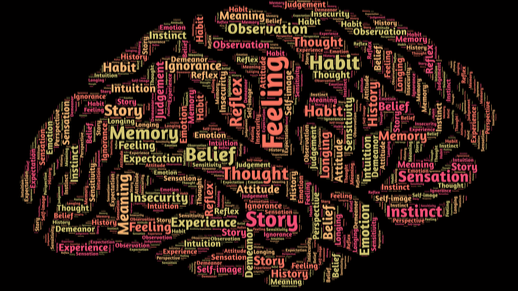
; the enduring habit of distinguishing human cognition from machine intelligence. Weatherby argues that both skeptics (e.g. Chomsky, Bender) and boosters (e.g. AI risk advocates) fall into this trap, thereby failing to engage meaningfully with how large language models (LLMs) reshape our understanding of language as a cultural, computational system. Drawing on French structuralism, he suggests that LLMs embody a “double autonomy”: autonomous symbolic systems that generate language independently of human intention, parallel to Saussure’s vision, and that this challenges the long-standing divide between cognition and language.
Reading this interview was like discovering a whole new lens for AI. It’s easy to fall into the trap of “of course humans have meaning, machines don’t” or “AI will either save us or doom us,” but Weatherby is inviting us to reimagine language itself. When machines generate meaning, they aren’t just echoing; they’re reshaping the symbolic landscape. That means our human-centered frameworks, intent, cognition, alignment, aren’t just outdated, they’re baggage. We need to hold on to complexity, embrace the unpredictable, and accept that meaning now thrives in the messy meeting of algorithms and culture. Phones don’t just ring anymore, they talk back and speak of worlds we never imagined. For business leaders, this signals a shift away from narrow governance models focused solely on algorithmic bias, toward a more holistic semiotic governance, addressing the polythematic interplay of meaning, data, and cultural dynamics. Organizations should rethink AI literacy, not as compliance training but as cognitive co-design, preparing teams to navigate the unpredictable symbolic environments that generative models produce.
David Crawshaw’s “ How I Program with Agents ” post explores the transformative shift from passive LLM usage to active, feedback-driven coding agents

. He defines an “agent” as a simple loop that wraps an LLM call in tool interactions, bash, patch, test, and web functions, enabling code generation, compile-execute-debug cycles, and iteration, greatly improving practicality over static LLM prompts . He shares a concrete example: building GitHub App auth in sketch.dev, where the agent delivered working code, exposed a critical security bug, and iterated to fix it - showing agents can autonomously handle dreary plumbing while preserving momentum.
Yeah, Crawshaw shows us how agents don’t replace developers, they amplify them. It's IA - Intelligent Augmentation, the same John Markoff was telling us on the "Machines of loving grace". So, imagine delegating the tedious grepping, compiling, debugging, the stuff that saps joy, while you sketch logic or design. That flow: human vision, agentic execution, feedback loop, it reminds me why I loved coding before email and meetings drained my energy. But the magic depends on trust: when your agent finds a bug, you feel less oversight than partnership. By enabling the models to invoke compilers, test suites, logs, and patch tools within a loop, software workflows become resilient and context-aware. For engineering teams, this implies a paradigm shift, from manually maintaining dense pipelines to configuring agent-capable environments that autonomously iterate on correctness and integration. But to fully benefit, development platforms must evolve: embracing “agent-first” IDE design, secure defaults, seamless diff reviews, and auditability. This agent-augmented model promises a more robust, less error-prone future, but only if we codify governance and remain vigilant against automation complacency.
In “ Software is About Promises” , Bram Adams argues that every piece of software inherently makes a promise to its users, a commitment that must be clear, realistic, and measurable
. Software blends abstract ideas with concrete execution, meaning developers must define precisely what they’ll deliver within resource constraints to avoid overpromising. Using his project “Your Commonbase” (YCB) as a case study, he outlines testable promises for its main features; store, search, synthesise, and share — prioritising based on user impact and engineering feasibility.
This got me nodding; promises are the quiet contracts we all sign when we click “Install" and no one has ever time to read the EULA! So, there’s an elegance in framing feature scope as promises. By declaring what YCB will and won’t do, Bram builds more than software; he builds trust. And trust, once broken, is hard to repair. It reminds me that every feature roadmap is really a pact: a promise that guides work, one line of code, one test, one deploy at a time. His manifesto reframes software engineering as stakeholder contract management. By articulating clear, testable promises, teams align around measurable goals and avoid overextension. This way, organizations transform technical roadmaps into transparent commitments, reinforcing credibility and strategic discipline.
Virologist Beata Halassy, diagnosed with aggressive recurrent breast cancer in 2016, developed and self-administered lab-grown oncolytic viruses
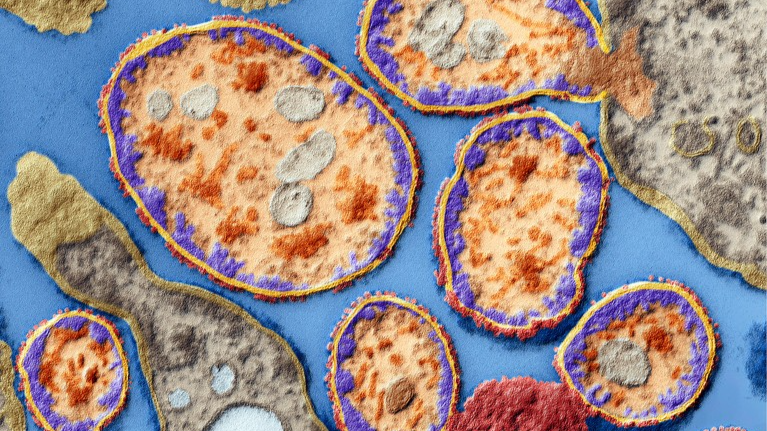
, specifically measles and vesicular stomatitis virus, through intratumoural injections. This novel self-treatment, conducted before surgery, successfully reduced her tumour, enabling less invasive resection and leading to a disease-free state for nearly four years.
Halassy’s story reads like a bold, personal experiment, compounding scientific expertise with deeply human stakes. It’s inspiring to see someone take control in the face of crisis, engineering a hope-filled path with viruses as allies. Yet, it also feels like a leap over the safety net we build for ourselves. Her courage shines, but so does the tension: personal agency versus collective safeguards. It reminds us that medicine isn’t just about lab results; it’s about trust, structure, and the unpredictable art of hope. For policy makers, I think her case underscores an urgent need to balance nimble therapeutic exploration with robust oversight. Ultimately, the episode highlights both the promise and peril of democratising advanced therapies outside traditional systems.
Amazon expects to cut corporate jobs
Yes, I've changed the name of this section. I realised there's a lot I've been missing that I wanted to share as links and I literally can't keep up with everything every week anymore :)