Summer’s already here! You can feel it in London, can’t you? It’s not just the weather that’s shifting, so are the ideas reshaping how we build, think, and reuse. From Ink & Switch’s vision of malleable software that users can bend to their will, to Calvin Chua’s take on Asian cities as political, layered organisms resisting easy redevelopment, it’s clear that agency; whether digital, urban, or intellectual, is at the core of our next design challenges. Michael Bennett’s “Stack Theory” dares to explain consciousness as computational orchestration, weaving biology, AI, and abstraction into a theory of feeling machines. Even myth-busting visuals like Common MythConceptions and Boston Review’s critique of Bad Economics echo this theme: we’re overdue for tools, models, and policies that adapt to us, not the other way around. A summer stack of ideas worth bookmarking.
In this issue
5 piecesInk & Switch’s "Malleable Software" essay champions reclaiming agency in our digital tools. Drawing parallels with physical workspaces, like a luthier’s worksho

p, the authors argue modern apps have become rigid, appliance-like boundaries requiring users to adapt, not the other way around. Instead, they envision a software ecosystem that treats modification as a natural act: users start as consumers and gently evolve into creators, reshaping tools in the moment to truly serve their unique workflows.
This essay struck that chord: I remembered the thrill of 'hacking' a spreadsheet macro to automate a repetitive task. You know, that sense of empowerment, of bending the tool to what we're doing, not the other way around, is visceral - must admit! Ink & Switch paints a future where that enthusiasm scales across all our apps, of turning everyday users into toolsmiths. But their dream doesn’t shy away from friction: AI is promising, but agent of change, not magic wand. The idea of communal tool-building is quite interesting; friends or coworkers customizing a shared canvas in real time. I think this nurtures not just tools, but collaboration and ownership, and we need more of that. Their three pillars; gentle slope, tool-focused architecture, and shared creation, do offer a compelling diagram for computing’s next paradigm. But real-world deployment will demand addressing security and interoperability challenges around modifying tools in situ.
The Boston Review article "Bad Economics" by Simon Torracinta critiques how modern microeconomic reasoning, especially formal, individualistic modelling has permeated American governance
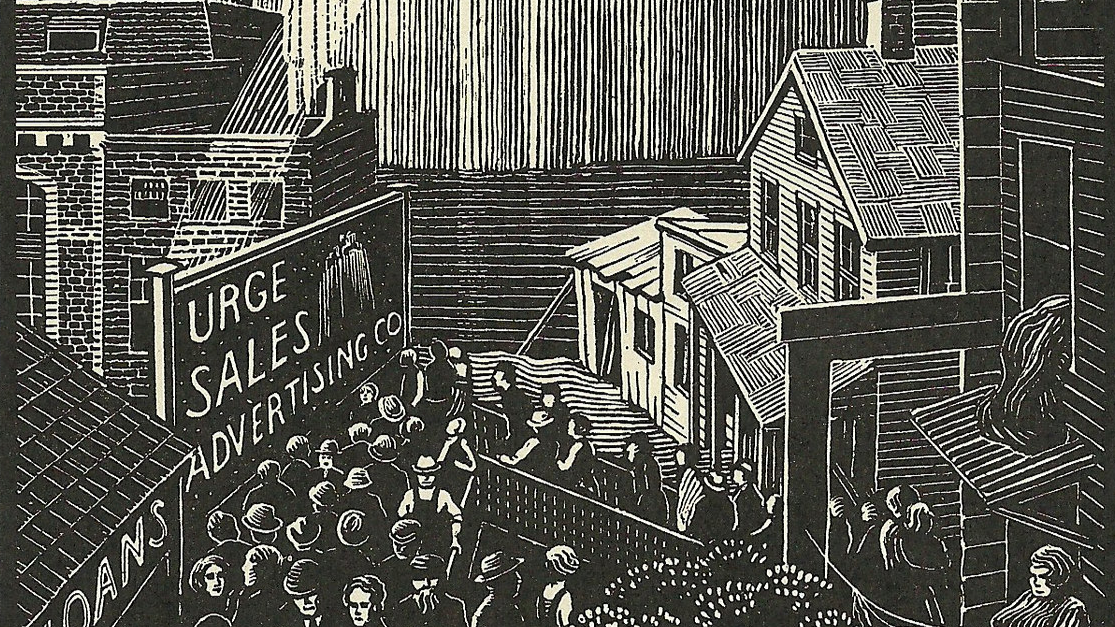
, often to society’s detriment. Torracinta draws on Robert Skidelsky’s critique in What’s Wrong with Economics, warning that clinging to formal equilibrium models and rational‑actor assumptions can lead to faulty theory, misguided policies (e.g., on minimum wage or inequality), and neglect of moral, institutional, and historical dimensions.
This sent me back to my undergrad days, where everything felt neatly boxed in neat curves and rational actors. It’s refreshing, even urgent, to hear that our lives can’t be solved by plugging into an equation. We’re messy, institution‑shaped, ethically loaded beings, not well‑behaved calculators. This plea to admit that economics isn’t Some All‑Knowing God but a social lens among many, nudges me to ask: what have we been blind to by favouring elegance over reality? Business leaders should advocate for decision frameworks that integrate behavioural insights, organizational sociology, and economic history. Ultimately, business strategy demands models grounded in adaptive realities, not just theoretical idealizations.
The “Common MythConceptions” interactive visua l from Information Is Beautiful debunks popular but false beliefs
, ranging from science and history to body facts, through data-driven references. Each myth is clickable, revealing sourced explanations; e.g., you don’t lose most body heat through your head unless it’s the only exposed part. Initially released around 2014 and updated over the years, the piece offers playful visuals (color‑coded by topic) combined with rigorous sourcing.
I love how this project feels like a social media scroll-through, with its colourful bubbles and topics I can click to debunk myths I’ve unthinkingly believed. It’s a cheeky reminder that our worldviews can be delightfully flawed. Whether it’s believing myths to sound smarter or just repeating what we “heard,” this charticle fluffs away our assumptions, still feels oddly satisfying when reality bites back in such a clear, sourced way. They do exemplify modern information design’s power to correct societal misconceptions through well-sourced interactivity and intentional visual hierarchy. Vis‑à‑vis the global information economy, such tools bolster resilience against misinformation by promoting critical consumption framed in compelling design. Also, I talked about presenting information in a beautiful way, many, many years ago here:
Michael Timothy Bennett’s doctoral thesis, How to Build Conscious Machines , proposes a new theoretical framework, “Stack Theory”,
that reimagines consciousness, intelligence, and embodiment through layers of abstraction akin to software-hardware-environmental stacks. He critiques simplicity-maximizing systems and argues for “w-maxing,” favouring weaker constraints to enhance adaptability and generalization. Biological systems, he claims, outperform artificial ones by delegating adaptation deeper in the stack, thus enabling more versatile responses. Bennett connects consciousness to structured tapestries of valence and introduces causal-identities that form the basis of qualia. Conscious experience, he suggests, begins with 1st-order selves (basic agency) and scales with complexity. Philosophical zombies are rejected; real consciousness is necessary for human-level intelligence. In his final chapter, he details the engineering principles for conscious machines, distinguishes hardware needs, and presents the “Temporal Gap” as an unresolved issue about the nature of time in consciousness.
Oh my! What a great summer reading this is! Clearly is one of those reads that lingers. Not because it’s light, definitely not that, but because it dares to thread computer science, philosophy, biology, and cognitive science into a theory that actually tries to explain why we’re conscious. Bennett's “Stack Theory” feels like Descartes met a systems engineer after a late-night AGI conference. I admire the ambition here: to formalize valence, build machines that feel, and even poke the Fermi Paradox while at it. Sure, it’s speculative in places, but isn’t that what good thinking sometimes needs? The real magic is the underlying humanity: consciousness isn't a module to bolt on; it’s a tapestry we’re all trying to weave. Notably, the biological-polycomputer analogy sharpens critique of current AGI architectures. Yet the model’s speculative span, from cosmology to consciousness, invites scrutiny. While promising, practical engineering applications remain nascent. Nonetheless, this thesis signals an emergent synthesis for designing embodied, valence-aware, potentially conscious machines.
The piece “ Adaptive Reuse Across Asia: Singapore’s Fragmented Ownership, Japan’s Rural Revival, & Korea’s Material Limits ” features insights from Singapore-based urban designer Calvin Chua
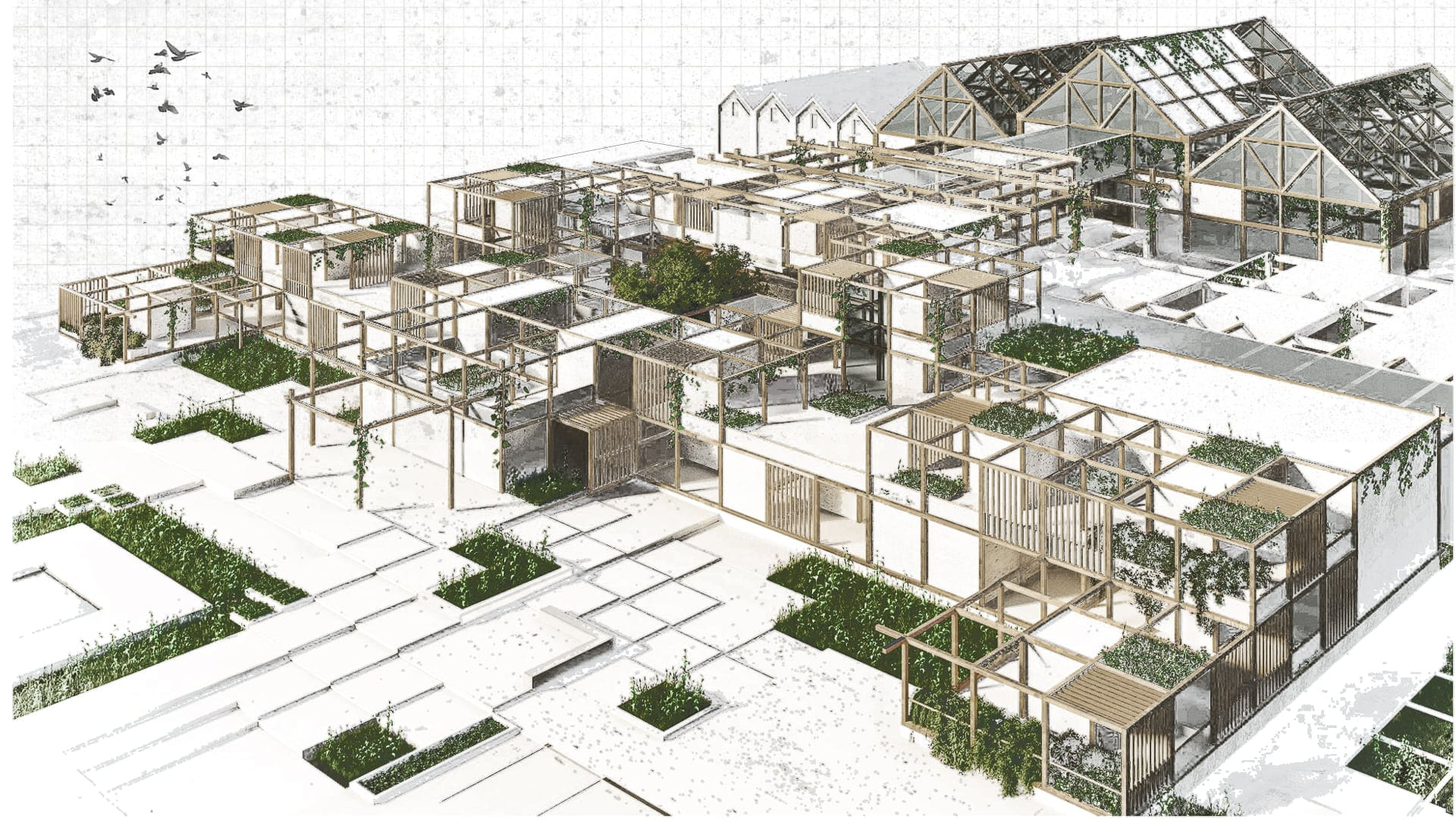
. It explores how Singapore’s model of “strata malls”, with individually owned commercial units, results in ultra-fragmented ownership, making collective decision-making for redevelopment difficult. The article further contrasts this with rural revitalization in Japan and constraints on material reuse in Korea.
I keep thinking about how cities aren’t just concrete and glass, they’re messy, political creatures. Singapore’s strata malls, with their mosaic of micro-landlords, feel almost like a democratic paradox: everyone has a say, so nothing moves. Chua’s framing of this as both a design problem and a political condition hit home. We often forget that the shape of our neighbourhoods isn’t just about taste or trends, it’s about who has the power to say yes or no. And sometimes, it’s your auntie who owns a nail salon and won’t budge. What I love here is the idea that reuse isn’t about nostalgia or aesthetics; it’s a quiet act of revealing. Design as diagnostic, not just directive. Japan’s rural strategies and Korea’s material limits add a nice counterbalance, reminding us that adaptation looks wildly different across borders. If anything, the piece left me wishing for more: more tools, more action. But maybe that’s the point, change doesn’t always roar in. Sometimes, it trickles through the cracks in the façade...
Last Week in AI
- Fine-Tuning LLMs is a Huge Waste of Time - by Devansh | codinginterviewsmadesimple.substack.com
- China’s AI Companies Dodge U.S. Chip Curbs by Flying Suitcases of Hard Drives Abroad - by WSJ | wsj.com
- How we built our multi-agent research system - by Anthropic | anthropic.com
- Meta Invests $14.3 Billion in Scale AI to Kick-Start Superintelligence Lab - by The New York Times | nytimes.com
- How we investigated Amsterdam’s attempt to build a ‘fair’ fraud detection model - by Lighthouse Reports | lighthousereports.com
- Announcing Magistral — the first reasoning model by Mistral AI | mistral.ai