
Another week full of great stuff! From Dutch chip labs to Hollywood sets, TikTok feeds, and Detroit garages, one theme pulses through: evolve or be sidelined. ASML, long the silent backbone of chip innovation, now finds itself in the crosshairs of trade wars and tech rivalries, forced to navigate politics while safeguarding a global supply chain. Meanwhile, enterprise AI is finally out of its proof-of-concept phase. In entertainment, Christophe Nuyens’s work on Andor shows that even in an age of LED rigs and 3D previs, true storytelling still hinges on invisible craftsmanship. Then as automakers pivot to software-defined vehicles, abandoning legacy systems and even Apple CarPlay, they face a reality where updates, not engines, define value. Also, the EU Data Act’s demand for open vehicle data only sharpens this shift. So, adapt fast or risk becoming yesterday’s machines…
In this issue
5 piecesASML, the Dutch tech giant and sole supplier of extreme ultraviolet lithography machines critical for advanced chip manufacturing
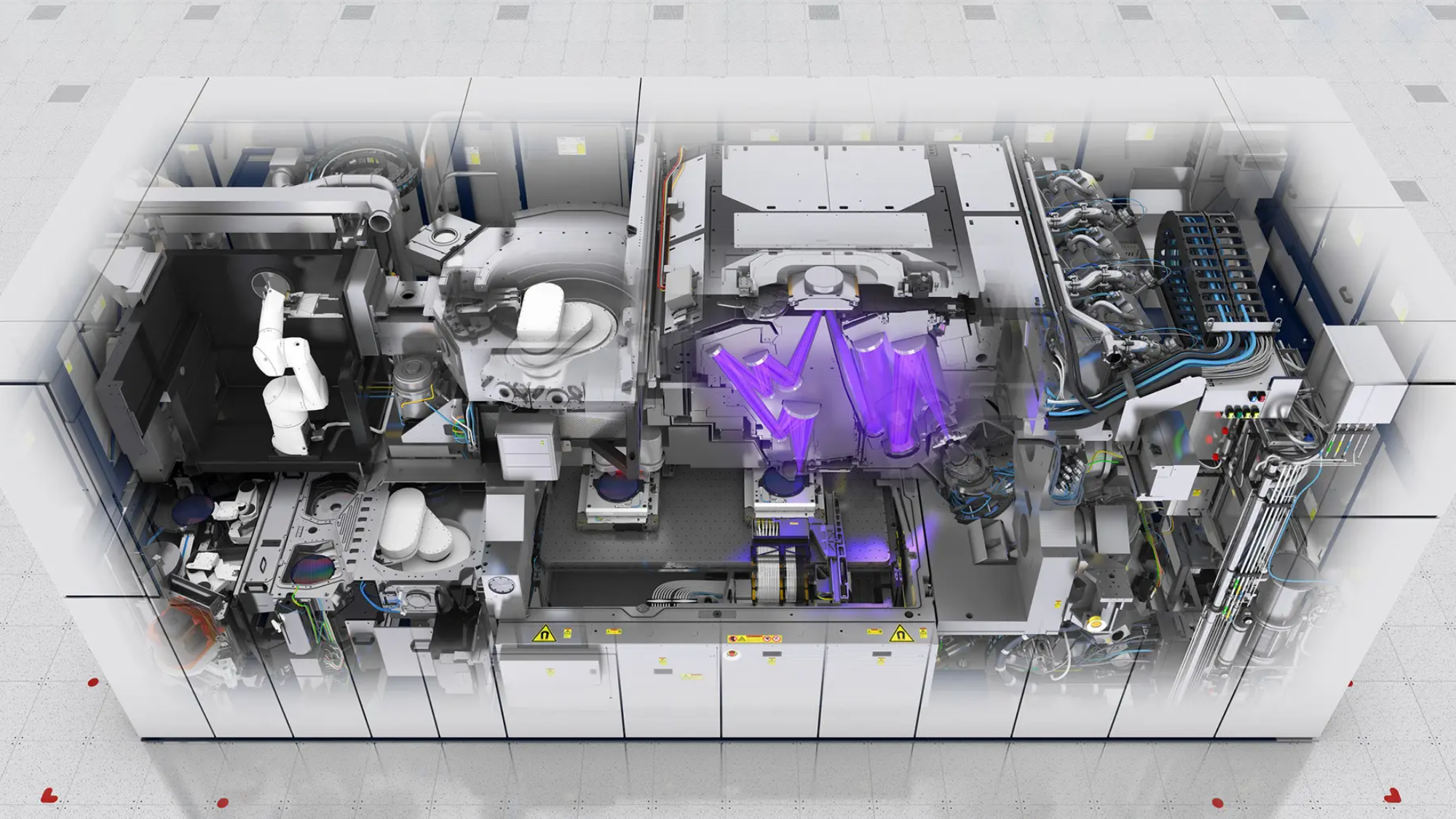
, is grappling with escalating geopolitical tensions, particularly those stemming from the Trump administration’s revived trade war. New tariffs on European goods, fluctuating export bans, and domestic political instability in the Netherlands have placed the company in a precarious position as it tries to maintain global operations. Christophe Fouquet, ASML’s CEO, warns that such policies could disrupt supply chains, drive up chip costs, and inadvertently accelerate China’s semiconductor self-sufficiency efforts.
There’s something oddly Shakespearean about ASML’s dilemma, which is being caught in the geopolitical crosswinds, trying to sell the world's most sophisticated machines while dodging trade war arrows from every side. This transformation from reserved engineer to global policy advocate feels like the logical arc of a man whose machines have become battlegrounds - I get his frustration! If you spend decades perfecting tools that essentially run the modern world, and then get penalized for selling them, wouldn’t you want to yell a little? ASML’s position exemplifies the globalised entanglement of modern tech supply chains and the unintended consequences of protectionist policies. Europe, meanwhile, must confront its ambiguous stance, dependent on U.S. defense guarantees but economically entwined with China. If the AI-driven chip demand continues, ASML may weather the storm. Yet, in a sector where timing is everything, political uncertainty remains its most formidable adversary.
This ChipStrat article notes that a year ago enterprise GenAI was largely experimental ; what changed is the advent of reasoning models; multi-turn, plan-aware systems that are reliable, auditable, and resilient.
These models, while computationally intensive, are now viable due to platforms like Nvidia Dynamo, which optimise inference workloads by smartly routing “prefill” and “decode” phases across GPUs. Concurrently, vendors like Dell are validating these advances, offering AI-optimised infrastructure (including Nvidia-powered servers and reasoning-model ecosystems) alongside services that help enterprises operationalise AI at scale. Dell’s Q1 bookings reached $12.1 billion, underscoring this momentum.
Enterprise AI’s shift from dusty PoCs to fully operational factories is business as usual. Nvidia Dynamo feels almost like orchestration genius: threading the needle between performance and cost. Yet the real story is Dell's backstage grit: building the scaffolding, syncing with Nvidia but staying pragmatic. So, this transition to enterprise-grade GenAI signifies a turning point in corporate digital strategy. Reasoning models and platforms reduce cost barriers and enable dependable decision-making tools. However, the true competitive edge lies in orchestrated ecosystems; hardware, software, and services working in tandem. For C‑level strategy, the question isn’t just when to adopt AI, but how to align it with operations, governance, and ROI frameworks.
In this detailed Pushing Pixels interview, cinematographer Christophe Nuyens discusses his transition from analog to digital film,

his practical yet naturalistic lighting approach on Andor Season 2, and his collaborative prep with directors, art, and VFX teams to bridge episodic storytelling and feature-level aesthetics. He emphasises tech innovations like RGBW LED lights and full-frame Ultra‑Vista lenses to evoke the visual tone of Rogue One while preserving human realism. Nuyens highlights the depth of pre‑production: script breakdowns, moodboards, 3‑D previs and virtual sets with ILM, blending practical sets, painted backdrops, and selective green-screen to maintain organic lighting. He also reflects on the enriched creative freedom in TV today, credits key collaborators like gaffer Andy Lowe and VFX supervisor Mohen Leo, and shares how international TV production styles and technological advances shaped his work.
I found Nuyens’s journey from electrician to cinematographer truly inspiring! His belief that technical skill and artistic sensibility can both be cultivated is a reminder that creative paths can be made, not just discovered. His respect for practical lighting and real-world textures resonates; Andor’s look never feels overproduced, yet it’s cinematic in every frame. And the precision he takes in prepping every moodboard and previs frame speaks to a craft that embraces both imagination and discipline. Ashton’s artistry lies in that invisible balance: his work feels effortless precisely because it isn’t. It’s a humble reminder that sometimes the best movie magic is unseen. Andor Season 2 demonstrates how large-format digital workflows can elevate serialised storytelling. From engineering to artistry.
Newer, platform‑driven news outlets are successfully capturing younger audiences

Newer, platform‑driven news outlets are successfully capturing younger audiences by embracing short-form video formats, especially on TikTok, Instagram and YouTube, that align with Gen Z and Millennial habits. These outlets prioritise visually engaging formats, interactive storytelling, and algorithm-first distribution methods. They blend informational snippets with entertainment, often bypassing traditional journalistic styles to match audience expectations. These outlets are also exploring revenue models beyond advertising—such as sponsorships, branded content, and community-driven memberships—while maintaining agile editorial structures.
The rise of platform-native news entities marks a decisive shift in the media landscape. Young audiences, long alienated by traditional formats, are now embracing short-form, video-based content delivered through algorithmically curated feeds. But there’s a tension here: the same swipe that brings snackable news can anesthetise nuance. I love how they're experimenting with what journalism could be, but I worry we’re trading depth for dopamine. Yet it's brilliant how they’re meeting young audiences on their turf, co-creating and iterating in real-time. If done right, this could redefine public discourse for the better—just don’t forget, context is what turns information into knowledge. However, the model’s long-term viability hinges on balancing monetisation methods like sponsorship with journalistic integrity, and ensuring these lean teams don’t sacrifice depth for speed. For legacy publishers, the lesson is clear: adapt to feed-first distribution or risk irrelevance among the next generation of news consumers.
Legacy automakers are increasingly engaged in a “software war" , seeking to shift from hardware-centric vehicles to software-defined vehicles (SDVs) that are more cost-efficient, agile, and updateable.
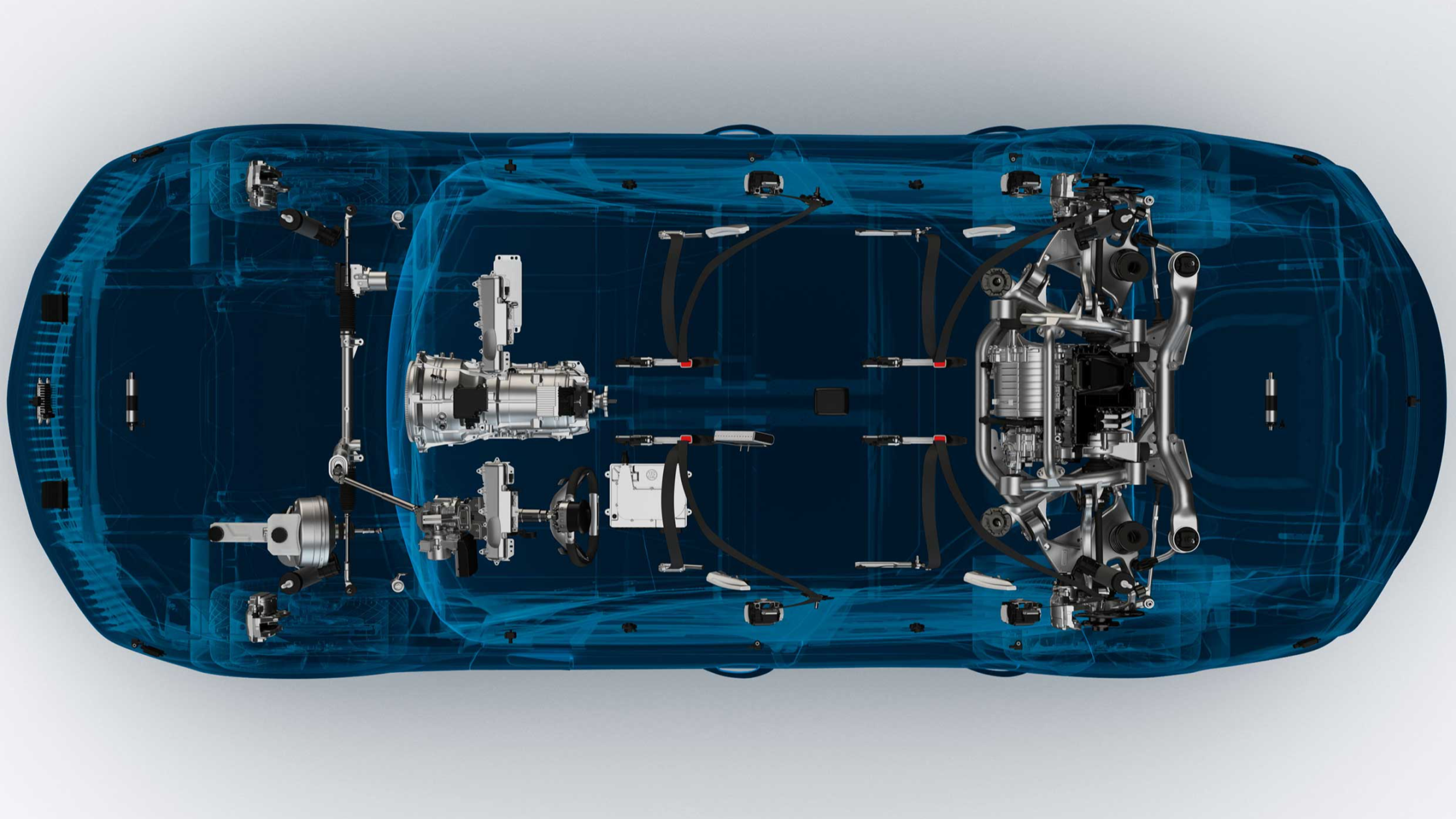
This transformation aims to reduce reliance on fragmented supplier code bases and enable rapid, centralised innovation through OTA updates, though it poses the same complexity as scaling EV production. The push for software-led design has been catalysed by partnerships such as Rivian’s deal with Volkswagen, where external platforms power next-gen vehicles, and GM’s move away from Apple’s CarPlay in favour of its own Ultifi architecture. Disruptions are inevitable: Ford scrapped its equivalent centralised system due to cost overruns and delays, reflecting the high stakes of this transition.
It feels like the auto industry is waking up to need software the way smartphones did years ago. Turning cars into smart platforms makes sense, why replace the whole engine when a software update does the job? But there’s an irony: traditional automakers are parking their expensive mechanics in the garage while trying to hire engineers overnight. GM turning off CarPlay is bold, but could end up like cutting the cord before you have an alternative. Amid all the pivots and cancelled programs, it’s thrilling to see the shake-up - but messy too. At least the journey toward smarter cars promises fewer trips to the mechanic and more over-the-air magic. Ultimately, competitive advantage will accrue to firms that seamlessly integrate software platforms, OTA capabilities, and vehicle hardware. Legacy incumbents must pivot decisively or risk commoditisation in the next era of mobility. The EU Data Act, set to take effect this year, mandates that vehicle-generated data be accessible to users and third parties, challenging automakers’ control over in-car data ecosystems. This regulation could significantly impact revenue models and force manufacturers to redesign how data is shared and monetised.
Last Week in AI
- The Prompt Engineering Playbook for Programmers on Substack | addyo.substack.com
- “AI will replace all the jobs!” Is Just Tech Execs Doing Marketing | sparktoro.com
- AI startups revolutionize coding industry, leading to sky-high valuations by Reuters | reuters.com
- Beyond GenAI: How Agentic AI Redefines Infrastructure Management by David Williams | medium.com
- European approach to artificial intelligence on the EU websites | digital-strategy.ec.europa.eu
- AI video just took a startling leap in realism. Are we doomed? By Ars Technica | arstechnica.com