Welcome to the new subscribers! AI may be the engine of the future, but its energy costs are staggering, soon to eclipse Bitcoin mining and rival entire nations. Meanwhile, Amazon workers are writing sci-fi to reclaim a future their employer seeks to monopolise, and we’re being nudged to trade the gospel of productivity for a saner ethic. Meta’s treating the global internet like a single machine, raising both eyebrows and infrastructure stakes. And as AI outpaces knowledge work, we’re left to ask: is wisdom, emotional clarity, connection, discernment, the last frontier of human value? This week is all about from datacentres to dystopias, and probably the next revolution may be more philosophical than technological.Btw; did you know that you can subscribe to this newsletter on Substack? Now you do!
In this issue
5 piecesArtificial intelligence is poised to surpass Bitcoin mining in energy consumption by the end of 2025, potentially accounting for nearly half of the electricity used by global data centers
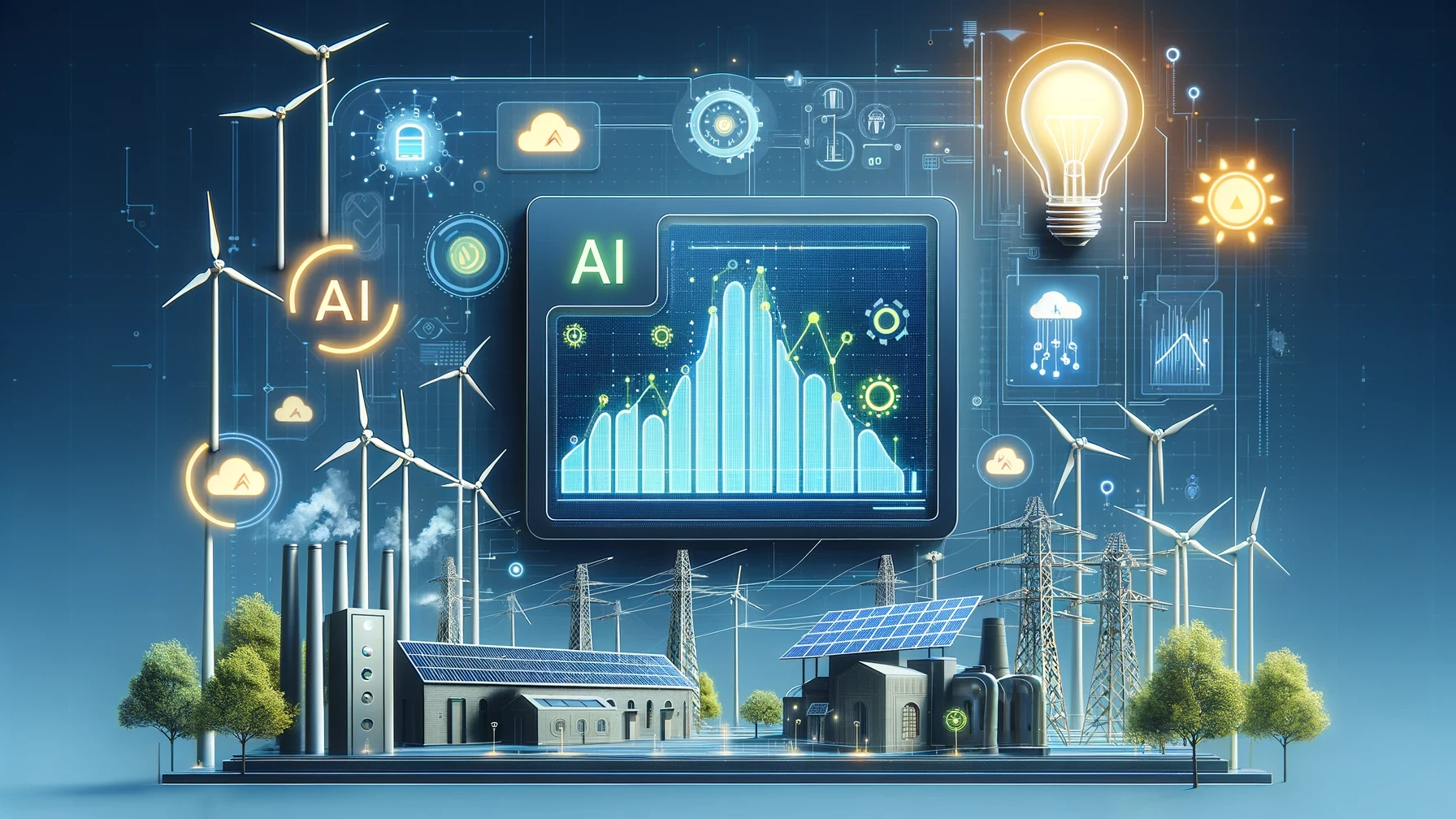
. This surge is attributed to the increasing deployment of large, resource intensive AI models and a lack of transparency from tech companies regarding their energy usage. Research by Alex de Vries-Gao from Vrije Universiteit Amsterdam estimates that AI devices consumed electricity equivalent to that of the Netherlands last year, with projections suggesting this could rise to the level of the UK's consumption by 2025, reaching 23 gigawatts. The expansion of data centers, particularly in the U.S., and the construction of new gas and nuclear plants to meet AI's growing energy demands raise further environmental concerns.
It's both fascinating and a bit unsettling to see this new energy appetite growing so voraciously. Clearly AI is the new electricity! But the idea that our digital assistants and recommendation algorithms could soon consume more power than entire countries is a clear reminder of the hidden costs of our technological advancements. While AI offers incredible benefits, from medical breakthroughs to climate modelling, we must balance innovation with sustainability. Transparency from tech companies and a concerted effort to develop energy-efficient AI models are crucial steps forward. After all, what's the point of building smarter machines if we're not wise enough to manage their impact on our planet? Let's try to implement standardised reporting on AI-related energy consumption, adopting an approach that considers the environmental impact of AI across its lifecycle - from development to deployment.
" The World After Amazon " is a speculative fiction anthology created by Amazon workers participating in the Worker as Futurist projec

t. Organized by RiVAL (ReImagining Value Action Lab), the initiative offered workers creative space to imagine futures beyond Amazon’s pervasive corporate reach. The collection critiques Amazon’s dominance over labour, logistics, and culture, while harnessing science fiction to reclaim workers’ narratives and agency. It juxtaposes Amazon’s techno-utopian corporate messaging - rooted in founder Jeff Bezos’s sci-fi idealism - with dystopian realities faced by its workforce.
This anthology exemplifies the tensions at the heart of 21st-century capitalism: technological grandeur juxtaposed against precarious labour. Amazon’s control over logistics and cloud infrastructure embodies a shift toward platform capitalism, yet its sci-fi-inflected narratives obscure the material conditions underpinning this dominance. This illustrates how speculative fiction, a genre co-opted by corporate visionaries, can also serve as a counter-narrative for the disenfranchised. Whilst the economic structures enabling Amazon’s rise remain intact, the creative insurgency documented here gestures toward a broader reckoning. Workers’ speculative fiction may not disrupt markets, but it reveals fault lines in the corporate imagination, where myth-making collides with lived reality. There’s something deeply poetic about Amazon workers using speculative fiction, a genre beloved by Bezos, to write their own futures, isn't it?
In " The Cult of Doing Business ", Drew Calvert reviews Erik Baker’s book "Make Your Own Job," which critiques the pervasive entrepreneurial work ethic in American culture.

Baker traces this ethos back to 19th-century New Thought movements, highlighting how concepts like positive thinking and self-help have been co-opted to promote relentless work and self optimisation. He argues that this ideology, reinforced by figures like Napoleon Hill and Dale Carnegie, has led to a culture where personal worth is tied to productivity, often at the expense of individual well-being.
Lets move from one cult to another! I couldn't help but reflect on how deeply ingrained the hustle culture is in our society. The idea that our value is tied to our productivity feels almost inescapable. Baker's historical perspective sheds light on how these notions didn't arise overnight but have been cultivated over centuries. We do need to question the narratives we've been fed and to seek fulfilment beyond the confines of work. Perhaps it's time we redefine success not by our output, but by our well-being and the quality of our relationships. But what do I know? Looking at TikTok we're heading towards the opposite direction...
In " Meta’s Hyperscale Infrastructure: Overview and Insights ", Chunqiang Tang offers a comprehensive examination of Meta's global computing framework, which treats all its datacenters as a unified computer system

. The article goes into Meta's engineering culture, emphasising rapid development, openness, and the integration of research into production environments. Key strategies include universal continuous deployment, widespread use of serverless functions, and a monorepo approach that fosters code reuse and cross-team collaboration.
I do like to know all these details behind big infrastructures, and this, about Meta's approach to treating all its datacenters as a single computer is both fascinating and a bit daunting. The emphasis on speed and openness is commendable, but I what about the potential pitfalls of such rapid iteration? Are we sacrificing stability for the sake of innovation? And as AI workloads consume more resources, how do we ensure that other essential services aren't left in the dust? Yet, I do think Meta sets a precedent for hyperscale computing here, but underneath it shows the need for meticulous planning and robust engineering practices.
Knowledge Work Is Dying - Here's What Comes Next

In "Knowledge Work Is Dying - Here's What Comes Next", Joe Hudson argues that the traditional model of knowledge work is being rendered obsolete by AI's rapid advancement. As AI systems increasingly outperform human experts in fields like physics, law, and engineering, the value of mere knowledge diminishes. Hudson suggests that the future belongs to "wisdom work," emphasising qualities such as emotional clarity, discernment, and deep human connection, attributes that AI cannot replicate.
I'm amazed by the profound shift we're witnessing in the value of human labour. As AI takes over tasks once reserved for highly trained professionals, we're compelled to reconsider what makes us indispensable... It's not just about what we know, but how we relate, empathise, and navigate the complexities of human experience. This transition challenges us to cultivate qualities that machines can't replicate; our capacity for wisdom, emotional depth, and authentic connection. The future of work isn't a place for those introvert... I do think this evolution necessitates a strategic overhaul of talent development programs, which rely on the cultivation of soft skills alongside technical proficiency. Organizations that proactively adapt to this paradigm shift will be better positioned to get the full potential of their human capital in an AI-augmented economy.
Last Week in AI
- The first trial of generative AI therapy shows it might help with depression | technologyreview.com
- Opera announces Opera Neon, the first AI agentic browser | press.opera.com
- Mistral: The new state-of-the-art embedding model for code. | mistral.ai
- Perplexity’s new tool can generate spreadsheets, dashboards, and more | techcrunch.com
- NYT signs AI licensing agreement with Amazon | nytimes.com
- Generative and Agentic AI: Intelligent Manufacturing Evolves | chemengonline.com