
I’ll be cutting down on my side projects and revamp somethings. Rest assured, #RBM isn’t one of them 🙂 My weekly live This Week In GenAI and when_i_can Now About This will be merging, but that’s soon, now into this week’s edition of Read Before Monday! The folks at Road to VR dissect the secret sauce behind VR hits like Beat Saber and Until You Fall. It turns out it’s not just about rhythm or action – it’s “Instructed Motion”. Then Matthew Ström tells a gorgeous tale of how album covers evolved from plain brown sleeves to pop culture landmarks. Wired reports that OpenAI has launched a shopping feature inside ChatGPT. It gives product recommendations, without ads, based on user preferences and review. Hello WeChatGPT! Next, the number of people with no close friends has quadrupled since 1990. While tech gets the usual blame, it’s also cultural; work and family take centre stage, and friendships fall behind. Finally, Devesh’s sharp Substack post explores a looming knowledge-work crisis.
In this issue
5 piecesThe article from Road to VR

The article from Road to VR delves into the concept of "Instructed Motion" in VR game design, using Beat Saber and Until You Fall as primary examples. It argues that Beat Saber's success stems not from its rhythm-based gameplay, but from its design that guides players to move in specific, satisfying ways. This approach enhances the immersive experience by encouraging deliberate physical movements, rather than relying solely on timing or musical cues.
Oculus Rift and Quest user here! I even had the whole setup of separate PC to just run Oculus Rift... So, reading about Instructed Motion in VR games like Beat Saber - which I love! - and Until You Fall made me reflect on how structure can enhance creativity. It's fascinating that by guiding players through specific movements, these games can create stronger emotional responses and a deeper sense of immersion. At least that's how I felt when playing them - which I still do now and then. However, I reckon if too much structure might limit the spontaneous joy that comes from unstructured play. Because after a while you get bored with the same old movements and the game starts being a chore rather than just plain fun. Balancing guidance with freedom seems crucial to maintaining both engagement and player agency.
"The History of Album Art"

Matthew Ström's article, "The History of Album Art", chronicles the evolution of album cover design from its utilitarian origins to a form of artistic expression. Initially, records were sold in plain sleeves with minimal information. This changed with Alex Steinweiss, who, in the 1940s, introduced visually engaging covers at Columbia Records, significantly boosting sales and setting a new standard for the industry.
I have returned to vinyl ... I know I know! What a shame and lost, but I most admire all the nice art some of these have. The evolution of album art shows the strategic importance of design in product differentiation and consumer engagement. Alex's pioneering work at Columbia Records exemplifies how visual aesthetics can drive sales and brand identity - as they always should. It's fascinating how a simple change in packaging could redefine an entire industry. Yet, in our digital age, I wonder if we're losing a tactile connection to music. There's something special about holding a record, admiring its cover, and feeling the anticipation build as you place it on the turntable. Perhaps it's time to revisit the tangible aspects of music consumption, blending the old with the new.
OpenAI has introduced a shopping feature within ChatGPT,

OpenAI has introduced a shopping feature within ChatGPT, enabling users to receive personalised product recommendations directly through the chatbot. While purchases are completed on retailers' websites, ChatGPT provides curated suggestions based on user preferences and online reviews. Unlike traditional search engines, these results are organic and not influenced by paid placements, aiming to offer a more conversational and tailored shopping experience.
This would probably be on the This Week in GenAI live, but it's interesting to explore ChatGPT's new shopping feature. It feels like stepping into WeChat universal app, where you can do everything there. This new blend of AI and commerce, aiming to simplify decision-making, might be the start of ChatGPT universal app plans, like that WeChat’s all-encompassing ecosystem; one app to message, pay, shop, and book travel. There’s an attraction to that seamless, universal interface, where the boundary between utility and experience blurs. Yet, it makes me pause: how much control are we handing over in exchange for convenience? The spontaneity of a store stroll or the satisfaction of personal research might be quietly slipping away. While the efficiency is undeniable, the more we delegate to algorithms, the more critical it becomes to ask who - or what - is really curating our choices. Maybe the future isn't about fewer apps, but about smarter agency within them.
"The Friendship Recession: The Lost Art of Connecting,"
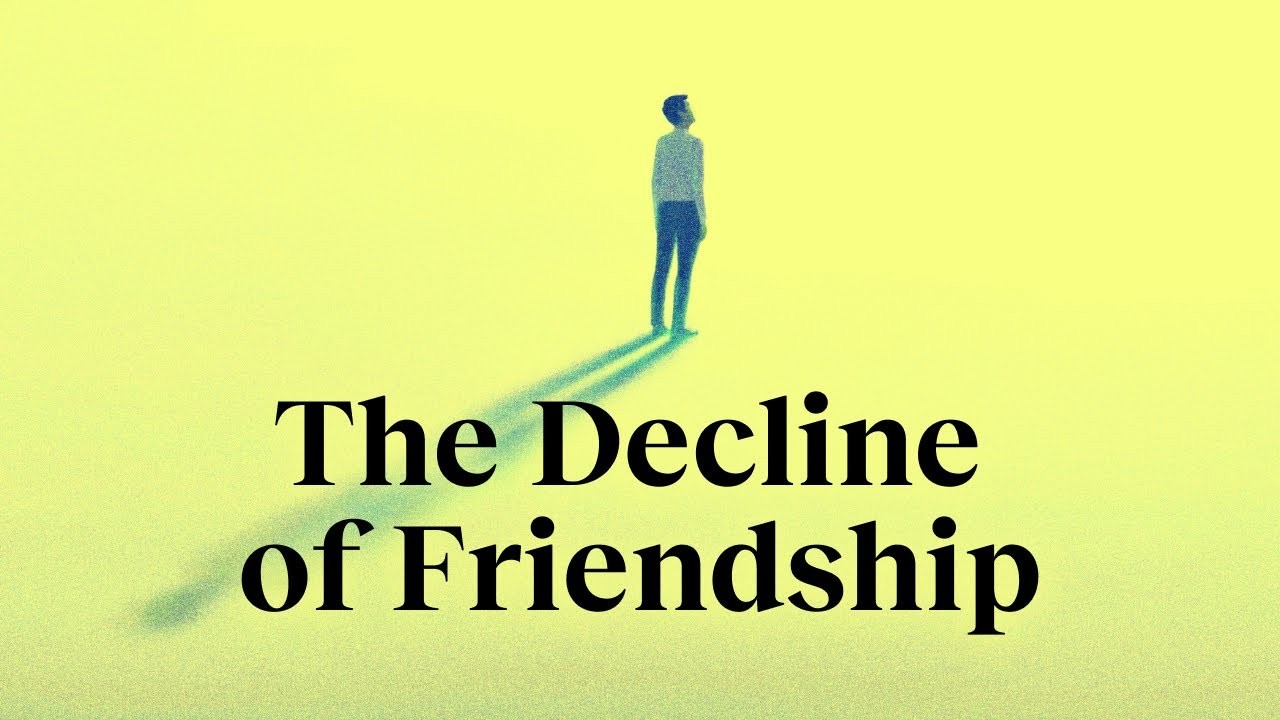
Carolyn Bruckmann's article in the Harvard Kennedy School's, "The Friendship Recession: The Lost Art of Connecting," examines the significant decline in close friendships among Americans. Citing the American Perspectives Survey, the piece notes that the percentage of U.S. adults reporting no close friends has quadrupled to 12% since 1990, while those with ten or more close friends have decreased nearly threefold. Factors contributing to this trend include suburban sprawl, reduced investment in communal spaces, economic pressures, and the rise of digital communication, leading to decreased in-person interactions and a cultural shift towards solitude.
The decline in close personal relationships, as highlighted in this analysis, presents a challenge for organisational leaders. Social connections are integral to employee well-being and productivity. Companies should recognise the value of fostering workplace friendships through team-building activities and collaborative projects. By promoting a culture that values interpersonal relationships, organisations can enhance employee satisfaction and retention, ultimately benefiting overall performance. That said, there are a few people in my career that made that difference for me, and it's bad when you lose them at work, but hopefully you can gain them after work as friends, not just colleagues or line managers. Nevertheless, it's ironic that in an age where we can message anyone instantly, genuine connections are dwindling.
"The Coming Knowledge-Work Supply-Chain Crisis,"

Devesh's article, "The Coming Knowledge-Work Supply-Chain Crisis," explores how advancements in AI, particularly in content generation, are outpacing the human capacity to process and utilise this information effectively. While AI tools can produce vast amounts of content, the bottleneck arises in the human elements of editing, fact-checking, and decision-making, leading to inefficiencies in the knowledge work supply chain. This imbalance highlights the need for improved systems to manage and integrate AI-generated content into human workflows.
AI tools can produce content at an unprecedented scale, outpacing human processing capabilities. But the primary limitation lies in human tasks such as editing and decision-making, which haven't scaled alongside AI advancements. I do think the dependence on AI for content generation could lead to a devaluation of human creativity and critical thinking. So, this knowledge-work supply-chain crisis feels like watching a factory produce goods faster than the trucks can ship them. AI's ability to generate content is astounding, but without the human infrastructure to process and apply this information, we're left with digital warehouses full of unused data. Perhaps it's time we focus not just on what AI can do, but on how we, as humans, can adapt to work alongside it effectively.
Last Week in AI
- Extend the Amazon Q Developer CLI with Model Context Protocol | aws.amazon.com
- Google’s NotebookLM Audio Overviews adds more than 50 languages | blog.google
- 30 percent of some Microsoft code now written by AI | The Register | theregister.com
- What’s new in Copilot Studio: April 2025 | Microsoft Copilot Blog | microsoft.com
- OpenAI rolls back update that made ChatGPT 'too sycophant-y' | TechCrunch | techcrunch.com
- Alibaba unveils Qwen 3, a family of 'hybrid' AI reasoning models | TechCrunch | techcrunch.com