This week is all about the good ol’times! Really! From the medieval manuscripts to modular synths, from retro gaming caves to five-key USB keysets; this #RBM roundup details the artefacts and moments that shaped how we interact, create, and connect. Lets revisit the quirky journey of the manicule, a typographic pointing hand that’s silently guided us for centuries, and trace how an Altair 8800 sparked a grassroots tech revolution. Then we detour through the pixelated, puzzle-packed tunnels of The Troll Hole Adventure. And how about a look at the soulful reengineering of Daft Punk’s Something About Us as both homage and autobiography? Finally, a tribute to the tactile innovation of Douglas Engelbart’s chorded keyset, now reborn with USB. This edition is a true celebration of legacy tech, human creativity, and the quiet brilliance hiding in every byte!
In this issue
5 piecesThe article " The Secret History of the Manicule, the Little Hand That’s Everywhere " from Messy Nessy Chic gets into the intriguing journey of the manicule
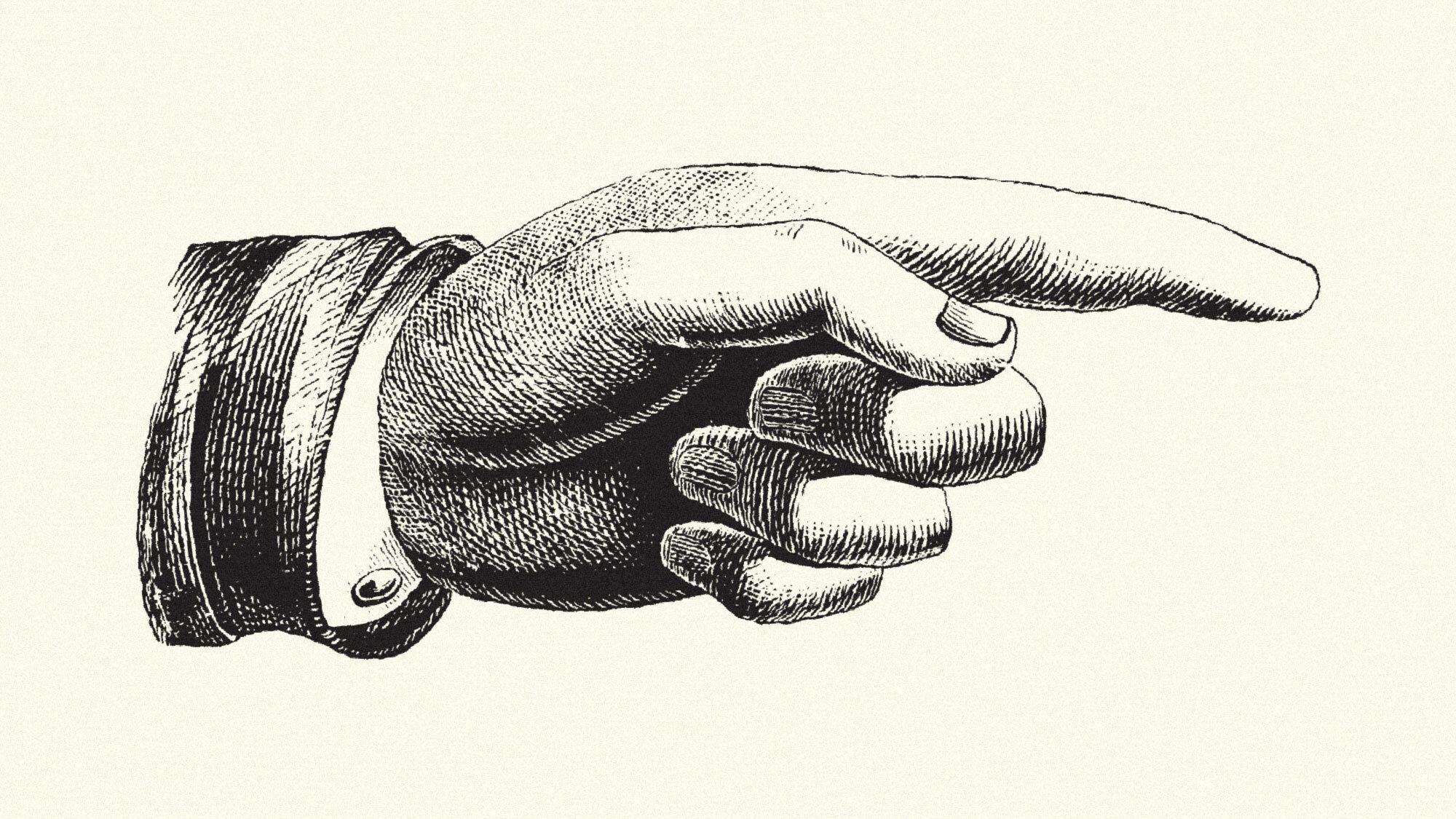
, a typographic symbol resembling a pointing hand. Originating in the margins of medieval manuscripts, manicules were hand-drawn by readers to highlight significant or contentious passages, serving as personalised annotations. Notably, the Domesday Book of 1086 contains some of the earliest known examples of these symbols. Over time, the manicule evolved from a reader's tool to a printed symbol used by publishers to direct attention within texts.
What a journey, eh?! From medieval manuscripts to modern digital interfaces! This exemplifies the long enduring human desire to guide and emphasise. Reading this makes me wonder about our evolution, as all of it reflects our continuous adaptation of symbols to suit changing mediums while preserving their fundamental purpose. We live in an age where information is abundant, some of it redundant, and most importantly fake; this manicule serves as a gentle reminder of the importance of direction and focus. In the broader context, the manicule represents the enduring relevance of historical symbols in contemporary communication, bridging the gap between past and present.
" Microcomputers – The First Wave: Responding to Altair " from Creatures of Thought explores the transformative impact of the MITS Altair 8800
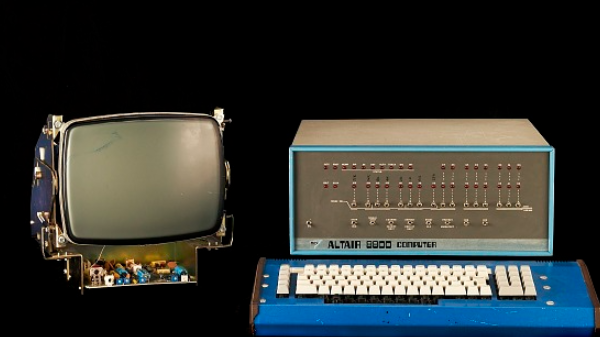
on the personal computing landscape. Introduced in 1975, the Altair 8800 was a kit-based microcomputer that, despite its minimal initial features - such as 256 bytes of memory and a lack of input/output devices - sparked a revolution among hobbyists and entrepreneurs. Its affordability and accessibility empowered individuals to experiment, leading to the formation of user groups like the Southern California Computer Society (SCCS), where enthusiasts shared knowledge and innovations.
The Altair 8800's introduction marked a pivotal moment in computing history for me, not merely for its technological contributions but for the socio-economic ripple effects it generated. By lowering the barrier to entry, it enabled a diverse group of individuals to participate in technological development, leading to a decentralised innovation model. This democratisation of technology fostered a fertile ground for entrepreneurship, ultimately reshaping the global economic landscape and setting a precedent for future technological disruptions. This whole story, ensued a wave of innovation of the power of community and the human drive to overcome limitations. It's fascinating how - with today's lenses - a rudimentary kit could ignite a movement that transformed the technological landscape. This era reminds me that sometimes, constraints can be the very catalysts that propel us toward groundbreaking advancements. Case in point; DeepSeek and the revolution that is following that.
“ The Troll Hole Adventure ” (1980) is a text-based treasure hunt game developed by Long Playing Software for the Interact Model One computer

. Despite the system's limited capabilities, the game offers a surprisingly rich and challenging experience. Players navigate a whimsical underground world filled with puzzles, treasures, and quirky characters. The game's parser is notably strict, requiring precise commands like "FLICK LIGHTER" to progress. Puzzles often involve creative solutions, such as using a mirror to read reversed inscriptions or employing a balloon to lift heavy objects. The game also features a unique inventory management system and interactive elements like a singing sword and a cobra guarding a ruby.
Gotta love the creativity and ingenuity of early game developers! This complex puzzles and rich world-building of this game - which I was too young to play - offers a great view into the formative years of interactive fiction. Sure, it may present challenges to modern players, but its preservation allows us to appreciate the roots of narrative-driven gaming. In the annals of computing history, the troll hole exemplifies the resourcefulness of early developers working within tight technical constraints. I think this foundational work paved the way for today's complex gaming experiences.
Marca Tatem’s “Recreating Daft Punk’s Something About Us” i
Marca Tatem’s “Recreating Daft Punk’s Something About Us” is a meticulous, love-letter of a project that reimagines the iconic track using Ableton Live 12. Layer by layer, from the dreamy Wurlitzer keys to the emotional guitar solo and vocoded harmonies, Tatem reverse-engineers the sonic fingerprint of Daft Punk, drawing heavily from the aesthetics of the French Touch movement. His methods combine precise sampling, vintage emulations, and modern production tools, showcasing how deeply music and memory intertwine. Beyond technique, the piece is an autobiographical reflection.
Reading this, I couldn’t help but imagine music as a sort of time travel, one beat dragging memory into the present. This recreation isn’t just a studio exercise; it’s a sonic diary, punched full of reverb and romance. What moved me most was how specific sounds; a filtered synth, a muffled snare, carried whole chapters of his life. It’s comforting to know that even in the sterile glow of DAWs and plugins, the soul still sneaks through. We’re all just trying to remix where we come from, aren’t we? This is way more than a fan homage, this is technical ethnomusicology, marrying precise sound synthesis with a contextual understanding of musical lineage. Reminds me of my times with S3M tracker (search my youtube and you'll find some details).
A USB Interface to the 'Mother of All Demos' Keyset,
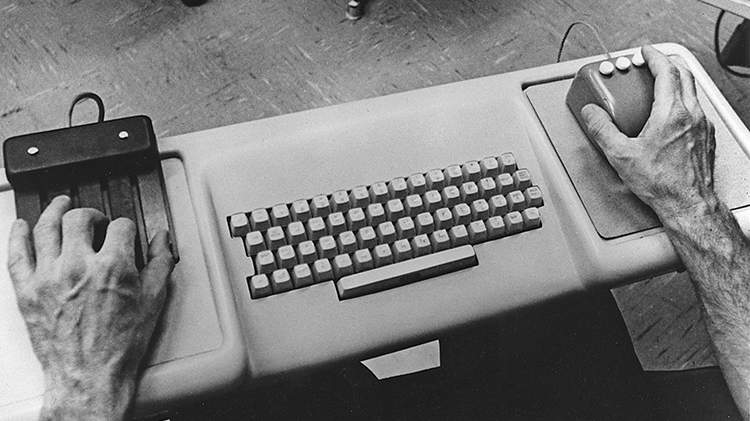
"A USB Interface to the 'Mother of All Demos' Keyset," details the recreation and modernisation of Douglas Engelbart's innovative five-key chorded input device from the 1968 demonstration. Engelbart's original keyset allowed users to input characters by pressing combinations of keys simultaneously, enabling efficient text entry without moving the hand. Shirriff, with the assistance of Engelbart's daughter, Christina, who provided an original keyset, developed a USB interface to connect this historical device to contemporary computers. This endeavour not only preserves a piece of computing history but also offers insights into alternative human-computer interaction methods.
We started with nostalgia, we'll end with nostalgia! Resurrecting this input device is na amazing thing to do! This project offers valuable insights into alternative interaction paradigms, which, I think, it show the importance of preserving and studying historical computing artefacts. Isn't that the topic of this week edition? :) This shows us the huge legacy of computing artefacts that pioneers, but also inform the development of future interaction technologies. Reading all these details evokes a sense of true nostalgia and admiration for the pioneers of computing. What a great endeavour!
Last Week in AI
- Generative AI is learning to spy for the US military | MIT Technology Review | technologyreview.com
- The Agency, Control, Reliability (ACR) Tradeoff for Agents | fin.ai
- Our Best Customers Are Now Robots · The Fly Blog | fly.io
- Sam Altman says OpenAI's new ChatGPT-4.5 is more emotionally intelligent but warns that it's 'expensive' | tech.yahoo.com
- WHAMM! Real-time world modelling of interactive environments. | microsoft.com
- AI chatbots, particularly those designed for fantasy and sexual role-playing, are leaking user prompts online | The Wired | wired.com