Welcome to April! This time it’s all about the birth of Microsoft to the rediscovery of a forgotten coffee bean, what ties these stories together in this week edition is a very human obsession: the race to build, to claim, to endure. Gates and Allen saw a future coded in BASIC, Sierra chased dreams only to be caught in a retail detour, and Coffea stenophylla may just save our coffee culture from a world too hot for arabica. Meanwhile, today’s websites are subtly shifting their tone; not for us, the humans sipping our espresso, but for LLMs, the quiet new readers of our age. And then there’s Guillemin and Schally, grinding actual brains in pursuit of biochemical glory, a rivalry that feels eerily familiar in a world where researchers hoard data like startup founders hoard VC investment. Whether it’s peptides or pageviews, the same forces keep showing up: ambition, urgency, and a desperate need to matter. Progress may be digital now, but the fuel is timeless.
In this issue
5 piecesIn a recent blog post commemorating Microsoft's 50th anniversary , co-founder Bill Gates reflects on the company's origins and the development of its first product

, the Altair BASIC interpreter. Inspired by the January 1975 issue of Popular Electronics featuring the Altair 8800 microcomputer, Gates and Paul Allen recognised the potential of personal computing and set out to create software for the Altair. Working intensively, they developed a BASIC interpreter that allowed users to write programs for the machine. This software became Microsoft's inaugural product and laid the foundation for the company's future innovations.
Lets start with the obvious! 50 years of Microsoft is a lot and I've been there through the past 35 or so... So, Isn't it fascinating how a single magazine cover can ignite a revolution? Gates and Allen's story reminds us that sometimes, seizing the moment, armed with passion and a bit of audacity, can lead to monumental change. It's like they saw the future in that Popular Electronics issue and decided to code their way into it. Having access to the original 157-page source code for Altair BASIC available as a PDF? Yes please! It offers a glimpse into the early days of personal computing and Microsoft's formative moments. In today's world dominated by complex software ecosystems, revisiting such foundational code provides valuable insights into the minimalist ingenuity that sparked a technological revolution
In 1996, Sierra On-Line, a leading video game company known for titles like Phantasmagoria, announced its merger with CUC International, a conglomerate specialising in retail and membership services.
This unexpected move raised questions about CUC's identity and its interest in the gaming industry. CUC, under CEO Walter Forbes, aimed to revolutionise shopping by bypassing traditional retailers through digital platforms, envisioning a future where consumers would shop directly from manufacturers using computers. This vision led to CUC's public offering in 1983, with plans to aggregate product information and present it engagingly to consumers.
My youth was based on Sierra games! Those pixelated worlds were my comfort zone! King’s Quest, Space Quest, Gabriel Knight? Leisure Suit Larry? They didn’t just entertain, they raised a generation of gamers who learned to type "open door" before we learned to drive. So when I read this article about Sierra’s 1996 merger with CUC International, it felt like hearing your favourite indie band just signed with a corporate label best known for selling vacuum cleaners. It’s wild how one of the most imaginative companies in gaming history became a pawn in the ambitious, retail-fuelled visions of Walter Forbes. CUC wasn’t evil, just utterly disconnected. Their mission to digitise shopping was decades ahead of its time, but merging that with the magic of Sierra felt like mixing oil paint with spreadsheets. This story is more than a merger; it's a reminder of how creativity and commerce often struggle to speak the same language. And sometimes, when business gets involved, the most magical quests can lose their map.
In the face of climate change threatening global coffee production, scientists have turned their attention to Coffea stenophylla , a rare species native to West Africa
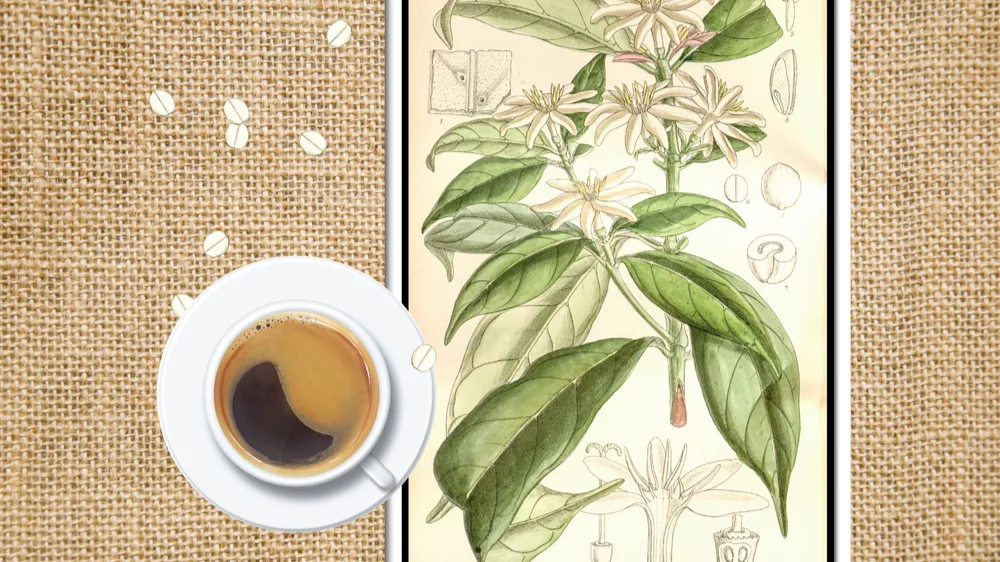
. Rediscovered in Sierra Leone's forests after being unseen in the wild since 1954, stenophylla exhibits remarkable heat and drought tolerance, thriving in temperatures 11 to 12 degrees Fahrenheit higher than those suitable for arabica coffee. Notably, stenophylla's flavour profile closely resembles that of arabica, offering a complex and naturally sweet taste with medium-high acidity and fruitiness.
I love coffee and I bet you weren't expecting a post about it on this newsletter! Expect the unexpected, that's me! As someone steeped in Portuguese café culture, the idea of coffee going extinct hits harder than a bica on a sleepy Lisbon morning. Coffee isn’t just a beverage there, it’s a ritual, a social glue, an excuse to pause, talk, or silently reflect. From neighbourhood cafés where the 'barista' knows your order before you sit, to sobremesa conversations that stretch long past dessert, coffee fuels not just our bodies, but our bonds. So, rediscovering of Coffea stenophylla feels like finding the long-lost cousin of our beloved espresso bean, a tougher, a bit wild, and ready to take on a hotter world - climate change is a thing you now! Sure, it may yield less, but if it saves the soul of the café, it’s worth every tiny berry. After all, if there's one thing more enduring than saudade, it’s our love for that perfectly pulled shot.
"Hyperlegibility" is a great essay from Packy McCormick , where he explores the concept of hyperlegibility, extending it beyond its traditional association with fonts to describe the modern era's trend toward extreme clarity and accessibility of information

. He reflects on how information that was once difficult to obtain is now almost impossible to avoid, illustrating this with personal anecdotes about accessing sports scores in the past versus the present. McCormick draws inspiration from Tyler Cowen's prolific reading habits and his intent to make his writings comprehensible to future AI models, coining the term "hyperlegible" to describe content designed for maximum clarity and accessibility.
We used to build websites for people, designing for clicks, colours, and conversions. And browsers, remember that?! But now, it feels like we’re quietly pivoting to building for language models. This riff on hyperlegibility hints at a future where clarity isn’t just about human readability, it’s about machine digestibility. We're no longer just optimising for SEO or skimmability; we’re tuning our content so that LLMs can understand, summarise, and, maybe someday, decide for us. And here’s where it gets weird: what happens when websites are no longer written for us, but through us, for the bots that read, rank, and relay our information back to others? Hyperlegibility might soon mean a kind of machine-friendly transparency; perfectly parsed, source-tagged, and prompt-ready prose that’s less about style and more about structure. It’s like designing buildings that only drones can navigate.
The Nobel Duel article recounts the bitter rivalry between Guillemin and Schally , two scientists in endocrinology racing to isolate and determine the structure of hypothalamic releasing factors, TRF.

Their competition, fuelled by ambition, personal conflict, and scientific challenges, provides a cautionary tale of how research incentives can distort scientific progress. Their decades-long duel saw breakthroughs and missteps, including flawed experiments and eventual convergence on the identity of TRF as pyro‑glu‑his‑pro‑amide. Although Schally secured a narrow victory, both scientists’ work ultimately confirmed the existence of hypothalamic hormones and advanced our understanding of human physiology.
Reading about this Nobel war feels less like dusty history and more like a prototype of today’s startup and research rivalries; just with more sheep brains and fewer GPUs. Their obsession with isolating TRF, hoarding data, and claiming credit mirrors the modern scramble in AI and biotech, where being first is everything, even if the road there is paved with burnout, secrecy, and quietly sabotaged collaborations. What really hits home is how the tools they lacked; automated sequencing, machine learning models, real-time data sharing, are exactly what we’ve now built. And yet, even with all that tech, we haven’t outgrown the mindset. Look at how researchers jockey for priority on preprint servers, or how tech giants race to drop the latest LLM feature like it's the molecular structure of TRF. It’s the same drama, new lab coat.
Last Week in AI
- Google Online Security Blog: Google announces Sec-Gemini v1, a new experimental cybersecurity model | security.googleblog.com
- Yann LeCun, Pioneer of AI, Thinks Today's LLM's Are Nearly Obsolete - Newsweek | newsweek.com
- Project Aardvark: reimagining AI weather prediction | The Alan Turing Institute | turing.ac.uk
- Most AI value will come from broad automation, not from R&D | Epoch AI | epoch.ai
- The Llama 4 herd: The beginning of a new era of natively multimodal AI innovation | ai.meta.com
- Microsoft has created an AI-generated version of Quake | theverge.com