
What a busy week, eh?… hopefully soon I can share some great news about work, but for now, this week in #RBM I’ll cover from retro computing and the elegance of old-school OS design to modern AI-driven science. It’s the tension between the human and the machine, the old and the new. Starting then with an AmigaOS piece that celebrates forgotten design finesse that once gave users real power and delight, whilst expanding to fastDOOM, which reminds us that vintage tech still has room for performance miracles with just the right care and craft. Meanwhile, Yufei Zhao’s textbook stands at the crossroads of structure and randomness, not just in mathematics but in life itself, advocating for a balanced intellectual rigour. Mariam Mahmoud calls us back to the joy of intentional curiosity, urging us to see research not as work, but as a deeply human, leisurely pursuit. And then, zooming forward, Google’s AI co-scientist hints at a future where machines not only support but collaborate in our quest for knowledge. All of this invite us to reflect on how we engage with systems, whether they’re vintage or virtual, and how much of ourselves we’re willing to bring to the process of learning, building, and discovering.
In this issue
5 piecesThe article “ Little Things That Made Amiga Great ” gets into the nuanced features of AmigaOS versions 2.0 to 3.1,
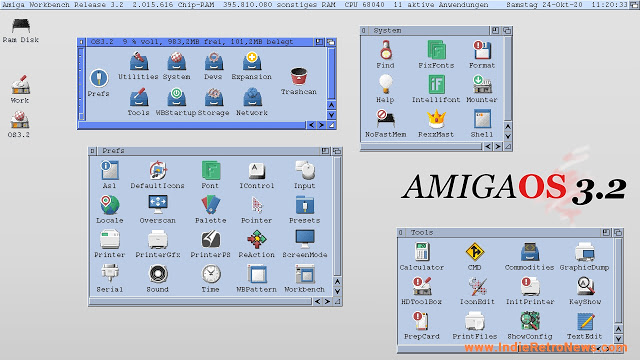
highlighting the operating system’s innovative blend of command-line and graphical user interfaces. It underscores how AmigaOS balanced user-friendliness with openness, offering functionalities such as the dynamic RAM Disk, the persistent RAD Disk, proportional scroll bars, and the ARexx scripting language, which collectively contributed to a computing experience ahead of its time.
Ah, the Amiga! A machine that is the symbol of nostalgia, for a time when operating systems dared to be different. Reading about all these - somehow forgotten - features feels like uncovering a treasure chest of ingenious solutions that modern systems could still learn from. The dynamic RAM Disk and persistent RAD Disk? Pure brilliance. Sometimes, the little things, like proportional scroll bars, can really make a world of difference in user experience - which is somewhat forgotten these days. If only today’s tech landscape embraced such elegant simplicity and user empowerment. Perhaps it’s time to revisit these old ideas and see how they can inspire the future of computing. However, it’s also a tale of missed opportunities, innovations that, despite their brilliance, couldn’t secure AmigaOS a dominant spot in the market.
Yufei Zhao’s “ Graph Theory and Additive Combinatorics: Exploring Structure and Randomness ” offers a modern introduction to extremal graph theory and additive combinatorics
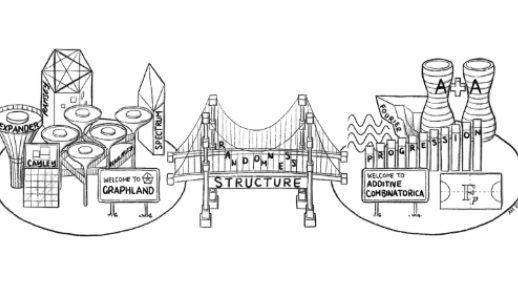
, emphasising the interplay between structure and pseudo randomness. The text details foundational results such as Roth’s theorem, Szemerédi’s theorem, and the Green–Tao theorem, providing insights through graph-theoretic perspectives. Topics covered include the Turán problem, Szemerédi’s regularity lemma, pseudorandom graphs, graph limits, and the sum-product problem. The book is designed for graduate and advanced undergraduate students, featuring numerous figures, exercises, and access to lecture videos from Zhao’s MIT course.
Zhao’s work feels like embarking on a mathematical expedition where graphs and numbers dance in a delicate balance of order and chaos. His emphasis on structure versus pseudo randomness clearly resonates beyond mathematics, echoing the human quest to find patterns amidst randomness - aren't we all like that? :) Much like in life, understanding the interplay between the predictable and the unpredictable can lead to profound insights. Perhaps, in both math and life, embracing this dance is key to uncovering deeper truths. Bottom line, this work not only enriches the academic discourse but also underscores the evolving nature of mathematical inquiry in deciphering patterns that underpin both theoretical constructs and real-world applications.
The Lost Art of Research as Leisure,

In “The Lost Art of Research as Leisure,” Mariam Mahmoud advocates for reviving the practice of ‘research as leisure,’ emphasising its role in cultural development. She draws upon T.S. Eliot’s concept of culture as a hierarchy of individual, group, and societal interactions, and Josef Pieper’s notion of leisure as a form of directed contemplation, highlighting how intentional, curiosity-driven research fosters cultural coherence.
Here's a gentle nudge to swap our endless doom scrolling for a magnifying glass and a notepad. Imagine turning your next coffee shop visit into a mini research expedition, decoding the origins of your espresso or the architectural history of the café - who doesn't do weird searches??? Our world is brimming with mysteries waiting to be unravelled, if only we trade passive consumption for active curiosity - like reading this newsletter every week... So, next time you’re tempted by another binge watching session, perhaps consider embarking on a leisurely quest for knowledge instead. Who knows what fascinating rabbit holes you’ll discover? For professional work, this approach shows the importance of cultivating a mindset that values questioning and exploration, not only as a means of personal enrichment but also as a catalyst for organisational growth and adaptability. Think about that...
Why fastDOOM is fast

In “Why fastDOOM is fast,” Fabien Sanglard explores the performance enhancements achieved by fastDOOM, a port of the classic DOOM game optimised for speed on vintage hardware. By benchmarking on an IBM PS/1 486-DX2 66MHz, Sanglard observes a 30% increase in frame rates without sacrificing features, attributing these gains to meticulous code optimisations and architectural improvements implemented by developer Victor “Viti95” Nieto.
Whaaat? Two nostalgic posts in one edition? ;) Right, so DOOM, remember that? Now imagine it really FAST! It's so interesting to see how a labour of love and a few thousand lines of optimized code can breathe new life into a classic. Makes you wonder what other gems from the past are just a tweak away from a performance power-up. Maybe it's time to drop the vibe coding of today and put some effort of a LLM to recode old game and make them performant ... It's just an idea! Victor “Viti95” Nieto’s methodical approach demonstrates that even decades-old software can benefit from a rigorous audit and targeted enhancements- a dance well-known to developers navigating the constraints of both past and present computing environments.
Google Research has introduced an AI co-scientist , a multi-agent system powered by Gemini 2.0, designed to serve as a virtual collaborator for scientists.

This system aims to assist in generating novel hypotheses and research proposals, thereby accelerating scientific and biomedical discoveries. The AI co-scientist has been tested by researchers at institutions such as Stanford University and Imperial College London. It utilises advanced reasoning to help synthesise vast amounts of literature and generate innovative hypotheses.
This needs a bit of reflection, outside of the general GenAI news bellow... Having tireless lab partner who never sleeps? Doesn’t hog the coffee machine? Can sift through mountains of data faster than you can say “peer review"? Yes, please! This Google’s AI co-scientist seems to be that dream colleague, potentially revolutionising the way we approach scientific discovery. Its ability to generate and refine hypotheses could free up human researchers to focus on the nuanced, creative aspects of science. Of course, we’ll need to keep an eye on ensuring that this digital assistant doesn’t inadvertently lead us down biased rabbit holes or make us complacent in our critical thinking. But overall, it’s an exciting glimpse into a future where AI and human ingenuity collaborate to push the boundaries of knowledge. The early applications, notably in liver fibrosis research, suggest that AI-generated hypotheses can complement and enhance human expertise. However, the deployment of such systems necessitates careful consideration of data quality, interpretability, and ethical implications.
Last Week in AI
- Anthropic Economic Index: Insights from Claude 3.7 | anthropic.com
- Tracing the thoughts of a large language model Anthropic | anthropic.com
- Introducing 4o Image Generation | OpenAI | openai.com
- The 500 Million Worker Problem - From India Dispatch | indiadispatch.com
- Archetype AI is like ChatGPT for the physical world | fastcompany.com
- Microsoft adds ‘deep reasoning’ Copilot AI for research and data analysis | theverge.com