
March is ending – yay!! So, it’s wild how our world is evolving in so many unexpected directions, right? From CPUs secretly performing shadow computations to robots pulling off breakdancing routines, it feels like reality is stretching at the seams. Then there’s AI Labyrinths, which sounds like a digital funhouse of endless decoy pages designed to send nosy bots on a wild goose chase; AI tricking AI, because why not? And on a completely different note, we’ve got the housing crisis intertwining itself into everything from fertility rates to climate change. Who knew that finding a place to live could mess up the whole socioeconomic fabric? Finally, Europe’s tech industry is trying to reclaim its independence, pushing for a “Euro stack”. It’s like the whole world is in a massive experiment, and we’re just hoping the variables don’t blow up in our faces…
In this issue
5 piecesThe article " Computing with Time: Microarchitectural Weird Machines " introduces the concept of microarchitectural weird machines (µWMs

), which leverage unintended computational behaviours arising from interactions within CPU components like branch predictors and caches. These µWMs perform computations through side effects and conflicts among microarchitectural entities, observable as timing variations during instruction execution. The authors demonstrate the practicality of µWMs by obfuscating malware code that remains invisible until triggered, at which point it decrypts and executes its payload.
How fascinating it is to dive into the world of microarchitectural weird machines, which feels a bit like discovering a hidden language within our everyday gadgets. It's as if our CPUs have secret lives, performing shadow computations that fly under the radar of traditional security measures. Imagine trying to catch a whisper in a noisy room; that's what current analysis tools face when dealing with µWMs. I think this opens up Pandora's box of security concerns. If malicious actors build on these techniques, we could be looking at a new frontier of undetectable malware. It's a gentle reminder that as our technology becomes more intricate, so do the methods to exploit it. And you can say the same with AI/GenAI...
Boston Dynamics' latest showcase of its Atlas robot demonstrates remarkable advancements in humanoid mobility.

The robot exhibits fluid movements, including running, cartwheeling, and even breakdancing, highlighting its agility and balance. These developments underscore Boston Dynamics' leadership in the field of humanoid robotics, pushing the boundaries of what robots can achieve in terms of dynamic motion.
Watching Atlas bust out moves that would make a gymnast proud is both awe-inspiring and a tad unsettling. It's as if we've leapt from clunky metal contraptions to robots that could give dance crews a run for their money. But beyond the spectacle, it makes me wonder: are we engineering robots to dazzle us on stage, so that they can kill us at the end, or to tackle the mundane yet essential tasks of daily life, so that they can kill us at the end? Whilst Atlas's agility is a show off of human ingenuity, I can't help but hope that these advancements will soon pivot from performing stunts to perhaps folding my laundry or mowing the lawn. After all, isn't the dream to have robots handle the chores we dread, rather than outshine us on the dance floor?
has introduced AI Labyrinth , a novel approach to combat unauthorised AI web crawlers that disregard "no crawl" directives.
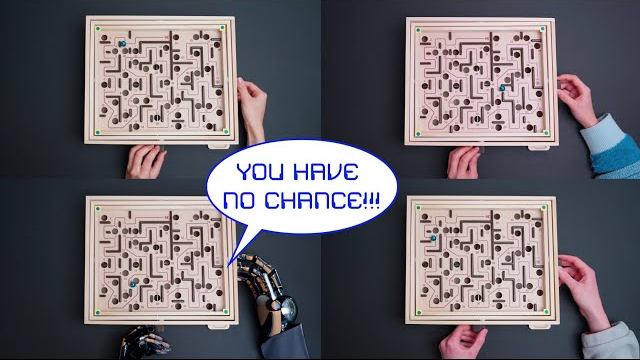
Cloudflare This system deploys AI-generated, interconnected decoy pages designed to ensnare these bots, causing them to expend resources on irrelevant content. By doing so, AI Labyrinth not only protects genuine website data but also serves as an advanced honeypot, enhancing bot detection capabilities.
Talking about obfuscation, right? Imagine setting up a series of funhouse mirrors for nosy neighbours peeking into your yard. That's essentially what Cloudflare's AI Labyrinth does to pesky web crawlers. By leading these digital snoops down a rabbit hole of AI-generated gibberish, it's like giving them a wild goose chase they'll never win. It's a clever twist; using AI to dupe other AI... turning the tables in this cat-and-mouse game. But as with all tricks, there's the risk that the bots might eventually wise up. For now, though, it's a delightful digital prank that keeps the bad bots baffled and the good content safe.
The article " The Housing Theory of Everything " explores how housing shortages in Western countries contribute to various societal issues beyond just affordability.

The authors argue that limited housing supply exacerbates economic inequality, hinders productivity growth, influences climate change, affects public health, and contributes to declining fertility rates. They emphasise that where individuals live impacts numerous aspects of their lives, including employment opportunities, social interactions, family planning, and health outcomes. The article suggests that addressing housing shortages could alleviate these interconnected problems.
How something as fundamental as housing intertwines with so many facets of our lives... The simple notion that where we live can ripple out to influence our health, the environment, and even our decisions about starting a family is both profound and a bit unsettling. Addressing housing shortages, in today's world and economy, isn't just about building more homes; it's about crafting communities (not gentrification) where people can thrive without sacrificing other aspects of their well-being. Perhaps it's time we rethink our approach to urban planning, considering not just the quantity of housing but the quality of life it fosters. Moreover, the postponement of family formation due to financial pressures linked to housing costs signals potential demographic challenges ahead. Then we can't forget that some local communities are being priced out by nomads, digital workers and expats. It's a bumpy ride...
A coalition of over 80 European tech entities , including industry giants like Airbus and Dassault Systèmes, has urged the European Union to bolster digital sovereignty

by reducing dependence on foreign technologies. In an open letter to EU leaders, they advocate for the creation of a sovereign infrastructure fund to invest in advanced technologies and propose a "buy European" policy in public procurement to support local tech industries.
I do welcome this European move towards its own tech industry, rallying for digital sovereignty, essentially advocating for a homegrown tech ecosystem. The idea of a "Euro stack" sounds like a techie's dream; a continent powered by its own chips, platforms, and AI models. But let's be honest, building this from scratch is like deciding to bake your own bread after years of buying from the bakery; it requires time, resources, and a lot of trial and error. Plus we need to add every single country own problems, languages and cultural differences. While the intent is noble, ensuring that these local products can compete on a global scale is the real challenge. After all, no one wants to use a clunky email service just because it's made in Europe. Striking the right balance between independence and quality will be key. But this brand new world is teaching us that maybe local is the new global.
Last Week in AI
- A Deep Dive Into MCP and the Future of AI Tooling | a16z.com
- Apple’s new shake-up proves Siri’s now being taken seriously | 9to5mac.com
- GAIA: An Open-Source Project from AMD for Running Local LLMs | amd.com
- US appeals court rejects copyrights for AI-generated art lacking 'human' creator | reuters.com
- Tencent Expands AI Push with Open-Source 3D Generation Tools | techsterhub.com
- AI search is starting to kill Google’s ‘ten blue links’ | theverge.com