Welcome to the second year of Read Before Monday newsletter! For those that haven’t subscribe to it yet, here it is the link. For loyal members (yes you!), this week is about cognitive decline, which might not hit as early as we thought – new research suggests our mental faculties remain stable until around 60, provided we keep them engaged. That’s great news for IT professionals, but for the rest, maybe it’s time to pick up Raspberry Pi projects! Meanwhile, unexpected communities continue to fuel innovation, as seen when anime fans on 4chan stumbled upon a new mathematical concept, proving that intellectual contributions aren’t confined to academia. On the tech front, reflecting on the evolution of filesystems up to 1984 highlights how foundational past innovations were; yet today’s tug-of-war between performance and integrity feels oddly familiar. Elsewhere, ancient civilisations knew a thing or two about colour, but many of their vibrant hues faded over time, reminding us that history isn’t always as monochrome as we perceive. And finally, seemingly “weird” research; whether levitating frogs or studying toast physics, has a habit of yielding groundbreaking discoveries, reinforcing why we should embrace the unpredictable in science and innovation.
In this issue
5 piecesThe article " Age and cognitive skills: Use it or lose it " examines how cognitive abilities evolve with age
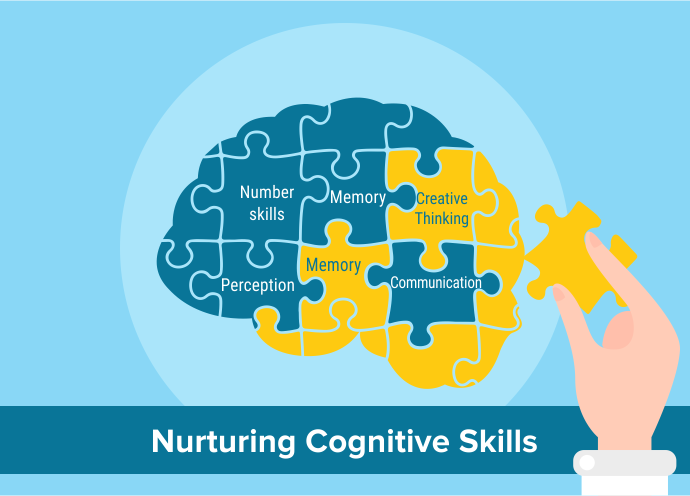
. Traditional cross-sectional studies suggest cognitive decline begins around age 30. However, this research indicates that such declines may be overestimated due to cohort effects. Longitudinal data reveals that cognitive skills remain stable until around age 60, after which a gradual decline occurs. The study emphasises the importance of continuous mental engagement to maintain cognitive functions throughout life.
Isn't it reassuring to think our brains might not be on a downhill slide from our 30s? This study suggests we can keep our cognitive gears well-oiled until our 60s, especially if we stay mentally active. If you work in IT, you probably be fine :) But, if not, perhaps it's time to pick up that new hobby or finally tackle that challenging puzzle - pick RaspberryPi's! After all, keeping our brains engaged might just be the secret to graceful aging. Yet, the findings from this study offer valuable insights for organisational leaders; understanding that cognitive abilities remain stable until around age 60 challenges prevalent assumptions about aging in the workplace #Ageism. This clearly shows the importance of fostering continuous learning environments and leveraging the experience of senior employees.
In 2011, an anonymous 4chan user posted a mathematical puzzle related to the anime "The Melancholy of Haruhi Suzumiya," sparking widespread interest among anime fans.

This led to the discovery of a novel mathematical structure, later formalised by mathematicians as the "Haruhi number." The incident exemplifies how online communities can contribute to mathematical research.
Who would've thought that a bunch of anime fans on 4chan could stumble upon a new mathematical concept? It's like finding out your favourite fan theory actually holds the secret to the universe. This just goes to show that sometimes, the most unexpected communities can contribute to serious academic fields. Maybe next time I binge watch an anime, I'll keep an eye out for hidden mathematical gems. After all, inspiration can come from the most unlikely sources. Jokes aside, the emergence of the "Haruhi number" shows the democratisation of knowledge in the digital age. These grassroots collaborations (or even Hackatons) challenge traditional academic pathways, suggesting that intellectual contributions can arise beyond established institutions.
The article " 50 Years in Filesystems: 1984 " explores the evolution of filesystems up to the year 1984,

highlighting significant developments and design philosophies that shaped modern computing. It delves into the transition from simple storage mechanisms to more sophisticated systems, emphasising the challenges and innovations during this transformative period. The piece provides insights into how early filesystem designs have influenced contemporary data management practices.
Nostalgia time folks! And what a great piece of history content; reflecting on the evolution of filesystems up to 1984. Isn't it fascinating to see how foundational these developments were for today's data management? I mean. the move from rudimentary storage to complex systems with hierarchical directories and metadata was akin to giving our digital world a structured language. But - there's always one! - it's intriguing to consider how resistance to change and the tug-of-war between performance and integrity mirrored challenges we still face in tech adoption today. So, which of our current innovations will be viewed as groundbreaking - or misguided - by future generations? I'll start first! Generative AI... I do think that understanding these historical developments, can provide valuable insights into current engineering practices and the ongoing evolution of data storage solutions.
The article " The Ancient Art of Colour " delves into the rich history of colour usage in ancient civilisations, highlighting the techniques and materials employed to create vibrant artworks.

It explores how societies like the Egyptians, Greeks, and Mayans developed unique pigments and methods to adorn their sculptures, pottery, and architecture, reflecting cultural significance and technological advancements.
Now I'll pull my Art background and Civil Engineering degree, and show how our ancestors transformed the world around them with colour. From the meticulous creation of Egyptian blue to the enduring mystery of Maya blue, these vibrant hues were more than mere decoration - they were expressions of culture, spirituality, and identity. Yet, as time flows, many of these colours faded - see what I did here? :) - leaving us with a monochromatic misconception of the past. The other day someone was asking what colour I wanted for a car and I said, "any colour as long it's black". So, this is, perhaps, a reminder that our perception of history is always, in some way, incomplete - a puzzle missing a few vibrant pieces. Clearly, the practice of polychromy challenges modern assumptions about classical aesthetics, indicating a historical preference for vivid coloration in art and architecture.
The article " A Defense of Weird Research " argues that government-funded scientific studies, even those that seem obscure or impractical, often lead to significant breakthroughs and substantial economic returns.
It highlights examples like the development of massage therapy for preterm infants, which originated from rodent studies on maternal separation, resulting in improved infant health and reduced medical costs. The piece emphasises that basic research, though not always immediately applicable, is essential for technological and medical advancements, yielding returns far exceeding initial investments.
On a previous #RBM edition I talked about how GenAI hallucinations are being used to help researchers get unpredictability into their bench and use it. So, even if we think that studies are utterly bizarre - like levitating frogs -, they can clearly pave the way for groundbreaking discoveries. It's a bit like life's way of reminding us that the path to innovation is rarely a straight line. Organisations and policymakers should recognise that fostering an environment supportive of exploratory studies can lead to substantial long-term benefits, reinforcing the critical role of seemingly "weird" research in driving progress. So, the next time you hear about scientists researching the mating habits of fruit flies or the physics of toast landing butter-side down, remember: today's weird science might just be tomorrow's world-changing breakthrough. Keep it weird, science!
Last Week in AI
- Mistral OCR | Mistral AI | mistral.ai
- Amazon's AWS forms new group focused on agentic AI | reuters.com
- Introducing DeepSearcher: A Local Open Source Deep Research - Milvus Blog | milvus.io
- Microsoft releases new Phi models optimized for multimodal processing, efficiency | siliconangle.com
- 10 real-world Agentic AI examples and use cases | techtarget.com
- McDonald’s to employ AI at 43K locations to speed up service | nypost.com