
Welcome to another #RBM! This week I cover the march of progress, whether in science, technology, or culture, which is both relentless and reflective. Emmy Noether’s theorem, once a revelation tying symmetries to conservation laws, remains fundamental to physics despite the barriers she faced as a woman in academia. Delphi, a programming stalwart, reaches its 30th year- a rare feat in tech – continuing to serve a dedicated user base even as newer languages dominate. Then the Video Game History Foundation’s digital archive breathes new life into gaming’s past, preserving magazines and development footage, though the absence of playable classics leaves a lingering gap. Meanwhile, there’s a call for a return to decentralised content distribution – like the once-beloved RSS – which highlights the tension between digital freedom and the convenience of centralised platforms. And in psychology, the rise and reassessment of stereotype threat theory exemplifies the self-correcting nature of science, reminding us that even the most influential ideas must withstand the test of time and scrutiny. In other note, I’ll be posting here on Linkedin about TimeSeries and TimeSeries Foundation Models, so if that interests you, let me know and ping me a message.
In this issue
5 piecesEmmy Noether's 1918 theorem represents a cornerstone in theoretical physics, elucidating the intrinsic link between symmetries and conservation laws

. By resolving the apparent paradox in Einstein's general relativity regarding energy conservation, Noether provided a mathematical framework that has become indispensable in modern physics.
So, imagine uncovering a hidden code that ties together the universe's most fundamental laws?! That's essentially what happened over a century ago. Emmy's theorem elegantly shows that for every symmetry in nature, there's a corresponding conservation law. It's like finding out that the universe has a rhythm, and if you dance in sync with it, certain moves, just like energy or momentum, remain constant - the rippling effect of time perhaps? Yet, it's interesting to think that despite such a monumental contribution, Emmy faced significant gender-based barriers in academia. I think her story is a powerful reminder of the brilliance that can flourish when we look beyond societal biases, particularly in today's modern world.
commemorates Delphi's 30th anniversary, highlighting its enduring relevance and active developmen
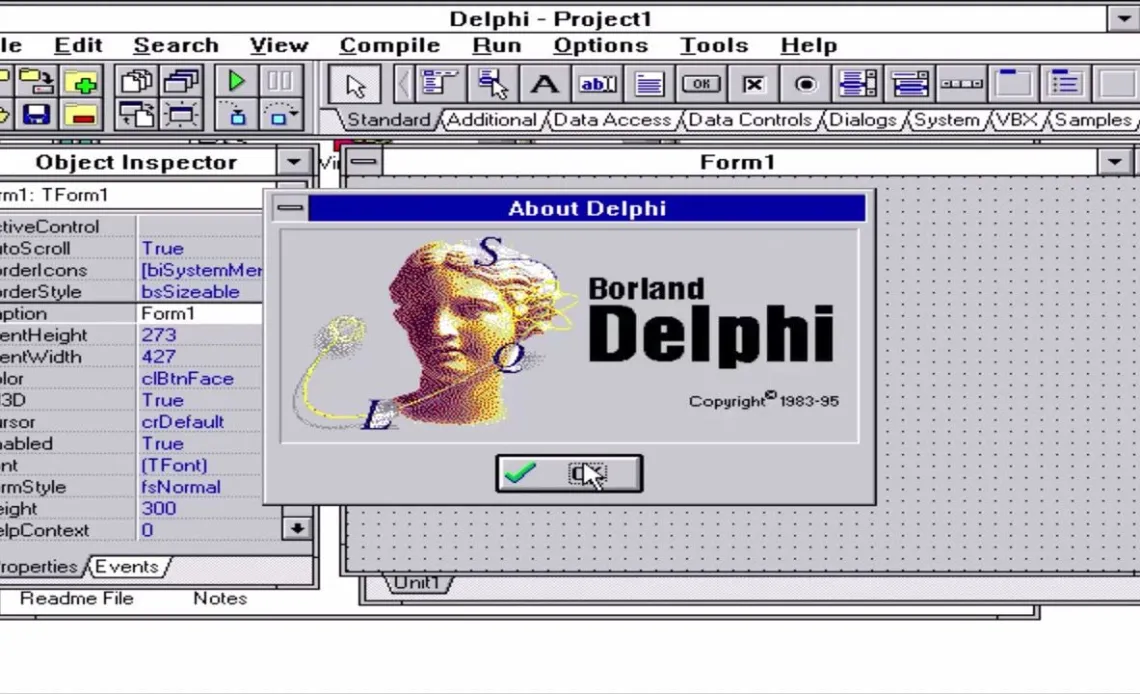
Marco Cantu't, with a global user base. Embarcadero celebrates this milestone with a "30x30" webinar series and special offers. Cantu shares slides from a recent session for the Japan team, reflecting on Delphi's history and its consistent value proposition: enabling developers to create native compiled applications with robust UIs and database connectivity efficiently.
Wow, really, wow! 30 years of Delphi? How did that happened? It's like celebrating a friend's milestone birthday, reminiscing about the good old days while marvelling at how they've stayed relevant. I remember looking into Delphi in my early coding days; and yes, it was a game changer for building Windows applications - which I hated back then, hence starting my OpenSource and Linux journey. But seeing it still going strong, with webinars and special offers, feels like a nostalgic trip down memory lane with brand new tickets and wheels... Yet, in our fast-paced tech world, I wonder how many new developers will take the time to appreciate this veteran tool.
The Video Game History Foundation (VGHF) has launched early access to its digital library
, offering free, worldwide access to a curated collection of video game history research materials. The library features over 1,500 full-text searchable, out-of-print video game magazines, including rare industry trade publications. Highlights include the Mark Flitman papers, detailing game production and marketing from the 1990s and 2000s, and over 100 hours of behind-the-scenes footage from Cyan's Myst series development. The VGHF collaborated with community archivists to digitise and share these resources, aiming to support and enhance the study of video game history.
As a lifelong gamer - almost true! once a gamer, always a gamer!- the launch of the VGHF's digital library feels like opening a time capsule of my youth. Flipping through those digitised pages of old gaming magazines - which I loved back then and I already wrote extensively here about Joystick for example -, I can almost smell the ink and feel the glossy paper under my fingers. It's a nostalgic journey, reminding me of weekends spent poring over game reviews and cheat codes. I do believe this is a vital preservation of our digital heritage and I love these kind of projects. However, I can't help but wish for the day when we can seamlessly play these classic games directly from the archive, bridging the gap between past and present in a truly interactive way.
In " Decentralized Syndication — The Missing Internet Protocol ," argues that while the internet's architecture is inherently decentralised

Tautvilas Mecinskas, modern content distribution has become overly centralised, dominated by platforms like social media giants. He advocates for a return to decentralised syndication methods, such as RSS, to empower users and content creators, reduce dependency on centralised platforms, and enhance privacy and control over personal data. Mečinskas emphasises that embracing decentralised protocols can restore the internet's original open and distributed nature.
Remember the days when we curated our own content feeds, free from algorithms dictating what we see? Everyone had their RSS reader and all? This is a call to revive decentralised syndication and it feels like a nostalgic nod to that era. Embracing protocols like RSS could return control to users and creators, fostering a more open and personalised internet experience. However, the convenience and monetisation models of centralised platforms are hard to overlook. Balancing user empowerment with usability and financial viability remains a complex challenge.
Revisiting Stereotype Threat

In "Revisiting Stereotype Threat," Michael Inzlicht reflects on the decline of the stereotype threat theory, once pivotal in understanding identity and achievement in social psychology. He acknowledges that while the theory was influential, recent scrutiny and replication challenges have led to its diminished standing in the field. Inzlicht emphasises the importance of reassessing established theories in light of new evidence to advance psychological science.
It's intriguing to witness the evolution of scientific theories, especially those that once held significant sway over our understanding of human behaviour. The rise and fall of stereotype threat theory serve as a reminder that science is not static; it's a dynamic process that thrives on continual questioning and reassessment. While it's disheartening to see a once-promising theory face challenges, it's also a testament to the self-correcting nature of science. I often don't bring books for this newsletter, but maybe I should. There's a lot of good stuff that I would like to share with you.
Last Week in AI
- The Anthropic Economic Index - Anthropic | anthropic.com
- OpenAI postpones its o3 AI model in favour of a ‘unified’ next-gen release | techcrunch.com
- Meet Firefly Video Model: AI-Powered creation with unparalleled creative control | blog.adobe.com
- Eleven Labs: Elevate your listening experience | elevenreader.io
- AI Mistakes Are Very Different from Human Mistakes - Schneier on Security | schneier.com
- Great article on Detecting AI Agent Use & Abuse | stytch.com
- Exclusive: OpenAI set to finalize first custom chip design this year | Reuters | reuters.com