
TikTok ban and its consequences have been all over the news, which begs for so many questions that I might do a #NowAboutThis video, when things calm down. This is a big precedent for everything. It’s about the larger societal shifts we’re navigating; starting with the UK’s AI Opportunities Action Plan, for example, which promises to redefine public services and economic growth, yet feels like a mix of bold ambition and cautious optimism, leaving practical implementation hanging in the balance. Meanwhile, the Reuters Institute’s predictions for AI in journalism highlight the tension between efficiency and integrity, underscoring how transparency is now non-negotiable in a world grappling with trust deficits. Similarly, by exploring our “anti-social century” it reveals how technology designed to connect us has paradoxically amplified isolation. Even the rediscovery of ELIZA, the first chatbot, reminds us how far we’ve come, and how much the basics still matter. Whether it’s AI summoning Silicon Valley aspirations to Culham – what? – or the quiet power of a rendering book that bridges science and art, this week stories share a common thread: technology’s potential to revolutionize lives depends on our ability to wield it thoughtfully and responsabily.
In this issue
5 piecesThe UK government’s AI Opportunities Action Plan , unveiled this week, positions AI as a transformative force for the nation's economy, public services, and global competitiveness
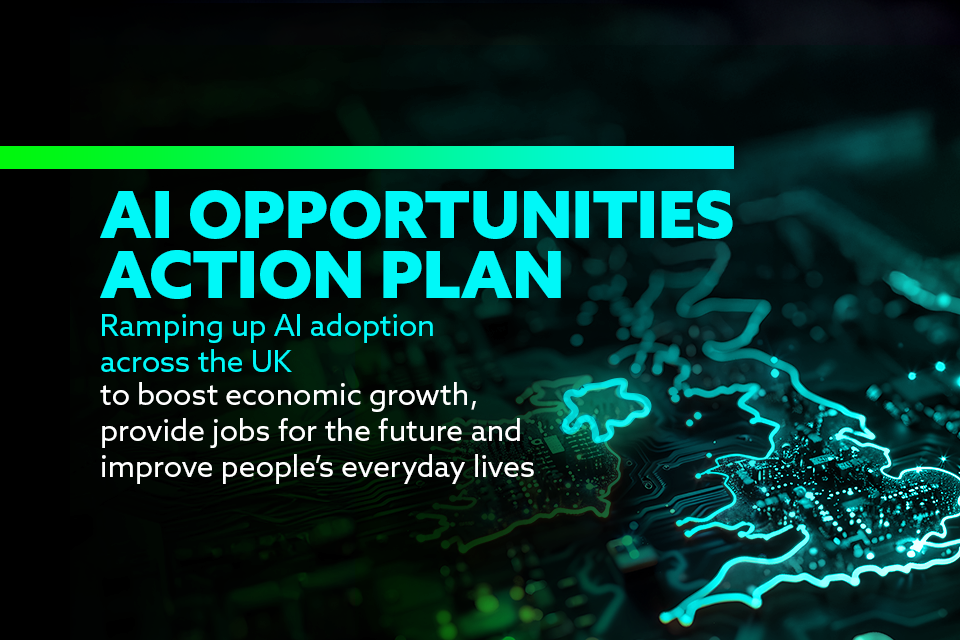
. Key initiatives include AI Growth Zones, a 20-fold increase in compute capacity, a National Data Library, and new AI-focused energy solutions. Backed by £14 billion in private investment and projected to generate 13,250 jobs, the plan emphasizes infrastructure, adoption across public and private sectors, and maintaining global leadership. By streamlining planning and unlocking AI’s productivity potential, the plan aims to deliver £47 billion annually to the economy while enhancing everyday services like healthcare, education, and road maintenance.
I find this plan an interesting start and move into the right future. It somehow blends optimism with calculated risk. AI as the “engine of national renewal” sounds poetic, but it raises the question: are we racing toward innovation or just catching up? Sure we need supercomputers, but does it move the needle on public concerns like overburdened schools or pothole-laden roads? Even most of the media questions at the press conf for this were about the economical state of the UK and finances. I would prefer to see an even more aggressive plan for AI in the public sector, where actually can be put in place to eliminate waste and bring efficiencies, but with control, responsibility and in benefit of citizens. Feels like the announcement was more about investment rather than practical actions. Still, I’m intrigued by the Growth Zones, a clever way to rebrand industrial evolution for the AI age. Culham could be our Silicon Valley? What? :) Let’s just hope AI doesn’t end up diagnosing the same old societal problems we’ve left untreated for decades. On Friday I talked about this extensively on the #TWIGAI live.
The Physically Based Rendering (PBR) book is a comprehensive guide to rendering techniques grounded in physical accuracy

, offering both theoretical foundations and practical implementation details. It explores topics such as light transport, material modeling, and the Monte Carlo integration methods used for photorealistic imagery. The book is widely regarded as an authoritative text, with its code implementations in C++ providing a real-world toolkit for developing rendering systems.
This book is like the Rosetta Stone for rendering nerds, a bridge between raw physical theory and the poetic artistry of image creation. It’s as if someone combined a physics lecture, a coding bootcamp, and an art exhibit, and I simply love that! Imagine the joy of watching a virtual sunset and knowing you coded the light rays yourself! What strikes me most is its timeless appeal. Even as GPUs evolve and neural networks revolutionize rendering, the fundamental principles here remain the bedrock. It’s a humbling reminder that in tech, elegance often lies in the basics. Whether you’re chasing photorealism or just want to geek out on how light really works, this book is a beacon. Or maybe a very, very shiny sphere!
Derek Thompson's article, "The Anti-Social Century, " goes into the increasing trend of Americans spending more time alone

, examining its profound effects on individual personalities, political dynamics, and societal perceptions of reality. He highlights the transformation of social spaces, such as restaurants shifting from bustling communal areas to hubs for takeout orders, reflecting a broader societal move towards isolation. Thompson connects this rise in solitude to significant shifts in political behaviour and the spread of misinformation, suggesting that decreased face-to-face interactions may contribute to heightened political polarization and a fragmented understanding of truth.
This drift into solitude is both enlightening and a tad disconcerting. It's as if we've traded the rich tapestry of communal life for the convenience of a drive-thru existence. The metamorphosis of our favourite eateries into mere pickup points mirrors a deeper societal shift, one where the warmth of shared experiences is swapped for the sterile efficiency of solo living. And I'm here all in for it! :) Jokes aside, this trend nudges me to ponder, if are we becoming a world of hermits, comfortably ensconced in our personal bubbles, yet starved of genuine human connection? Return back to the office, anyone? Less Teams meetings and more coffee conversations? It's ironic that in an age where technology promises to bridge gaps, we yet find ourselves more isolated, with our screens acting as both connectors and barriers. The TikTok ban is a clear example of that, working both ways.
The Reuters Institute's " Journalism, Media, and Technology Trends and Predictions 2025 " report highlights the increasing integration of AI in newsrooms
, with 87% of surveyed news leaders acknowledging its transformative impact. Publishers are exploring AI applications such as converting text articles into audio (75%), generating AI summaries (70%), and translating content into multiple languages (65%). Despite these advancements, concerns persist regarding the influence of influencers and creators on traditional journalism, with 27% viewing this trend negatively and 28% seeing potential benefits in storytelling and community building.
The convergence of AI and journalism is an exciting yet complex frontier. On one hand, the technology holds immense potential to enhance efficiency and personalization, from turning written articles into audio to translating stories for global audiences. On the other, it raises critical questions about transparency, authorship, and the risk of diluting journalistic quality. The increasing reliance on AI to generate content or summarize information demands a renewed commitment to editorial oversight to prevent the so-called "AI Slop" from undermining credibility. Equally significant is the broader challenge of maintaining public trust. Transparency about AI's role in news production isn’t just a best practice, it’s a necessity. Without clear disclosures, audiences may grow sceptical of journalistic integrity, especially in an era where misinformation thrives. This tension between embracing AI's capabilities and preserving the human touch in storytelling will define the next decade of journalism. This is not just about keeping up with technology but using it thoughtfully to uphold the values that define quality journalism. PS: I'm a member of the National Union of Journalists and registered Member of the Press in the UK.
In the early 1960s, Joseph Weizenbaum at MIT developed ELIZA , widely regarded as the world's first chatbot
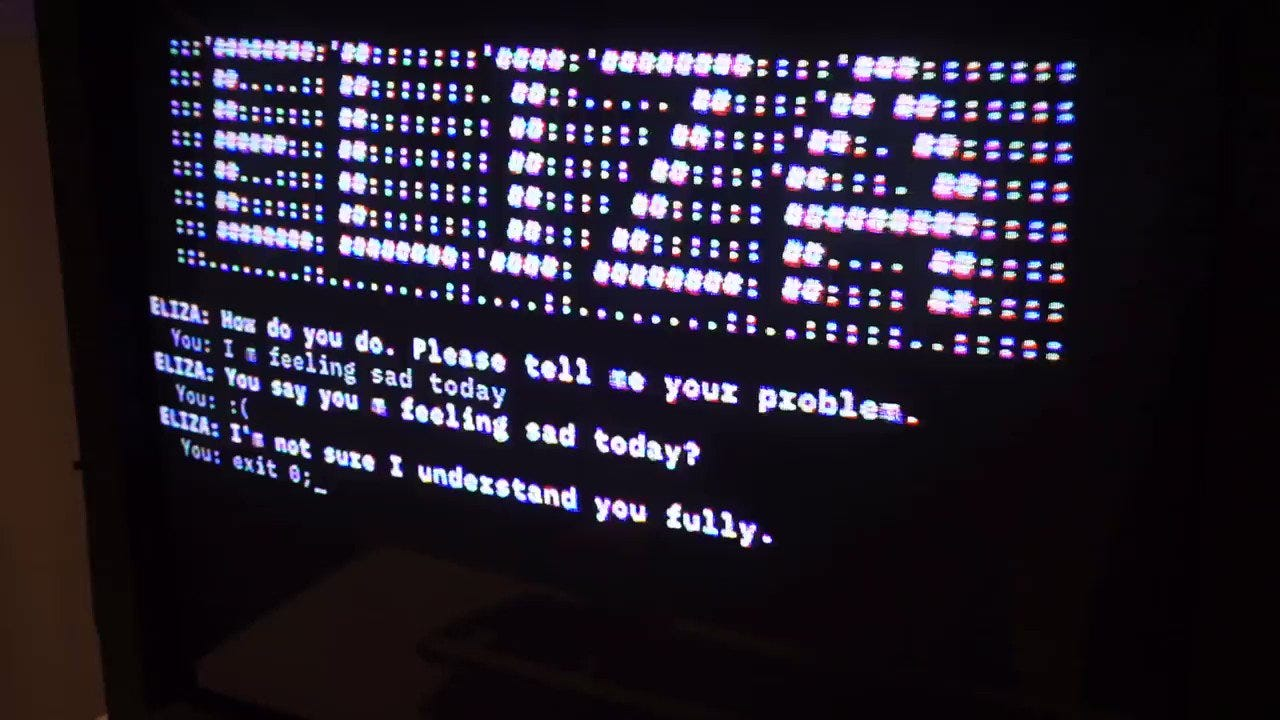
. This pioneering program was created using MAD-SLIP on MIT's Compatible Time-Sharing System (CTSS), operating on an IBM 7094. Researchers have uncovered an original ELIZA printout from Weizenbaum's archives, featuring an early version of the renowned DOCTOR script, nearly complete MAD-SLIP code, and various support functions in MAD and FAP. This discovery has enabled the restoration of ELIZA on a recreated CTSS, itself running on an emulated IBM 7094. The entire setup is open source, allowing users with Unix-like operating systems to experience the world's first chatbot on the first time-sharing system.
Revisiting ELIZA is like opening a time capsule from the dawn of artificial intelligence. It's fascinating to see how far we've come from simple pattern-matching scripts to today's complex, context-aware conversational agents. Yet, this restoration isn't just about nostalgia; it serves as a reminder of the foundational ideas that continue to influence AI development. Understanding ELIZA's design and impact can provide valuable lessons as we navigate the ethical and technical challenges of modern AI. After all, appreciating our digital heritage can inform and inspire the innovations of the future.
Last Week in AI
- Transformer²: Self-Adaptive LLMs | sakana.ai
- Microsoft CEO Nadella sees 'thirty years of change compressed into three years' | the-decoder.com
- She Is in Love With ChatGPT | nytimes.com
- In details: How Amazon makes Machine Learning Trustworthy | artificialintelligencemadesimple.substack.com
- HALoGEN: Fantastic LLM Hallucinations and Where to Find Them | arxiv.org
- AutoGen v0.4: Reimagining the foundation of agentic AI for scale, extensibility, and robustness | microsoft.com
- HuatuoGPT-o1, Towards Medical Complex Reasoning with LLMs | arxiv.org