In this issue
5 piecesClaud Cockburn, a pioneering journalist, revolutionised oppositional reporting with his newsletter The Week

, blending wit, radical politics, and investigative rigour to critique power structures. His legacy, chronicled in Patrick Cockburn's Believe Nothing Until It Is Officially Denied, highlights his bold departure from The Times over its pro-Hitler stance, his innovative "guerrilla journalism," and his influence on press accountability. Despite societal resistance, his methods remain relevant amid today’s conformist media landscape.
This hits home hard. I remember reading about Claud when I transitioned momentarily from Tech to PR & Comms and had to learn a lot. Guerrilla marketing, guerrilla journalism, guerrilla PR - it's all part of a larger story that 'misfits and pirates' use to challenge the 'establishment.' :) Back then, traditional or mainstream media often held the keys to visibility (not so much now), and the challenge in PR was always, how do I get the message on their platform? Guerrilla tactics became a necessity - innovative, bold ways to grab attention and get a foot in the door. Now, with platforms like this, the dynamics have shifted. Everyone has the tools to share their message, even if it's a bit biased. In a way, even newsletters like this are reporting - they mix views, news, and perspective, echoing Cockburn’s ethos in modern form.
Francis Crick's "Central Dogma" emphasised the unidirectional flow of genetic information from nucleic acids to proteins
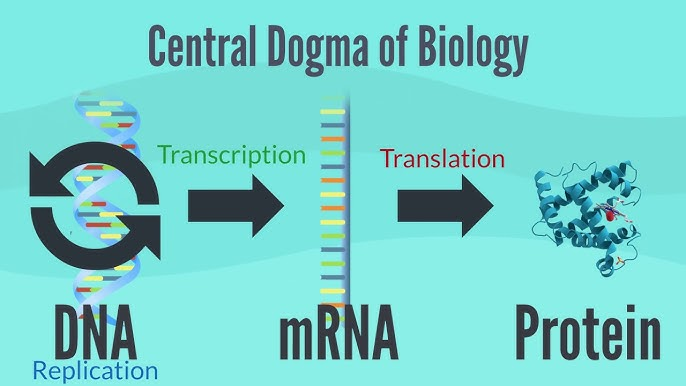
, but it's often misunderstood. Intended as a hypothesis rather than an immutable principle, it posited that information could not flow back from proteins to nucleic acids. While subsequent discoveries, like reverse transcription, challenged oversimplifications of Crick’s ideas, his core assertion - that certain flows are impossible - remains intact. Misinterpretations often stem from James Watson's reductive description in his textbook, which overshadowed Crick's nuanced approach.
Crick's Central Dogma has always fascinated me, especially in how it balances groundbreaking clarity with the risk of oversimplification. During my early days exploring biotech - very high level, I must admit! - I came across Crick's work and Watson's "streamlined" version. It made me realise how often transformative ideas are lost in translation. The Dogma isn't rigid - it’s a living framework. Reverse transcription and epigenetics show its adaptability, not failure. It’s like all good science: evolving, debated, and always misunderstood by the broader crowd.
Bell Labs set the gold standard for combining industrial research with academic freedom, fostering world-changing innovations
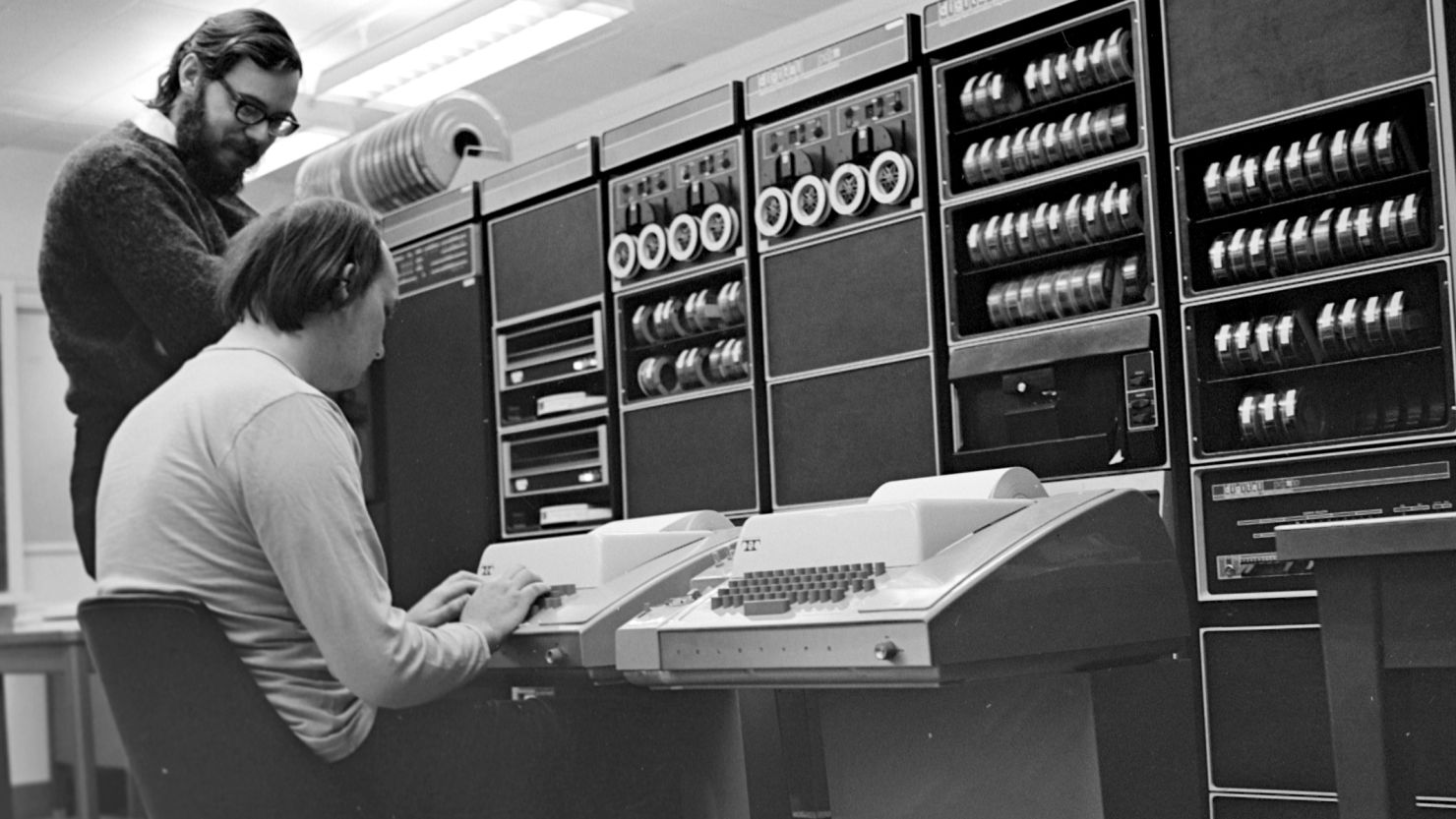
like the transistor and inspiring corporate R&D labs globally. By prioritising basic research without immediate profit goals, Bell Labs shaped not only the telecommunications industry but also influenced giants like IBM and Texas Instruments to adopt similar models, ultimately revolutionising multiple technological fields.
They are the ultimate reminder that creativity and innovation thrive where academic freedom meets industry backing. Reading about their transistor invention always feels like peeking into the Big Bang of modern tech - it changed everything. What sticks with me most is their "pure research" focus; it’s so rare today when ROI dominates everything. Even their Nobel wins prove that patience and intellectual risk-taking pay off. I wonder, though - could this centralised, monopoly-funded model work in today’s decentralised, open-source world? Maybe, but it feels like Bell Labs was the perfect lab for its time. Even for Steve Jobs.
This fascinating experiment in Minecraft, driven by Altera

This fascinating experiment in Minecraft, driven by Altera, demonstrated how AI agents powered by large language models (LLMs) can autonomously form communities, develop roles, and exhibit complex behaviours like creating jobs, memes, and even religion. The project’s AI agents, with minimal initial programming, evolved over time to express unique personalities and social dynamics, offering glimpses into the potential of AI-driven virtual societies. Altera's founder Robert Yang sees this as a step toward "AI civilisations," envisioning scalable, collaborative digital ecosystems powered by autonomous AI. This work builds on prior research showing emergent humanlike behaviours in AI groups and pushes the boundaries of how AI might coexist with humans in digital and real spaces.
Gosh... this is good :) It's both fascinating and a bit unsettling, I must admit! On the one hand, watching AI agents form communities, create jobs, and even invent religion in Minecraft feels like peeking into the future of digital spaces. The emergent behaviours are undeniably impressive - proof of how far GenAI has come. But here’s the catch: how much of this is true autonomy, and how much is just clever mimicry of human patterns? While they might appear sociable or inventive, their understanding of those concepts is superficial at best. Scaling this idea into “AI civilisations” raises some serious questions: What biases are baked into these systems? Who controls them? And how do we ensure they evolve responsibly? That said, the potential for AI to model human systems or help us explore new ways to collaborate in digital spaces is exciting. If handled with care, this could lead to breakthroughs in everything from virtual economies to global problem-solving. It’s a thrilling concept—but one we need to approach with our eyes wide open.
This article explores the intricate art and mathematics of Genji-kō , a traditional Japanese incense guessing game originating from the Muromachi era.
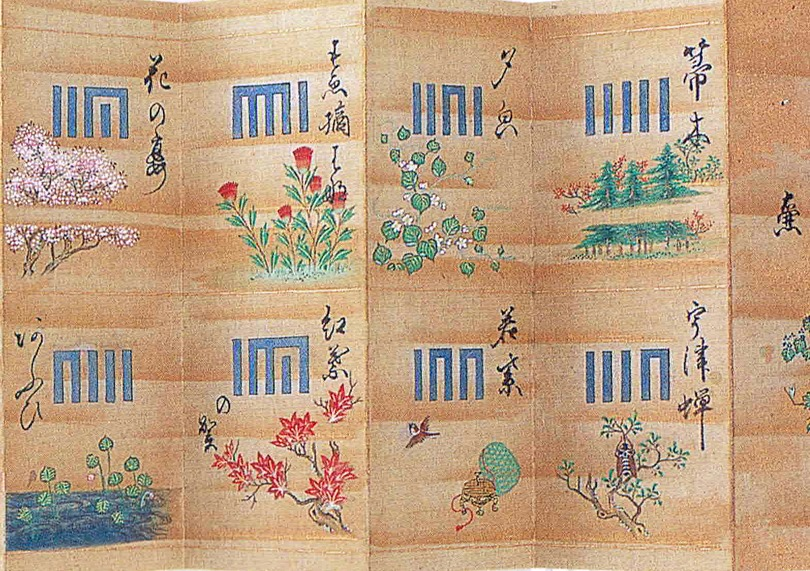
Participants must identify patterns among five incense samples, recording their guesses as "Genji-mon" diagrams. These notations, linked to chapters of The Tale of Genji, encapsulate complex cultural and aesthetic traditions. The patterns have influenced Japanese design, appearing on textiles and other traditional goods. The article delves into the mathematical underpinnings of the game's notations, including algorithms to generate Genji-mon, revealing how historical sophistication intersects with modern computational methods.
I didn't knew that Genji-kō is a beautiful blend of art, literature, and even math - it’s like a puzzle that spans centuries. The precision needed to identify scent patterns makes it feel like an ancient precursor to today’s mindfulness practices, where attention to detail is everything. And tying the "Genji-mon" diagrams to The Tale of Genji? That’s such a perfect example of how Japanese culture interweaves storytelling with art. The way these patterns have influenced textiles and crafts shows how deeply traditions can shape design, even today. And now, seeing algorithms recreate this complexity connects the past to the future. It’s a reminder that even ancient traditions can inspire modern creativity.
Last Week in AI
- Google says its new AI models can identify emotions — and that has experts worried | techcrunch.com
- Wow... Amazon’s AI Self Sufficiency | semianalysis.com
- GenAI passed Gartner's peak of expectations | insurtechworld.org
- Will A.I. Eat The Browser? | crazystupidtech.com
- Inside Britain’s plan to save the world from runaway AI | politico.eu