
This week is a bit different here… First lets talk about cloud repatriation, as it is gaining traction because companies are moving workloads from public cloud back to private or onprem infrastructure, driven by cost efficiencies and control over resources. Some are blending both approaches, using hybrid strategies to gain cloud benefits with custom cost-control tools. Meanwhile, the evolution of datacentres reflects a push toward autonomous, decentralised systems, with third-wave technologies like self-healing infrastructure and cognitive AI minimising operational costs – read about that in detail. On the nostalgia front – Cyrix’s story from the 90s reminds us of a classic underdog tale in the CPU market, as they challenged giants like Intel with innovative, budget-friendly chips. Cyrix may be gone, but their impact on affordable computing lives on. Then, a quirky mystery surfaced recently: the UK’s oldest satellite, Skynet-1A, launched in 1969, has mysteriously moved from its original orbit over East Africa to a position above the Americas- without any record of who moved it or why. Finally, Grim Fandango! Mexican folklore with film noir in a fully 3D world – a wining formula to revisit.
In this issue
3 piecesThis article explores the rising trend of “cloud repatriation,” where companies like 37signals and GEICO move from public cloud services to on-premises or private cloud environments.

Key motivations include cost efficiency, particularly for storage and AI, and avoiding vendor lock-in. High-profile cases highlight that predictable, stable workloads often perform more economically on owned infrastructure, reducing dependency on costly cloud storage and managed services. However, repatriation requires significant internal engineering capacity and isn’t universally viable, especially for smaller firms. Companies also explore hybrid solutions, staying in the cloud while leveraging customisable tools to manage costs and performance effectively.
Interesting article! It's not new and I'm guessing it represents the new wave of doing things, it's the full circle isn't it? We started with expensive monoliths to decouple everything in the cloud, because it was cheaper, was a new way of doing things and cloud provided that containerized, serverless of doing things. Now with the software defined datacentres, we can do that anywhere, so we start to analyse ROI's and CAPEX vs OPEX again and for some, having datacentres is going to be again the thing. Don't get me wrong, cloud can remain cheaper for unpredictable workloads or those needing high scalability. Cloud services reduce infrastructure management demands, critical for companies lacking extensive IT resources. But, stable workload patterns can make on-premises infrastructure more economically viable and managed cloud services often bind organisations to specific configurations, complicating future migrations.
Grim Fandango was a pioneering adventure game developed by LucasArts, blending Mexican folklore and film noir aesthetics in a unique 3D environment.

Designed by Tim Schafer, the game moved away from traditional pixel art to 3D graphics, a decision influenced by both creative and economic factors. This shift allowed for cinematic camera angles and more flexible scene rendering, aligning with Schafer’s film-inspired vision while reducing production costs. The game was also adapted to be more controller-friendly, positioning it for success on platforms like Sony’s PlayStation, which favoured immersive 3D experiences.
Nostalgia time is back! Grim Fandango is a case study in how technical advancements (3D rendering, cinematic perspectives) can shape narrative experiences, foreshadowing trends in modern gaming where storytelling is often enriched by graphical and cinematic techniques. By adopting a film noir aesthetic, the game’s use of 3D allowed for dynamic camera angles and a more immersive world that enhanced its cinematic, story-driven focus. That was exceptional at the time and it's still a great game to play today. LucasArts back then was doing really pioneering work.
Cyrix was a semiconductor company founded in 1987 by former Texas Instruments employees, initially focusing on creating affordable, high-performance math coprocessors as alternatives to Intel’s.
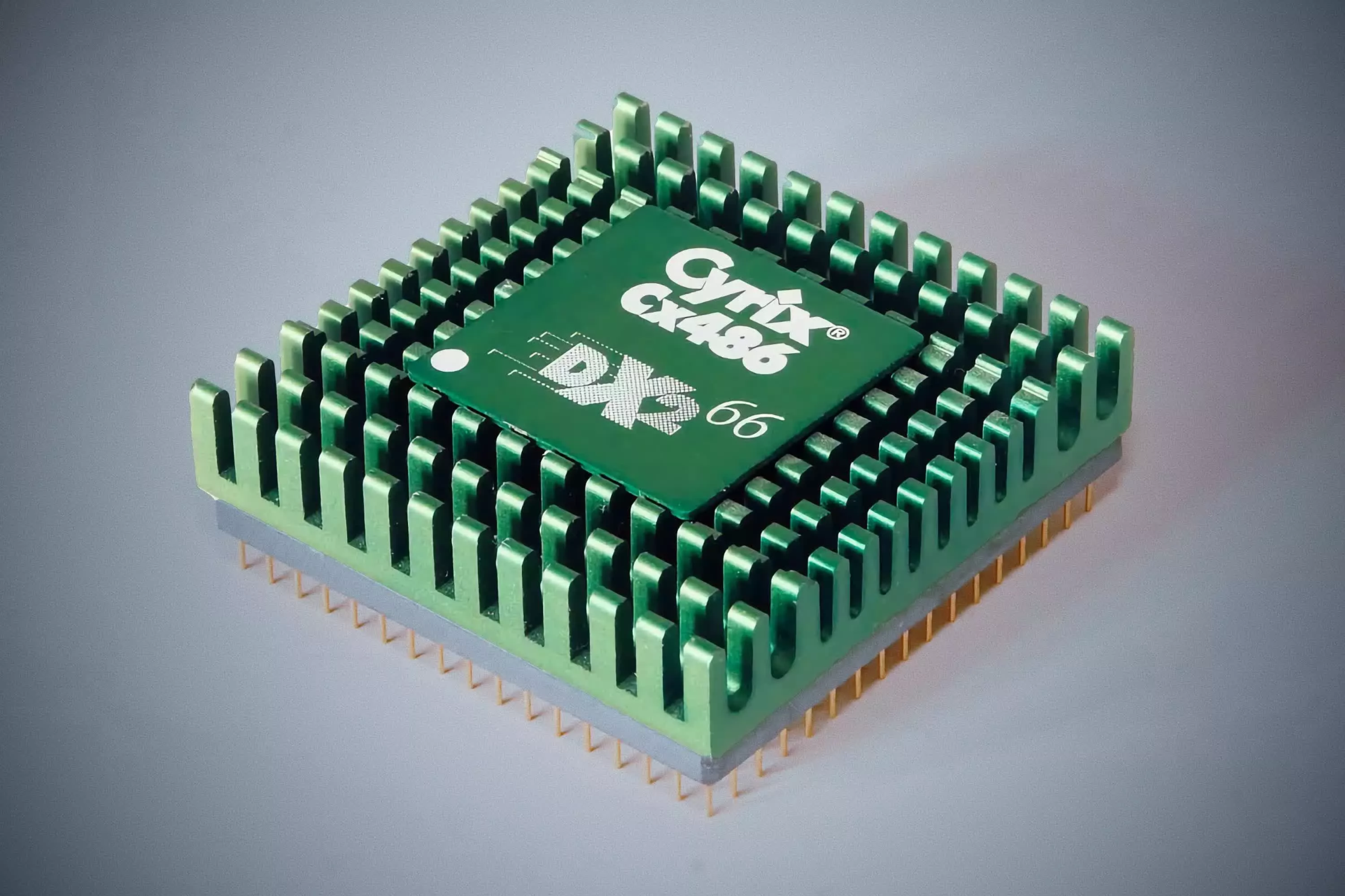
After success with products like the 83D87 FPU, Cyrix expanded into Intel-compatible CPUs, including the Cx486 and 6x86 lines, which targeted the budget segment with competitive performance and price. The company faced continuous legal challenges from Intel but prevailed due to its unique designs. Cyrix’s innovations included energy-efficient processors and one of the first System-on-Chip (SoC) designs, the MediaGX, which combined graphics, audio, and CPU into a single chip, popular in sub-$1000 PCs. Cyrix’s impact lies in its push for affordable, powerful computing, which drove competition and innovation in the 1990s CPU market.
Nostalgia time, twice! In the same edition! How lucky are we? :) Reflecting on Cyrix is like remembering the rebellious kid from school who, despite not having all the advantages, was dead set on standing up to the big guys. Cyrix didn’t have Intel’s powerhouse infrastructure, but they had grit, wits, and an eye for the underdog. In true 90s fashion, they didn’t mind stirring up trouble either - those regular lawsuits with Intel were practically a corporate soap opera. And who could forget the MediaGX, that strange but genius Frankenstein chip, stuffing graphics, audio, and CPU into a single, wallet-friendly package? It was a quirky answer to the age-old question: how cheap can we go while still being awesome?
Last Week in AI
- Letting AI systems argue with each other may help expose when a large language model has made mistakes. | quantamagazine.org
- Claude AI to process secret government data through new Palantir deal | arstechnica.com
- To find out more: Diffusion Models are Evolutionary Algorithms | gonzoml.substack.com
- OpenCoder is an open and reproducible code LLM family which matches the performance of Top-Tier Code LLM. | opencoder-llm.github.io
- Taiwan chip output to hit record $165bn on AI demand | asia.nikkei.com
- GenAI Script: Programmatically assemble prompts for LLMs using JavaScript. Orchestrate LLMs, tools, and data in a single script. | microsoft.github.io