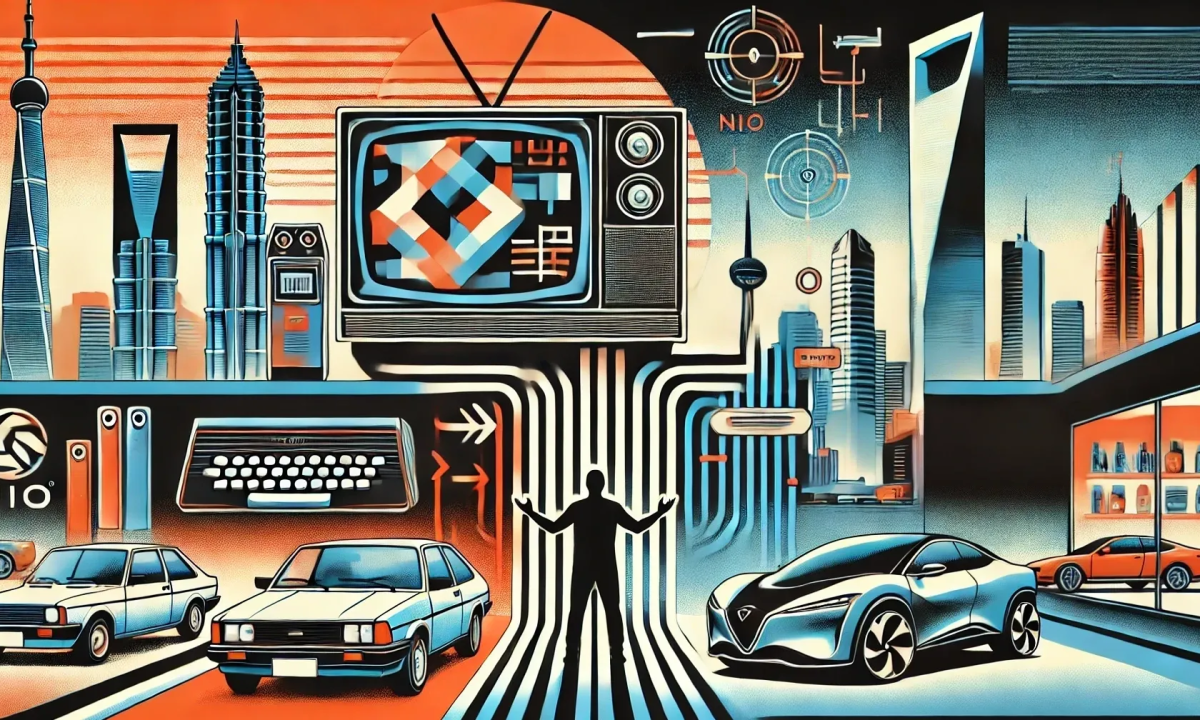
Welcome to another #RBM! This edition we start strong, with a lot of tech nostalgia and insights! Delayed by internal issues, the Atari 7800 struggled to compete with the NES despite its advanced features. Retro lovers, keep an eye out for the upcoming Atari 7800+! Then, once a giant, Motorola’s failure to innovate post-RAZR and poor decisions led to its downfall. The brand’s journey from leader to Lenovo’s acquisition is a cautionary tale. What about if life is a series of inputs and outputs that we can’t always decode? Maybe instead of over analysing we need to focus on adapting and responding. Also, not everything needs to scale, right? Sometimes, the most fulfilling pursuits are those that resist mass production and constant growth. Finally, in Shanghai, cars are more than transportation – they’re status symbols. As Western tariffs rise, how will Chinese automakers like NIO and BYD navigate global competition? See you next week!
In this issue
5 piecesLets get into the history, design, and impact of the Atari 7800 console . This article highlights its initial shelving after development
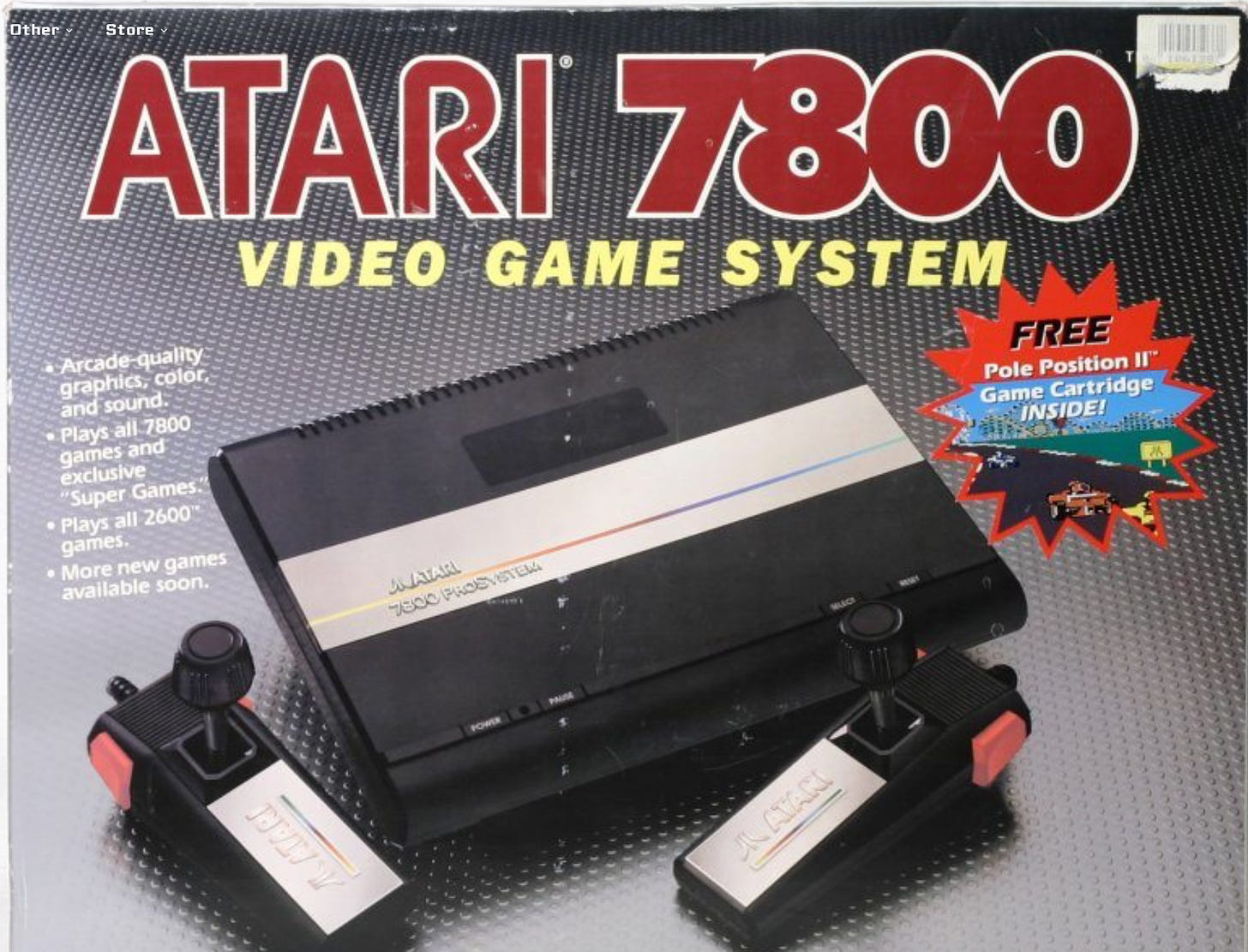
, subsequent re-release to compete with the NES, and its mixed success. Despite offering advanced graphics and backward compatibility with the Atari 2600, the 7800 struggled due to poor marketing, limited game library, and weak sound capabilities. It also mentions the upcoming Atari 7800+ retro console and the challenges of collecting 7800 games today.
This week we start strong! With the usual nostalgia post :) For those old enough to remember, the Atari was great fun, but the 7800 was delayed to Atari's internal issues, yet the backward compatibility with the famous 2600 was a key feature. If you want to continue on the revival path, there's a new retro 7800+ to be launched and for those Spectrum lovers, there's a new "The Spectrum" to be launched in November. Or even if you're the perfect hobbyist, then you can build your own Z80 and good luck finding some tools and components to built it from scratch ;) Steve Ciarcia did a detailed guide for constructing a Z80-based microcomputer, which covers the design, assembly, and programming of the system with step-by-step instructions
Chicago Magazine explores the decline of Motorola from its peak as an industry leader to its fall from relevance
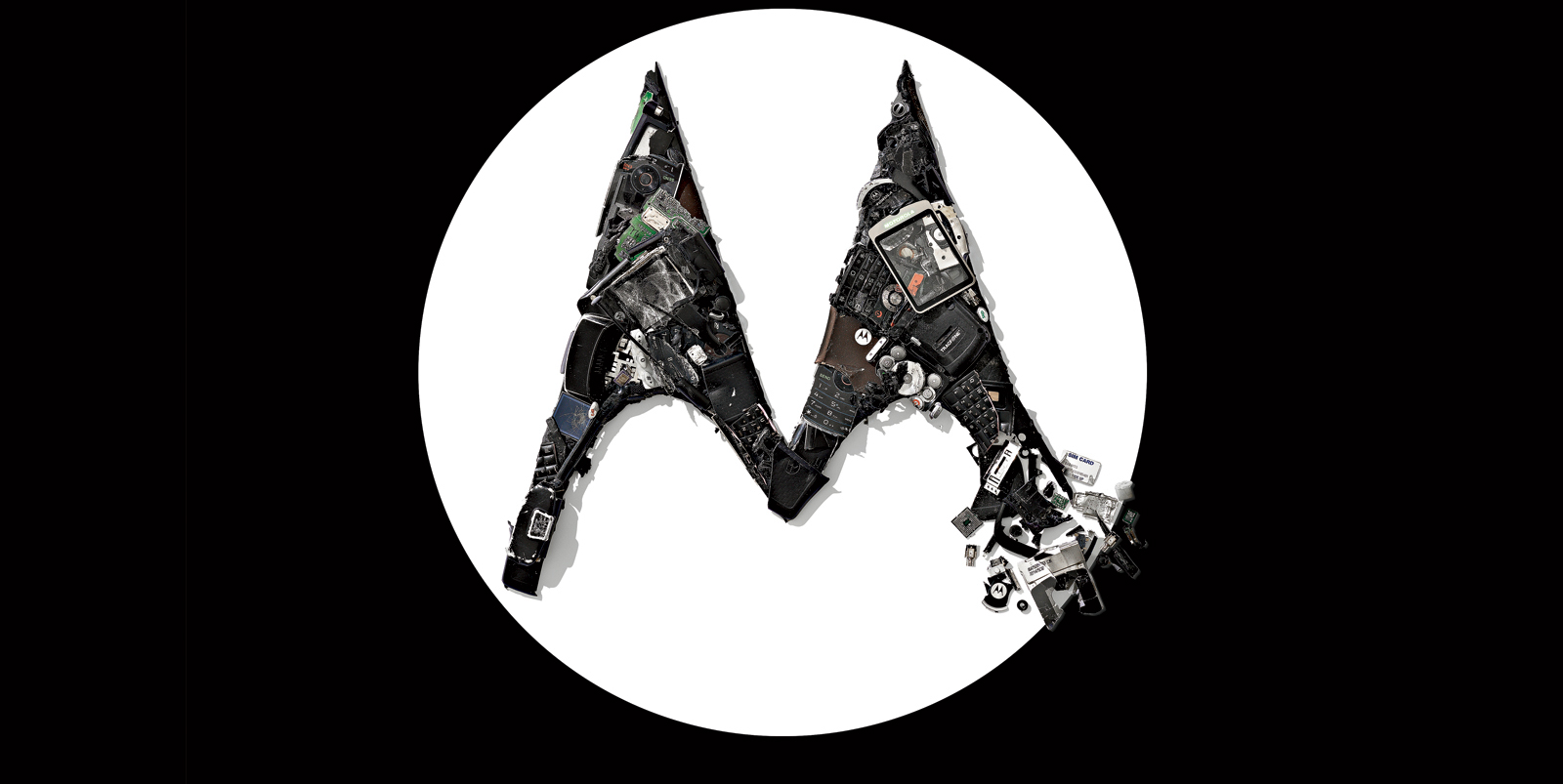
. Key factors include poor strategic decisions, failure to innovate after the success of the RAZR, internal conflicts, and the inability to compete with emerging smartphone giants like Apple and Samsung. The company’s eventual split and the sale of its mobile division to Google, and later to Lenovo, marked the end of an era for the once-iconic brand.
I've been a big fan of Motorola since its beginning, but lately and after being sold to Lenovo, it's been all over the place, launching cheap phones with little quality. I don't think they managed the Razr well enough to top other models and manufacturers and it feels that they don't have a clear direction or even strategy. It's not the first time a well known brand loses market relevance; the first one was Nokia and all the mess around Microsoft. Nowadays the only brand I've been seeing with some interesting strategy and products (for low and high end) is Nothing Company - the ones doing the Nothing Phone.
" A Black Box View of Life ” explores the concept of life through the metaphor of a black box
, focusing on the idea that life can be understood as a series of inputs and outputs, with the inner workings often hidden or too complex to fully comprehend. The piece emphasises the importance of observation, adaptation, and the limitations of our understanding, proposing that life is best navigated by responding effectively to the stimuli we encounter, rather than by trying to fully decode the internal mechanisms at play.
What an interesting reading to end August and the 'vacation month' - for most :) Life is indeed a series of input and outputs, that sometimes we struggle to understand and deal with them properly. Sometimes we over-analyse everything (or overthink) and suffer of anticipation. For me the hardest thing is lack of control when it comes to my life and what happens around me. Not in a control freak way, but rather managing expectations, the outcomes. Hate surprises :) Predictability is the key factor for me.
This article discusses the value of “ pursuits that can’t scale ,”

focusing on the importance of activities that remain meaningful regardless of their size or impact. These pursuits often bring personal fulfilment and a deeper sense of purpose because they resist the pressures of growth and mass production. The author suggests that embracing such activities can lead to a richer and more satisfying life.
Following up on the previous topic, we live in a world where everything needs to scale, when success is measured in that form and where personal fulfilment is getting harder by the day. Don't even get me started with content creators :) Yes, economic models depend on constant growth, but if we can't do that? When is enough, enough? When do companies focus on individual purposes rather than collective economical growth?
This blog post reflects on the unique culture of car ownership and usage in Shanghai,

highlighting the contrast between the global perception of China as a mass-transit-driven society and the reality of its rapidly growing car culture. The author observes how cars have become status symbols in Shanghai, despite traffic congestion and urban challenges. The piece also explores the societal implications of this shift, considering the environmental impact and changing urban landscapes.
Everyone is raising tariffs against Chinese cars (well, manufacturers, not those made in China for other European brands). In Shanghai cars symbolise status and personal success, pretty much the same in Western countries, but higher costs for Chinese-manufactured cars in our Western markets could reduce demand, affecting these Chinese automakers revenue and their ability to compete globally. For me, both NIO and BYD are pushing the envelope in battery technology and smart features in ways that the West can't compete. I'm afraid we're going to the in the same Huawei situation again.
Last Week in AI
- Omi, the world’s leading open-source AI wearables | github.com
- Amazon’s generative AI tool for developers is saving 4,500 years of work, $260 million annually | digiday.com
- Hamming: Test your AI voice agent against 1000s of simulated users in minutes. | hamming.ai
- ChatGPT unexpectedly began speaking in a user’s cloned voice during testing | arstechnica.com
- Tinder, Hinge, Bumble, and Grindr are building or testing AI tools | t.co
- Amazon's revamped “Remarkable” Alexa, due for release in October 2024 | reuters.com
- Google's HeAR, a bioacoustics health care AI model trained on 100M coughs | bloomberg.com