
What a weird week this one; with lots of stuff happening in tech, politics and the whole world. We’re living in a non-stop hamster wheel. Anyway, here’s this week edition of #RBM, with five reads, one theme: interfaces + incentives win. Starting with Claude Code that isn’t just smarter AI; it’s the interface shift from chat to a terminal-native doer. Cool… but commit %s aren’t outcomes, and plausible-but-wrong at scale is a real threat. Then GitHub Actions shows the dark side of convenience: slow UI, painful debugging loops, YAML traps. No wonder own your compute, keep YAML dumb (Buildkite style) feels appealing. Also, how one-pizza engineering with AI moved the bottleneck from coding to product/design clarity, whilst pushing decision-making closer to builders, but raising governance + resilience risks. Nostalgia time; with Ultima IX where subscription cash changes priorities, leadership drifts, trend-chasing ships a Frankenstein. And finally.. Finally! Al Lowe’s Larry stories? Yes please! Mischief works best when it’s cheeky, not hostile. Remember the “go back to life” – Leisure Larry!
In this issue
5 piecesThis article argues that Anthropic’s Claude Code marks an “inflection point” for AI agents , claiming it already authors 4% of GitHub public commits and could exceed 20% of daily commits by end-2026.

It describes Claude Code as a terminal-native CLI agent that reads a codebase, plans multi-step tasks, and executes them iteratively under user direction. The piece frames this as a shift from chat-style prompting towards tool-orchestrated outcomes. SemiAnalysis extends the argument beyond software engineering, positioning coding as the “beachhead” for broader disruption across information work. It outlines a generic workflow pattern (READ, THINK, WRITE, VERIFY) and suggests longer autonomous task horizons unlock larger addressable markets. It also ties agent adoption to falling “price of intelligence” and to compute availability, asserting Anthropic’s growth is constrained by compute and forecasting stronger ARR additions relative to OpenAI.
This argument is less “Claude is smarter” and more about how “the interface won”. A terminal-native agent that can orchestrate tools, iterate, and verify pushes value up the stack from raw tokens to outcomes? Yes please! But that has knock-on effects: cloud partners and supply chains matter because agent usage is compute-hungry, and the piece explicitly frames Anthropic’s growth as compute-constrained. If that’s true, the competitive battlefield shifts towards capacity planning, pricing, and integration: who can keep latency, reliability, and permissions sane while letting an agent touch real repos and real data. But I’m sceptical of the headline percentages being the whole story: commits aren’t outcomes, and quantity can masquerade as progress. Still, this part that worries me is the skill atrophy and silent mistakes at scale, right? Are we ready for codebases full of plausible-but-wrong? This assessment remains contingent on real-world deployment constraints and measurable outcome quality.
Ultima IX: Ascension became a notorious late-1990s “epic failure” , undermining a landmark CRPG franchise and damaging Origin Systems.
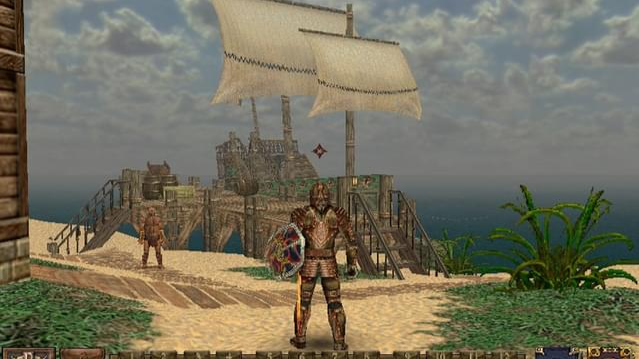
The article traces pressures that pushed Origin to chase trends: Wing Commander’s rise, Electronic Arts’ acquisition on 1992-09-25, and a downturn in traditional single-player CRPG fortunes. Development repeatedly reset, leadership wavered, and a late shift towards action-led design left the game feeling detached from Ultima’s core identity. It also argues that Ultima Online’s success reshaped Origin’s priorities and incentives, starving Ultima IX of continuity and talent. The piece describes subscription revenue (90,000 players paying $10 monthly) as a lifeline, while the single-player project was retrofitted to meet perceived market tastes and deadlines. Ultima IX’s release on 1999-11-26 is portrayed as a forced shipment of ill-fitting parts, leading to poor reviews, poor sales, and Origin’s eventual end.
This one’s a slow-motion car crash, and the painful bit is how familiar it feels. You can almost see the incentives snapping into place: the subscription cash cow gets attention, the prestige single-player finale gets “managed”. The $10-a-month Ultima Online lifeline makes perfect sense, but it also warps everything around it. I buy the argument that leadership drift and midstream retrofitting turned Ultima IX into a Frankenstein build. Still, some of the “true Ultima” purity talk can be a bit precious. The real sin is shipping something you don’t believe in. Brutal, eh?!
Ian Duncan argues that GitHub Actions degrades engineering productivity through a slow, fragile user experience and awkward configuration model.

It highlights the multi-click navigation to reach failures, log rendering that can crash browsers on large outputs, and a debugging loop that turns small changes into long waits. It also criticises Actions’ YAML plus expression syntax as a “trap” that forces engineers to learn by repeated failure rather than clarity. It further claims GitHub Actions’ ecosystem and compute model create hidden operational and security costs. The Marketplace is framed as risky third-party code with access to repos and secrets, while Microsoft-hosted runners are described as slow and difficult to customise. As an alternative, the piece recommends Buildkite: a simpler pipeline YAML boundary, better log reading, SSH-able agents on your own infrastructure, and dynamically generated pipelines that avoid sprawling conditional YAML.
Being embedded in GitHub reduces switching friction, so teams accept latency, UI complexity, and configuration contortions as the price of convenience. The most concrete technical critique is the debugging path: slow, multi-page navigation to logs, log rendering that falls over on large outputs, and iteration cycles that can stretch to tens of minutes. The operational critique is equally pointed: hosted runners are treated as commodity compute with limited control, which pushes serious teams towards self-hosted runners or a secondary market of “faster runners” vendors. That’s a strong signal of unmet needs, even if the post doesn’t quantify time-loss systematically. But the bigger point isn’t the UI - it’s the way YAML plus weird expressions nudges teams into cargo-cult config and endless reruns. Buildkite’s pitch of “own your compute, keep YAML dumb” sounds saner, even if it means you’re now the one on call for runners. I’d switch for any team losing hours to 45-minute builds.
AI coding tools have shifted engineering’s bottleneck away from writing code towards product and design throughput

. The article claims LLMs help engineers more than PMs and designers, creating an imbalance where roadmaps and wireframes arrive too slowly for faster implementation. To address this, it highlights “product engineers” who take on parts of PM and design responsibilities, while still retaining PM and designer context-setting roles. It also predicts organisational reshaping: more specialists, smaller delivery groups, and a changed engineering manager role. The author says AI produces acceptable code but rarely excellent, making expert reviewers and gatekeepers more important to prevent destructive patterns and second-order effects. Team size, they suggest, trends towards 2–3 engineers per project, with managers increasingly expected to code using AI while prioritising work that avoids blocking the team.
If AI compresses implementation time, then product definition, design articulation, and cross-functional alignment become the limiting factors. The proposed response; where more “product engineers", is a reallocation of decision-making closer to execution, which can improve throughput but also increases the need for clear governance: who owns prioritisation, user insight, and UX trade-offs, and how disagreements are resolved. The team-size argument (2–3 engineers per project) aligns with reducing communication overhead, but it raises resilience risks: fewer peers means weaker redundancy for review, onboarding, and incident response. The engineering manager evolution described on the article is more about coding enabled by AI, less “people pillar” load, which may work in small, mature teams, yet it can fail when coaching and coordination needs spike. Net result here is that it offers a credible direction of travel, but execution will hinge on explicit role boundaries, review discipline, and incentives that reward outcomes over throughput.
This interview with Sierra veteran Al Lowe ranges beyond Leisure Suit Larry , focusing on how his hobbies and working style shaped his games.

Lowe discusses lifelong model railroading, including a shift to N-scale for 35 years and standards-driven digital control changes in the 1990s and early 2000s. He also talks about being a working musician, playing saxophone in big bands and quartets, and how humour and player-address shaped his writing. Lowe also reflects on making licensed Disney educational titles and on Sierra’s internal dynamics. He describes delivering Donald Duck’s Playground with minimal Disney input, then resisting late cosmetic change requests to ship. He recounts Sierra’s volatility, including a day when staff fell from 120 to 40, and later working as an external contractor on royalties. He links Sierra’s later decline to leadership gaps and a risk-averse pitch-and-cancel development approach.
What jumps out is how much of Leisure Suit Larry’s “personality” is really a bundle of design choices; some clever, some a bit accidental. The Larry 1 quiz is a perfect example: it’s framed like gatekeeping, but Alt-X turns it into optional friction, which is both mischievous and slightly pointless. The Spiro Agnew reference is almost a time capsule of how US-centric humour can quietly lock out everyone else. I appreciate Lowe admitting some 1980s material wouldn’t fly now, even if he doesn’t get into the messy specifics; it’s a reminder that comedy debt compounds. The rubber-band arm gag in Larry 2 is exactly the kind of self-aware slapstick that makes Sierra-era cruelty feel like a wink. And Larry 3’s “go back to life” option feels like maturity: keep the snark, reduce the punishment. If you’re reviving Larry today, that’s the roadmap; localisation-aware, less hostile, still cheeky.
Last Week in AI
- Introducing OpenAI Frontier | openai.com
- Voxtral transcribes at the speed of sound. | mistral.ai
- 0-Days red anthropic | red.anthropic.com
- Introducing the Developer Knowledge API and MCP Server | developers.googleblog.com
- Massive spending by tech firms on AI is causing shortages elsewhere | washingtonpost.com
- The Waymo World Model: A New Frontier For Autonomous Driving Simulation | waymo.com