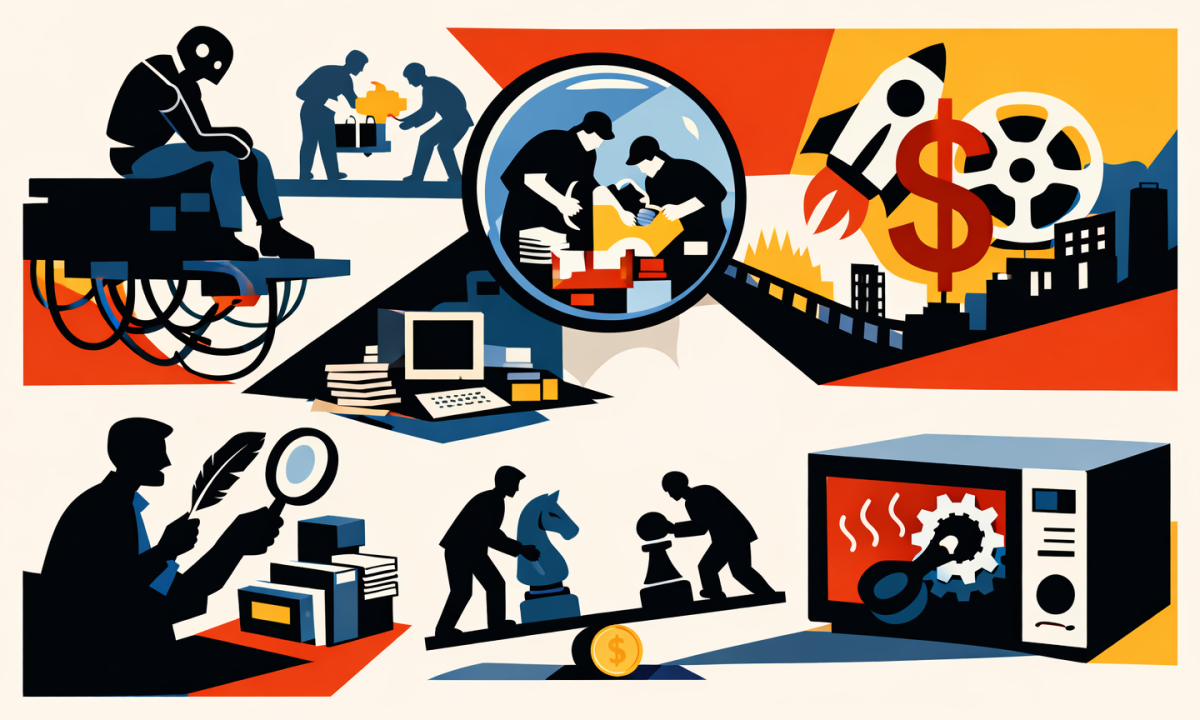
This week’s edition is all about reality checks, old ghosts, and the unglamorous work that actually moves the needle. We start with the fact that Agents didn’t “join the workforce” in 2025, where brittle demos met messy integrations, so I’m backing narrower scopes, human-in-the-loop, and unit economics over vibe-based forecasts. We detour into BBS-era creativity to puncture a shaky “first webcomic” claim: great archival sleuthing beats folklore every time. Then, Pixar’s origin tale doubles as a finance lesson, where a narrative arbitrage bought time until fundamentals arrived. On AI history, credit is an incentives market; fix translations, bibliographies and gatekeepers if we want a fuller canon, not a nationalist rewrite. And what about microwaves? Well, that’s decades of incremental engineering – not “smart” gimmicks – tamed a cranky magnetron!
In this issue
5 piecesCal Newport reviews bold forecasts that 2025 would herald AI agents “joining the workforce,” citing Sam Altman, Kevin Weil, and supportive Axios coverage.

He argues the promised shift did not materialise: agent success in coding failed to generalise, and released products, including ChatGPT Agent, proved brittle. One cited example shows an agent spending fourteen minutes on a simple drop-down menu. Voices such as Gary Marcus and Andrej Karpathy underscore overprediction and recast expectations as a longer “Decade of the Agent". The broader point is behavioural: stop reacting to speculative hype and evaluate what current systems actually do. He pushes back on fresh alarmism, referencing Sal Khan’s warnings about job displacement and examples that, in his view, lack convincing evidence. He also notes the slow, costly mapping behind self-driving deployments and contested claims about call-centre replacement rates. For 2026, he urges attention to tangible capability, productivity impacts, and limits already visible in real deployments, not vibes or headlines.
This reads like a classic hype-cycle correction. Markets priced in a near-term productivity dividend predicated on general-purpose agents; vendors amplified timelines; customers ran into brittle behaviour, messy interfaces and integration costs. Newport’s emphasis on “what works now” is sound because productivity arises from repeatable workflows, not speculative forecasts. The examples; failed UI interactions, self-driving’s painstaking mapping, and shaky claims about call-centre displacement, imply a deployment bottleneck rather than a research miracle away. The commercial path likely lies in bounded domains where incentives, data access, and error tolerance align. That means human-in-the-loop designs, narrower scopes, and pipeline engineering, not grand promises of digital employees. So, treat agents as incremental automation that must prove unit economics, not as macro shocks in waiting. This reframing keeps expectations disciplined while leaving room for compounding improvements over a longer horizon.
Josh Renaud reconstructs the origins of “Inspector Dangerfuck” , a 1994 ANSI character created by the Quebec artist Eerie, and interrogates claims that it was “the first known comic on the Internet”

. Drawing on an interview with Eerie and artefacts from 1993–95 artpacks, he distinguishes early portrait pieces from later sequential works, notably a six-panel vertical comic exceeding 300 rows and two semi-animated demos. Renaud situates the work within the BBS artscene’s shifting groups and aesthetics, from Astek to Imperial to Relic, and tracks Eerie’s stylistic evolution, including the “Noise” character and a gritty shading technique. The article argues ANSI comics were “early online” creations but not webcomics, due to distribution and serialization limits of 1990s BBS culture. It finds weak evidence of direct influence on later webcomics and foreshadows a follow-up on Don Lokke’s 140 “telecomics.”
This piece hits a sweet spot: detective work, receipts, and just enough nostalgia. I buy the core argument that ANSI comics were “online” but not “web,” and the reconstruction of Eerie’s 1994 sprint is delightful. Still, influence is hard to measure; scenes leak into each other in funny ways. The practical constraints feel decisive, with the 100-row editors and dial-up workflows punish serialisation. For me, the win is demystifying a shaky “first” and dignifying the work on its own terms. Chalk one up for patient historiography.
Computer History Museum recounts a live conversation in which Pixar insiders and investment bankers describe how a precarious studio was saved by an audacious IPO tied to Toy Story.
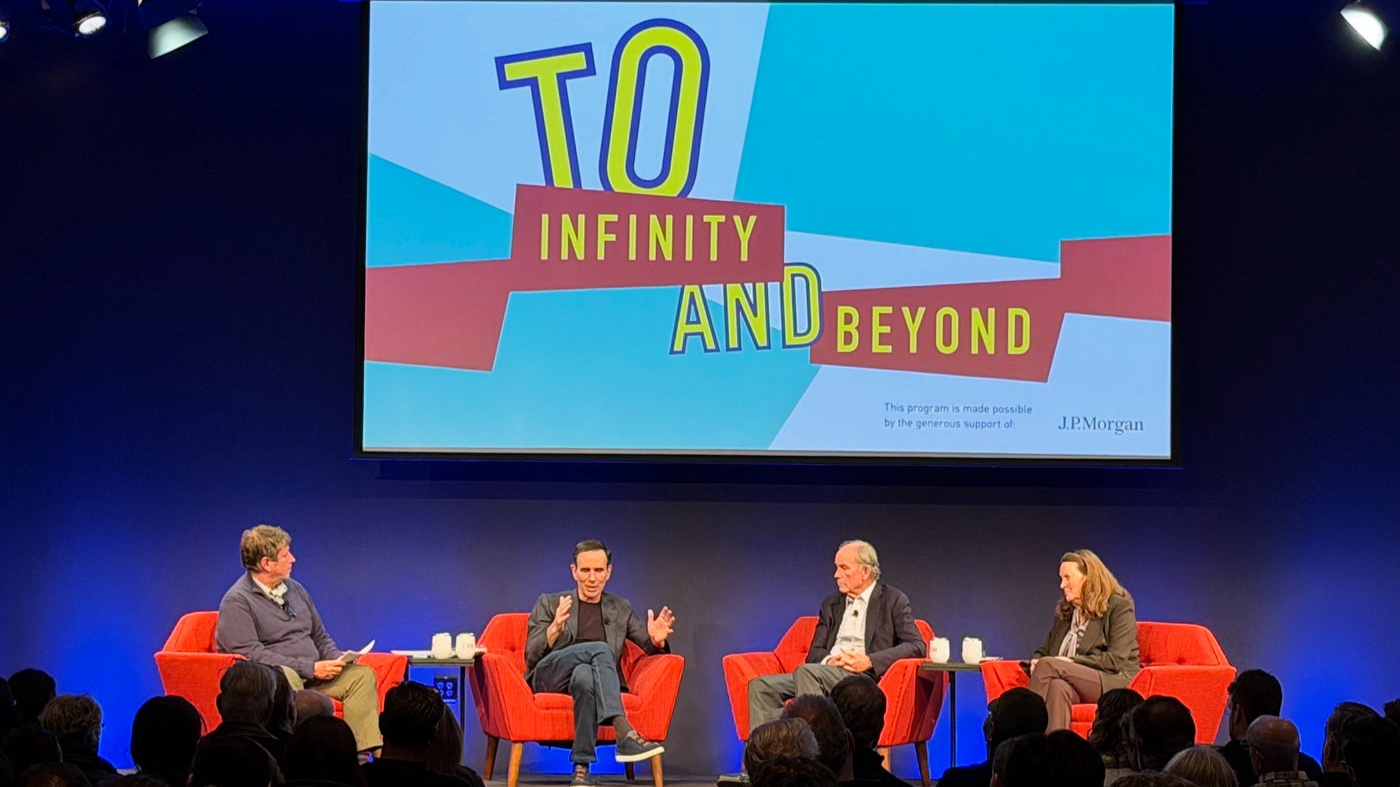
Former CFO Lawrence Levy says 1994–95 Pixar faced three crises: a difficult Steve Jobs, no profits or cash, and a crippling Disney contract, with Jobs covering payroll personally. Spurned by Morgan Stanley and Goldman Sachs, Levy turned to Robertson Stephens, Hambrecht & Quist and Cowen, who backed the deal after visiting the studio and seeing Toy Story’s promise.
This is a study in narrative arbitrage unlocking capital! Big banks passed because the numbers were thin; boutique houses underwrote after inspecting the product and sensing credible momentum. The roadshow “sugar high” sits near the boundary of fair disclosure, yet such theatre often determines pricing. Listing before box-office data was a belief bet that paid off when Toy Story hit. Finance didn’t create value; it bought time for execution. Survivorship bias aside, the operational takeaway is clear: when fundamentals are fragile, inspectable product narratives and aligned incentives can bridge the gap until fundamentals arrive.
This article argues that Japanese scientists were pioneers of artificial intelligence
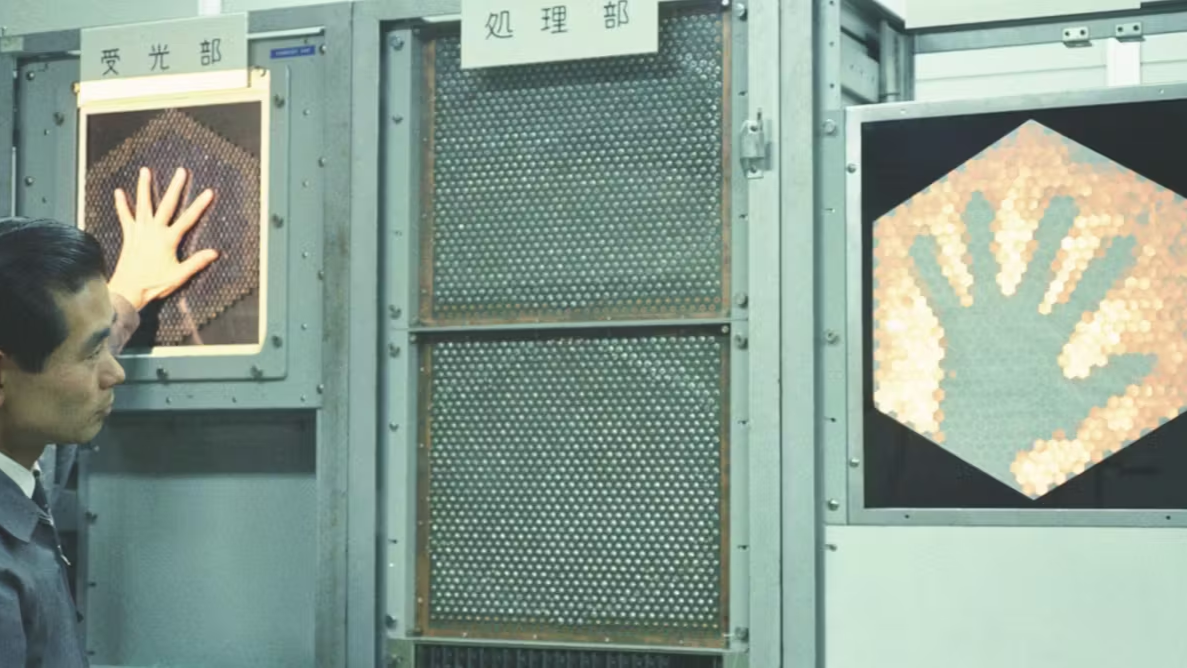
This article argues that Japanese scientists were pioneers of artificial intelligence yet are being written out of its history. It revisits early theoretical and engineering contributions from Japan and contrasts them with recent narratives centred on Anglophone institutions and award circuits. Without access to the body text, specific individuals, dates, or experimental results cannot be confirmed, but the thrust appears to be a corrective account aimed at rebalancing credit and broadening the conventional origin story for modern AI. The likely implications emphasise historiography and policy: whose work is preserved, cited, translated, and taught shapes future research agendas.
This is an incentives story, not just a narrative one. Citations, prizes and curricula are marketplaces where attention is allocated under constraints; language, access, institutional prestige. Japanese work historically lived in different channels (journals, proceedings, corporate labs), making diffusion into Anglophone canons slower. That shapes today’s policy choices: if attribution privileges Western centres, funding and talent will continue to flow along established paths, regardless of where foundational ideas originated. Independent reinvention complicates strict priority claims, and nationalism cloaked as redress helps no one. What matters for the next decade is expanding the pool of inspectable, teachable exemplars so students and policymakers see multiple lineages for AI. Recognising Japanese contributions isn’t nostalgia; it’s portfolio diversification for ideas. That, ultimately, improves resilience and reduces the risk of monocultures in research direction.
This richly illustrated timeline
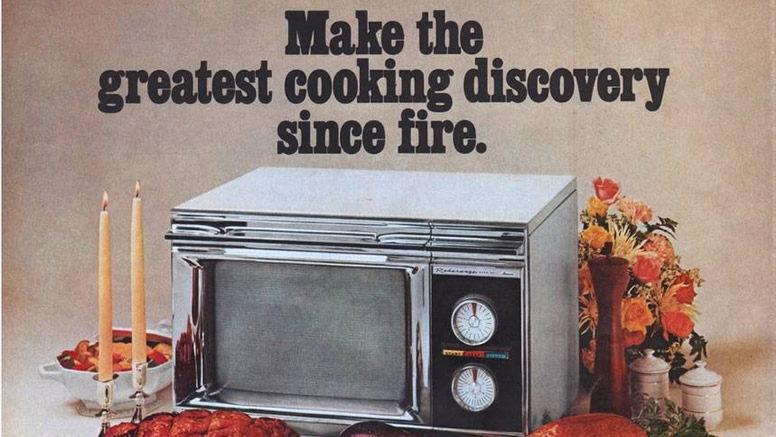
This richly illustrated timeline traces microwave ovens from wartime radar hardware to everyday kitchen workhorses. It explains dielectric heating, why consumer ovens centre on 2.45 GHz, and how early Raytheon models (Radarange 1132, 1161) gave way to the first consumer unit, Tappan’s RL-1 (1955, $1,295). Subsequent milestones include Sharp’s first turntable (1966) and Amana’s successful RR-1 (1967, $495). Safety engineering (Faraday-cage doors, interlocks) and the 1968 Radiation Control Act shaped public acceptance alongside messy early accidents. The piece frames progress as steady fixes for uneven heating and crude power control: mode stirrers and turntables; auto-defrost by duty-cycle modulation; temperature probes; convection hybrids; then inverter supplies and, more recently, solid-state RF with sensing. It notes ISM-band interference with Wi-Fi, mixed results from “smart” features, and market consolidation in manufacturing.
I’m a sucker for well-curated engineering history, and this one’s a delight. The through-line is obvious: decades of fiddly fixes slowly tamed a blunt magnetron. I especially liked the practical explanations; why defrost cycles stutter, why Wi-Fi sulks... because they map directly to lived kitchen pain. The downside is rigour: it leans on Wikipedia and era ephemera, so some claims feel anecdotal. Smart features underwhelm; sensing-led RF looks promising but pricey. Net-net: microwaves evolved the boring way, incrementalism that lasts. Sure, manufacturing consolidation underscores commoditisation pressures that punish exotic bills of materials, which is why sensor-rich, phased systems stay premium. But this is a credible, engineering-first account of a mature platform’s slow refinement. That’s real progress.
Last Week in AI
- IBM AI ('Bob') Downloads and Executes Malware | promptarmor.com
- Lego announces Smart Brick, the ‘most significant evolution’ in 50 years | theverge.com
- New ChatGPT Health tab allows you to connect fitness apps | axios.com
- Wall Street’s key takeaways from Nvidia CEO Jensen Huang’s speech and analyst Q&A at CES | sherwood.news
- The Agentic Self: Parallels Between AI and Self-Improvement | muratbuffalo.blogspot.com
- A multimodal sleep foundation model for disease prediction | nature.com