
This week’s #ReadBeforeMonday articles are from Japan’s 1950s parametron computers and Akizuki Denshi’s habit of publishing schematics long before “open source” became fashionable, through to IBM teaching neural networks to solve power-grid problems, Amazon turning custom silicon into a $25 billion business, and Google using AI to hunt, triage and patch Chrome vulnerabilities at industrial scale. The common topic this week is less glamorous than the marketing: infrastructure wins when engineering choices survive contact with cost, reliability, deployment and scale. Ferrite cores once beat expensive transistors, open schematics built trust, hyperscalers now design their own chips, and AI is being pushed into systems where a plausible answer is useful only if somebody can still verify it.
In this issue
5 piecesProfilling Akizuki Denshi Tsusho, the long-running Akihabara electronics-parts retailer
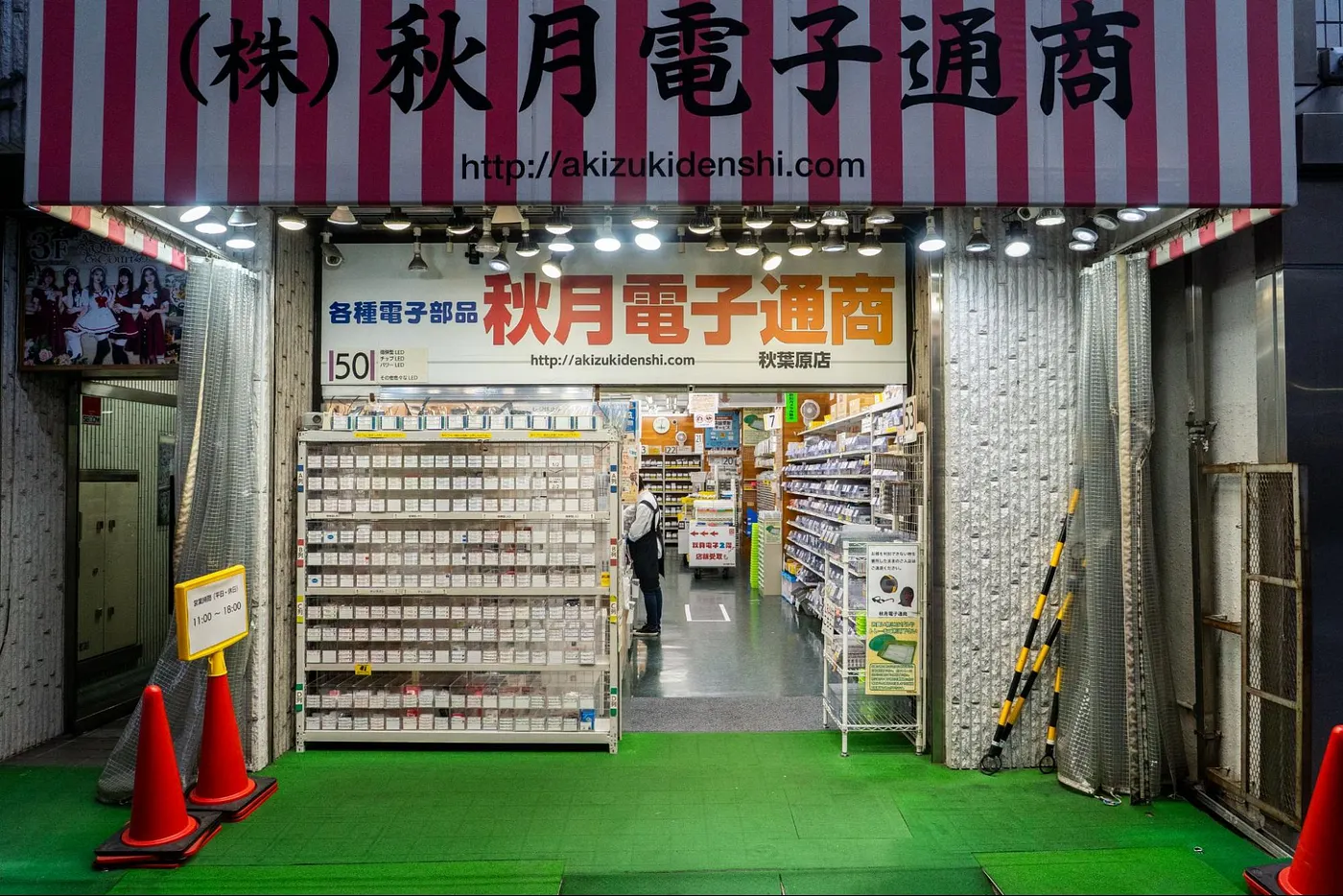
FabScene’s profiles Akizuki which reports roughly ¥3 billion annual revenue, around 160 employees, about 1,200 online orders daily and roughly 500 daily shop visitors. The article traces the business to founder Akio Tsujimoto, who began selling surplus parts from his family home while still a student and opened the Akihabara shop in November 1970. Akio’s operating model combines staff-tested inventory, outright purchasing rather than consignment, competing products displayed together and in-house manufacturing of some boards. Online sales now outweigh physical-store sales roughly nine-to-one, while repeat customers exceed 85%.
Akio Tsujimoto’s cheekiest thing is that publishing complete kit schematics let customers repair the company’s own mistakes - which is indeed brilliant and today's a must! He reportedly treated that, half-jokingly, as a way to dodge responsibility. That’s wonderfully backwards by modern product-management standards, and I think it contains the article’s best idea: transparency can make support a property of the product rather than a department bolted on afterwards. The rest of Akizuki’s model makes that credible, with staff reading datasheets, testing parts, rejecting products they dislike, and buying stock outright and manufacturing some boards internally. The company then survives on repeat business at a scale including roughly 1,200 online orders a day and an 85% repeat-customer rate. Yet, Akizuki’s inventory is described almost as a map of one founder’s curiosity; great companies can run on taste for decades; durable systems have to encode why that taste worked. What happens when Akio’s instincts stop being the decision engine, and which tests, supplier rules and product choices are actually documented? So, open documentation reduces dependency only when the surrounding organisation can keep producing trustworthy artefacts. Schematics help customers inspect and repair. Curation, testing and purchasing discipline determine whether those schematics describe something worth buying. The durable advantage is institutionalised technical judgement.
ethw: Eiichi Goto’s 1954 invention of the parametron at the University of Tokyo

The Engineering and Technology History Wiki’s IEEE Milestone entry describes a logic element based on ferrite cores and parametric oscillation, developed because vacuum tubes and early transistors were costly or unreliable. The page says 4,200 parametrons powered PC-1, which began operation on 26 March 1958 and became Japan’s fastest computer at the time. The entry connects Eiichi’s design to Japan’s early computer industry, citing adoption by commercial manufacturers, some systems selling more than 700 units, and PC-1’s use by researchers inside and outside the University of Tokyo. It also records the architecture’s constraints: roughly 10–30 kHz operation against about 1 MHz for contemporary transistor calculators, limited fan-out, heat at higher frequencies and poor suitability for miniaturisation. The IEEE milestone plaque was dedicated in Tokyo on 27 November 2025.
PC-1 was all about engineering choices, which only make sense against the constraints that produced them! Ferrite cores cost 5 yen, compared with 1,000 yen for a vacuum tube and 8,000 yen for a transistor in Eiichi’s recollection. A logic family built from cheap, stable magnetic material was rational. I like that the page treats the machine as a complete architecture: majority logic, limited fan-out, three-phase excitation, error-corrected memory and all. Interesting the claim that Eiichi’s and his laboratory budget was one-thousandth of a comparable MIT project; that changes how I read the parametron’s speed deficit. So cost pressure produced an ingenious answer, but the answer carried physical limits: 10–30 kHz operation, heat at higher excitation frequencies, weak miniaturisation prospects and awkward fan-out. Those constraints were embedded in the technology. Bottom line; a system can be reliable, understandable and brilliantly matched to its immediate environment, then lose as the economics around its components change. The wiki itself reaches that point: faster, increasingly stable transistors eventually displaced parametrons.
GENCO - a neural solver developed with research and energy-sector partners for three steady-state grid tasks
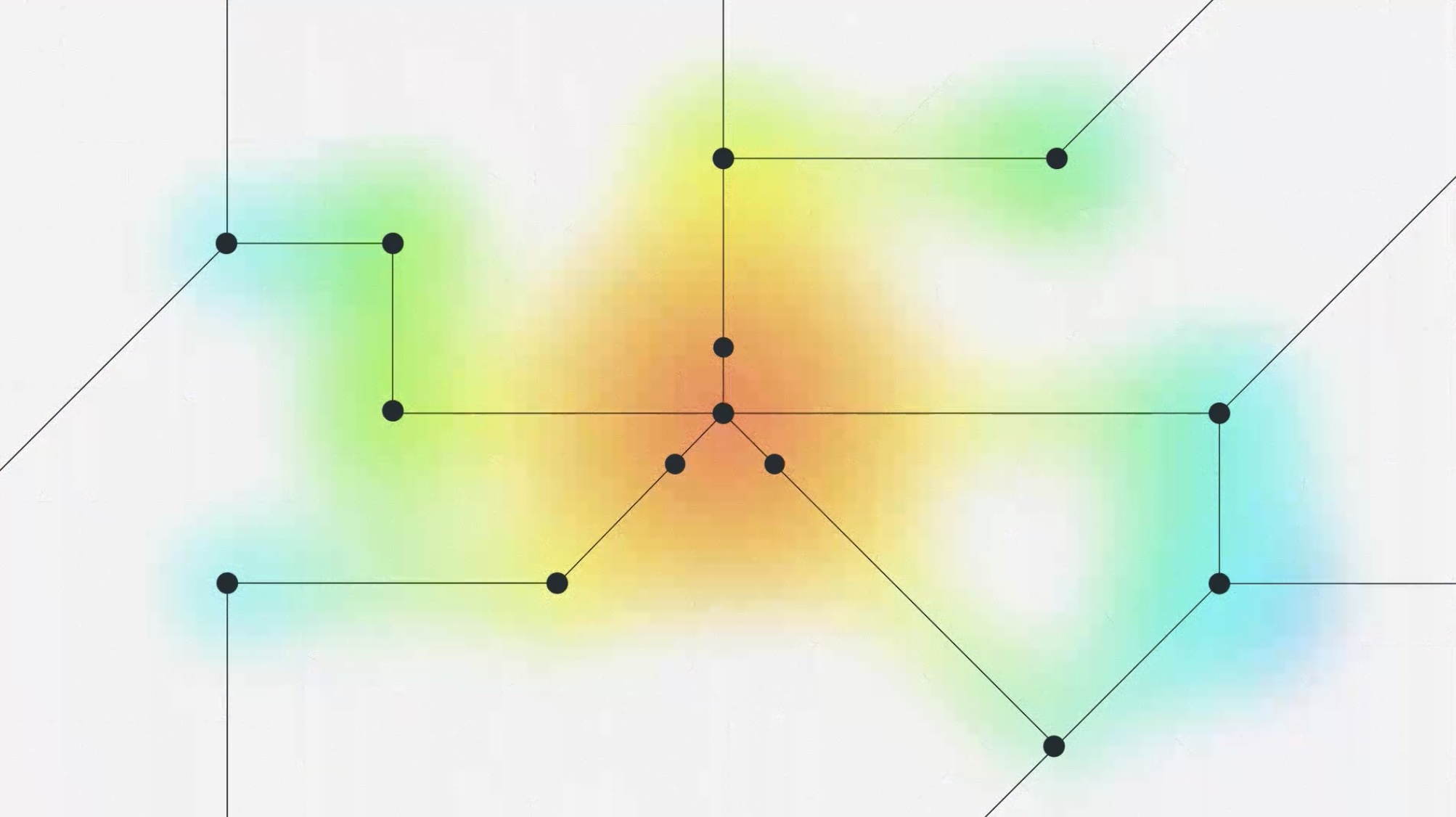
IBM Research’s Peter Hess describes GENCO, which uses a shared graph-transformer architecture with corrective layers intended to enforce physical consistency. IBM reports speedups of up to 30 times for power flow and 85 times for optimal power flow, with tests spanning grids of up to 10,000 buses. Peter also describes an open GridFM Development Framework for training, data generation and benchmarking. The project includes four million instances across six grid topologies, Apache 2.0-licensed tooling and validation using a year of Hydro-Québec SCADA data from a 1,200-bus network. IBM positions GENCO for hybrid use with established AC solvers, with classical methods checking cases that residual and violation tests identify as critical.
I think control rooms are where GENCO’s tidy benchmark story becomes a harder systems problem. Whilst the article gets something important right by resisting the full-replacement pitch, but then BM explicitly recommends a hybrid workflow: let GENCO chew through the bulk of scenarios, inspect residuals and violations, then send suspect cases to an established AC solver for the authoritative answer. That’s a much more credible deployment model for critical infrastructure. GENCO always returns a state-estimation result in the reported tests, even where classical methods fail to converge. That sounds enormously useful. It also makes me immediately ask what confidence attaches to that answer; does a solver failing loudly be operationally inconvenient; or a fast model returning a plausible result that creates a different verification problem? IBM partly answers this with physical corrective layers, residual checks and open benchmarking. That's good! But who decides which predictions deserve classical verification, and how does that policy behave under grid states absent from the training distribution? The article admits that zero-shot generalisation to unseen topologies remains open. I’m also cautious about the headline speedups. Comparing GPU neural inference with CPU numerical solvers is inherently awkward, which the researchers themselves recognise by publishing runtime-analysis scripts. Reproducibility here matters more than another large multiplier.
Isaac Schultz says Amazon’s custom silicon business has exceeded a $25 billion annual revenue run rate
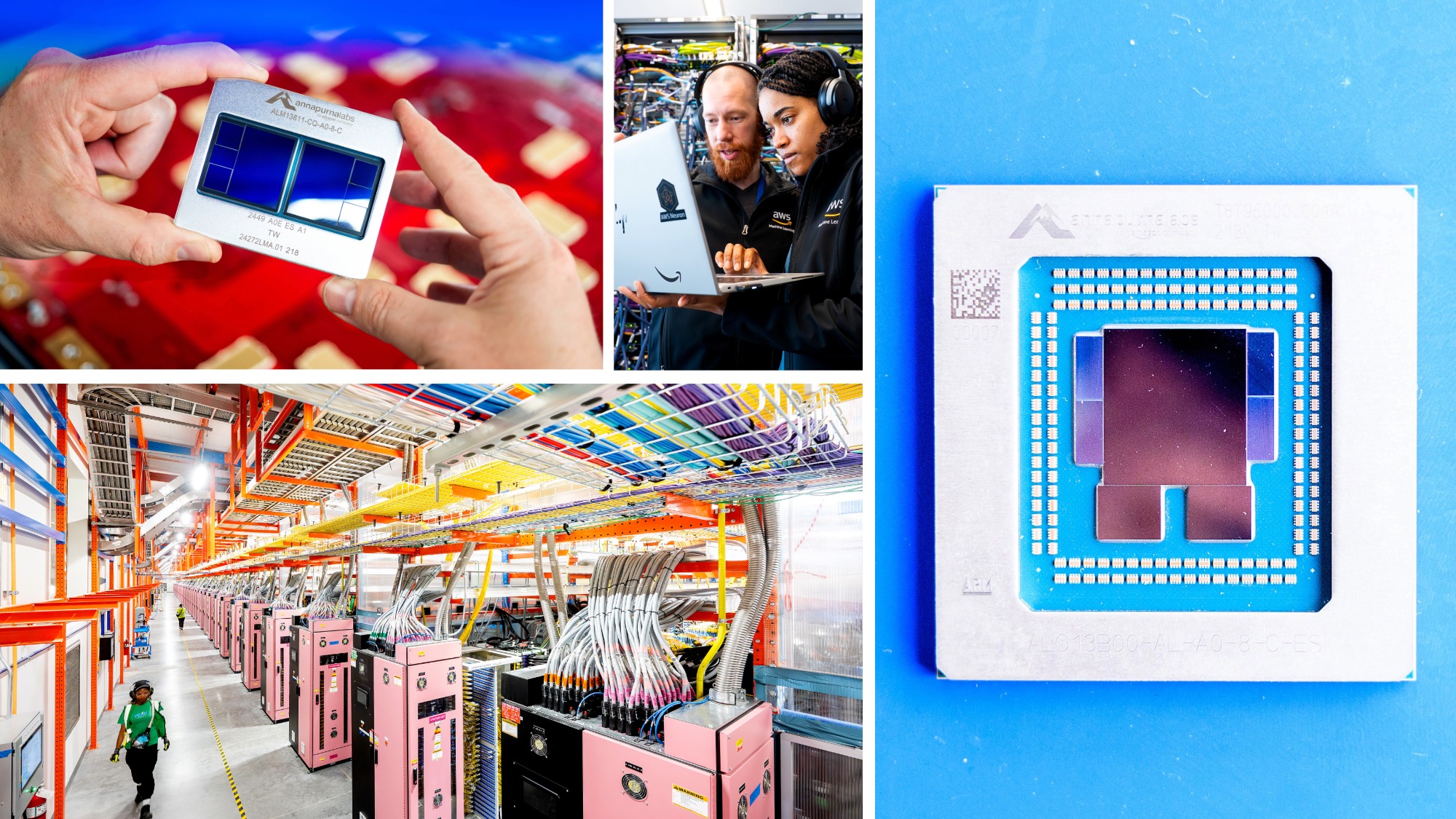
Amazon News article traces the business from Amazon’s 2015 acquisition of Annapurna Labs through Trainium, Graviton and Nitro, arguing that vertically integrated chip design lets AWS tailor silicon to cloud workloads. It reports Trainium3 at up to 40 per cent better price-performance than Trainium2 and Graviton adoption among 98 per cent of AWS’s top 1,000 EC2 customers. Isaac connects the chip strategy to large customer commitments and increasingly integrated systems. Anthropic has committed to as much as five gigawatts of Trainium capacity, while OpenAI has committed to two gigawatts beginning in 2027. Amazon says Trn3 UltraServers combine up to 144 Trainium3 chips, and Trainium3 produces more than five times as many output tokens per megawatt as Trainium2. The broader proposition is that controlling silicon lets AWS influence both cloud economics and AI infrastructure design.
Damn! Amazon’s $25 billion chip run rate changes the cloud bargain! Whilst I buy the core reasoning: designing processors, servers, networking and software together giving AWS more places to squeeze out cost and performance gains, at hyperscale, a few percentage points can matter enormously. Amazon claims much larger improvements, which makes the strategy worth taking seriously. Over half of all new processing power added to AWS runs on Graviton; that suggests custom silicon has moved well beyond an interesting alternative buried in the instance catalogue. It’s becoming the default substrate for a sizeable portion of AWS growth. That changes the competitive game, with customers choosing Trainium or Graviton increasingly, entering a vertically integrated hardware and software system that AWS controls from chip design through deployment, producing excellent economics (at scale!). It also gives AWS more influence over where optimisation happens, which interfaces matter and how easily workloads move elsewhere. “Up to” 40 per cent better price-performance and five times more output tokens per megawatt sound impressive, but there isn't much benchmark detail - maybe I missed something... What portion of those gains survives a customer’s actual models, utilisation patterns and software stack? The next cloud cost curve will be shaped inside the silicon roadmap, that's for sure.
Chrome Security Team describes how Chrome is applying AI across vulnerability discovery, triage and patch generation

Google Security Blog’s details how Its systems combine Gemini-based agents, Chrome-specific knowledge, critic agents and existing fuzzing infrastructure. Automated triage now filters, reproduces, enriches and assigns reports, which Google estimates saves hundreds of developer hours each month. AI-generated candidate fixes are also integrated into review workflows, while DeepMind and Project Zero tools scan code changes every 24 hours. The Chrome Security Team also focuses on reducing the gap between a public fix and users receiving protection. Google is piloting twice-weekly security releases, researching dynamic patching and automating selected restarts. Longer-term work combines stronger C++ mitigations with targeted Rust adoption, automated dependency updates and AI scanning inside continuous integration. Chrome currently has more than 2,300 third-party dependencies across Chromium and related projects, about 1,700 of which reach users in some form.
Ah! A browser restart is the sort of mundane operational detail I tend to distrust in grand security narratives. Here, it turns out to matter enormously. Chrome can find, triage, fix and release a vulnerability in days, then leave the user exposed because the updated binary is waiting for a restart. Google deserves credit for treating deployment latency as part of security engineering rather than somebody else’s problem. The scale jump is extraordinary. Chrome 149 and 150 fixed 1,072 security bugs, more than the previous 23 milestones combined. That’s where I become wary of the victory lap. Finding and fixing vastly more bugs certainly sounds healthy, but raw fix counts tell us little about severity distribution, false negatives or whether exploitable exposure is actually shrinking. Sure, more automation also changes the architecture of assurance; whilst candidate fixes come from agents, critic agents review them, test-writing agents produce tests, and other models scan code entering continuous integration. Humans remain involved, yet increasingly they’re supervising a machine-generated chain of evidence. How well does that chain detect a convincing patch that quietly shifts the vulnerability elsewhere? I like how dynamic patching attacks the patch gap directly; Rust targets bug-prone components; memory-safety mitigations reduce entire vulnerability classes; dependency automation addresses stale upstream code. Each tackles a different failure mode. Security teams should watch the metric Google publishes next. Bugs discovered is interesting. Time exposed, recurrence rates and exploitable defects escaping into Stable would tell us considerably more.
My Week in AI
- Anthropic pledges to embed watermarks to help discern AI slop in sop to EU | theregister.com
- What's the best programming language for coding agents? | danluu.com
- Exploring ClaudeGPT Knowledge Cutoffs | blog.sshh.io
- Cloudflare OS an open platform for agents, apps, and work | blog.cloudflare.com
- Context Collapse, Part 3 - AI Worming through Word | enklypesalt.com
- Orchard An open framework for scalable agentic AI | microsoft.com