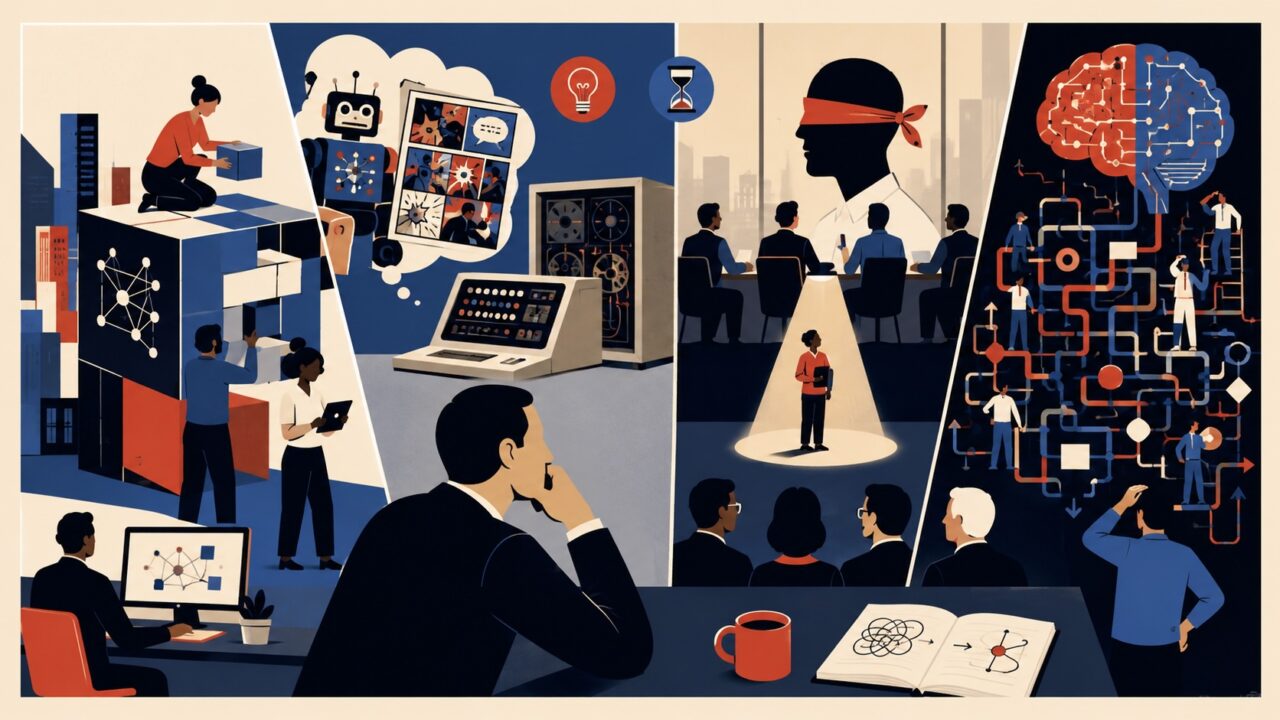
This week’s #RBM reading is quite broad! Starting with Microsoft arguing that enterprise AI success depends on embedding engineering expertise into organisations rather than simply providing models, while its decision to open source Comic Chat and the story of the Rekursiv computer both show that many ideas presented as cutting-edge today were conceived decades ago but arrived before the market, hardware or software ecosystem could support them. Ian Reppel explores the organisational consequences, describing how successful companies can gradually lose the ability to recognise technical excellence, and David C. Krakauer widens the lens further by arguing that intelligence can itself become a source of failure when increasingly sophisticated systems make manageable problems more complex.
In this issue
5 piecesStupidity is an active misuse of intelligence rather than its absence

David C. Krakauer defines intelligence as reducing a problem’s difficulty and stupidity as increasing it through elaborate theories, beliefs or algorithms. He distinguishes consequential stupidity from ignorance, noise and understandable error, describing it as the process through which mistaken ideas become defended, refined, institutionalised and used as foundations for further action. He applies this definition to misplaced scientific theories, cybernetic economic planning, literature, evolutionary heuristics and artificial intelligence. He argues that methods can remain effective within their original domain yet become destructive after changes in context, scale or purpose. The essay calls for a science of stupidity examining how intelligent systems generate harmful outcomes, how institutions lose collective judgement and which technologies support human cognition without replacing the capacities needed to detect errors.
This project cybersyn supplies a recurring pattern: a powerful abstraction escapes its proper domain, gathers institutional confidence and begins making reality answer to the model. We’ve seen the same move in management dashboards, algorithmic hiring, enterprise architecture and now GehAI. The machinery becomes impressive enough that questioning its premise looks unsophisticated. What David gets right is the core mechanism, ignorance is often visible, but elaborate error arrives with diagrams, credentials and a steering committee. It can survive evidence because organisations have invested status, budgets and careers in keeping the framework intact. This essay occasionally makes simplicity sound safer than it is. Asking people what they need can beat weeks of modelling, but people possess incomplete information, conflicting incentives and unreliable forecasts. Complexity earns its place when it improves decisions under scrutiny. The useful test is whether the apparatus reduces uncertainty and survives contact with outcomes. But, AI raises the stakes because it industrialises persuasive elaboration, as a model can produce a polished explanation before anyone has checked whether the question, evidence or objective makes sense. The historical pattern predicts a flood of systems that optimise proxies, satisfy internal benchmarks and fail quietly in production. Their sophistication will make them harder to challenge, especially once the humans responsible for verification have allowed those skills to decay.
Successful companies can gradually lose the ability to recognise good engineering

Ian Reppel compares the process to Mexican cavefish that retain the genes for eyesight even after the eyes themselves disappear. The essay describes “competence blindness” as an organisational failure driven by changing incentives rather than declining individual ability. As companies grow, hiring, promotion and decision-making increasingly reward conformity to existing systems instead of engineering judgement. Ian says the process becomes self-reinforcing. New hires learn from weakened practices, hiring panels replicate the same standards, and engineers who challenge poor decisions either adapt or leave. Unlike disruption caused by changing markets, competence blindness allows companies to survive for years while steadily reducing their capacity to build excellent software. The proposed antidote is continued exposure to external standards, diverse engineering experience and environments that actively reward technical excellence.
Feels that the metaphor is doing a lot of work here, and mostly earning it! Companies don’t suddenly become technically weak - right? They gradually lose the ability to recognise what good looks like or have taste in what is good. That’s a much more uncomfortable failure mode because everyone involved believes they’re making sensible decisions. I’ve seen versions of this happen in engineering organisations that grew quickly. New people learn from the system they’re given, interview against that system and eventually become the people defining the next generation of standards. Nobody sets out to lower the bar. The environment quietly does it for them. Ian gets that mechanism exactly right. What the essay leaves largely unexplored is that AI may accelerate both directions. Companies with weak engineering judgement can now produce software faster than ever, creating the illusion that capability has improved. Equally, organisations with strong engineering cultures can amplify their best people because routine implementation becomes cheaper. The differentiator shifts from writing code towards recognising architecture, making trade-offs and knowing when the model is confidently wrong. This feels like the real strategic risk over the next decade. Whilst every vendor is selling AI productivity, far fewer are helping companies preserve engineering judgement itself. That’s a much harder capability to rebuild once it disappears because the people deciding what “good” means are the same people whose calibration has drifted.
Microsoft announces Microsoft Frontier Company, an operating business intended to deliver enterprise AI systems tied to measurable customer outcomes

Microsoft says this new organisation will combine industry knowledge, change management, continuous improvement and AI engineering. Its engineers will work inside customer environments to co-design, deploy and refine systems, extending the forward-deployed engineering model into broader business transformation work. The proposed architecture combines an intelligence platform, containing proprietary data, workflows and expertise, with a trusted platform for governance, security, observability and financial management. Judson says customers can choose models from OpenAI, Anthropic, Microsoft AI, open-source providers and specialist developers. Microsoft also plans to extend delivery through systems integrators including Accenture, Capgemini, EY, KPMG and PwC.
Microsoft’s headline promises an operating company; but the evidence currently describes an unusually large services and engineering organisation wrapped around Microsoft’s platform. The $2.5 billion commitment and 6,000 embedded specialists make this more consequential than another forward-deployed engineering announcement. Microsoft is preparing for customers to ask a practical question: “How do I get my own FDE capability?” The answer will probably bundle people, models, data services, governance and delivery methods into one Microsoft-shaped system. That’s commercially coherent. It also deserves scrutiny. The launch gets part of the outcome focus right. Enterprises have spent enough time admiring demonstrations. Useful AI work begins with the operating result and works backwards through workflows, data, controls and engineering. Yet “company IQ” remains too vague. A knowledge graph alone won’t make enterprise data ready for agents. Neither will a large model with a generous context window. Customers still need an engineering framework in which human FDEs and software agents collaborate, supported by reusable components, evaluation loops, security controls and clear ownership. Graph engineering, Fabric IQ and similar products may fit inside that framework; none supplies the operating model by itself. This is where Outcome Focused Engineering (OFE) has room to become the broader category. The reusable architecture matters more than whichever graph database, model provider or Microsoft product happens to be fashionable this quarter. A credible approach would let customers retain the method, substitute components and develop their own capability after Microsoft’s embedded team leaves.
Rekursiv computer anticipated several architectural ideas that have only recently become commercially viable
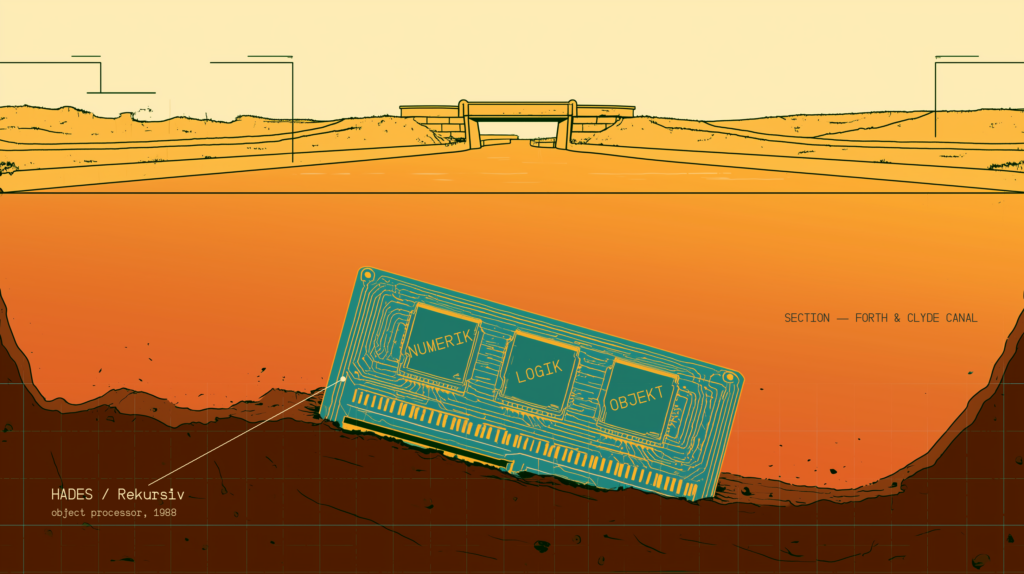
Alasdair Allan Allan traces the machine’s development from Linn’s object-oriented manufacturing ambitions through its hardware-enforced memory safety, garbage collection, persistent object store and programmable instruction set, while explaining why commodity processors overtook it before it could succeed commercially. The article argues that the Rekursiv failed because of timing rather than technical direction. Alasdair connects its core concepts with modern developments including CHERI capabilities, Arm’s Memory Tagging Extension, domain-specific accelerators and renewed interest in specialised silicon. The conclusion is that technological cycles matter as much as technical correctness, making the Rekursiv a case study in being decades ahead of the market rather than fundamentally mistaken.
The part that stuck with me wasn’t the canal. It was the suggestion that the Rekursiv was right four times in succession and still lost because the calendar hadn’t caught up. That’s a useful correction to the tidy stories we tell about technology. We love to imagine that good ideas win and bad ideas disappear. Reality is messier. Plenty of excellent ideas arrive before the supply chain, manufacturing economics or software ecosystem are ready to support them. Rekursiv appears to have landed squarely in that gap, and the article does a good job of explaining why its commercial failure doesn’t automatically invalidate its architecture. I’d still treat the central thesis with some caution. This is an investment firm’s essay, and there’s an understandable temptation to connect historical dots into a compelling narrative for today’s silicon startups. The evidence around independent performance validation is thin, and it’s easier to identify successful descendants after forty years than it is to predict them in advance. Hardware ages rapidly. Interfaces, instruction models and programming abstractions can survive several generations of hardware if they’re designed with portability in mind. History doesn’t just reward good architecture. It rewards architecture that can survive its first implementation.
Microsoft Comic Chat, its 1996 Internet Relay Chat (IRC) client, is now open source
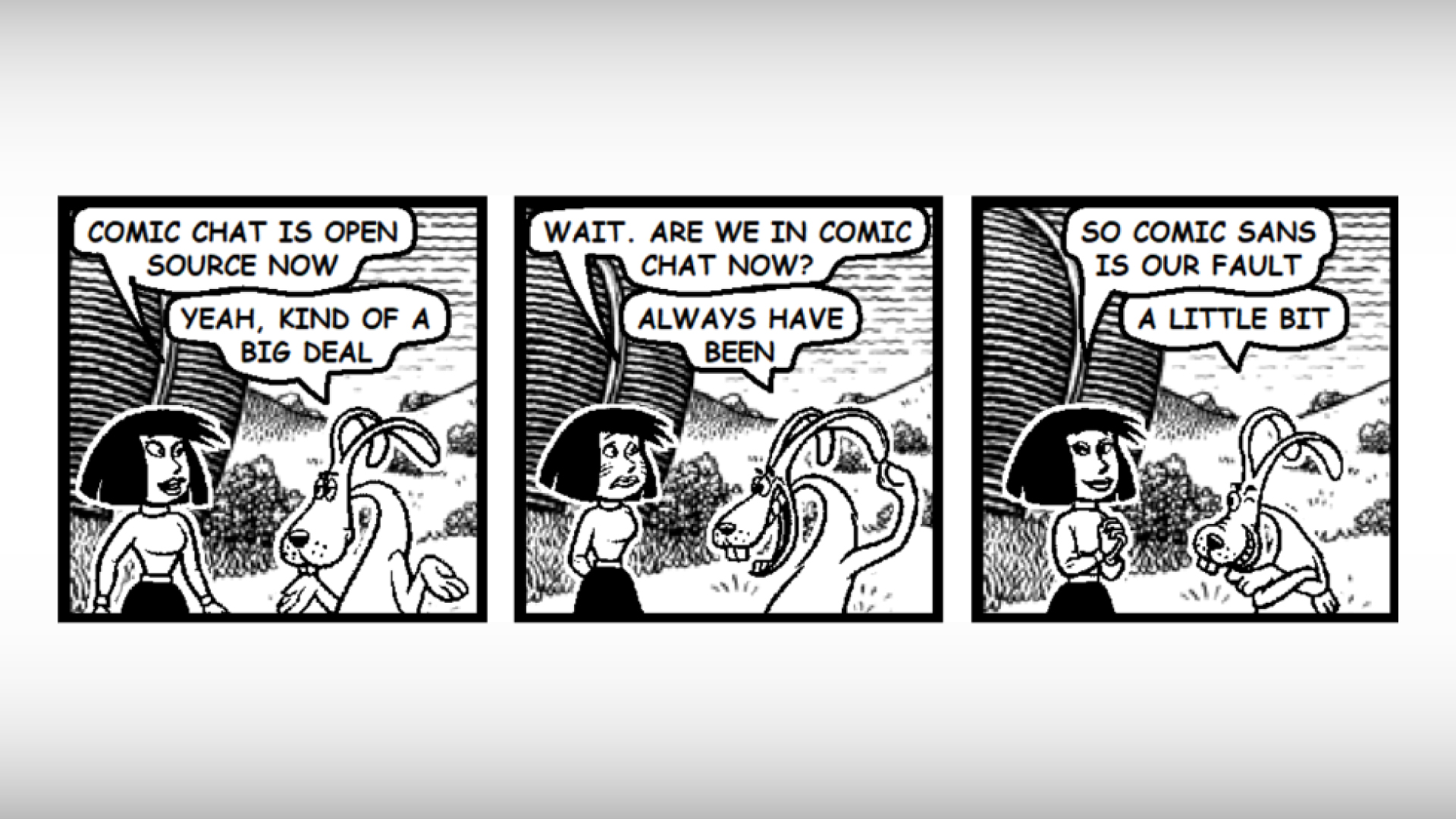
Written by Robert Standefer and Scott Hanselman, the article explains how the software converted text conversations into automatically illustrated comic-book panels using character poses, facial expressions and speech bubbles. It also recounts how Comic Sans, designed by Vincent Connare in 1994, found its first major use within the application. The article positions the release as software preservation rather than a commercial revival. It describes the original research behind the project, credits David “DJ” Kurlander, Tim Skelly, David Salesin and Jim Woodring, and notes that the repository includes AI-assisted modernisation experiments demonstrating how the original Visual C++ and MFC code can build with current tools and connect to modern IRC servers. The intended audience includes developers, historians and retro-computing enthusiasts.
Releasing old code is easy. Making it understandable, buildable and genuinely useful to today’s developers is where projects usually stall. This repository isn’t presented as a museum piece frozen behind glass, it includes working modernisation experiments gives future contributors somewhere concrete to begin. That’s far more valuable than dropping a tarball onto GitHub and hoping curiosity does the rest. Comic Chat was effectively making editorial decisions about conversations decades before today’s fascination with AI-generated interfaces. It inferred tone, selected expressions and changed presentation dynamically. Primitive by current standards, certainly. Yet the interaction model feels oddly contemporary. This release also says something about Microsoft’s relationship with its own history. Open sourcing legacy software has become a way to reduce custodial cost while strengthening developer goodwill. I’d still like more evidence that these preservation projects develop lasting communities rather than brief waves of attention. GitHub stars arrive quickly. Active maintainers rarely do. Anyway, Comic Chat was a thing I used for brief moments and never liked it. But that's me.. you should try it too...
My Week in AI
- Introducing Claude Opus 5 | anthropic.com
- VulnHunter is an open-source, agentic AI security tool | github.com
- Kimi K3 Benchmarks Explained: A Coding-Agent Evaluation Guide | nxcode.io
- NVIDIA-labs OO Agents: Native Python Object-Oriented Agents | arxiv.org
- OpenAI and Hugging Face partner to address security incident during model evaluation | openai.com
- KumoRFM is a pre-trained relational foundation model | docs.nvidia.com