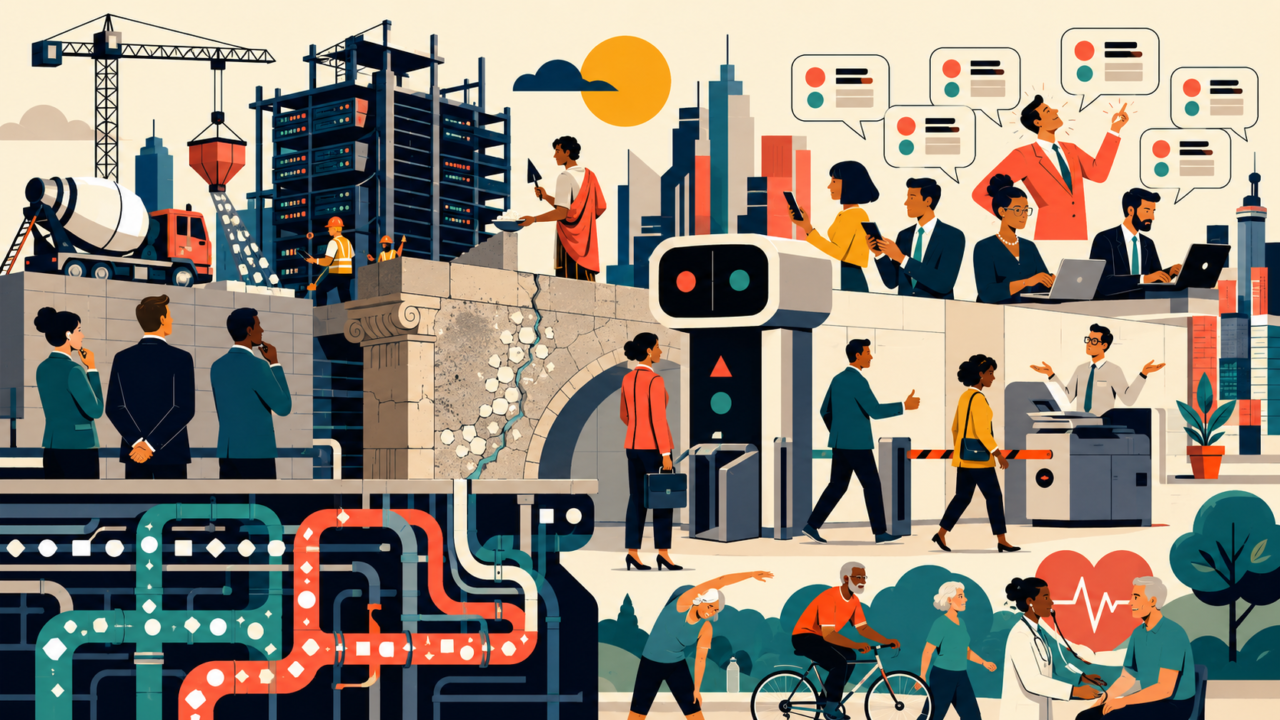
This week in #RBM; AI economics looks reassuringly like every infrastructure boom before it: a trillion dollars of concrete, silicon and optimism poured into capacity while nobody can quite explain who will retain the margin once tokens become plumbing. The Romans, meanwhile, appear to have solved a more practical infrastructure problem two millennia ago by leaving reactive lumps in their concrete that helped seal cracks. Princeton’s researchers remind us that machines become social actors the moment they start judging, refusing or allocating, regardless of how often procurement insists they’re merely “decision-support tools”. Dementia rates are falling in several wealthy countries, apparently because education, cardiovascular care, exercise and other unglamorous interventions work, which is unfortunate news for any strategy requiring a proprietary platform, a heroic drug launch and a conference keynote. And Pangram reports that LinkedIn contains rather a lot of AI-generated prose, using its own commercial detector to reach a conclusion that most users had already formed somewhere around the third post beginning “I’m humbled to announce”.
In this issue
5 piecesBenedict Evans argues that AI token pricing is temporarily distorted by constrained capacity, rapid demand growth and uncertain economics
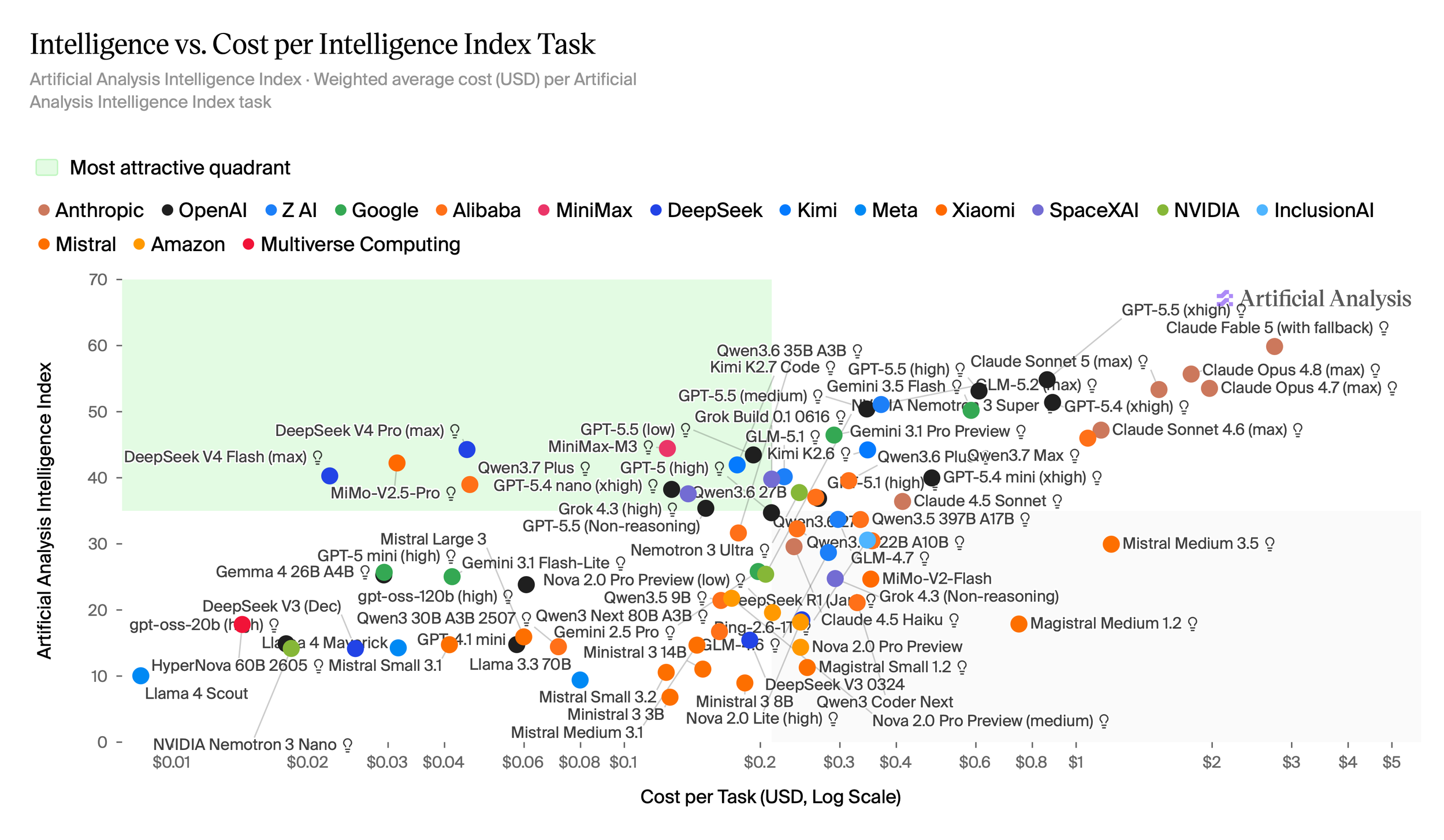
More than $1 trillion in data-centre capital expenditure is expected, inference efficiency is improving, and model architectures consume tokens at different rates. Meanwhile, software development has produced sudden product-market fit, but future use cases, their scale and customers’ willingness to pay remain unknown. Benedict examines whether foundation models can retain pricing power or become commodity infrastructure beneath higher-value software. Market outcomes depend on frontier-model differentiation, network effects, training costs, regulation and how much customer value the model provider can capture. Comparisons with broadband, mobile networks, semiconductors, cloud computing and utilities reveal several plausible market structures, without providing reliable forecasts.
When mobile networks became a trillion-dollar industry, spent roughly $200 billion annually on capital equipment, and still watched much of the economic value migrate elsewhere. That’s what we're comparing here - roughly! I think Ben gets this underlying question right: technical importance and commercial power are separate variables, that sometimes people forget. This article is particularly good on that uncertainty, with token prices depending on supply, efficiency, model behaviour, customer returns and competitive discipline, with every input moving simultaneously. Sure, a five-year spreadsheet may produce immaculate cells and fictional confidence. But Ben also resists the standard analogy game... Fibre, mobile, semiconductors and cloud each illuminate part of the market, yet none supplies an answer key. Enterprises won’t choose solely through a daily auction of benchmark scores and token prices. It's about security approvals, observability, fine-tuned workflows, contractual liability and staff familiarity, which can turn nominally interchangeable models into operational dependencies. Then commodity components regularly support durable vendor power once procurement and integration enter the room. Yet, the infrastructure question therefore reaches beyond model quality. So CTOs should watch routing portability, data-egress constraints, proprietary tool interfaces and whether providers can make workloads expensive to move. Today’s generous discounts may be acquisition spending disguised as economics. Tomorrow’s margins could depend on controlling the surrounding system rather than charging more for each token.
The Science Advances investigates why ancient Roman concrete has remained durable
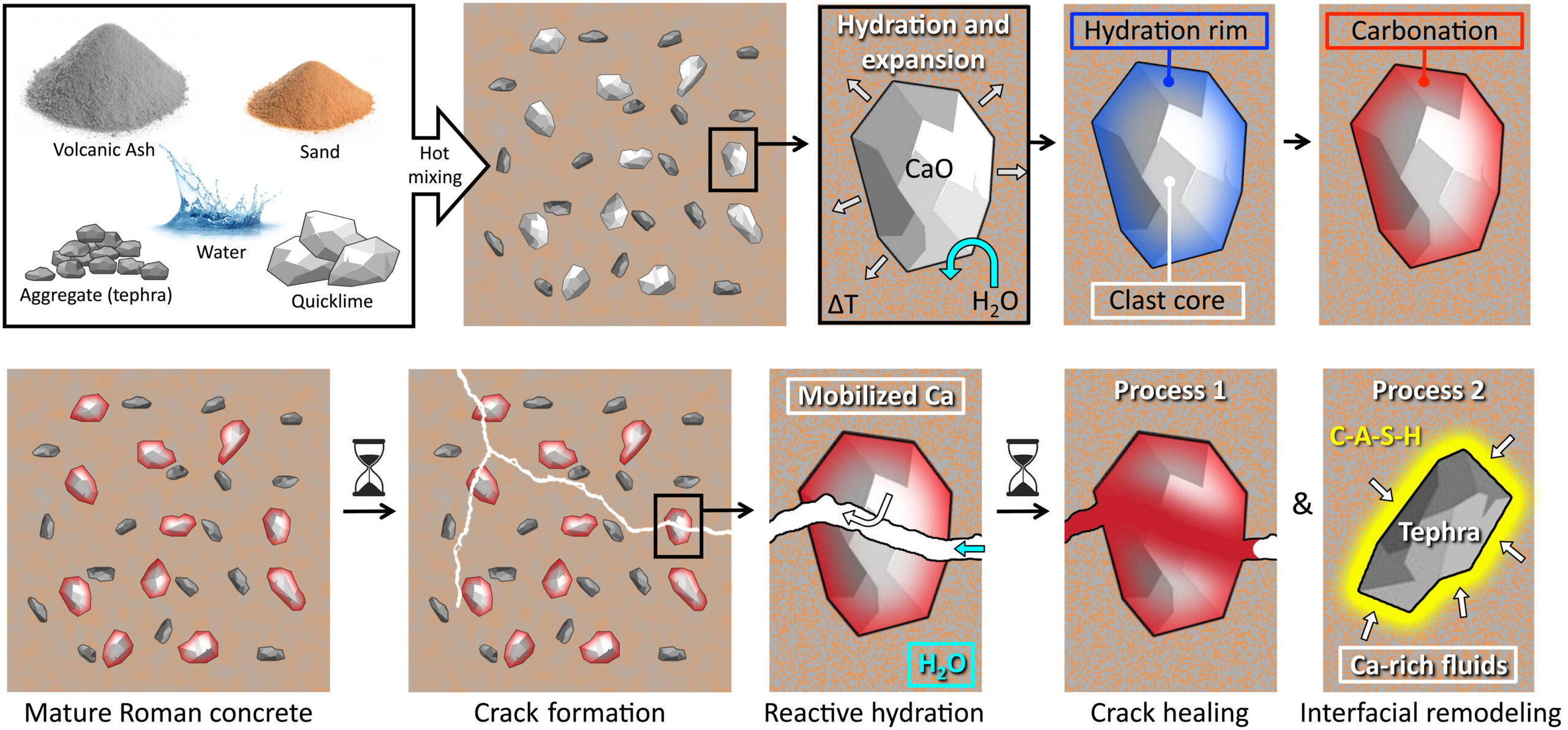
Using elemental mapping, spectroscopy and electron microscopy on mortar from Privernum, the researchers identify lime-rich clasts formed under high-temperature conditions. Their evidence indicates that Roman builders used quicklime through a hot-mixing process, alongside or instead of slaked lime. Linda and her colleagues propose that these lime clasts supply reactive calcium when water enters pores or cracks. They tested the mechanism by producing Roman-inspired concrete, splitting cured samples and passing water through approximately 0.5-millimetre gaps. Calcite formed inside cracks containing lime clasts, reducing water flow, whereas control samples without the clasts remained open. The findings suggest a route towards concrete requiring fewer repairs and longer replacement cycles.
My background is in Civil Engineering - I know! it's a shock, even to me! So these topics are quite interesting to me and these lime clasts give this paper a satisfying reversal. The researchers take seriously a feature commonly dismissed as sloppy Roman mixing and show why it may have been deliberate. That’s good scientific instinct: examine the apparent defect before designing it away. Linda’s team connects chemical signatures to hot mixing, proposes a calcium-based repair mechanism, then recreates that mechanism in modern samples. Water reaches a crack, dissolves calcium from the clasts and helps precipitate calcite into the opening. The control remains open. Clean result. Perfect! Modern concrete design usually pursues uniformity. This work suggests that carefully engineered heterogeneity may produce resilience. Roman-inspired concrete has earned a serious programme of structural validation.
Princeton researchers review how people perceive and respond to robots and artificial intelligence

They describe machines as “agents of replacement”: human-created entities designed to assume roles previously occupied by people or animals. The chapter examines machine mind perception, anthropomorphism, the uncanny valley, algorithm aversion, trust, moral decision-making and reactions to automation across social settings. Kurt and his colleagues argue that machines create ambiguity because people may perceive them as mechanical tools or substitutes for human agents. Acceptance varies with human likeness, reliability, task type, transparency and perceived emotional capacity. People show particular resistance when machines make moral decisions, although habituation may reduce discomfort over time. The authors consider consequences spanning employment, healthcare, education, art, intimacy, religion and relations between human groups.
Imagine a hospital bed allocation system, which enters the organisation through procurement, then quietly acquires a social role. Staff infer judgement. Patients infer authority. Managers infer neutrality. The deployment consequence sits inside that progression: people respond to an automated system according to the mind and role they believe it possesses, regardless of what its architecture can actually support. So, reliability metrics alone won’t explain adoption because users judge machines as social actors, especially once software recommends, refuses or evaluates. A model that writes meeting notes remains a tool. A model that scores an employee starts resembling a manager. This “agent of replacement” frame is useful, though too broad, whilst many systems arrive as assistants and become substitutes through budget pressure, workflow redesign or managerial convenience. For me, replacement can emerge from deployment rather than design, and that distinction matters because nobody owns the decision once it’s distributed across product defaults, procurement targets and headcount plans. Calling software a colleague or adviser changes expectations about competence and responsibility. Humanlike cues can invite trust faster than evidence earns it. Every consequential system needs an explicit account of who decides, who can appeal and who carries the cost of error. Machine psychology is going to be so much fun!
Age-adjusted dementia incidence has fallen substantially across several rich countries
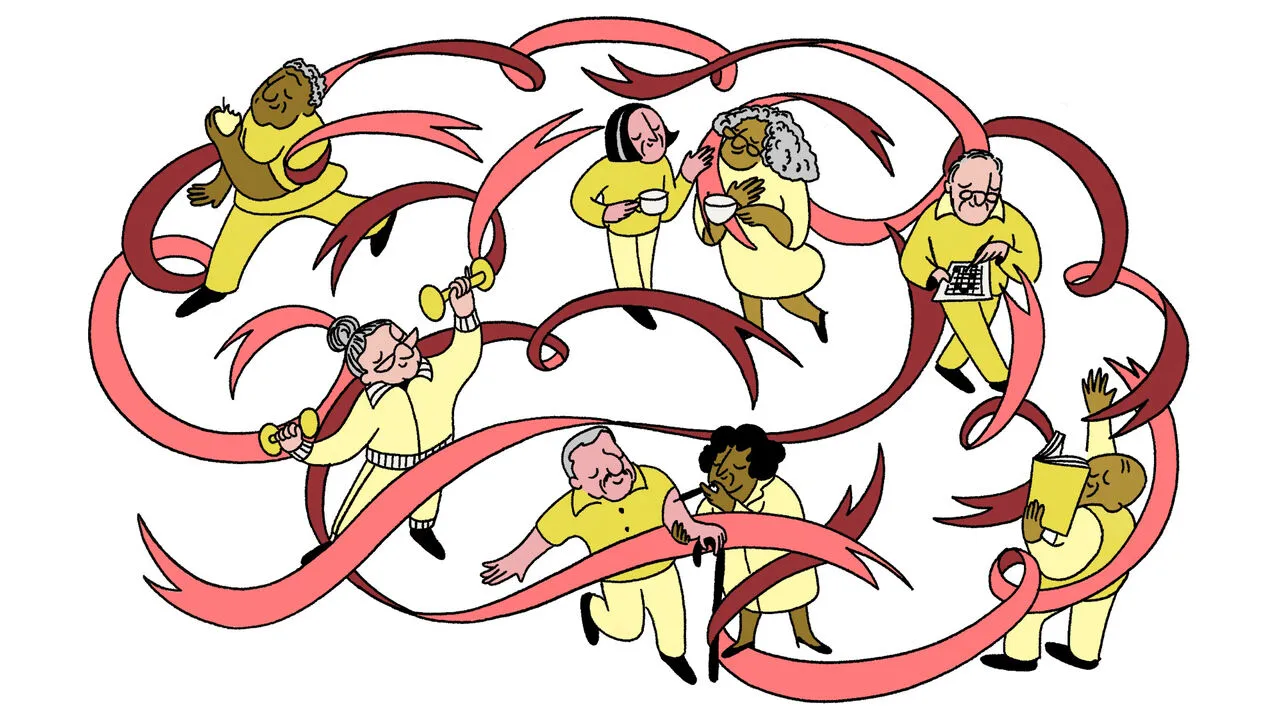
Among Americans aged 85-89, dementia prevalence dropped from roughly three in ten 40 years ago to one in ten by 2024. Other studies found declines of 13-20% per decade across North America and Europe. Total cases may still rise as populations age, but projections assuming unchanged underlying risk probably overstate future growth. The article links much of the decline to better education, cardiovascular health and management of modifiable risks throughout life. Randomised trials indicate that combined improvements in diet, exercise, cognitive activity and heart treatment can slow cognitive decline. Vaccination against shingles may also reduce dementia risk, whereas amyloid-clearing drugs have shown modest practical benefits and substantial risks. Policymakers therefore have several preventive tools whose effects may exceed those of specialised treatments.
Insurers, pension systems and health ministries may be the biggest economic winners here, yet the article’s real market insight receives surprisingly little attention. Sure, a slower rise in dementia would alter long-term care demand, household savings, workforce participation and public spending projections, but entire actuarial models could be carrying an assumption that has already started to expire. Ageing populations don’t automatically produce dementia at yesterday’s age-specific rates. Small annual declines compound dramatically, and models that freeze incidence can manufacture enormous future burdens with impressive mathematical precision. That’s a useful warning for anyone forecasting slow-moving systems. The prevention evidence is also more persuasive than the drug story. Education, blood-pressure control, hearing treatment, exercise and vaccination look mundane beside antibodies and pharmaceutical pipelines. Mundane interventions often scale better. They also suffer from weak commercial incentives, fragmented responsibility and benefits that arrive decades after the spending. But, who pays for hearing aids today when the savings may appear in another agency’s dementia budget twenty years later? Public-health systems routinely split costs and rewards across departments, insurers and generations. Prevention can be clinically sound and institutionally homeless.
Pangram reports results from 1 million social-media posts scanned through the company’s opt-in Chrome extension
Pangram classified 13.8% of all scanned items as fully AI-generated, rising to 25.72% among items exceeding 250 words. LinkedIn produced the highest detected share, while Substack’s longer posts were slightly less likely than its shorter ones to receive a fully AI-generated classification. Max says LinkedIn supplied one-third of scanned items but 62% of everything Pangram classified as AI-generated. Reddit replies received far fewer AI classifications, although its top-level posts showed higher rates. The findings suggest that format, length and platform culture influence where synthetic writing appears. Pangram presents content detection as a way to restore user control over attention, using results produced by its own commercial model.
I hope everyone recognises the polished, symmetrical posts as “obviously AI”... yet then, they all disagree completely about the next ten examples. Pangram replaces that intuition with a million-item dataset - that’s useful! It also turns one vendor’s classifier into the measuring instrument, referee and supporting evidence for the product it sells. So, longer posts attract more AI classifications, LinkedIn dominates Pangram’s detected output, and Reddit replies remain overwhelmingly human according to the model. Those patterns feel plausible because incentives differ. Professional feeds reward frequent, polished certainty. Replies reward specificity, timing and direct engagement. Still, the sampling frame is doing heavy work. These posts came from people who installed an AI-detection extension, opted into research sharing and chose what to scan. That population may seek suspicious material more often than ordinary users. Pangram’s claimed 0.01% false-positive rate also needs platform-level validation, alongside false-negative rates and results for edited or mixed-authorship text. A detector can be excellent in controlled testing and noticeably less decisive inside messy production prose. The comic centre is LinkedIn announcing plans to downrank AI-generated material through a post Pangram classified as AI-generated. It’s funny because it exposes the policy problem.
My Week in AI
- OpenAI ships ChatGPT Work, a GPT-5.6 agent that runs full workflows for hours | openai.com
- A new way to reflect on how you use Claude | anthropic.com
- SHEPHERD Programmable Meta-Agents via Reversible Execution Traces | shepherd-agents.ai
- The Hitchhiker's Guide to Agentic AI From Foundations to Systems | arxiv.org
- SkillHone: A Harness for Continual Agent Skill Evolution Through Persistent Decision History | arxiv.org
- Introducing TabFM: A zero-shot foundation model for tabular data | research.google