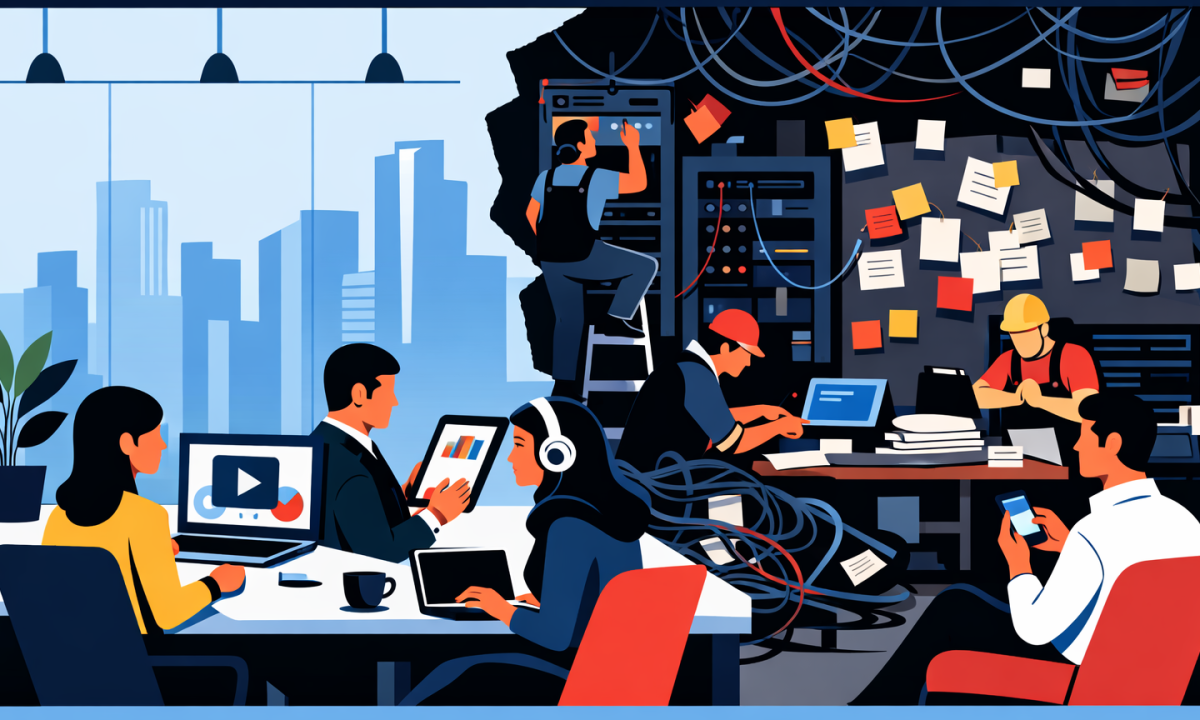
Yes, I’ve been away for the past week here on Linkedin, but we’re cooking something great over Hitachi Digital Services – and it has to be with skills! Anyway… the best thing I read this week all pointed at the same uncomfortable truth: most modern work doesn’t fail because we lack tools, speed or cleverness, it fails because we avoid the hard task, inherit systems nobody can easily replace, generate code faster than teams can align around it, forget that notes are part of thinking, and rely on platforms whose sharpest fixes still come from persistent outsiders banging on the doors. That’s why “productive procrastination” feels so familiar, why airline infrastructure still runs on old iron logic, why agentic AI is making coordination the real bottleneck, why notebooks matter more than polished outputs, and why AWS’s history reads less like tidy innovation and more like messy stewardship. Different domains, same pattern: the real work is never the shiny layer. It’s the alignment, memory, incentives and institutional grit underneath.
In this issue
5 piecesMax van IJsselmuiden argues that procrastination is not always idleness ; it can take the form of doing worthwhile work that conveniently avoids the most important task.
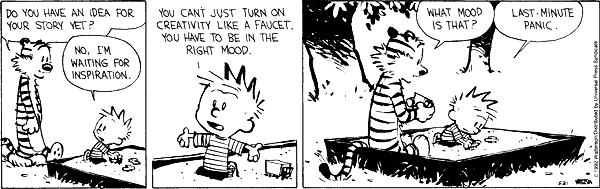
He frames this as “productive procrastination” and combines personal experience with a small dataset from his own YouTube workflow. His evidence suggests he edits newer videos faster than older ones, then links that pattern to research on dopamine, novelty, negative emotion, moral licensing and the Zeigarnik Effect. The piece matters because it shifts the discussion from laziness to task selection and emotional avoidance. Rather than treating all procrastination as simple failure of discipline, van IJsselmuiden suggests that novelty-seeking and guilt can jointly steer people towards lower-priority but still useful work. For anyone juggling long projects, creative work or knowledge tasks, the article’s practical implication is that progress may depend less on willpower than on redesigning the task so it feels emotionally safer and cognitively fresher.
Let me tell you that procrastination can look impressively busy! Plenty of stalled projects have died on me because of watching YouTube, write newsletters or just messing with other stuff. They die the emotional texture of the task matters more than the task list... Older work can become stale, loaded with guilt, and weirdly threatening in a way that brand-new work simply isn’t. This mix of novelty, avoidance and moral licensing is persuasive enough to explain why intelligent, motivated people keep circling the runway without landing. Still, the evidence is thinner than the confidence, but trust me, I'm an expert in procrastination! The broader implication here is quite useful, though. In workplaces, “productive procrastination” can become organisationally respectable. Teams polish dashboards, refresh strategy decks and launch internal experiments because these activities feel energetic and legible. Meanwhile the ugly, consequential work sits untouched. There’s always a new tool promising momentum without confrontation... I've been facing that everyday with Agentic AI.
Ajitem Sahasrabuddhe traces the modern airline booking stack back to the operational crisis that produced SABRE in the 1950s and 1960s.
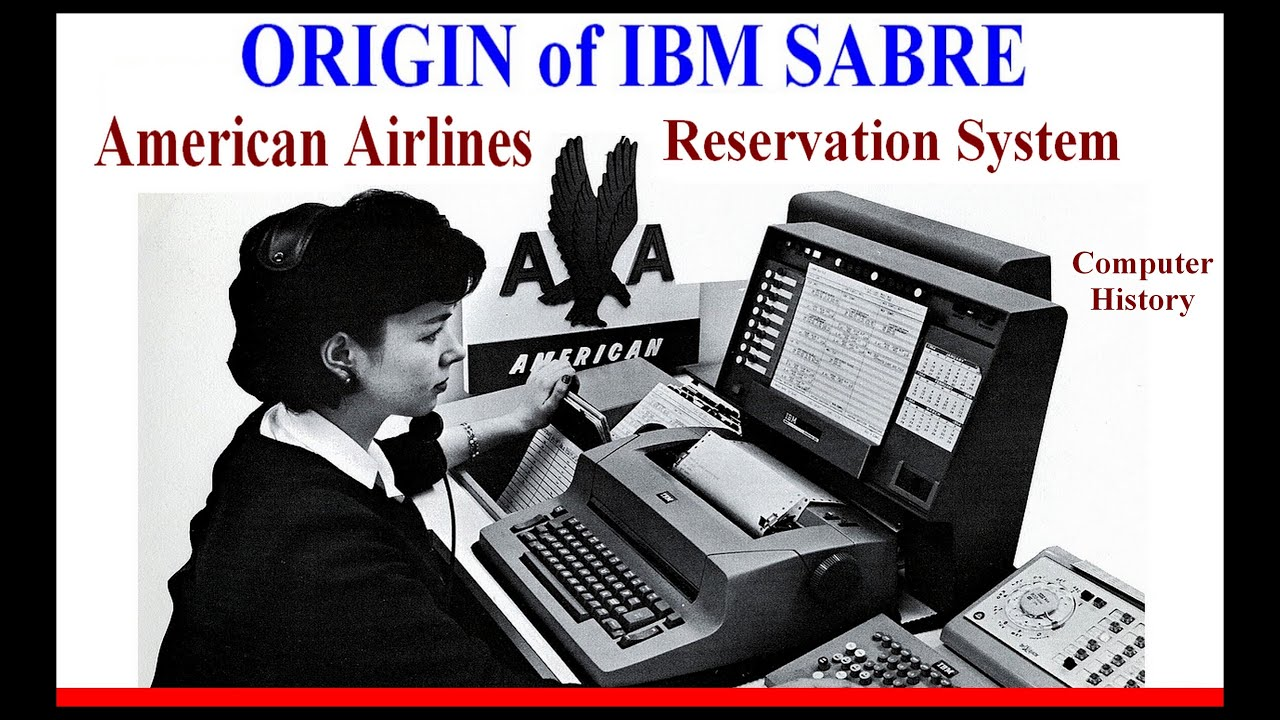
He argues that the industry’s long-lived transaction infrastructure survived not through inertia alone, but because it was designed around a brutally specific workload: vast volumes of low-latency bookings, shared inventory, and settlement rules that punished divergence. The piece mixes historical milestones, system characteristics and one concrete booking journey to show why old transaction models still underpin modern travel. The article is also a framing exercise about continuity rather than nostalgia. Sahasrabuddhe says the hardware, software layers and interfaces have evolved, but the underlying data model, protocols and transaction semantics remain recognisably descended from that earlier era. His broader point is that airlines did not converge on similar architectures by accident. Interlining, IATA standards, operational risk and switching costs made compatibility economically rational, which helps explain why these systems are still entrenched even as cloud-native layers appear around them.
So, this isn’t a quaint story about airlines clinging to relics; it’s a story about infrastructure that solved a horrible, high-stakes coordination problem so well that the rest of the industry had to route around it rather than replace it. That’s the interesting bit. Shared standards, settlement rules and interlining economics do a lot more to shape technology than engineers’ aesthetic preferences ever will. That’s a useful corrective. The airline stack didn’t just “happen”. It was cornered into this shape. What the piece leaves a bit too neatly packaged is power; once an industry settles on a handful of compatible cores, the question stops being “why hasn’t this been rewritten?” and starts being “who benefits from rewrite difficulty?” TPF itself is almost beside the point. The real story is institutional lock-in with a performance justification attached. Sometimes that justification is perfectly real. Sometimes it’s become a very expensive article of faith.
Maggie Appleton argues that coding agents are being built as single-player tools for a team sport.

Writing from her position at GitHub Next, she says the industry is optimising for individual output just as implementation becomes cheap and fast, even though software quality depends on shared judgement about what to build. Her evidence is mostly conceptual and product-led: current pull requests and issues arrive too late in the process, local agent plans are invisible to teammates, and the cost of misalignment rises as agentic output accelerates. Appleton’s answer is Ace, a research prototype that combines chat, cloud microVMs, shared prompting, previews and source control in one collaborative workspace.
I think the problem isn’t that coding agents write too little code, it’s that they let teams generate too much momentum before anyone agrees what the work is for. That’s a real shift, and she names it cleanly. “Agreeing on what to build is the new bottleneck” is the article’s most distinctive claim, and it’s stronger than the usual productivity chest-thumping. We get a compelling diagnosis and a slick prototype, but not much evidence that today’s teams are actually drowning in misalignment more than they’re drowning in integration, test failures, brittle requirements or plain old organisational indecision. Ace sounds plausible because anyone who’s sat through late-stage PR carnage knows the shape of the problem. GitHub sits in an interesting position here. The piece effectively says the core artefacts of modern software collaboration are becoming too blunt for agentic work, then offers a new collaborative layer that still feeds back into GitHub. Fair enough. Also convenient. The stronger strategic point is that if code generation keeps cheapening, coordination tools become the real battleground. Not models. Not autocomplete. Workflow control. Shared context. Permission to decide. That’s where power accumulates.
Asimov Press and Ulkar Aghayeva argue that lab notebooks are the closest written record of “science in the making”, preserving the mess, uncertainty and iteration that polished papers remove.

The article traces notebook practices from Renaissance commonplace books through figures including Newton, George Starkey, Michael Faraday and James Joule. Its evidence is historical and textual, showing how notebooks stored raw data, hypotheses, corrections and working methods that rarely survived into formal publication. The article’s wider claim is that notebook style changed alongside scientific culture. Early notebooks mixed memory aids, observation and theory-building, while later examples split more clearly into narrative and numerical forms. By comparing Faraday’s expansive, indexed lab diaries with Joule’s terse real-time measurements, the essay suggests that notetaking practices reflected deeper shifts in scientific precision, objectivity and communication. For folks in research, engineering or knowledge work, it positions notebooks less as clerical residue and more as infrastructure for thinking.
History is repeating itself here, just with better interfaces! Every generation seems to rediscover that the polished artefact isn’t the work; it’s the residue of the work. Papers look clean because they’re supposed to. Notebooks look alive because they still contain the argument with reality. For example, I never return to my previous notebooks; as they're just for me to scribble what I think it's relevant and to work on the moment, or at least, go back a few days or week to check on some notes. Never going back years or for me to remember something. It's my visual aid for the moment to get in the mood, to be focused. Newton’s reused Waste Book, Starkey’s tagged alchemical records, Faraday’s numbered diaries and Joule’s dry calculations all show the same thing: notation systems shape what a researcher can notice, revisit and trust. That’s the real lesson. Recording isn’t administrative. It’s cognitive architecture. As research becomes more digital, collaborative and instrument-heavy, the notebook stops being a bound object and starts becoming a systems problem: provenance, versioning, searchability, permissions, reproducibility. That’s where things get political as well as practical. Whoever defines the record format ends up shaping what counts as evidence, what can be audited and what gets lost between experiment and claim. It's a good essay, then, because it treats old notebooks as working machinery rather than museum pieces. If you don’t design for memory, your workflow will design forgetting for you.
In this retrospective, Colin Percival argues that meaningful influence on AWS often came not from formal employment inside Amazon, but from persistent outside technical criticism and follow-throug

h. Writing from two decades of involvement, he recounts reporting security flaws, pushing for constrained credentials, helping bring FreeBSD to EC2, and flagging design issues in services ranging from SimpleDB to OCI tooling. The article is memoir-like but highly specific, anchored in dates, named services and concrete episodes. Cloud platforms are shaped not only by internal roadmaps but by long, messy interactions with external experts who keep pressing on awkward edges. Percival presents AWS as responsive in places, slow or silent in others, and heavily dependent on informal relationships to get difficult issues fixed.
Production reality is the thing this article underplays, even as it describes it brilliantly. Reading it, you keep noticing how many fixes arrived only after years of nudging, side channels, personal contacts and patient technical pestering. That’s not a charming anecdote. That’s an operating model. Percival is convincing because he’s concrete. Dates, APIs, Xen versions, oddball edge cases, broken assumptions about metadata, boot modes and signing schemes: this doesn’t read like mythology. It reads like someone who kept turning up with receipts. He also gets something important right about large platforms: the hard part isn’t spotting a better design. It’s getting a running system, existing customers and internal priorities to move at the same time. AWS comes off here as both impressive and faintly alarming. Impressive because it clearly had people willing to listen, escalate and eventually fix things. Alarming because so much seems to have depended on informal trust networks rather than crisp, visible mechanisms for external technical challenge. Platforms externalise more stewardship than they admit and this is an excellent memoir, useful institutional history, and a slightly damning portrait of how infrastructure really gets corrected.
Last Week in AI
- Anthropic launches Claude Design, a new product for creating quick visuals | techcrunch.com
- Salesforce launches Headless 360 to turn its entire platform into infrastructure for AI agents | venturebeat.com
- Autonomous vulnerability scanner and source-code hunter built on LangGraph. | github.com
- The 2026 AI Index Report | hai.stanford.edu
- A closer look at Work IQ | hai.stanford.edu
- Microsoft's Agent Stack Confuses Developers While Rivals Simplify | forbes.com