
This week’s #RBM theme is straightforward: the interesting stuff isn’t the shiny demo, it’s the plumbing. Google’s TurboQuant looks like a proper cost-cutter for AI memory and retrieval, Karpathy’s autoresearch loop suggests agents will be more useful as tireless lab assistants than robot overlords, and Wine 11 shows how an unglamorous kernel fix can deliver the sort of gains users actually feel. Even Niche Museums makes the same point in its own odd way: good curation beats endless scale. Then there’s Arm, which has stopped being content to sell the blueprint and now wants to ship the silicon too. Different sectors, same story: the real advantage comes from removing friction, tightening the loop, and turning clever ideas into infrastructure.
In this issue
5 piecesGoogle Research presents TurboQuant as a vector-quantisation method for large language models and vector search that targets memory overhead.
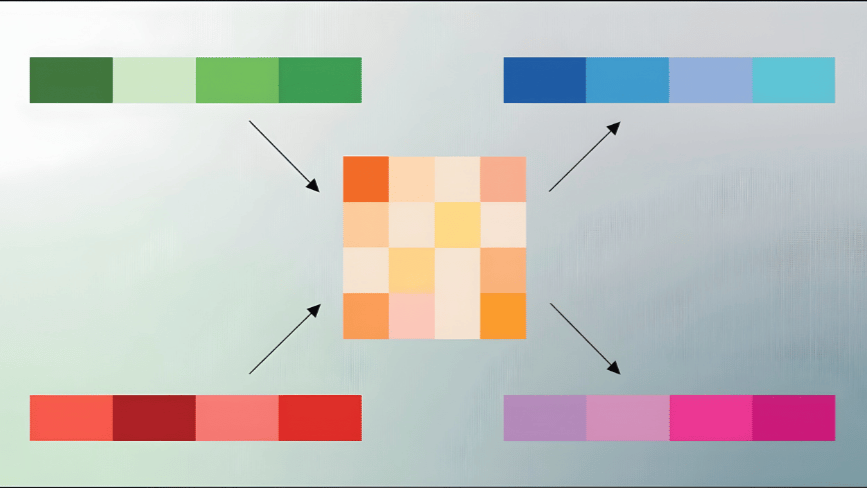
TurboQuant combines PolarQuant for the main compression pass with QJL for a one-bit residual correction step, aiming to preserve attention accuracy while shrinking key-value caches and vector representations. It positions the work as both practically useful and theoretically grounded. The article backs that claim with benchmark results on LongBench, Needle In A Haystack, ZeroSCROLLS, RULER and L-Eval using Gemma and Mistral models.TurboQuant cuts key-value memory by at least 6x on needle-in-haystack tasks, quantises caches to 3 bits without training or fine-tuning, and reaches up to 8x faster attention-logit computation than 32-bit keys on H100 GPUs.
So... we have the zip equivalent for AI! Finaly! Hidden overhead in vector quantisation; that's the main key topic here and Google gets the practical target right. KV-cache bloat and vector-search memory are exactly where elegant maths can turn into cheaper inference and faster retrieval, and the piece explains why PolarQuant and QJL matter without completely burying the reader in formalism. “Zero accuracy loss” is an arresting claim! Google is really making an architectural claim here; compression that preserves attention quality changes the economics of context windows, retrieval systems, and hardware utilisation at the same time. This matters because memory bandwidth, cache pressure, and index-building costs often decide whether a clever model feature survives contact with production. Oh yeah, and the price of RAM!
Fortune argues that Andrej Karpathy’s “autoresearch” experiment offers a concrete glimpse of autonomous AI research loops rather than a fully self-improving machine.
The article says Karpathy let an AI coding agent run for two days on a small language-model training problem, producing 700 experiments and 20 useful optimisations. Applied to a somewhat larger model, those same tweaks reportedly reduced training time by 11%, which Fortune presents as the practical hook behind the excitement. The piece places that result inside a wider debate about recursive self-improvement, agent swarms and the future conduct of frontier-lab research.
I've been also experimenting with Karpathy’s AutoResearch, particularly to improve skills across agents. But what makes the strongest case yet that agentic AI will matter first as a research assistant, not as a sci-fi mastermind, is the article’s real insight, and it lands because the numbers are concrete: 700 experiments, two days, 20 tweaks, then an 11% training speed-up on a larger model. Fortune gets that right. That's good! The interesting consequence is not an intelligence explosion tomorrow; it is a steadier squeeze on time-to-improvement, where organisations that can formalise metrics, bound experiments and parallelise search start compounding advantages. The article hints at that shift without quite following it to the end. The winners here may be the groups with the cleanest tooling and the clearest objectives, not necessarily the ones with the grandest rhetoric.
XDA argues that Wine 11 is a genuinely important Linux gaming release because it changes how Windows-style thread synchronisation is handled

, moving the job into the kernel through NTSYNC rather than relying on older user-space workarounds. The article explains why esync and fsync helped but remained imperfect, then presents NTSYNC as a cleaner implementation of NT synchronisation semantics. It supports that case with benchmark examples, kernel-integration details, and an account of the years-long engineering effort behind the feature.
I think Wine 11 clearly earns the article’s excitement, because kernel-level synchronisation is exactly the kind of boring-looking change that can alter the whole feel of Linux gaming. Valve should be paying very close attention. Once a change lands upstream, enters mainline kernels, and reaches SteamOS, the win stops being a niche hobbyist trick and becomes a distribution advantage. This is where developer pain starts to fall away: fewer patched kernels, fewer multilib headaches, fewer odd little setup rituals that make Linux gaming feel like a test of devotion. Wine has always been judged on whether it can make incompatible systems behave plausibly. This Wine version shifts that judgement towards whether it can do so cleanly, upstream, and at scale. That is a much stronger place to compete from.
Niche Museums presents itself as a way to find tiny museums near you and then immediately showcasing specific entries

. Each listing combines a short narrative, links, address details, and a visit date, giving the site the feel of a curated travel notebook rather than a conventional museum database. This list relevance lies in how it frames niche museums as serious destinations with distinctive histories, appointment rules, and collection details, from 370 bank locks in Manhattan to more than 350 tubas in Durham and over 250,000 items at V&A East Storehouse.
I love this quirky things and list curation! They're making a strong argument that curation beats scale when the subject is cultural discovery... or even tech, like this weekly newsletter :) The writing is charming, but the pages still feels more like a beautifully maintained notebook than a mature finding tool. So, maps matter here. So does trust. A site like this succeeds when it reduces the effort needed to decide that a peculiar place is worth an afternoon, a train fare, or an appointment request. Bottom line, this shows excellent taste and a clear point of view. It now needs the infrastructure to match; this is a lovely cultural guide that deserves sharper product scaffolding.
Arm presents the Arm AGI CPU as its first production silicon product , extending the company beyond IP and compute subsystems into Arm-designed processors for AI infrastructure.

Agentic AI changes data-centre requirements by making CPUs the pacing element for orchestration, memory, storage, scheduling and accelerator coordination. They frame the chip as a production-ready Neoverse-based platform built for sustained, massively parallel workloads rather than a general announcement about future ambition. The article also leans heavily on early partners, naming Meta as lead partner and customer alongside OpenAI, Cloudflare, SAP and others.
Arm is one of my pet peeves! In a good way! This is a declaration that Arm no longer wants to sit one layer back as the neutral enabler while everyone else monetises the platform. AI infrastructure is now constrained by orchestration, memory movement and system coordination as much as by raw accelerator horsepower. That feels dead-on. CPUs do become more important when software agents keep fanning work out across systems all day. But, the moment Arm ships its own production silicon, it changes its relationship with partners who built businesses on licensing Arm designs and differentiating above them. It's going to be wild! The 2x performance-per-rack claim may prove impressive, but the more durable point is strategic. Arm wants to turn architectural influence into product leverage. That could make the ecosystem stronger if the reference designs speed deployment and keep software aligned. It could also unsettle partners who now have to compete with the platform owner.
Last Week in AI
- Awesome GitHub Copilot | awesome-copilot.github.com
- TurboQuant: Redefining AI efficiency with extreme compression | research.google
- Vibe Coding XR: Accelerating AI + XR prototyping with XR Blocks and Gemini | research.google
- Claude Code auto mode: a safer way to skip permissions | anthropic.com
- By 2030, Performing Inference on an LLM With 1 Trillion Parameters Will Cost GenAI Providers Over 90% Less | gartner.com
- Updates to GitHub Copilot interaction data usage policy | github.blog