
What another weird week… Eh? We’re ‘cooking’ something quite amazing at Hitachi Digital Services that I hope to talk about it soon! Meanwhile, this weeks edition is about how brutal markets keep rewarding execution over elegance: from the home-computer wars, where Commodore proved that price, packaging, and channel control mattered more than lofty educational rhetoric, to Arm’s Cortex X925 finally earning proper desktop credibility through serious core design rather than benchmark theatre, even if the platform story still has to catch up; from Howard Marks’ view that AI is no longer just a clever assistant but an economic force pushing capital, labour, and valuations into new territory, to Noah Smith’s argument that software engineering is losing some of its old aura as AI takes over the repetitive, industrial parts of the craft, though reliability, security, and operational mess still refuse to disappear; and right through to SaaS and low-code, where the real story is not instant extinction but a harsh repricing of convenience, duplication, and abstraction in a world where budgets are shifting, seats are compressing, buyers want outcomes, and AI is making it cheaper to build more things directly in your own stack.
In this issue
5 piecesThis Creatures of Thought article argues that the home computer became a mass-market product only when manufacturers fused game-console appeal with programmable computing, then fought a destructive price war to reach ordinary households.

It traces that shift from Atari and Texas Instruments in 1979 through Tandy’s TRS-80 Colour Computer to Commodore’s VIC-20, whose low price, full keyboard, retail reach and in-house chip supply gave it decisive momentum. Mass adoption, in this telling, was won through aggressive economics as much as technical design. The piece presents the early 1980s as the moment computers moved from specialist shops into department stores and Christmas gifting, widening access but muddying purpose. It shows how brands sold home computers as educational family tools even though games dominated software sales and much household use. By the end of 1983, more than ten million personal computers were in US homes, yet the sector’s leaders had damaged margins, disrupted product plans and, in Texas Instruments’ case, retreated altogether.
Cheap colour computers, not lofty sermons about digital literacy, turned the computer into a household object. That central argument lands. This article gets one big thing right: price and packaging mattered more than purity. A VIC-20 with bright graphics, a full keyboard and a department-store shelf was always going to do more cultural work than a nobler machine priced for specialists. Commodore understood that! What it underplays is the gap between purchase and durable use. Selling a computer at Christmas is not the same as making it central to family life, and the article itself supplies clues that many machines were lightly used beyond games. That matters, because mass adoption can look bigger than it really is when gifting, novelty and bargain pricing all hit at once. Price wins attention. It does not guarantee habit. So, Commodore’s real achievement was operational, not romantic. Vertical integration let it cut where rivals bled, and retail expansion put the machine where ordinary shoppers already were. Texas Instruments had serious technical strengths and strong output, yet a costlier bill of materials, muddled peripherals and weaker third-party support left it exposed once the knives came out. That is the bit that still feels modern: consumer tech markets are often decided less by the best box than by supply chain leverage, channel control and software depth. Brutal markets punish elegance without scale. This article sees that clearly. Its verdict on the home computer boom is convincing, and a little merciless...
This article argues that Arm’s Cortex X925 has crossed an important threshold: it can now deliver desktop-class single-threaded CPU performance, at least in Nvidia’s GB10 implementation.
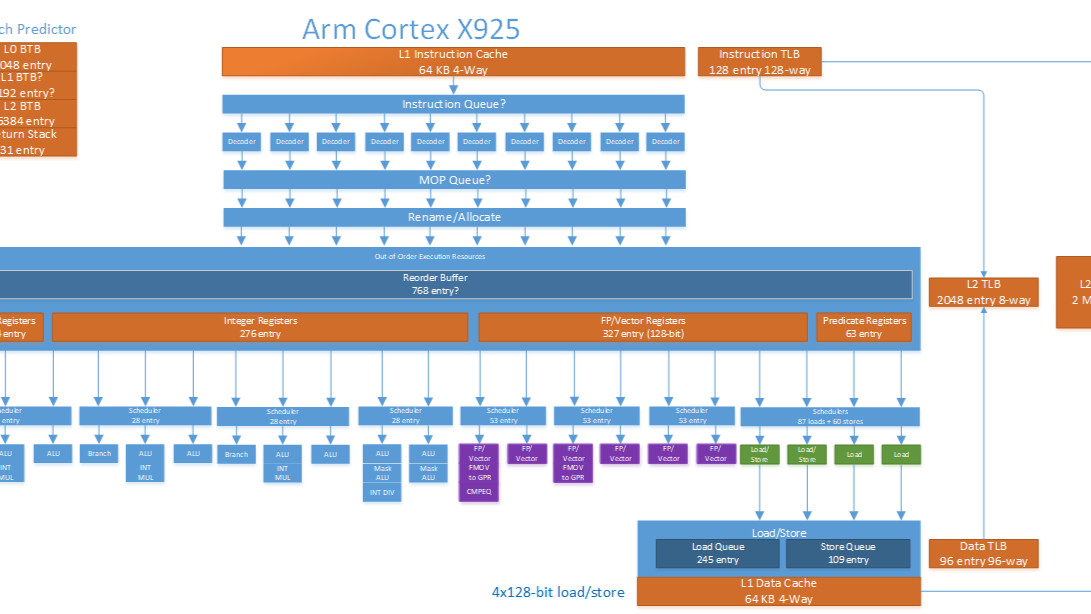
The evidence is highly microarchitectural. Chips and Cheese describes a 10-wide core with large reordering capacity, strong branch prediction, sizeable private caches, and enough instruction throughput to match or closely trail AMD’s Zen 5 and Intel’s Lion Cove across many SPEC CPU2017 integer workloads. The piece also makes clear that parity is conditional rather than universal. X925 keeps pace through high IPC, but it still runs at lower clocks, falls behind Zen 5 in floating-point tests, and faces penalties from narrower 128-bit vectors and higher instruction counts in several workloads. The author closes by arguing that a fast core alone will not settle desktop competition, because memory subsystem design, software ecosystem strength, and partner execution still matter.
Sure, Arm has finally produced a core that deserves to be discussed in proper desktop terms. That is the article’s central claim, and on its own evidence it stands up - not just me saying that for the last couple of years :) The piece gets the technical heart of this right: X925 is not winning through some odd benchmark trick, but through genuinely serious core design. The wide frontend, strong branch prediction and large out-of-order machinery explain why it can hang with Zen 5 and Lion Cove across so much integer work. That matters. It is real progress. What the article underplays is how narrow that victory corridor still looks. Floating-point performance remains weaker against Zen 5, 128-bit vectors extract a cost in instruction count, and the results come from one very particular implementation in Nvidia’s GB10. Desktop credibility is not the same thing as desktop inevitability. The distinction is important!
Howard Marks argues that AI’s recent progress has been so fast , and its capabilities have advanced so sharply, that it now demands an updated investment and economic assessment.

Drawing on a tutorial generated by Claude and other AI sources, he describes models as systems trained to reason from patterns rather than retrieve facts, then claims the big recent shift is from chat and tool use towards autonomous agents that can complete tasks with limited human direction. The memo treats that shift as economically consequential because autonomous agents move AI from productivity enhancement towards labour substitution, potentially expanding the market from tens of billions to trillions of dollars. Marks also argues AI is real, rapidly adopted and probably still underestimated, while separating that view from any claim that AI assets are cheap. He warns about circular AI revenue, possible malinvestment in infrastructure, and severe social disruption if job displacement outruns society’s ability to adjust.
Marks makes the strongest case here for AI as an economic accelerant, not a passing software fad. Moving from chatbots to agents that can execute defined tasks changes the commercial maths, because buyers pay differently for a helper than for a substitute. He is also right to separate belief in the technology from complacency about valuations. Real does not mean cheap. Too much of the memo rests on Claude’s framing of its own powers, with Perplexity and other secondary inputs doing more work than Marks’s own examples. That does not make the argument wrong, but it does make it easier to over-read the present moment. So, this Oaktree’s memo is most useful when it turns back to incentives. Capital will flood anything that looks like a new general-purpose platform, and some of that capital will be wasted. We have seen that film before. Circular spending, infrastructure overbuild and uncertain end-user monetisation can all coexist with a technology that changes business life.
Noah argues that AI coding tools are rapidly eroding the economic value of traditional software-engineering craft.
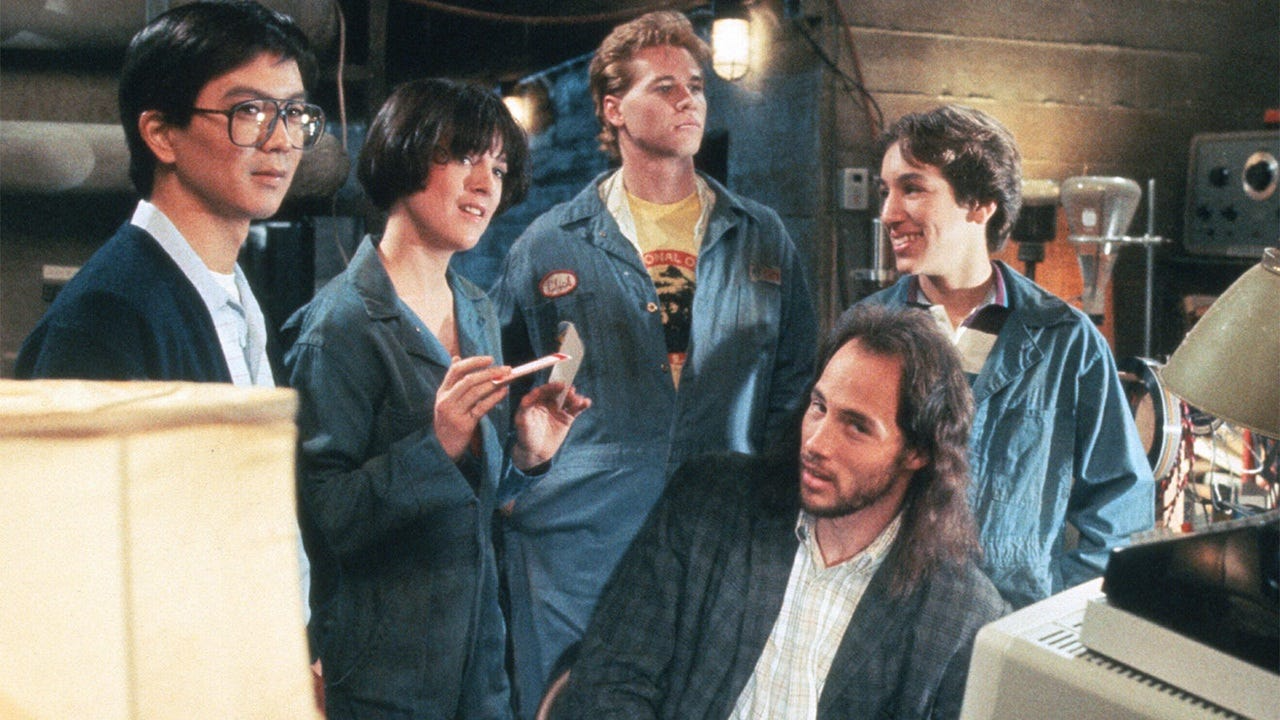
Using a recent software-stock selloff as a prompt, he says investors now fear AI will hollow out established software business models by letting less skilled workers create usable applications in plain English. He presents “vibe coding” as the mechanism of change, citing Anthropic’s Claude Code and Andrej Karpathy’s account of shifting quickly from manual coding towards agent-led workflows. He also suggests software engineering may prove less like a rare creative profession and more like routine cognitive labour that automation can compress. Whilst not claim experts vanish; instead, he says their work shifts towards oversight, maintenance, security, and guidance
Maybe software engineering is losing its aura faster than most of the industry wants to admit. Noah gets one thing very right: coding was always more industrial than the mythology allowed. Plenty of the job involved repetition, maintenance, translation of business needs, and patient tidying-up. AI is good at that sort of work. Very good. The Karpathy example helps because it shows the shift reaching the top end, not just hobbyists chasing shortcuts. Bu, the article also leaves a major question hanging; making a usable application is not the same as running a dependable software business, and the preview glides past the messier bits: integration, accountability, security, and the cost of failure. Those frictions are boring. They are also where markets usually rediscover reality. A tool that helps novices ship something in hours may still create a lot of expensive rubbish.. Just saying...
Jason Lemkin argues the 2026 SaaS sell-off is being misread as a story about AI agents replacing enterprise applications.

His actual claim is narrower and harsher: most core SaaS products are not being displaced by vibe-coded substitutes, but sector valuations are falling because growth has already been decelerating since 2021. He points to IGV down 22%, sharp one-day falls in ServiceNow and Microsoft, and weak net-new-logo momentum across public software. The article says AI matters chiefly through budget reallocation and seat compression. With AI budgets rising more than 100% year on year while overall IT budgets grow only about 8%, software vendors are competing for a pie that is being redirected rather than expanded. Lemkin adds that enterprises want fewer apps, users expect AI-native interfaces, and founders now need systems-of-record leverage, outcome pricing, and much lower expectations for easy growth.
SaaS is not crashing because Claude can draft a workflow. Enterprise software is sticky, ugly, integrated, audited, and full of edge cases that no weekend prototype wants to meet. Systems of record do not disappear because prompting got better. They disappear when customers stop renewing, stop expanding, and stop believing the vendor is where future work will happen. Salesforce, ServiceNow, and Workday are not passive targets; they own data, distribution, procurement paths, and the miserable internal plumbing that big companies depend on. Those advantages matter! So does sentiment. Public markets often discover a structural truth by first having a wobble, then a tantrum, then a spreadsheet. Budgets move before architectures do. But, if AI spend is swallowing discretionary software budget, the winners will be vendors that tie automation directly to existing workflows, permissions, and data stores, not the loudest demo on social media - sorry to be a party pooper. Founders should pay attention to the pricing point too. Seat-based SaaS was built for human labour expansion; agent-heavy software pushes buyers towards outcomes, consumption, and hard ROI claims. That shift will be rough for anyone selling polished interfaces without real lock-in beneath them.
Last Week in AI
- Karpathy open-sources an interactive map showing how exposed each job is to AI | karpathy.ai
- Design UI using AI with Stitch from Google Labs | blog.google
- Vibe Code to production with Google AI Studio | blog.google
- What 81,000 people want from AI | anthropic.com
- Anthropic invests $100 million into the Claude Partner Network | anthropic.com
- NVIDIA Announces NemoClaw for the OpenClaw Community | nvidianews.nvidia.com