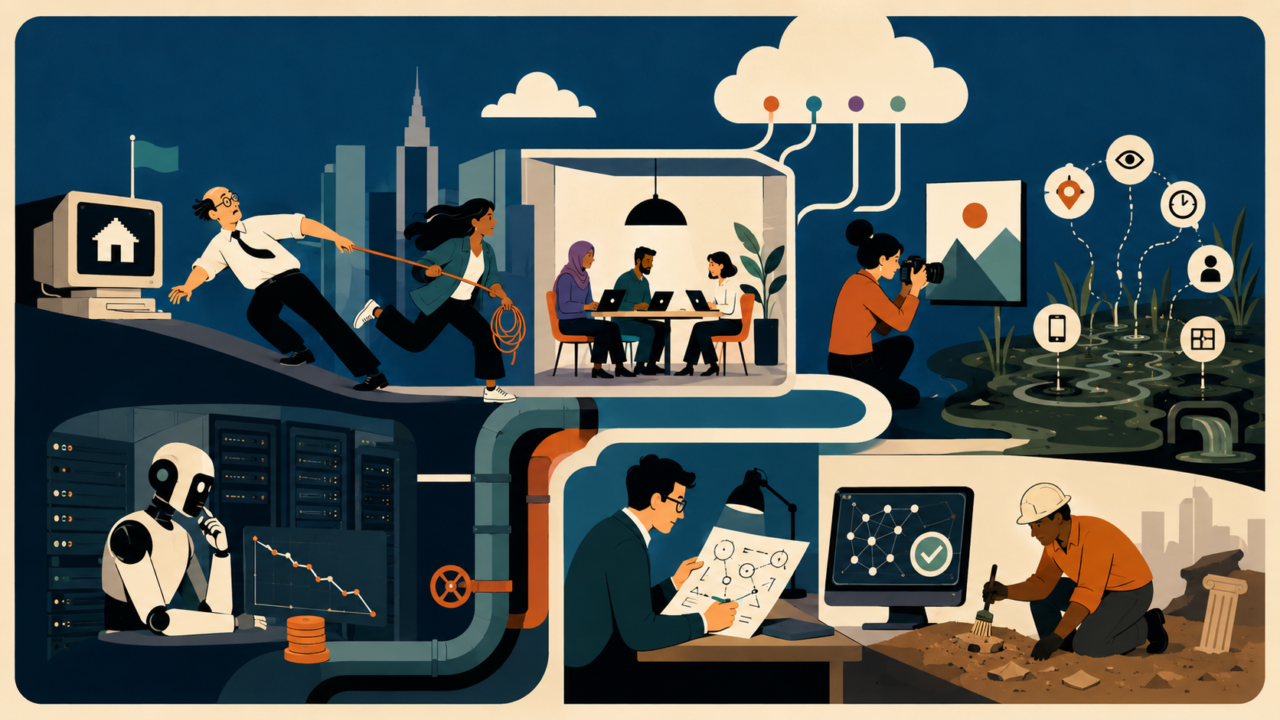
Welcome to another #RBM week, where a DEC Professional gets dragged onto the modern web with a hand-rolled SLIP stack, GeoCities is reclassified from design crime scene to early identity platform, JPEG Exif turns out to be the usual metadata swamp of leaky assumptions and hidden footguns, AI discovers that GPUs are less useful once the good training data cupboard starts looking bare, and Terence Tao’s proof-checking adventures suggest mathematics may be edging towards open-source collaboration with sterner compilers. So, sure, the future is still mostly plumbing, incentives and archaeology, just now with better TLS proxies and a larger cloud bill…
In this issue
5 piecesOld Vintage Computing Research author ClassicHasClass describes building BASS
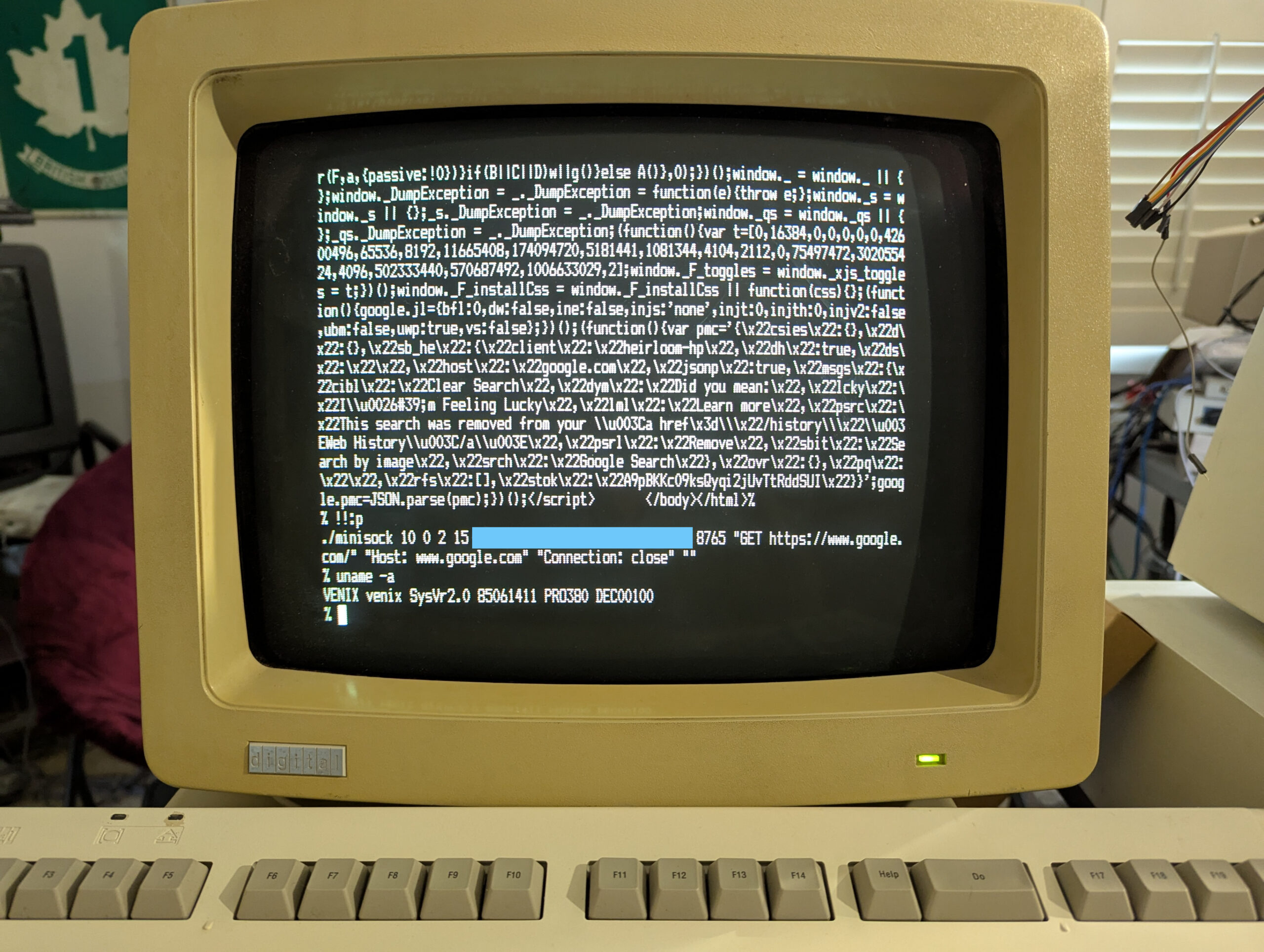
It's a deliberately minimal SLIP-based TCP/IP stack for a DEC Professional 380 running PRO/VENIX V2.0. The article shows the machine reaching modern web content through Slirp-CK and a Crypto Ancienne TLS proxy, then explains why the stack focuses on single-user client tasks: ping, DNS lookup, NTP status and one-shot TCP connections for protocols such as HTTP/1.x, Gopher, whois and finger. Much of the piece is a practical archaeology of old constraints. ClassicHasClass works around seven-character effective linker symbols, missing unsigned char support, signed-byte comparisons, fragile 32-bit long handling, missing prototypes for time, rand and srand, and 256-byte serial buffers. The wider point is that portability to small or old systems comes less from standards purity than from severe assumptions, bytewise packet handling and a willingness to make explicit trade-offs.
Wow! A 40-year-old DEC professional getting onto the modern Internet through a deliberately barely adequate stack is the sharpest thing here: less TCP/IP can sometimes mean more usable computing. This article gets that spot on because it treats constraints as design inputs, not quaint scenery. So, there's no pretend full stack, no fantasy server workload. BASS exists for ping, DNS, NTP and simple TCP fetches, and that honesty is refreshing. I'm really buying this principle, not the generalisation. But, a client that relies on 256-byte windows, no timeouts, no retransmits, no IPv6 and occasional Slirp bounces isn't just minimal; it's a pact with the lab bench, and that pact is fine for a DEC Pro in a retrocomputing room, but it gets dicier once anyone mistakes the trick for a general pattern. Bottom line; DEC's old incompatibility is the quiet villain, as the machine was boxed into a weird corner by product strategy, then rescued decades later by serial plumbing, abandoned tooling and a homemade shim. It proves the cheapest useful interface may be a very small one.
AI leaders have misread Rich Sutton’s Bitter Lesson by treating compute as the decisive bottleneck

The article says scaling laws, especially the Chinchilla framing, imply a tighter dependency between compute and data: if compute rises, usable data must rise too. Kushal's distinctive claim is that AI’s next constraint is not GPU access, but the finite supply of high-quality training data. The piece turns that argument into a strategic split between “Architects” and “Alchemists”. Architects seek steady 20–30% gains through better model structures, efficiency and inductive biases. Alchemists pursue higher-risk breakthroughs by generating new training data through self-play, reinforcement learning, synthetic preferences and agentic feedback loops. Kushal concludes that AI companies surviving 2026 will be those that addressed data scarcity in 2025.
The C ~ D² reframing: double the GPUs and, by his simplification, you need about 40% more data or you’re burning money with excellent thermals - that’s a useful slap! Compute worship has got lazy and Kushal gets the current AI management problem right because it forces a data roadmap into the same room as the chip budget. Good. Too many strategy decks still treat training data as a passive ingredient, somewhere between electricity and office Wi-Fi. Yet, the Architect versus Alchemist split is memorable, but the estimates behind the “20–30% doubles” and “300% lottery ticket” framing are openly rough. Directionally useful, yes. Investment-grade, no. IMHO; architecture is where the real engineering discipline shows up. Mamba, HRM and ParScale aren’t magic spells; they’re arguments about bottlenecks, memory, routing and useful computation. Data generation is the riskier story. Self-play and agentic traces sound powerful, but synthetic loops have a nasty habit of rewarding what the system can measure, not what the world needs. Bigger alone isn’t a plan. Still, the replacement doctrine needs harder evals, cleaner accounting and fewer heroic metaphors before leaders start reorganising budgets around it.
GeoCities, known for most of 1995 as Beverly Hills Internet, helped turn web publishing from a technical exercise into a consumer activity.
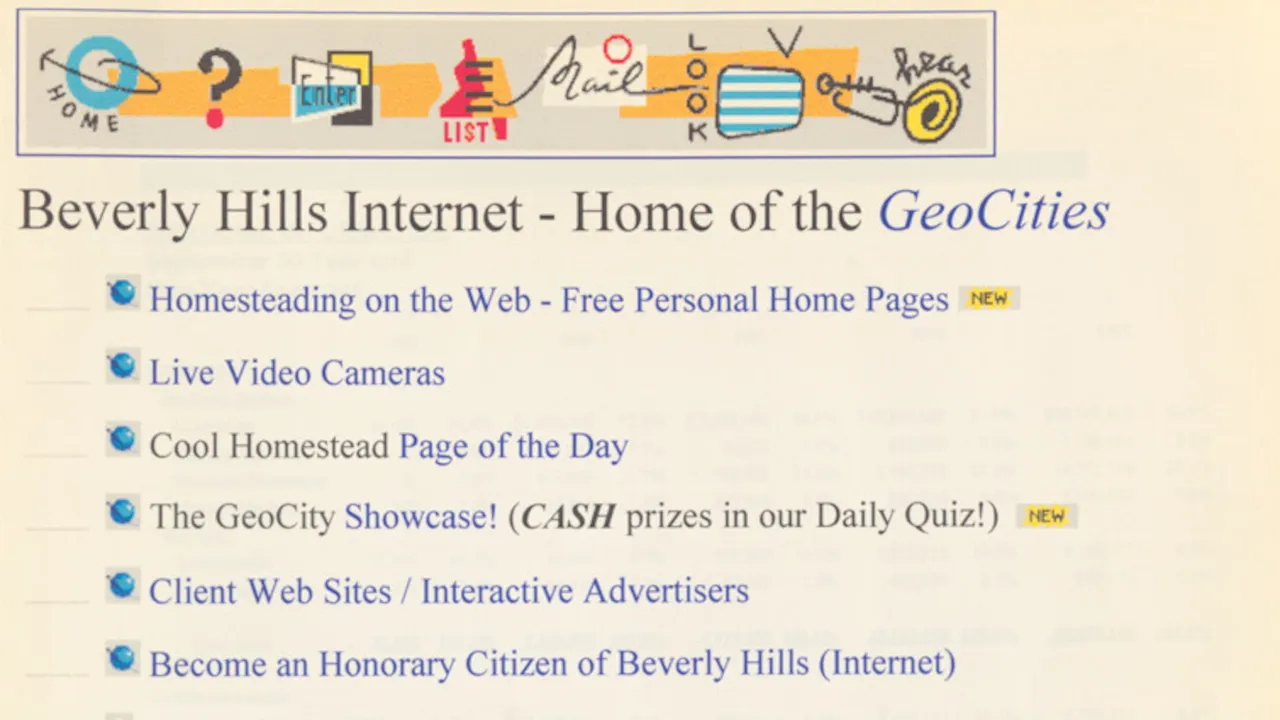
Richard MacManus traces David Bohnett and John Rezner’s late-1994 start, the early RodeoDrive and Hollywood communities, the Personal GeoPage Generator, and the spread to themed areas including SiliconValley, CapitolHill, Paris and Tokyo. The piece presents GeoCities less as a chaotic design cliché than as a structured gateway into online identity. MacManus notes that early 1995 pages were relatively sparse, shaped heavily by templates, icons and form-based editing, before later experimentation made GeoCities visually notorious. Centralised services helped non-technical people publish online, even while constraining creativity and inserting platform limits.
Platforms usually begin by flattering users with freedom, then quietly define the size and shape of that freedom. GeoCities looks like that early version of the pattern. Richard gets the important bit right: Beverly Hills Internet made web publishing feel possible for people who didn’t know servers, FTP or HTML. That mattered. Lowering the barrier changed who could speak online. The sharper, more counterintuitive claim is that 1995 GeoCities wasn’t yet the garish animated-GIF carnival lodged in popular memory. It was sparse, template-led and heavily shaped by the Personal GeoPage Generator. That's why this story is more interesting, because the messiness we remember seems to have grown from a fairly controlled starting point. Even chaos had scaffolding! “Homesteaders”, “cities”, “street numbers”: it’s brilliant marketing, but it’s also early platform enclosure dressed as civic romance. GeoCities sold a home, then handed users a plot inside a privately managed estate. Bit of underplayed commercial logic, as free tools weren’t neutral; they organised users, constrained design and made participation legible to the service. Sure, GeoCities is the ancestor of every later platform that says, “Come express yourself, just use our boxes".
Exif is a 1990s digital camera metadata format that remains useful in 2026 because image pixels alone rarely carry enough context.

Brent starts from a practical coding problem: applying a mask to an image while accounting for Exif orientation. It then shows where Exif lives in JPEG APP1 segments, how TIFF-shaped Image File Directories store tags, and why orientation is usually tag 0x0112. This piece is a developer’s guide to handling image metadata without mysticism. Brent recommends using exiftool first, normalising orientation before pixel transformations, stripping metadata deliberately for privacy, and treating metadata as untrusted input. He also distinguishes Exif from adjacent systems such as XMP, IPTC, ICC profiles, C2PA and container-specific chunks, warning that “stripping Exif” does not necessarily remove all non-pixel data.
Usually, image pipelines fail at the seams and this article is strongest when it stays exactly there. The boring deployment consequence is that orientation, colour, provenance and privacy problems don’t arrive as grand architectural debates. They arrive as a sideways JPEG, a washed-out thumbnail, or GPS data casually hitching a ride to production. Brent gets that right because he starts with code, not standards theatre. Exif aged well because it escaped its first container; JPEG APP1, WebP chunks, HEIC boxes; same old TIFF-shaped payload, different houses - that’s useful engineering! It works! So, Exif is a reminder that architecture often survives by being merely good enough in enough places. The format carries camera context, enables display correction and leaks private data with equal composure. Metadata is helpful. Metadata lies. Metadata sticks around after everyone assumes it’s gone; don’t trust the pixels, don’t trust the tags, and don’t trust the upload path to save you, but inspect the actual file and then decide what to keep.
Kevin Hartnett profiles how Terrence Tao moved from early sceptical curiosity about computer-checked mathematics to public advocacy for AI-assisted proof.
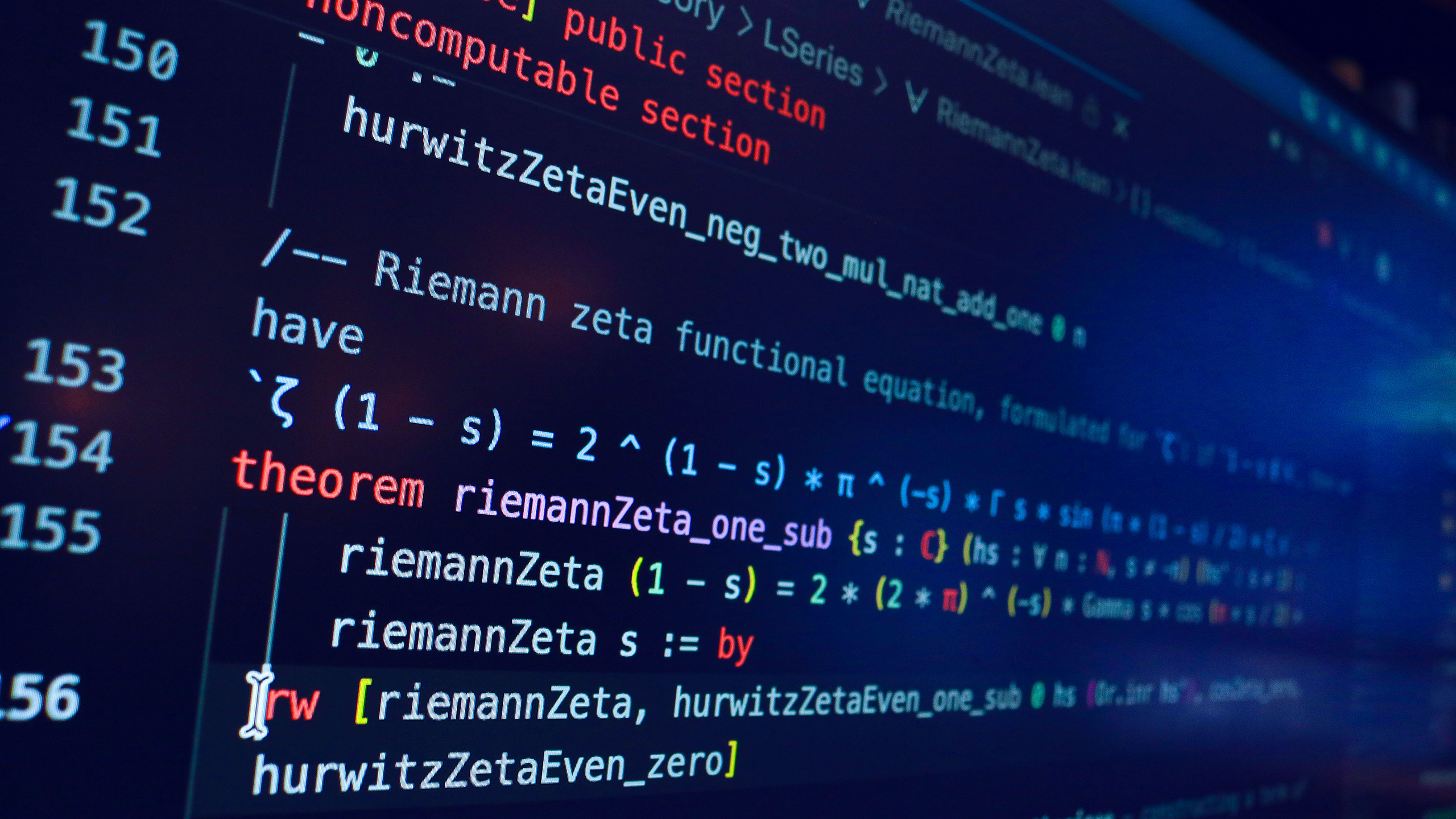
Quanta Magazine’s article traces Terry’s route through collaborative research, blogging, the Polymath Project, Lean, and the formalisation of the polynomial Freiman-Ruzsa conjecture. It presents automated proof-checking as a way to divide large mathematical projects into small verified pieces. The piece links Terry’s interest in collaboration to a broader change in mathematical work: from small teams and human refereeing toward modular proofs, open contribution and machine verification. It also shows the limits. Johan Commelin questioned whether Terry’s success would generalise, contributors still face unclear academic credit, and John Baez saw the Equational Theories project as odd despite its later discovery of magma cohomology.
The oddest part is the plumbing! Terry didn’t become convincing here because AI suddenly looked like a fields medallist in a hoodie, he became convincing because lean exposed a blunt architectural truth: formal systems can absorb lots of small verified tasks, even when the human interface is still fussy, brittle and occasionally comic. The hard proof steps went through. The supposedly obvious bits, like what kind of “3” he meant, made the machine sulk. And that feels right; anyone who’s built serious systems knows the glamorous layer is rarely where the real change happens. The hard part is usually interfaces, schemas, dependency graphs, tests, build failures, naming, ownership and review. Mathematics has had all of those problems for centuries, only dressed in more elegant clothes. Terry’s real bet is that proof assistants turn mathematical collaboration into something closer to software engineering. I buy the direction. I’m less sold on the implied scalability. The PFR project worked partly because Terry was Terry; people will clear their weekend for that. Johan’s credit worry matters, because a young formaliser can’t pay rent with warm acknowledgements and vibes.
My Week in AI
- When AI builds itself | anthropic.com
- First Steps Toward Automated AI Research | recursive.com
- Machine Learning for Beginners | github.com
- Unlocking dependable responses with Gemini Enterprise Agent Platform’s Agentic RAG | research.google
- Model triage is the new AI skill | thenewstack.io
- Shepherd's Dog: A Game by the World's Most Dangerous AI | koenvangilst.nl