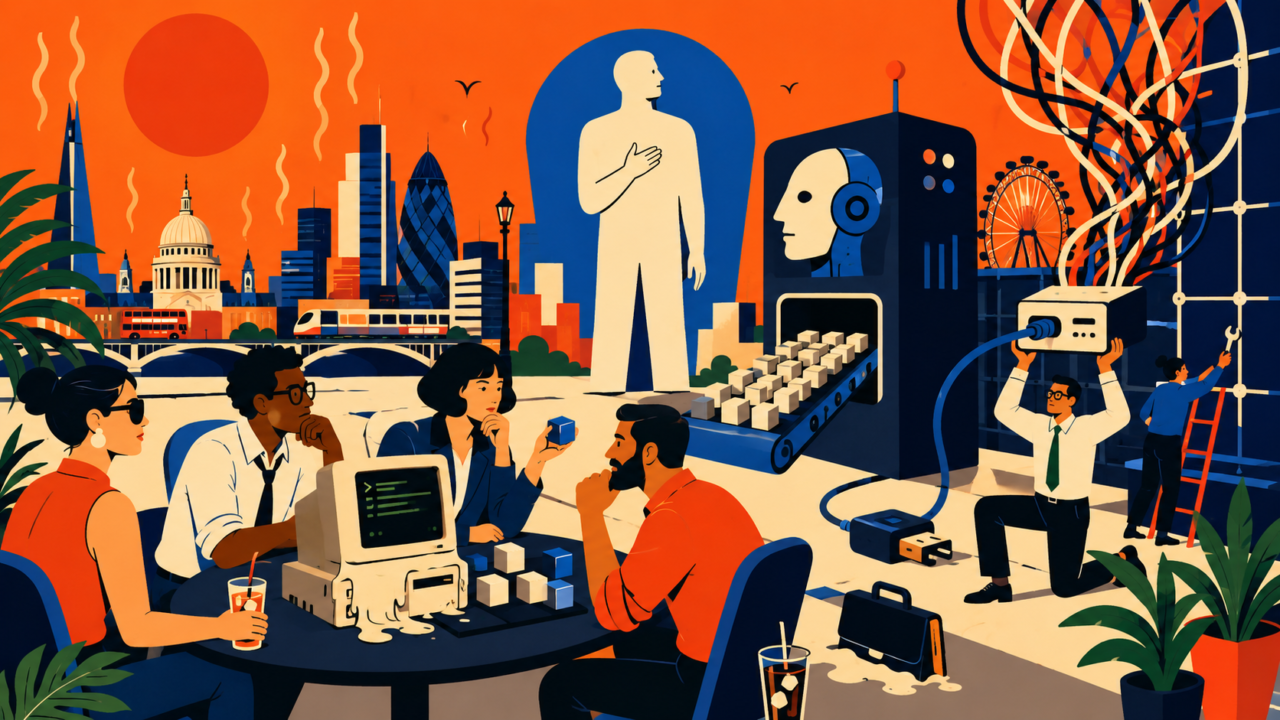
What a tropical week here in London it was… and the reading list felt appropriately overheated. Where Microsoft’s early DOS source code showed that software history is really a record of constraints, not just invention. Then the Project Management piece made the obvious point sharper: AI won’t replace product judgement, but it will expose weak product work. “After Automation” pushed the argument further, suggesting that once execution becomes cheap, taste, framing and maintenance become the scarce skills. Ah, the Griffin iMate story, now that is a tiny hardware parable about hidden dependencies and fragile assumptions. And finally, Pope Leo XIV’s *Magnifica Humanitas* widened the frame: AI is not only an efficiency question, but a dignity, power and responsibility question.
In this issue
5 piecesProject Gus investigates why a Griffin Technology iMate ADB-to-USB adapter failed with an Apple Extended Keyboard II

Gus details the 1990 keyboard that was cleaned and restored, then connected through the iMate, which briefly enumerated on Linux before entering repeated USB resets. After ruling out the keyboard’s visible capacitors, the article follows an undocumented CR1225 coin-cell battery inside the adapter, whose replacement made the device work reliably. The article’s broader point is that old hardware failures often sit between design intent, undocumented features, and analogue edge cases. Gus traces the iMate’s circuit, links the battery to Apple’s old keyboard power-switch behaviour, and concludes that a flat or missing battery leaves part of the circuit floating. Noise coupled from the ADB data line then glitches USB D-, triggering host resets. The fix is practical: add a 100nF capacitor between BATT+ and ground.
Oh! I love this! Old hardware has a lovely habit of turning “just plug it in” into a forensic investigation with solder fumes. An USB adapter that can work without its hidden battery may still be broken because the missing battery leaves circuitry floating - right? The battery isn’t just a battery; it’s also an accidental electrical stabiliser. Love this part of vintage computing: where documentation goes to die and parasitic capacitance gets a speaking role... But Gus does a strong job of resisting the lazy diagnosis. Griffin shipped a compatibility bridge between two eras: ADB’s dedicated power-switch pin and Apple’s odd early USB power-button behaviour. That’s a nasty little architecture boundary. The adapter had to mimic platform-specific weirdness while pretending to be a neat universal device for iMacs, Macs, and PCs. Of course the edge cases lived in the glue. What we learn is that vendors hide complexity behind friendly packaging, then time turns the undocumented bit into the maintenance nightmare. A coin cell nobody mentions becomes the reason your keyboard loops USB resets twenty years later. Legacy support is never just protocol translation; it’s archaeology with voltage levels. Good hack, excellent rabbit hole.
Dan Shipper argues in Every that AI automation creates more expert human work rather than less
That's because models commoditise yesterday’s visible expertise and flood organisations with competent but generic output. He draws on Every’s internal use of Codex, Claude Code, Cora, Fin, and coworker agents, saying AI now handles 95% of his work emails and Fin closed 81 of 202 recent support conversations without human intervention. The article’s wider claim is that benchmarks mislead when treated as substitutes for real-world agency. Shipper says models perform inside frames humans create, so benchmark saturation simply moves demand towards new expert judgement: choosing the problem, setting the frame, reviewing output, preserving context, and deciding what matters next. The piece matters for knowledge-work leaders because it challenges both AI job-panic and lazy automation optimism.
Every’s unspoken competitive implication is that expertise becomes the new bottleneck, and the orgs with the best expert loops win. Not the most agents. Not the flashiest dashboards. The best loops: framing, review, evals, permissions, feedback, and taste. That’s a less glamorous story than “AI replaces everyone”, but it’s probably closer to how serious organisations will feel the change on Monday morning. He gets one thing very right; cheap competence creates mess. If operations people can open pull requests, marketers can make thumbnails, and managers can generate decks, the organisation doesn’t magically become smarter. It becomes louder. More artefacts need triage. More plausible drafts need judgement. More “good enough” work competes for attention. The bottleneck shifts from production to discrimination - and taste! But systems don’t operate in reality; they operate in interfaces, prompts, permissions, data schemas, and reward signals; automation doesn’t remove work. It relocates the hard part.
David Pereira argues that product management is changing rather than dying
Even with AI accelerating an existing shift from execution support towards strategic value creation, Project Management roles vary widely across companies, from customer voice to roadmap executor, and he defines the PM as a “value maximiser” responsible for creating impact for both business and customers. The article organises the PM journey across seven areas: business understanding, requirements, engineering collaboration, focus, customer involvement, measurement, and decision-making. PMs must then move away from feature delivery, requirements management, and decision-following towards market fluency, outcome ownership, and sharper judgement. David sees AI making delivery cheaper and faster, which increases the importance of direction, discovery, customer behaviour, and accountable decisions. The piece is particularly relevant to product leaders, PMs, engineers, and executives trying to separate useful AI-enabled acceleration from reheated command-and-control product management.
AI’s most immediate product-management consequence isn’t fewer PMs; it’s more plausible-looking waste, produced faster. That's what David underplays a little, even though he circles it repeatedly. If teams can generate specs, prototypes, tickets, copy, dashboards, and experiments at speed, the bottleneck moves hard towards judgement - and taste (again!). Bad judgement now gets an accelerator. The article gets the role confusion exactly right. Ask ten companies what a PM does and you’ll get twelve answers, three org charts, and one wounded delivery manager. The “value maximiser” framing is useful because it refuses the comforting admin version of product work. A PM who only translates business wishes into Jira artefacts is not leading product. They’re running a polite conveyor belt. Engineers who understand systems, trade-offs, architecture, and value become more important, not less. The same applies to PMs. Writing requirements was never the crown jewel. Knowing which problem deserves a spec is the job. Product management’s future, as described here, is less about AI magic than organisational nerve.
Ars Technica reports that Microsoft has released what it describes as the earliest DOS source code discovered to date
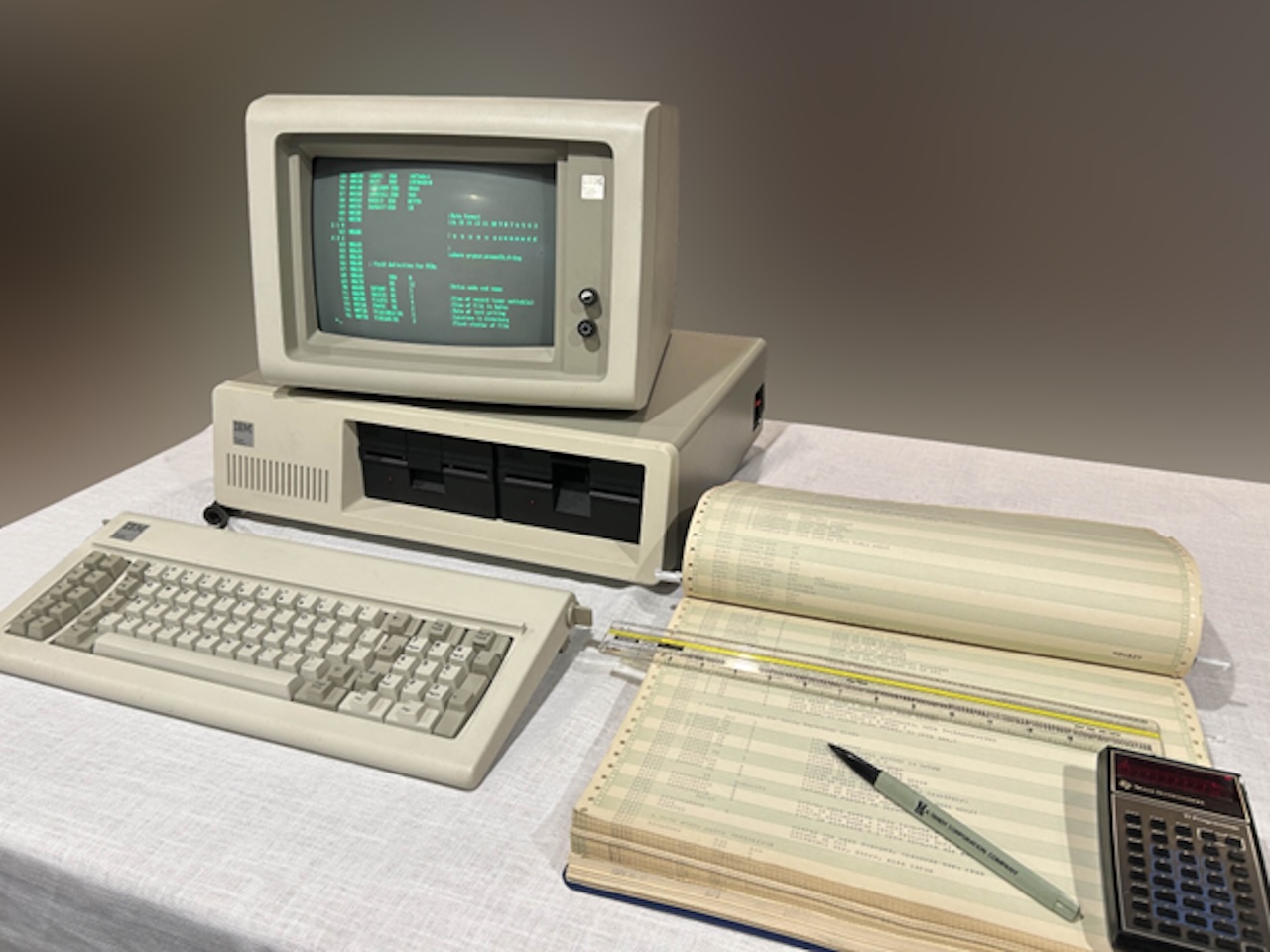
Andrew Cunningham writes that the old 86-DOS source code predates Microsoft’s purchase of the software and comes with other documentation and developer notes. The accessible preview frames the release as another step in Microsoft’s periodic publication of historically important DOS materials. By publishing source code from the pre-Microsoft stage of DOS, Microsoft is making a key ancestor of the PC software market available for study. The sector relevance is mostly historical and educational: developers, computing historians, emulator maintainers, and operating-system enthusiasts get a closer look at how an early personal-computer operating system was built before DOS became commercially and culturally dominant.
I think the article gets the important bit right: source code is historical evidence, not nostalgia in a zip file. Releasing early 86-DOS material matters because it lets people inspect the thing itself rather than argue entirely from corporate folklore, fond memory, or pub-grade computing mythology. Documentation and developer notes make that more useful. Code alone tells you what ran. Notes can hint at what the author thought was hard, urgent, ugly, or simply good enough. Microsoft is the interesting actor here because DOS is both dusty artefact and founding myth. Open-sourcing ancient code costs little commercially, but buys a lot culturally. It says: look, we’re custodians now. Maybe they are. The PC era wasn’t won by the prettiest kernel or the purest technical lineage. It was won through timing, licensing, distribution, and platform gravity. The code can show the machine. It can’t show the whole deal.
Pope Leo XIV’s encyclical Magnifica Humanitas argues that artificial intelligence must be judged through the dignity of the human person
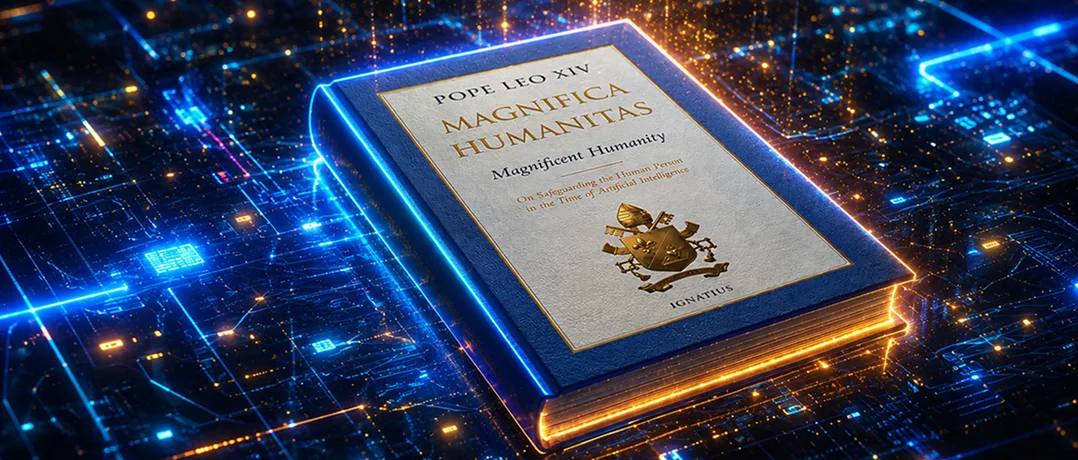
This document frames AI as one of the defining “new things” of the age, comparing two paths: the Tower of Babel, built on domination and uniformity, and Jerusalem, rebuilt through shared responsibility, dialogue and care. It applies Catholic Social Doctrine to AI’s effects on truth, work, freedom, war, democracy and economic power. Leo XIV warns that AI is never merely technical when it shapes employment, credit, public services, reputation, communication, weapons and access to opportunity. He is especially concerned about private technological power, concentrated data ownership, automated exclusion, disinformation, job insecurity, environmental cost and lethal decisions delegated to machines.
Magnifica Humanitas promises a grand defence of humanity, and much of it is indeed grand: Babel, Jerusalem, Augustine, the common good, the whole cathedral of Catholic Social Doctrine. Disclaimer: for those that don't know me yet, I'm atheist. AI is treated by the Vatican less as a clever tool than as a power-distribution machine. That is the document’s most distinctive move, I think. Leo XIV gets some of the politics of AI right: automated systems do not merely speed up decisions; they can decide who gets work, credit, public services, reputation and visibility. Once those judgements arrive wrapped in “neutrality”, the human being on the wrong end has very little to argue with. Computer says no. Very pastoral, obviously. Yet, the encyclical also usefully resists both panic and techno-incense, as it does not call technology evil, it only says tools inherit the priorities of those who build, finance and govern them. That matters because the AI debate often gets trapped between miracle and apocalypse. Then it asks the better question: who benefits, who is accountable, and who becomes disposable? Concentrated compute, concentrated data, concentrated lobbying, and weak international coordination - that the church knows quite well...
My Week in AI
- Rising AI spend turns FinOps into a boardroom strategist | siliconangle.com
- “Tokenmaxxing is real, expensive & it’s spreading”: AI budgets are exploding | thenewstack.io
- Erin Brockovich made a map to track data centers around the country | niemanlab.org
- Introducing dynamic workflows in Claude Code | claude.com
- A recent experience with ChatGPT 5.5 Pro | gowers.wordpress.com
- How we contain Claude across products | anthropic.com