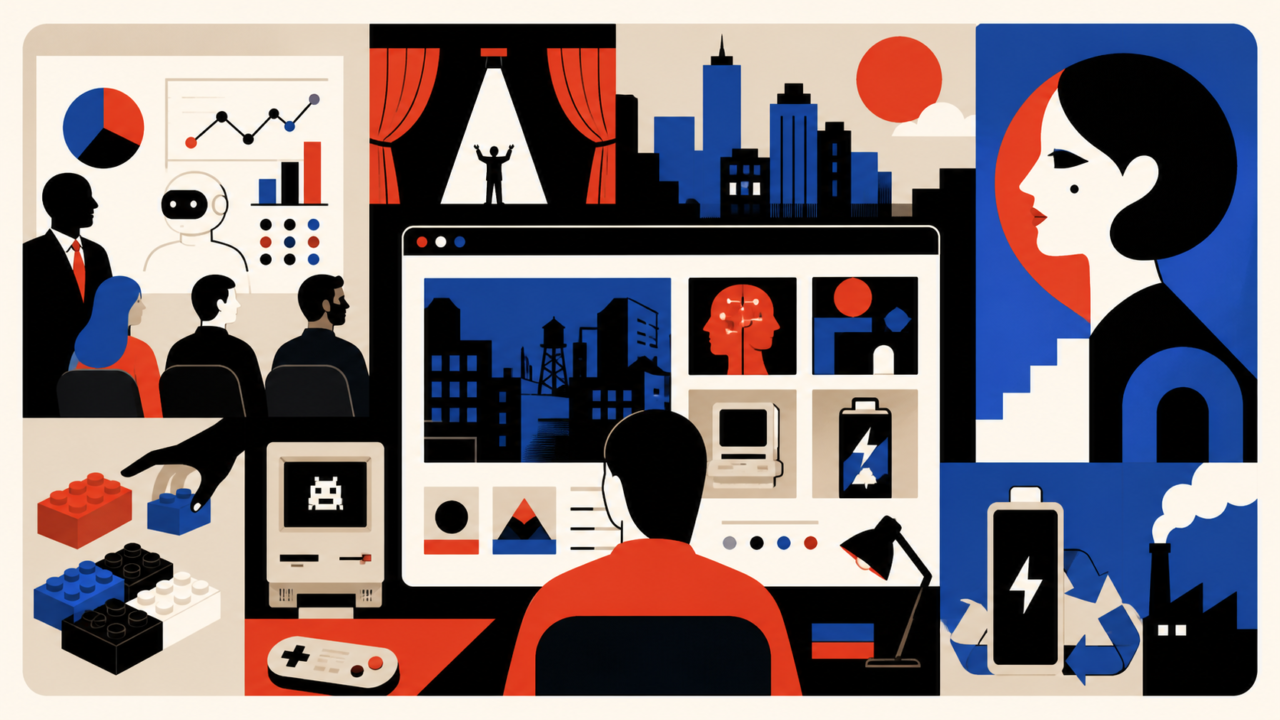
This is a very special edition! In fact, the first one after 2 years and 10 weeks in that there’s a website for #ReadBeforeMonday that incorporates the archive and it’s actually nice. This is the result of hard work, tenacity and lots of technical solutions! … I’m lying! This was Claude Design with Codex and Copilot and – wait for it – a lot of prompting! Anyway… on today’s edition we go from AI transformation theatre to toy-brick interoperability, from retro Mac preservation to battery recycling patents, and finally to the visual inspiration behind the Read Before Monday artwork and new site. Han Lee gives us the bleakly funny version of corporate AI mandates: dashboards, agents, workflows and productivity claims that look suspiciously like quota-driven performance art. The Free Universal Construction Kit reminds us that lock-in starts early, sometimes with children’s toys and proprietary plastic connectors. Dark Castle shows why software history survives not through nostalgia alone, but through people quietly packaging emulators, ROMs and instructions so the rest of us can press play again. The EPO’s battery circularity report is a useful warning that patents are not plants, and Europe needs capacity, not just promising charts. And Malika Favre’s website lands as the design prompt underneath it all: sharp identity, restraint, recognisable visual rules and no desperate over-explaining. The work is never just the thing you publish. It’s the system that makes people want to come back.
In this issue
5 piecesHan Lee argues that corporate AI transformation mandates increasingly resemble Mao’s Great Leap Forward:
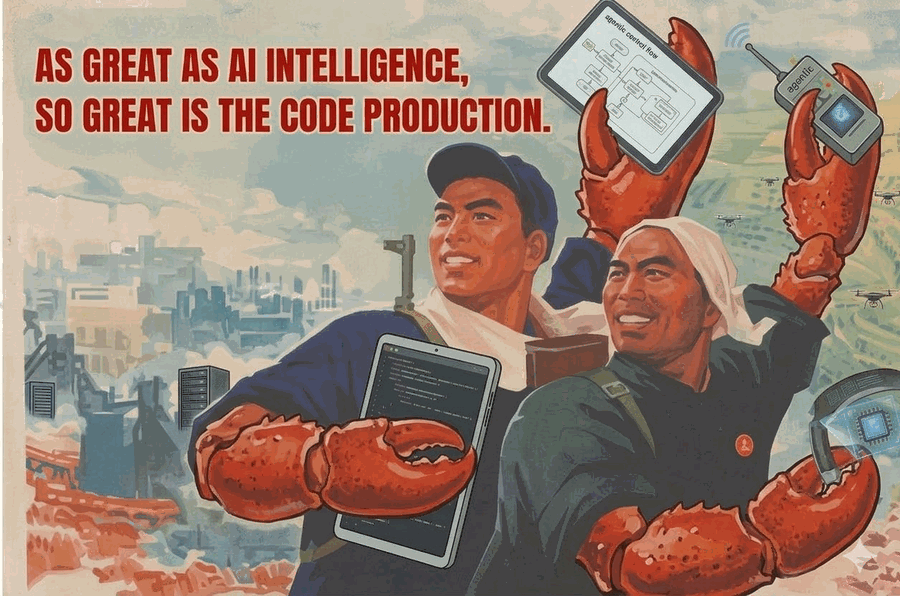
Which is centrally demanded, metrics-driven, performative, and dangerously detached from operational reality. The article uses the historical analogies of backyard furnaces, inflated grain reports, sparrow eradication, and the Hundred Flowers Campaign to describe AI dashboards, agent-building, workflow automation, headcount cuts, and expertise extraction. Its central evidence is organisational behaviour: teams shipping demoware, reporting dubious productivity gains, and optimising for adoption metrics rather than useful outcomes. Lee warns that AI initiatives can create brittle internal systems, hidden technical debt, broken incentives, and knowledge-hoarding employees who fear automating themselves out of relevance. Its sharper claim is that many AI programmes may not just fail to deliver productivity, but actively damage the social and technical systems needed to make AI useful.
The most uncomfortable claim here is that expert-built agent skills may become less a path to automation and more a new form of organisational booby trap. Give people a mandate to encode the judgement that makes them valuable, then pretend this is empowerment, and don’t be shocked when the resulting artefact has a few missing teeth. Lee gets the performative bit right because he keeps dragging the discussion back to measurement. A copilot that “saves 40%” but changes neither delivery dates nor staffing nor quality is not evidence; it’s a slide with better lighting. He also lands the point that AI workflows can look cleaner than the systems they replace while being harder to inspect, debug and own. The canvas smiles. The eighth prompt lies on Tuesdays. Yet, I think he overplays the historical analogy, of course. Corporate AI theatre is not famine. But as an organisational warning, it works because the shared mechanism is quota logic: leadership asks for visible production, teams manufacture visible production, and nobody wants to be the first person to say the steel is pig iron. CTOs should be asking dull questions: who owns this after the demo, what baseline did it beat, what happens when the model changes, and which human context did we just delete? Good AI programmes will survive those questions. Bad ones will call them negativity. That’s the tell.
F.A.T. Lab and Sy-Lab present the Free Universal Construction Kit
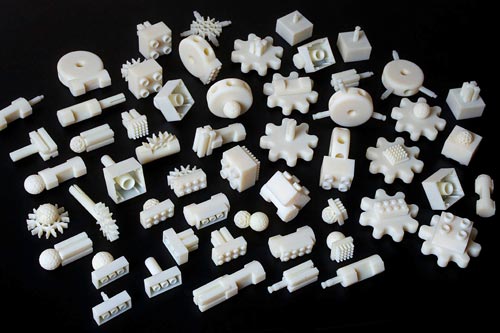
It's a set of nearly 80 3D-printable adapters designed to connect ten popular children’s construction toy systems. Lego, Duplo, Fischertechnik, Gears! Gears! Gears!, K’Nex, Bristle Blocks, Lincoln Logs, Tinkertoys, Zome and Zoob can become interoperable through reverse-engineered connector pieces. The authors frame the kit as both a practical toy accessory and a public-domain intervention against closed product ecosystems. The project’s wider implication is that low-cost 3D printing can turn hardware interoperability into a grassroots activity, much as open-source software addressed incompatible media formats. F.A.T. Lab and Sy-Lab stress creative continuity for children, arguing that toy knowledge should not become obsolete whenever a new playset arrives. They also address legal risks, patents, trademarks, fair use, non-commercial licensing, and fabrication limits, especially the precision gap between 2012-era desktop printers and commercial toy tolerances.
This gets one big thing right: interoperability is usually discussed as a software problem, but the same power game exists in plastic, screws, batteries, chargers, printer cartridges and every awkward proprietary connector hiding in a drawer. F.A.T. Lab and Sy-Lab make that point with toy bricks, which is clever because nobody wants to be the executive explaining why children must respect platform boundaries. The most distinctive claim is also the cheekiest: the Free Universal Construction Kit is “the VLC of children’s playsets”. That’s a small joke carrying a large accusation. This works because the they don’t pretend this is only about play. Lego meeting Tinkertoys is the demo; lock-in is the subject. Yet, a child’s toy is not just an interface. It’s a physical object that can break, splinter, choke, degrade or fail under load. The disclaimers know this, even if the manifesto would rather talk about liberation. Fair enough. Manifestos rarely come with CE testing.
Dark Castle is a fan-style homepage making two classic Macintosh games, Dark Castle and Beyond Dark Castle
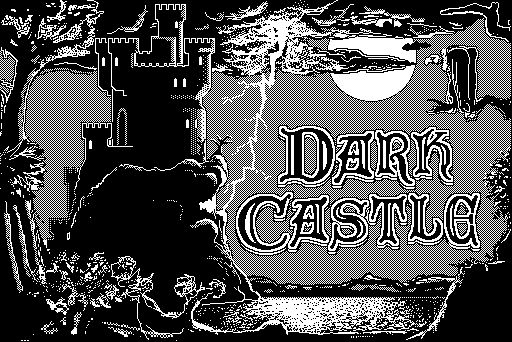
It's available through a downloadable ZIP containing Mini vMac, a Mac Plus ROM file, System 6, and a disk image with both games. The page is a nostalgic restoration for people whose old Apple machines no longer work, offering simple instructions for running the games on a PC and recommending full-screen mode for better play. The site also summarises the Dark Castle trilogy: Dark Castle from 1986, Beyond Dark Castle from 1987, and Return to Dark Castle from 2008. It presents Dark Castle as an early Macintosh gaming pioneer, praising its sound, animation, humour, level design and role in showing off the Mac’s capabilities. The broader relevance is preservation: old software, obsolete hardware, emulator packaging, and the tension between nostalgia, accessibility and the messy legal-cultural afterlife of abandoned or hard-to-run games.
Old games don’t survive because people remember them fondly; they survive because someone packages the emulator, disk image and instructions into something ordinary humans can use. That’s the useful work. Dark Castle nostalgia is the wrapper, but preservation plumbing is the actual story. The site gets that right because it doesn’t merely write a misty-eyed tribute to Duncan, bats and the Black Knight. It gives people a way in. Download, extract, drag DCImage onto Mini vMac, press CTRL-F, and avoid flinging your mouse off the window at a crucial moment. That is preservation with sleeves rolled up. It also captures why Dark Castle mattered: a black-and-white 1986 Mac game that made sound, animation and timing feel distinctive on a little 9-inch machine. Platforms move on, APIs vanish, hardware dies, and culturally important software becomes landfill unless enthusiasts reverse the entropy. Vendors rarely preserve the long tail unless there’s money or brand value in it. Fans do the unglamorous work, then hope nobody with a legal department notices.
The European Patent Office reports that inventions for battery reuse and recycling have increased more than seven-fold over the past decade
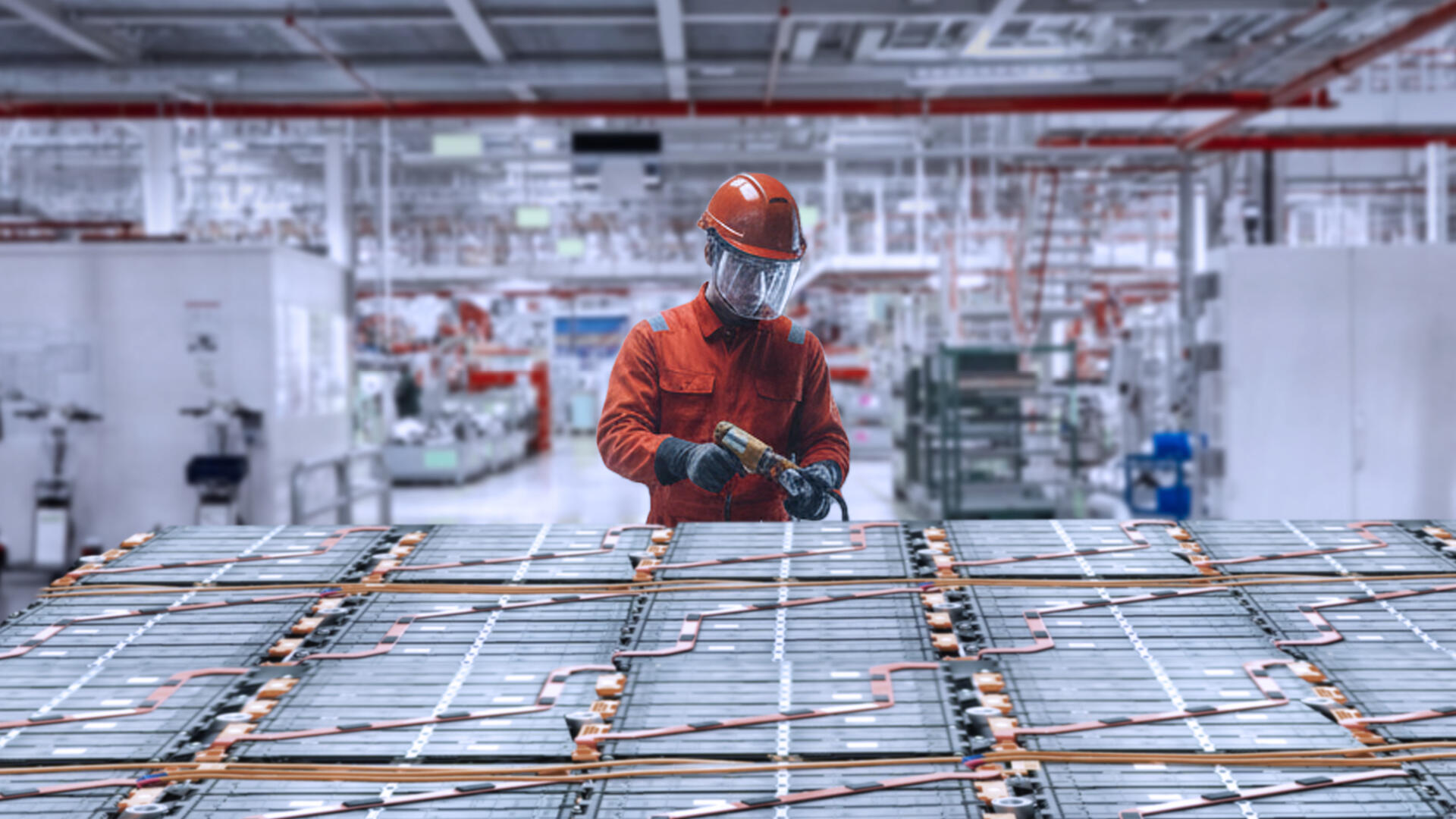
This is drawing on a joint EPO and International Energy Agency technology insight report; the article says battery circularity patenting surged from 2017, growing at a 42% compound annual rate, compared with 16% for rechargeable battery manufacturing and 2% across all technology fields. It examines around 16,000 inventions and nearly 4,000 international patent families across 24 technologies. The article frames battery circularity as a route to reduce dependence on mined and refined critical materials, strengthen supply chains and support European technological sovereignty. Asia leads the field, with Asian companies accounting for 63% of battery circularity international patent families in 2023, while China’s share rose sharply. Europe’s opportunity lies in collection, chemical transformation, remote handling, hydrometallurgical extraction, startups, policy support and scaling investment.
The gap between the headline and the evidence is where this one gets interesting. “Inventions increase seven-fold” sounds like the cavalry arriving over the hill. Then the details say something more useful and less comforting: patenting is moving fast, Asia is already ahead, China is accelerating, and Europe has promising niches rather than a commanding lead. That’s a better story. Less triumphant. The EPO gets the central point right because battery circularity is not a nice sustainability garnish. It’s an industrial capability. If batteries become strategic infrastructure, then collection, sorting, recovery, repurposing and refining become strategic infrastructure too. Yet, a patent family is a signal, not a factory. It doesn’t collect a battery, dissolve a cathode, negotiate grid rules, standardise pack design or make hydrometallurgy cheaper on a wet Tuesday. Circularity is being treated as resource policy, trade policy and industrial strategy wearing a green jacket. Europe’s problem is not that it lacks research. The article says it has plenty. The problem is turning patent maps, startups and regulation into scaled plants before Asian incumbents convert their lead into default infrastructure.
Malika Favre’s website presents the French artist’s portfolio, shop and curatorial activity

Her homepage divides the work into commercial and editorial categories including Women, Geometry, Society, Erotica, Travel and Collaborations, while the shop sells limited editions, books, themed prints and objects. Favre as a Barcelona-based French artist whose bold, minimal style starts from narrative and aims to provoke imagination with humour, sensuality and everyday re-framing.
A personal observation first: this is the kind of site that makes you realise how much most editorial projects over-explain themselves. Favre doesn’t arrive with a mission statement wearing a sandwich board. Her work leads! For those that follow this newsletter, Malika has been the source of inspiration for the weekly images of the newsletter, but also now the website. What I really enjoyed is her repeatable grammar: bold forms, controlled space, confident colour, clear themes and a strong sense that every piece belongs to the same mind. Obviously that Read Before Monday need its own version of that. Artwork that feels recognisable at thumbnail size. A website that treats every article as part of a larger editorial system. Categories that guide without becoming filing admin. She is a true inspiration! Hope everyone can see that this design cue is not just minimalism. It’s editorial architecture; sharp, spare, recognisable, and just opinionated enough to make the week feel less stupid.
My Week in AI
- Training language models to be warm can reduce accuracy and increase sycophancy | nature.com
- Google-managed MCP servers are available for everyone | cloud.google.com
- The Code Agent Orchestra - what makes multi-agent coding work | addyosmani.com
- Here’s how the new Microsoft and OpenAI deal breaks down | theverge.com
- Harness engineering: leveraging Codex in an agent-first world | openai.com
- Anthropic Opens Claude Security Beta to Enterprises | implicator.ai