
This week I tried to do a LinkedIn live, but it didn’t went as planned 🙂 That’s technology nowadays… But I’ve been on a bit of a reading binge lately and an unexpected theme kept popping up: we’re living through an era of incredible output… and increasingly fuzzy accountability. So starting with the fediverse world, communication keeps getting treated like content, and when things silently fail, we shrug because we’ve been trained to. In engineering, AI is clearly speeding up the work, but it’s also compressing the learning ladder that used to build intuition. In innovation history, Edwin Land’s instant camera story is a reminder that the spark is rarely the hard part; the hard part is turning conviction into repeatable execution. In the arts, writers with day jobs show the less glamorous truth: creativity isn’t just talent, it’s time, dignity, and decent boundaries. And in maths history, a rediscovered letter reopens the oldest question in knowledge work: who gets the credit, and what happens when they don’t?
In this issue
5 piecesPloum argues that many modern “communication” channels have effectively become entertainment and content-distribution systems, leaving people more entertained but less connected.

Using a dispute over Pixelfed and ActivityPub, he describes two incompatible user mindsets: one treats federation as reliable human-to-human messaging where losing messages is unacceptable; the other treats it as content consumption where missing posts or notifications is tolerable. He suggests these assumptions, not technical misunderstandings, drive the conflict. He then generalises the pattern beyond the Fediverse: social networks marketed themselves as connection, but optimise for profitable attention capture and “content” throughput.
I recognise this argument in my bones: if a message can vanish without you knowing, it’s not “communication”, it’s vibes. The Pixelfed bit is just the trigger; the real complaint is that we’ve normalised systems where attention is the product and reliability is optional. That said, I don’t think everyone wants the same thing. Sometimes you want a feed, sometimes you want a receipt. The win here is naming the mismatch so you can stop shouting past people. My personal fix is boring on purpose: RSS, email, smaller circles, fewer dopamine machines. The useful takeaway is to align product claims with delivery guarantees, and to design federation with honest semantics rather than implied reliability.
Liz Allan argues that AI will automate many repetitive , data-heavy entry-level chip-design tasks, but the labour impact may be less straightforward than early predictions

. Because universities and new graduates are increasingly trained on AI-enabled workflows, she suggests some juniors could enter organisations at a higher level of abstraction, moving faster into oversight and higher-value problem solving. Multiple interviewees frame AI as a force multiplier rather than a simple replacement engine. The article also stresses uneven disruption across seniority bands. It contrasts tool-familiar “seniority” with the bigger-picture experience gained through years of project delivery, collaboration, and failure. Several sources warn that mid-level engineers may struggle most with the transition, while seniors provide context and sanity checks for AI outputs.
This s mainly about workforce redesign under accelerating tool change. It clearly separates seniority as tool mastery from seniority as context, then argues AI compresses the former while leaving the latter stubbornly human: judgement, project organisation, and knowing what to distrust. That framing implies a management challenge, not just a technology shift! If entry-level tasks evaporate, companies must explicitly replace the learning pathway those tasks used to provide, or they risk producing fast-moving engineers with thin intuition. Then, treating agentic AI as a tutoring “intern” is useful, but only if orgs invest in governance: validation steps, clear responsibility for sign-off, and incentives that reward catching errors rather than shipping plausible output. There's clearly a lot more to discuss and learn...
David Young profiles Edwin Land, positioning him as an “original Steve Jobs” figure who combined obsessive research, product vision, and aggressive marketing.

The pivot moment is a 1943 holiday in Santa Fe, when Land’s three-year-old daughter Jennifer asked why she couldn’t see a photo immediately after it was taken. The article says Land conceived the core instant-camera idea within an hour, then pursued it with relentless intensity. It traces how that idea became Polaroid’s “Picture-in-a-Minute” breakthrough: a 1947 demonstration to the Optical Society of America, then commercial launch of the Model 95, followed by later models culminating in the SX-70.
I’m a sucker for origin stories, but this one lands because it’s so ordinary: a kid asks a basic question, and an adult refuses to let it go. The part I like most isn’t the genius halo; it’s the sheer stubborn follow-through, plus the willingness to bet big and risk looking daft. Still, the brilliant but difficult profile always leaves a bitter aftertaste. David stresses three linked levers: (1) a compelling user desire (immediacy), (2) a technology platform (Land’s polarising film work and Polaroid’s R&D engine), and (3) marketing and distribution choices that expanded the addressable market beyond specialists. That implied lesson is that category creation rewards conviction, but durable advantage requires translating conviction into repeatable, team-scaled execution.
Ed Simon uses Herman Melville’s long stint as a US Customs Inspector to explore the uneasy fit between paid labour and literary ambition.

He contrasts Melville’s earlier seafaring life with the repetitive dockside bureaucracy that followed poor reception for his major novels, stressing the grind, low pay, and lack of recognition. Simon then threads in his own short federal stint at the USPS, portraying modern office work as simultaneously easy, deadening, and identity-shaking. From there, he widens into a cultural history of writers’ day jobs, arguing that most authors have always relied on unrelated work unless independently wealthy.
This essay is a case study in motivation, identity, and how job design affects creative output. Contrasts meaningful effort (teaching, craft, tangible service) with roles that feel low-autonomy or low-impact, and he shows how that mismatch produces disengagement even when tasks are easy. The practical organisational takeaway is that creative workers need more than a paycheque: they need predictability, respect, and enough control over time to sustain mastery. Melville on the docks is the bit I can’t shake: world-class imagination, stuck checking manifests. The goal isn’t martyrdom; it’s enough stability to keep making the thing. Pay the bills, protect your hours, and don’t let the job eat your brain.
Quanta Magazine recounts how Demian Goos , a 35-year-old mathematician and journalist, investigated Georg Cantor’s path-breaking 1874 paper on different “sizes” of infinity and uncovered a long-missing piece of correspondence.
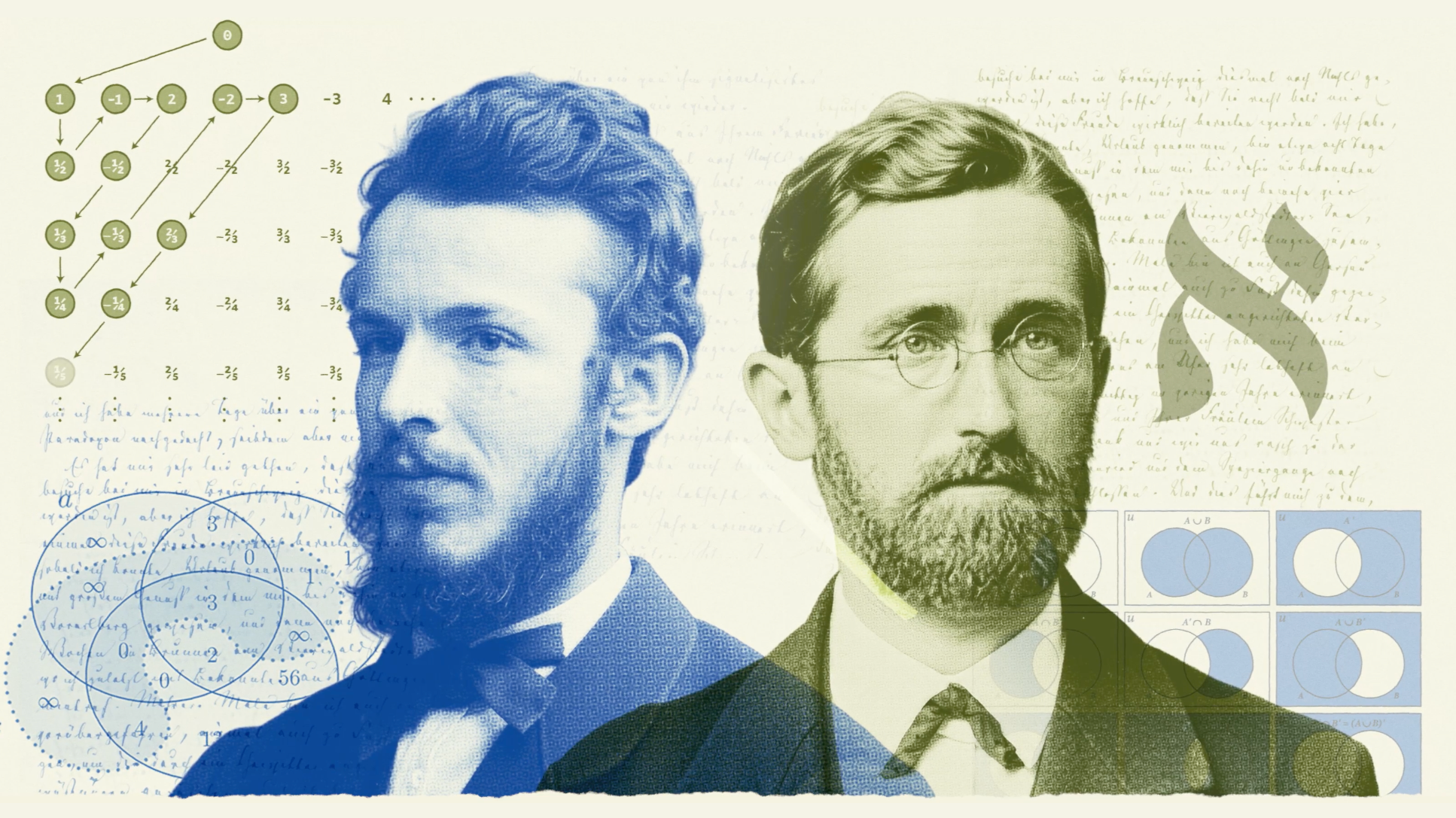
In Halle, Goos finds a letter from Richard Dedekind dated 30 November 1873, believed lost since World War II, which contains a proof about algebraic numbers. The article presents this as decisive evidence that Cantor later published Dedekind’s result without credit. It situates the discovery in the broader birth of set theory and the personal dynamics between Cantor and Dedekind, including Cantor’s urgency to publish and later isolation. Earlier editors (including Emmy Noether and Jean Cavaillès) had published partial correspondence and a note suggesting Cantor reproduced Dedekind’s proofs “almost word for word,” but historians hesitated without the missing letter.
I’m oddly relieved by this story. Cantor’s maths can stay brilliant while his behaviour looks… human. The missing-letter drama is great narrative fuel, but the bit that sticks is the reminder that credit isn’t a nice-to-have garnish; it’s how communities keep score, build trust, and decide who gets heard next. I also like that the article refuses the easy takedown. Yet the article also models a useful governance stance: it separates the validity of results from the ethics of authorship, and it frames correction as legacy repair, not demolition. It also shows how historical honour codes can inadvertently entrench power and myth-making.
Last Week in AI
- The Self-Driving Codebase: Background Agents and the Next Era of Enterprise Software Delivery | background-agents.com
- 6 agentic knowledge base patterns emerging in the wild | thenewstack.io
- Nano Banana 2: Google’s latest AI image generation model | blog.google
- The era of human web search is over: Nimble launches Agentic Search Platform for enterprises boasting 99% accuracy | venturebeat.com
- Anthropic’s Claude Cowork is plugging AI into more boring enterprise stuff | theverge.com
- AI is already making online crimes easier. It could get much worse. | technologyreview.com