
Busy week this one! I’ve been to the Lisbon AI Week to showcase some of Hitachi’s Agentic capabilities and we had some great conversations out there. Between sessions, I caught up on a few standout reads for you this week; one likened today’s AI rush to the internet’s dial-up years – chaotic but formative – arguing that real winners will be those who treat AI as a cost-curve shifter, chasing unmet demand rather than automating for its own sake. Another, stripped the hype from “agents” with a 15-line Python loop that does more to teach autonomy than any platform pitch; build your own, keep it narrow, own your loop. Then came a clever detour through Florence: the Medici as proto-venture capitalists turning wealth into legitimacy through patronage, a neat reminder that reputation compounds faster when tied to public good. We move then to the vintage hardware; deep dive on floppy disks scratched the engineer’s itch – formats, holes, notches, all mapped like an archaeological chart of data history. And finally, the Circulatronics paper from Nature, that wireless brain implants hitching rides on immune cells, proof that the line between systems design and biology is blurring fast.
In this issue
5 piecesThis article argues we’re in AI’s “dial-up” phase , mirroring the internet’s early years of hype, scepticism and uneven progress.

Employment effects will diverge by industry. Using radiology and James Bessen’s historical data on textiles, iron/steel and motor vehicles, it contends jobs rise while unmet demand expands, then fall when demand saturates as automation keeps improving. It highlights Jevons Paradox, notes Andrej Karpathy’s criteria for nearer-term displacement, and frames outcomes as a race between demand growth and productivity gains. The piece also addresses whether today’s surge is a bubble. It recalls dot-com exuberance that funded durable infrastructure and proposes a similar AI pattern: speculative capital, overbuilding, failures, yet lasting assets.
This is fundamentally about capital cycles and market expansion. The article’s strongest claim is that labour outcomes hinge on whether latent demand can outrun productivity gains. That’s a practical test for capital allocation: prioritise domains with clear unmet demand and forgiving error costs. The dot-com parallel is apt; capex misallocation can still build valuable commons, but equity holders and workers absorb volatility. The hyperscaler spend implies a medium-term supply shock in compute, yet the economic value depends on downstream utilisation; pricing, power, and workload mix. Treat AI as a cost-curve shifter: refactor processes where reduced unit economics unlocks new revenue, not just savings.
Build a simple LLM “agent” to understand the idea and cut through hype.

This demonstrates a minimal Python loop using the OpenAI Responses API, shows how multi-turn “state” is just an appended context list, and adds a tool (ping) via function-calling to illustrate autonomy. The author argues that this covers the core of an agent: an LLM in a loop that can call tools, with surprisingly little plumbing required. It contends MCP isn’t essential; use direct APIs and own the architecture. The essay frames “context engineering” as an ordinary systems problem: token budgets, sub-agents, summary/compression, and tree-of-thought patterns.
Here's some developer-first antidote to Agentic vendor theatre... The argument to own the agent loop is operationally sound: minimal code, explicit tool surfaces, and no plugin abstraction layer dictating architecture. That reduces hidden coupling and lets teams set guardrails; segregated contexts, least-privilege tools, auditable traces, without waiting on a vendor roadmap. The counterweight is obvious: dependence on a single model API, with cost, rate-limits and outage risk, is non-trivial. The essay’s dismissal of MCP understates the coordination benefits of a shared interface in larger estates. Still, the guidance scales: start with a narrow, observable agent, invest in context hygiene and summarisation, and layer security controls before handing it shell. Treat agents as programmable glue for specific jobs, not as generalist copilots, and you’ll avoid most reliability and lock-in pitfalls.
The Medici family converted banking wealth into lasting political legitimacy through deliberate cultural patronage.

Patronage wasn’t charity but a strategy: fund artists, architects, and scholars to manufacture consent, attract talent, and embed the family into Florence’s civic identity. Historical anchors include Giovanni di Bicci’s 1397 bank, Cosimo’s financing of Brunelleschi’s dome and San Lorenzo, and roles such as Depositor of the Apostolic Chamber, all reinforcing a feedback loop between economic power and cultural capital. It then translates this “Medici method” for today’s technology elites, proposing four principles: direct sponsorship of individuals, institution-building, network convening, and symbolic or philosophical patronage. The piece recommends targeted fellowships and no-strings grants, creating enduring civic institutions, curating salons and retreats, and underwriting public art or long-form journalism.
This is a playbook for converting private balance sheets into civic legitimacy through organisational design. It illustrates an incentives stack: targeted patronage generated social proof, which improved deal flow, regulatory access, and crisis resilience. So, fund individuals to diversify creative option value; found institutions to compound reputation; convene to shorten coordination cycles; shape narrative to stabilise the licence to operate. The missing piece is operating model: define grant charters, independence safeguards, measurement (attendance quality, downstream projects, civic co-funding), and exit conditions. Without that, patronage risks principal–agent failure and PR cynicism.
What a cool and structured reference on floppy disk media rather than a narrative article!
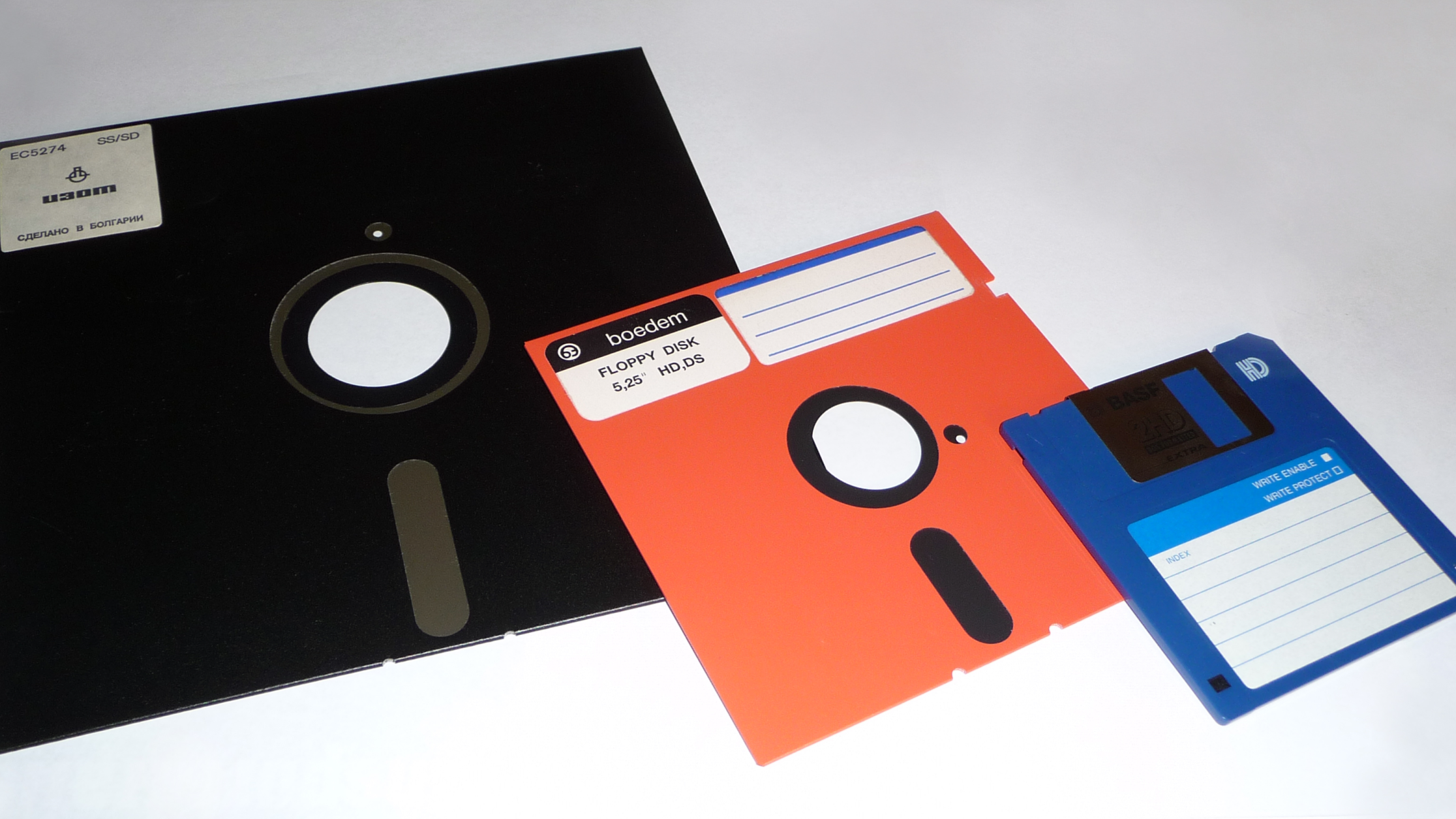
It outlines the four principal physical formats; 8-inch, 5.25-inch, 3.5-inch, and 3-inch. Lists common aliases, and notes that “floppy disk” became the generic term after the IBM PC/XT era. It distinguishes soft- versus hard-sectoring, explains index hole patterns across sizes, and contrasts write-protection conventions on 8-inch and 5.25-inch media. The “Examples” section shows rare hard-sectored variants, including 5.25-inch disks with 10 or 16 sector holes and 8-inch media with 32 holes. It associates specific systems with these formats (e.g., Heathkit H89, North Star Horizon, Vector Graphic) and mentions a “Virtual Sector Generator” to emulate hard-sector pulses.
Neat, concise, and genuinely useful for orientation. I like how the page anchors everything in mechanics; sizes, holes, notches, write-protect semantics, because that’s where restoration projects often go sideways. As a photo-forward primer it helps you reason from plastic and apertures to signalling constraints, and it even flags where tooling must step in, like using virtual sector generators to fake hard-sector pulses for fussy controllers. The clear separation of soft - versus hard -sectoring and those quirky 10- and 16-hole variants is quite cool. But the missing cross-walks; coercivity, track counts, RPM, flux transitions per bitcell, and encoding (FM/MFM/GCR)... so you’re still reaching for 3M/IBM manuals and controller datasheets to build a safe drive/media matrix.
This Nature Biotechnology article reports a “Circulatronics” approach: nonsurgical brain implants built as immune cell–electronics hybrids for focal neuromodulation.

Subcellular-sized, wireless photovoltaic devices are covalently attached to monocytes, delivered intravenously, and autonomously traffic to inflamed brain regions in mice. The organic-semiconductor devices harvest optical energy and stimulate neurons with reported ~30-µm spatial precision around the target site, including deep structures such as the ventrolateral thalamic nucleus, providing a potential alternative to invasive intracranial or endovascular implants.
Promising, with disciplined ambition! The idea of hitching a ride on the immune system’s satnav to deliver wireless brain implants is elegant and surprisingly pragmatic. I like designs that piggyback on biology, and the monocyte chassis is genuinely clever. The device physics; tiny organic photovoltaics pushing nanowatt power at ~0.2 V, are neat but unforgiving, demanding precise impedance tuning and tight control of thermal and optical budgets. The big upside here is if the targeting and focality hold, it could open deep-brain therapies to far more patients. But optical energy delivery through the skull remains a serious engineering slog. The practical path now is unglamorous but vital; safety, dosimetry, and manufacturing consistency before features or flair. The concept sings, but turning it into a clinical instrument will take patient systems work and a long view.
Last Week in AI
- Cognition | Introducing SWE-1.5: Our Fast Agent Model | cognition.ai
- EuroLLM | Large language model, made in Europe | eurollm.io
- Nvidia unveils first Blackwell chip wafer made with TSMC in US | reuters.com
- Magentic Marketplace: an open-source simulation environment for studying agentic markets | microsoft.com
- Apple is planning to use a custom version of Google Gemini for Apple Intelligence | theverge.com
- ChatGPT accused of acting as ‘suicide coach’ in series of US lawsuits | ChatGPT | theguardian.com