
Another week and welcome to October! The past week I wrote about TimeSeries, but focused on a new project that aims to integrate medical data and text-to-timeseries. Also, I published my view on MCP security and AI-first CxO’s. Worth reading 🙂 But with this #RBM edition, across all five pieces, the pattern is the same: progress follows distribution, not invention. Whether it was 1977’s “Trinity” turning computers into consumer goods, early email systems doubling as proto-AI interfaces, or modern hiring shifting from degrees to durability, the through-line is context beating complexity. The same logic applies to cataract surgery and robotics; mature tech still constrained by access and practicality. So, real impact happens when design meets delivery, when logistics outthink hype. In every field, the work that lasts isn’t the flashiest – it’s the work that reaches people.
In this issue
5 piecesTechnics History argues that 1977 marked a decisive break from hobbyist microcomputing to an emerging mass market, crystallised by the “Trinity”:
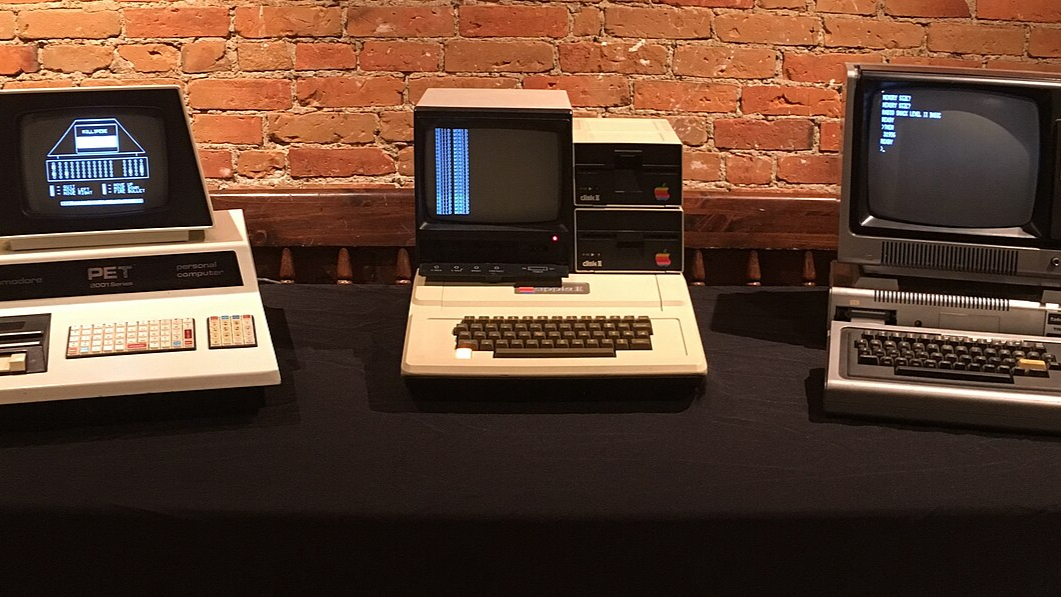
Apple II, Commodore PET, and Tandy/Radio Shack TRS-80. It traces Apple’s shift from the Apple I board to the Apple II, catalysed by Mike Markkula’s funding and Wozniak’s Disk II, while noting Apple’s initially modest sales and outsider architecture. Commodore leveraged vertical integration via MOS Technology to ship the PET cheaply, and Tandy converted nationwide retail presence into unprecedented volume with the TRS-80.
The Trinity’s impact came less from technical brilliance than from industrial posture: capital, channels, and cost discipline. Apple married product elegance with financing and expandability; Commodore used vertical integration to trade premium features for price and control; Tandy turned retail reach into demand generation, converting curiosity into sales. The shake-out that followed mirrored every classic industry cycle - early entrants without scale or distribution fell away. What endures is how context, not circuitry, made computing mass-market. Storefronts and practical compromises beat purity, demos outran reliability, and capital flowed faster than craft. The lesson is simple: design the go-to-market with the same intent as the product. In the long run, momentum trumps elegance. Distribution, not design, writes history.
This article tells the story that email served as the first mainstream interface for AI-like recommendation engines in the early 1990

s, via collaborative or “social” filtering. It traces a lineage from Xerox PARC’s Tapestry to Stanford’s SIFT and Bellcore’s movie recommender, culminating in MIT’s Ringo in 1994. Users emailed ratings; systems matched like-minded tastes; replies felt conversational, even human. The piece documents adoption stats, design choices, and anthropomorphism, then connects these prototypes to today’s GPT-era recommendation culture.
The real message is distribution-first product design. Email was the original growth hack: cheap to deliver, familiar to use, and structured enough to keep behaviour predictable. Its constraints forced clarity - no bloated UX, no guesswork for algorithms parsing free text. That simplicity let collaborative filtering actually work, powered less by code than by network effects in shared taste. But the magic was a double-edged trick. Anthropomorphic tone made machines feel human, even when quality and bias were fuzzy. I remember listservs where a single subject line could spark days of thoughtful replies - that rhythm built trust long before “engagement” was a metric. Channels like that are cheat codes only if you measure what matters. Build the loop, then prove the loop matters. The interface should earn belief, not borrow it.
In the AI era, durable or “soft” skills - such as creativity, adaptability, collaboration, and critical thinking - remain essential despite automation’s reach
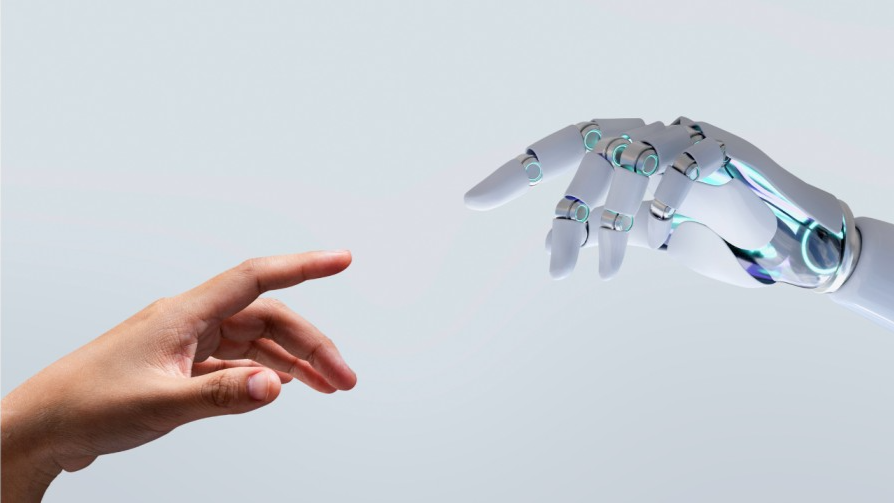
. The article cites LinkedIn and Wiley surveys showing that 80–92% of employers value these human capabilities as highly as technical ones. As AI tools expand into content creation, analysis, and decision-making, their limits in empathy, nuance, and relationship-building reinforce the irreplaceable role of human connection and tactful communication in professional life. The authors contend that employers are shifting toward skills-based hiring, prioritising qualities like resilience and teamwork over formal credentials. CompTIA data from 2024 revealed nearly half of active tech job postings omitted degree requirements, reflecting a new meritocracy based on capabilities rather than pedigree. Drawing on MIT Sloan research, the piece concludes that AI achieves its full potential only when paired with human intelligence - where durable skills complement automation to produce collaborative, innovative outcomes.
The shift from credential-based hiring to capability-driven work feels overdue, but it’s still uneven. Firms adopting skills-based frameworks cut friction in sourcing talent and stay better aligned with automation’s rise. Yet the so-called durable skills - communication, adaptability, empathy - are tricky to measure and harder to teach. To make “humanness” a real advantage, companies need to embed behavioural competence into how they hire, reward, and lead. Without that, productivity in hybrid AI–human workflows will stall, no matter how good the tools get. I’ve watched automation reshape teams, and the pattern’s consistent: the best people aren’t those who code fastest, but those who stay calm when the logic breaks. AI can analyse, but only humans can persuade, empathise, and inspire. Those are the skills that age well precisely because they’re hard to fake. For workers, that’s a source of reassurance; for leaders, a warning that culture and context outlast code. Technology moves fast, but trust and tact compound slowly - and that’s still our edge.
Asimov Press traces cataract care from ancient couching to modern phacoemulsification and intraocular lenses

, framing it as medicine’s most common operation and a clinical triumph with more than a 95 percent success rate in roughly 20 minutes. Milestones include Ridley’s PMMA intraocular lens in 1949, Kelman’s ultrasound-based phacoemulsification in the late 1960s, and femtosecond-laser assistance from 2008. Yet biology’s quirks, such as immune privilege and avascular lens anatomy, explain why surgery rather than drugs remains the definitive therapy. The second half shifts from invention to inclusion. Despite relatively low procedural costs, cataracts remain the leading cause of global blindness.
This is a rare medical story where the bottleneck isn’t invention but inclusion. The technology stack is already mature: phaco systems with advanced fluidics, foldable lenses, and laser options all deliver reliable outcomes. The constraint now is access, not physics. Aravind’s model proves that process beats heroics - cross-training, parallel theatres, and local manufacturing bend the cost curve without compromising quality. I’ve seen the same truth elsewhere: hard problems often yield to better workflow design, not shinier tech. We can restore sight cheaply, yet millions still can’t reach care. That gap isn’t clinical, it’s logistical - bus fares, chaperones, and trust. Policy should focus on low-cost lenses, regional hubs, and referral networks that shorten the distance between diagnosis and surgery. Laser platforms have their place, but the next real breakthrough won’t be optical; it’ll be operational. Progress in cataract care is measured not in dioptres but in equity, so yes, vision restored is agency restored.
Om Malik interviews Rodney Brooks , MIT roboticist and iRobot/Rethink/Robust.AI cofounder, who argues today’s AI-robotics buzz
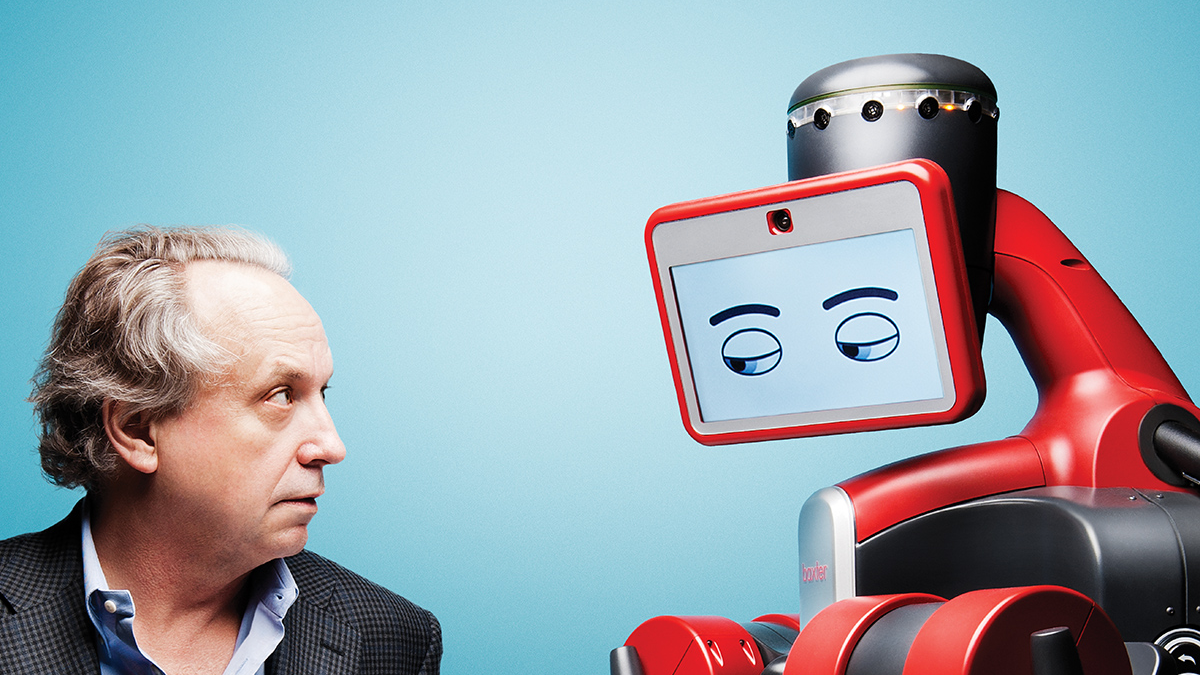
- especially around humanoids - is outrunning reality. Brooks says flashy demos mask messy environments, manipulation remains unsolved, and useful systems are narrow, safety-constrained, and often non-humanoid. He outlines Robust.AI’s approach: camera-equipped “Carta” warehouse carts that guide human pickers and reduce walking rather than attempt dexterous grasping. The near-term arc, he suggests, is pragmatic robotics that augments people, not general robots that replace them.
This is an audit of reality over roadmap. Brooks’s critique cuts through the noise: dexterous manipulation is still brittle, and vendors pushing “general” humanoids are really selling latency and liability. The defensible play is domain-bounded autonomy with humans in the loop - navigation, localisation, and task guidance that lift utilisation without the fantasy. Robust.AI’s cart proves the point: light compute, clear KPIs, minimal retrain. The same principle scales. Expect capex indigestion as data-centre build-outs overshoot model demand; repurposing will follow, as it always does. I’m with Brooks on swapping spectacle for serviceability. I’ve watched teams waste months chasing dexterity demos when a route planner and a smarter cart path saved real backs. Sure, investors want theatre; operators need throughput and safety. If we judged robots by hours saved, errors avoided, and fatigue reduced, the hype would fade and the work would speak. Demos impress crowds; workflows win shifts.
Last Week in AI
- Effective context engineering for AI agents | anthropic.com
- LoRA Without Regret | thinkingmachines.ai
- Sora 2 is here | openai.com
- Sandboxing agents at the kernel level | greptile.com
- OpenAI and NVIDIA announce strategic partnership to deploy 10 gigawatts of NVIDIA systems | openai.com
- How AI and Wikipedia have sent vulnerable languages into a doom spiral | technologyreview.com