
This week’s reading list was a mix of history, innovation, and introspection – a journey through foundational computing, retro tech, data visualisation, political theory, and AI ethics. First, lets start with the forgotten architect of computer science who gifted us lambda calculus, shaping functional programming and AI. Then a nostalgia-infused look at how Linux was adapted for Sega’s Dreamcast, as vintage computing challenges are always a fascinating dive into the roots of modern tech. Also, ahead of Black Friday, Shopify detailed the tech behind their real-time purchase visualisation globe. Then, politics – I know, I know! – with examining how we assign power to political symbols while neglecting the material conditions they represent. Finally, in the quest for safer AI, Anthropic explores how to nudge model behaviour to reduce biases without breaking performance – it’s a delicate balancing act.
In this issue
4 piecesAlonzo Church , a pivotal figure in computer science, developed the lambda calculus, s
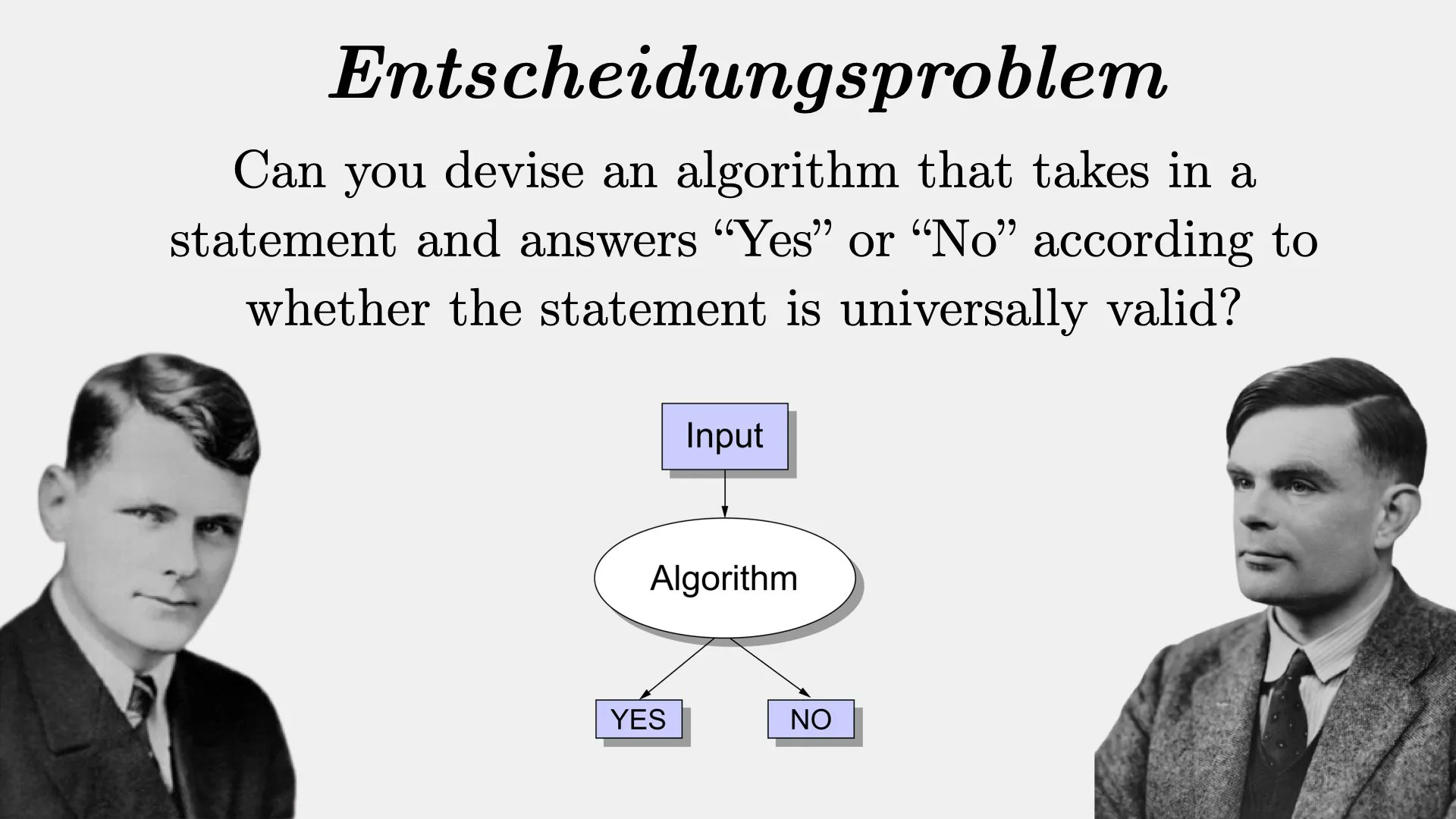
laying the groundwork for functional programming and influencing the design of modern programming language. Despite his significant contributions, Church remains less recognised compared to contemporaries like Alan Turing. His work on the Entscheidungsproblem and the Church-Turing thesis established foundational concepts in computability theory. Church’s influence extends to artificial intelligence and the development of algorithms, underscoring his role as a central architect in the evolution of computing.
What a great piece of history here on this article! It's the perfect dichotomy of the practical vs theoretical. Church’s work is theoretically profound, its practical applications were realised later, contrasting with contemporaries whose work had immediate practical impact. I believe the same is happening right now in the world of AI / GenAI, when only later we'll realise that a lot of theoretical work is being deployed in a very practical way. For me it's hard to follow up on every paper and research, but it's been one amazing journey to get all the details. Yet, as Church believed, no algorithm can determine the truth of all mathematical statements, which is something that we see everyday when we challenge the limits of what ca be computed.
The article “Dusting off Dreamcast Linux” explores the adaptation of Linux for the Sega Dreamcast console

, highlighting its minimal system requirements and support for various peripherals. It discusses the console’s hardware specifications, including a 200MHz Hitachi SuperH SH-4 CPU and 16MB of RAM, and the role of Sega’s MIL-CD format in enabling homebrew software development. The author reflects on the historical significance of Dreamcast Linux as an early example of Unix-like systems on gaming consoles, preceding PlayStation 2 Linux by about a year. The piece emphasises the unique challenges and learning opportunities presented by running a vintage Linux kernel on classic gaming hardware.
I'm biased here... Very! Firstly because the Dreamcast was a great console that I always wanted and back then was hard to get - having adult money is a bliss.... But then because it had a Hitachi CPU, and now I work for Hitachi... It's like a full circle. It also shows the engineering work around Linux to make it work for this console - which was the precursor of Linux on PlayStation. The best part is fitting Linux into the hardware constrains and then run it. For me this offers insights into vintage computing and the evolution of operating systems on gaming hardware.
In anticipation of Black Friday Cyber Monday, Shopify detailed the development of its 2023 real-time purchase visualisation globe

, emphasising enhanced visuals and performance optimisation. The globe, built using Three.js and React-three-fiber, features arcs representing real-time orders, rendered as Bézier curves with adjustable control points to depict transactions from merchants to buyers. To ensure arcs remain visible from all angles, the team implemented a vertex shader that offsets positions based on camera direction. Texture animation and a dissolve effect were achieved through UV mapping and noise functions. Initially, each arc had its own mesh, leading to performance issues; this was mitigated by adopting instancing, allowing multiple arcs to share geometry and reducing draw calls. This approach significantly improved the globe’s performance and scalability.
Black Friday is just around the corner and if you work in Retail, I feel your pain! It's one of the busiest times of the year, anticipating the other time, Xmas. This Shopify globe of what people are buying is an amazing visual experience that now just got some improvements. The best part is when we understand the technical details behind it and what are they doing to improve the experience. I do enjoy learning all the infrequencies of the systems and how technical teams address problems and come up with solutions. More companies should do this, so that knowledge can be shared.
Anthropic’s research on feature steering investigates modifying specific features within large language models to influence outputs, aiming to mitigate social biases.

By adjusting 29 features related to social biases, the study assessed impacts on model behaviour and capabilities. Findings indicate a “sweet spot” where steering effectively reduces biases without compromising performance; however, excessive adjustments can degrade capabilities. Notably, some features exhibited off-target effects, influencing unintended biases. A neutrality feature was identified that decreased biases across nine social dimensions with minimal impact on capabilities. These insights contribute to developing safer AI systems by understanding the balance between bias mitigation and model performance.
Lets finish on a strong note this week! Feature steering sounds like an elegant solution to a messy problem - adjusting AI’s biases without breaking it. But let’s be real, tampering with these systems feels a bit like hacking your own code after deployment: it works, until it doesn’t. Steering is a balancing act—enough to nudge outputs, not enough to wreck functionality. Off-target effects? They’re the plot twists of AI tweaking. And the “neutrality feature” sounds great on paper but feels like trying to make a compass point north while spinning a globe - it’s all connected in ways we don’t fully grasp. Ultimately, while it’s crucial to address AI bias, the broader challenge is keeping these models useful while avoiding a Pandora’s box of unintended outcomes. Maybe the sweet spot isn’t a setting but a philosophy: proceed carefully, and keep asking the hard questions.
Last Week in AI
- Hackers Have Uploaded Thousands Of Malicious Files To AI’s Biggest Online Repository | forbes.com
- Microsoft introduces new adapted AI models for industry | blogs.microsoft.com
- AI groups rush to redesign model testing and create new benchmarks | ft.com
- Debate May Help AI Models Converge on Truth | Quanta Magazine | quantamagazine.org
- The doctors pioneering the use of AI to improve outcomes for patients | ft.com
- US DHS Issues Guidance on Adopting AI in Critical Infrastructure | govtech.com
- O2: This 'AI Granny' Bores Scammers to Tears | pcmag.com