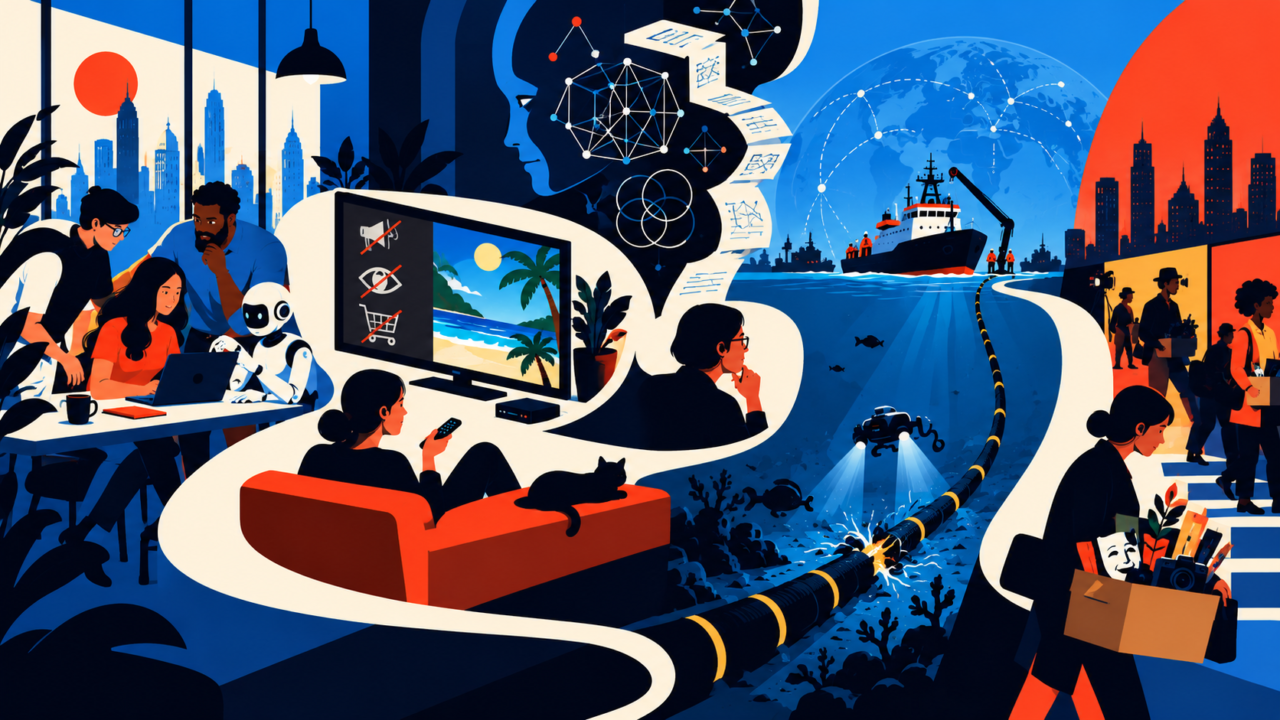
This week’s #RBM reading begins with Anthropic’s *Founder’s Playbook*, which suggests that a handful of people armed with AI can now build a startup without the traditional inconvenience of hiring an entire company, although finding customers who actually want the product remains stubbornly resistant to automation. Meanwhile, over at TechCrunch, frustrated television owners are using AI coding agents to strip adverts, tracking and other digital clutter from their smart TVs, achieving the remarkable technological breakthrough of making a television behave like a television again, occasionally at the cost of rendering it completely useless. Mathematics is having its own existential moment, with Francesco Maggi warning on Terence Tao’s blog that AI could deliver a golden age of scientific discovery or a dark age in which machines produce mountains of formally verified proofs that nobody understands. Under the sea, things are considerably less philosophical: Ryan Bagley examines how geopolitical conflicts are leaving critical internet cables damaged or unfinished because repair ships cannot safely reach them, demonstrating that global connectivity ultimately depends on someone being allowed to turn up with a boat. And finally, Joseph Politano examines the collapse of more than 200,000 American creative-industry jobs over four years, where AI joins streaming, consolidation and shifting consumer habits in making a living from creativity increasingly precarious.
In this issue
5 piecesThe Founder’s Playbook argues that AI changes the economics of starting a company
Anthropic’s 36-page organises the journey into Idea, MVP, Launch and Scale, supplying exit criteria, common failure modes and Claude-based exercises. Its central warning is that faster execution can amplify weak assumptions: a working prototype does not establish customer demand, while convincing AI-generated research can reinforce a founder’s biases. The guide recommends customer interviews before building, documented architecture and scope constraints during MVP development, security reviews before deployment, and retention measurements established before launch. Later stages focus on repeatable acquisition, reliable infrastructure, automated operations and competitive advantages built through specialised knowledge, customer feedback and integrations. Anthropic illustrates these approaches with customer examples, including Carta Healthcare’s reported 66% reduction in data abstraction time, while positioning Claude, Claude Code and Claude Cowork as tools throughout the startup lifecycle.
Here, one of the most useful instructions in this playbook, involves a rather unglamorous example: a medical billing application that understands the peculiarities of the 340B drug programme. Anthropic suggests turning precisely this kind of industry-specific edge case into a repeatable test, building a collection of scenarios that generic competitors would struggle to handle. I think that points towards a more convincing competitive advantage than the much-publicised ten-person unicorn. When AI can generate competent applications cheaply, knowing exactly where those applications fail becomes extraordinarily valuable. A founder who understands the obscure exceptions, regulatory quirks and operational compromises within an industry has something that a general-purpose coding agent cannot simply conjure from a prompt. More interestingly, that expertise can become executable knowledge. Each customer-reported exception becomes another scenario to test, another assumption made explicit and another opportunity to distinguish a genuinely useful product from a convincing demonstration. A growing suite of real-world tests also gives engineers something concrete against which to evaluate new models, prompts and architectural changes. There is a danger of collecting an impressive library of historical failures while missing emerging problems. The feedback loop must remain connected to actual customer behaviour.
Developers and TV owners are using AI coding agents to remove advertisements, tracking and unwanted software from smart televisions
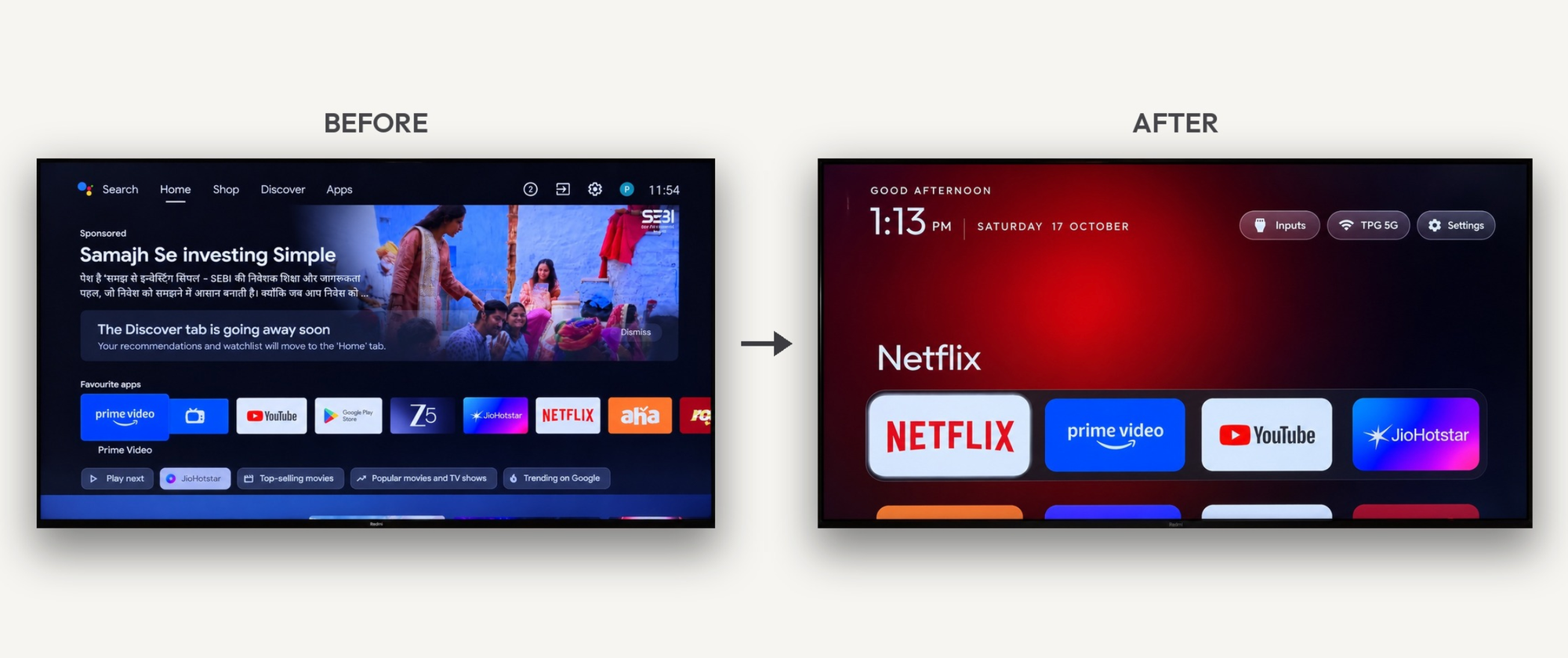
In TechCrunch, Sarah Perez reports about two projects called dumbtv and cleanyourtv, which offer simplified home screens, while individuals have used Claude Code to reconfigure their own devices. Perez draws on GitHub projects, developer accounts and social-media demonstrations, including a case in which an agent removed 25 Xiaomi packages from a television. These are early experiments rather than established consumer products. The modifications respond to smart-TV interfaces that prioritise sponsored content and collect viewing information through automatic content recognition, which can identify on-screen material from images or audio. TechCrunch suggests widespread adoption could challenge the advertising and viewing-data businesses associated with smart TVs. It also records significant reliability concerns: agents can disable necessary components, users report incomplete modifications and one person says their television was rendered unusable. Existing Android TV launchers offer an alternative for those seeking cleaner interfaces.
We are living in an age that television now inserts an advert before its we can open Netflix, and this is making a remarkably candid statement about whose attention it thinks it owns. That's the detail we get from Sarah Perez's report; it explains why people are prepared to hand an AI agent fairly invasive access to a perfectly functional appliance just to get back a screen with a handful of apps on it. Also, this weekend I've started doing the same to mine... Anyway... It's a curious reversal here; where manufacturers have packed more software into televisions to extend their commercial usefulness after purchase, and we, customers, are now using a new generation of software to remove the extras. The impressive trick isn't building a launcher; plenty already exist, as the article acknowledges. It's that a request in ordinary language can be translated into model-specific actions over Wi-Fi. The barrier between annoyance and modification has fallen far enough that a family TV becomes an afternoon project. Features that survive because removing them is tedious are exposed when the tedium can be delegated, of course, replacing a launcher should not require gambling with an operating system, and the reported bricked set is a useful reminder of what enthusiastic demonstrations leave out. I'd like this to end with a less heroic outcome: televisions shipping with a proper 'just show my inputs and apps' setting. If customers are writing agents to delete the user experience, perhaps the experience needs deleting...
LLM's could lead mathematics and science towards either a golden age of expanded human discovery or a dark age of technically productive but poorly understood research
In a guest post on Terence Tao's What's New blog, mathematician Francesco Maggi points to ambitious machine-generated proofs, some expressed as enormous Lean formalizations, whose natural-language explanations can remain difficult to interpret. His concern is that rising theorem output may coexist with declining human comprehension and intellectual independence. Maggi distinguishes proving existing conjectures from mathematization, the invention of concepts and mathematical languages that make phenomena intelligible. He questions how AI-assisted results should be credited, reviewed and used to train new researchers, and warns that unequal access to frontier systems could reshape scientific participation. Rather than rejecting these tools, he proposes broader research access, reproducibility and disclosure standards, studies of educational effects, and publicly governed AI infrastructure. His case draws on mathematical examples, reported model performance and professional observations rather than a controlled empirical comparison.
A proof running to hundreds of thousands of lines of Lean is a strange form of scientific success.... It may be formally correct while remaining almost impossible for a human to absorb. Imagine receiving a fully verified answer that nobody on the team can explain. For a famous conjecture, that still settles a question. For the rest of science, it could be a rather expensive dead end. The result has to travel. Someone must recognise which ideas generalise, which assumptions matter, and which experiments become possible. This is why Maggi's notion of mathematization deserves more attention than the headline battle between human and machine mathematicians. Physics did not advance merely because someone proved increasingly difficult statements inside an existing vocabulary. It advanced when people found new ways to describe the world, creating questions that hadn't previously been expressible. AI might make that work easier by clearing away proof obligations. Equally, a flood of formally certified results could crowd out the slower work of interpretation. There's something faintly absurd about imagining a future where we've solved the hardest problems in mathematics but need another AI to explain what the answers mean. A library full of certificates is a remarkable achievement. Whether it remains a living mathematical culture depends on what humans can do with them.
The greatest threat to subsea internet cables is becoming the inability to repair them amid geopolitical conflict, rather than cable damage alone

On his blog, Ryan Bagley cites two Red Sea incidents since late 2023 that each severed four cables, a six-month repair delay in 2024, and disruption across the Persian Gulf. Alcatel Submarine Networks has halted work on Meta’s 2Africa Pearls extension, leaving the Ile De Batz vessel stranded and partly laid infrastructure unconnected. Bagley argues that alternative corridors through Syria, Iraq and Turkey bring their own political vulnerabilities, while India’s westbound traffic remains exposed to Gulf routes. He questions proposals for a new global security framework as international trust deteriorates, favouring regional action instead: geographically diverse routes, SMART cable sensors, protected landing stations and coordinated maritime patrols. He presents EU and NATO initiatives as practical precedents, while warning that routing decisions increasingly follow geopolitical alliances, raising costs and latency and fragmenting worldwide connectivity.
De Batz sitting off Dammam while sections of Meta's 2Africa Pearls cable lie on the seabed, still unconnected - that's the image that stays... Sure, the technology exists, the investment has been made, and the vessel is there, but a war has turned the last few kilometres into an indefinite scheduling problem. It's a particularly uncomfortable illustration of how reassuring a network diagram can look while concealing the practical dependencies underneath. Most reliability planning treats repair time as an engineering variable: source a spare, dispatch a crew, restore service. Bagley's examples expose a nastier category of failure. If a ship cannot safely enter the water, mean time to repair stops being a statistic you can extrapolate from historical incidents. It becomes a political question with no service-level agreement. Planners can buy another route, but a second path through the same diplomatic choke point may simply double the sunk cost. This suggests a more demanding way to evaluate international connectivity. Alongside latency, capacity and route diversity, ask who can authorise repair work, which ports a cable ship can use, and what happens if access is denied for six months. That doesn't make global cooperation unnecessary; it makes the operational assumptions of every proposed alternative painfully concrete. When a cable is broken, the map tells you where it is. It cannot tell you when anyone will be allowed to reach it.
Joseph Politano examines a four-year decline of more than 200,000 US creative-industry jobs, including roughly 50,000 in the past year
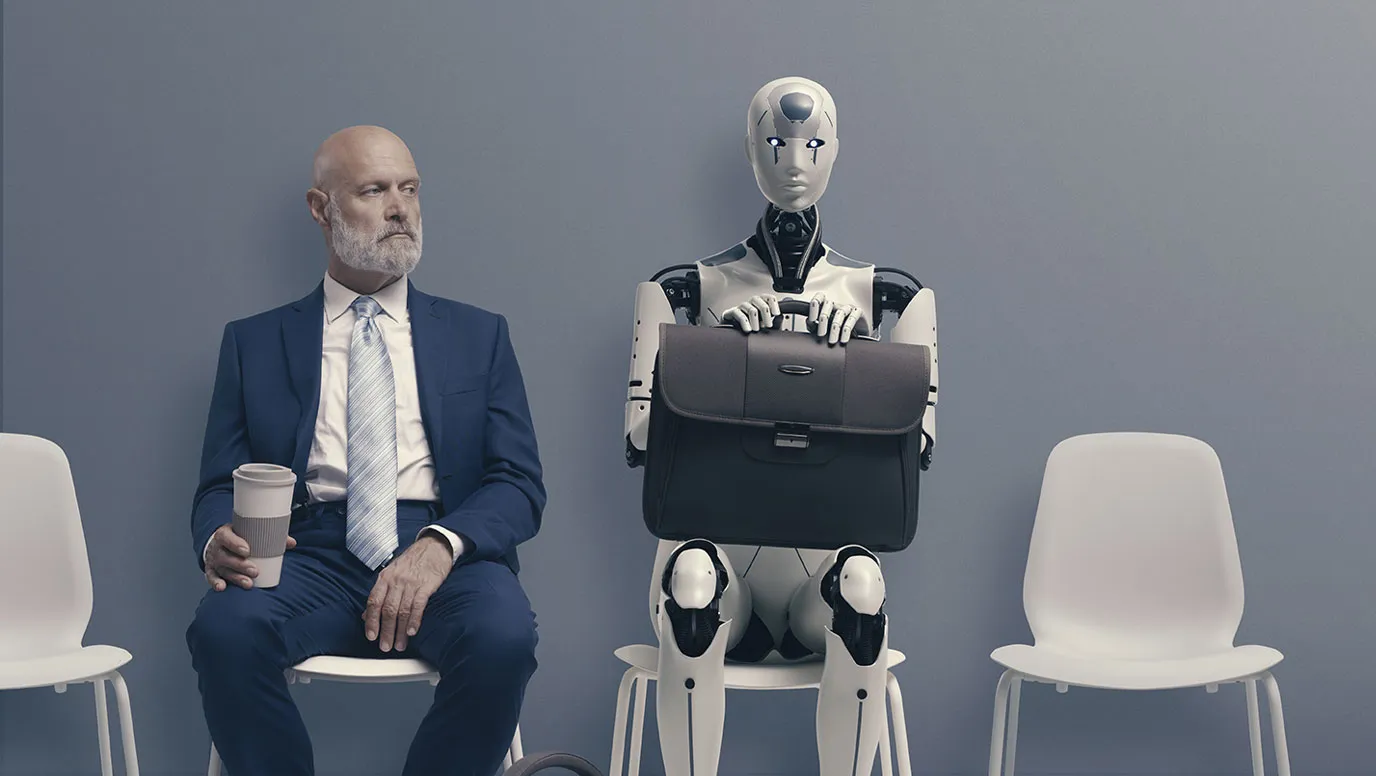
Hollywood accounts for over 100,000 losses, while publishing has shed more than 70,000. These declines coincide with the spread of generative AI, but Joseph says attribution is difficult: streaming competition, media consolidation, offshoring and the shift towards social platforms were already damaging established businesses. In-person entertainment has meanwhile continued growing. The article compares today's AI disruption with the internet's earlier transformation of music, film and newspapers. Recorded music lost pricing power but musicians could rely increasingly on live performances; newspapers suffered more fundamental losses when information and advertising migrated elsewhere. Film and television have fewer comparable alternatives as viewing fragments across services and user-generated content. Joseph also notes that TikTok-driven book discovery accompanied a reported 70% increase in sales, suggesting technological spillovers may be unpredictable. Creative employment, he argues, could foreshadow changes elsewhere.
The unlikely hero of printed books in Joseph's account is TikTok... whilst short videos compete with reading for attention, BookTok helped drive a reported 70% surge in book sales. That's a useful warning against treating every new content technology as a straightforward substitute for what came before. Sometimes the channel that appears to be eating an industry turns out to be its best shop window. So, sure, AI-generated media will make producing a competent image, song or video cheaper, but that sounds wonderful until everyone can do it - literaly! The economics then drift away from making the thing and towards convincing someone to spend time with it. For creators, the harder task may be building a recognisable voice, a community and a reason for an audience to return. The article's music analogy points in the same direction: when recordings became cheap, live performances mattered more. This catch in the BookTok story is that Joseph also describes a shrinking pool of dedicated readers; a booming market can coexist with a narrower audience and rewards concentrated among a few successes and increased sales don't automatically imply healthier creative careers. I'd be wary of any forecast that counts the number of AI-made works and calls it a prediction for employment. Yet, we need to understand who earns the next pound of audience spending, and how many people can make a living from it. BookTok helped sell books by making them a social experience. Generating another million novels won't necessarily achieve the same thing.
My Week in AI
- Introducing Agent Compute Engine and expanding agent governance | cloud.google.com
- Self-Evolving Coding Agents via Harness-Policy Optimization | arxiv.org
- Zero-Shot to New Robots Introducing Dream-1 | dreamlabs.ai
- The Decoherence Trap When AI slop drowns out the signal in an endless sea of noise | maevyn.codes
- A Chinese hacker used AI agents to break into more than 100 company websites | tomshardware.com
- Andrej Karpathy says only 5,000 people have seen what AI can really do | thenewstack.io