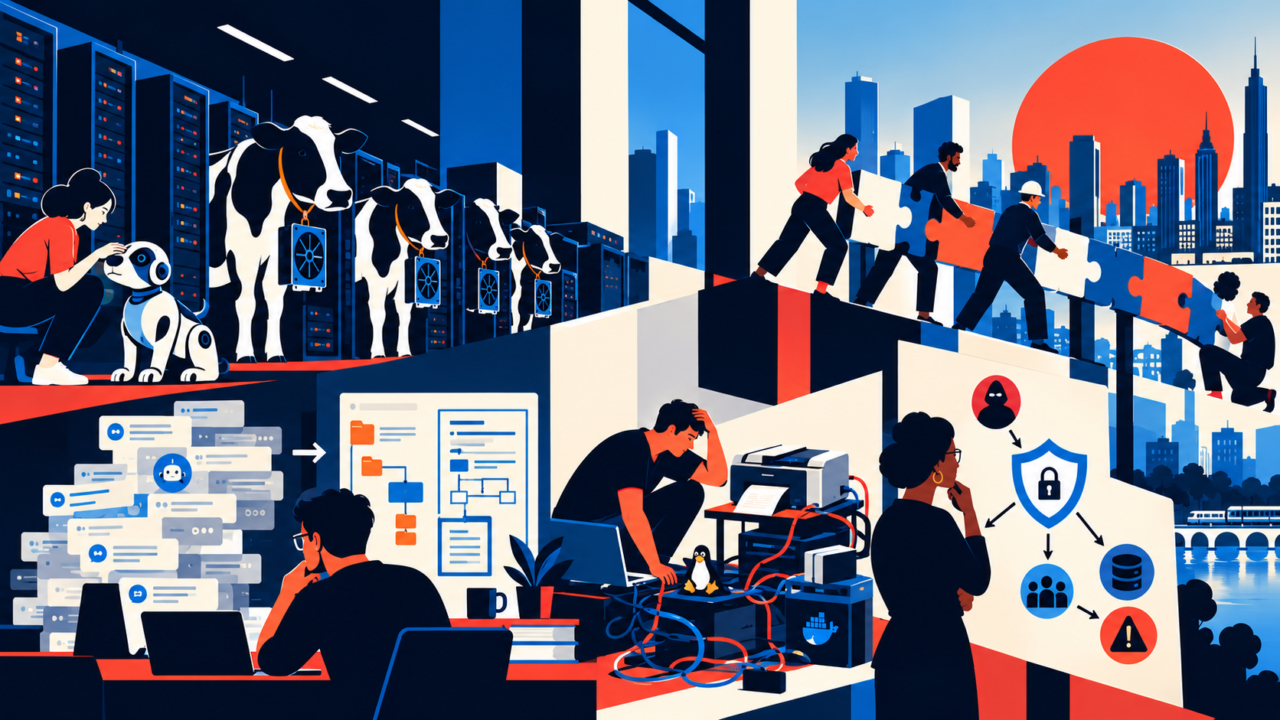
#RBM reading this week is a reminder that modern technology remains remarkably good at creating problems for itself… We start with Randy Bias revisiting the old “pets versus cattle” debate, discovering that AI infrastructure has managed to combine disposable software with GPUs too expensive to throw away. Kevin Liao argues that coding agents don’t need yet another memory plugin rummaging through old conversations; they need proper project documentation, architectural decisions and a little respect for why things were built in the first place. Kuber Mehta then spends four hours with Claude Code persuading an HP printer to produce a page on macOS, involving Linux containers, USB services and enough plumbing to make printing a document resemble a small infrastructure deployment. Meanwhile, security engineer Soatok reminds us that threat modelling works considerably better when someone bothers to identify what they’re protecting, who might attack it and how, rather than compiling fashionable lists of terrible things. Finally, AWS announces a $1 billion investment in forward-deployed engineers, complete with agentic development tools and governed enterprise knowledge, hoping to turn AI experiments into actual production systems; it’s precisely the challenge we’ve been tackling at Hitachi with Outcome Forward Engineering (OFE): giving engineers the shared skills, knowledge, tools and governance to make delivery repeatable, rather than relying on individual heroics every time.
In this issue
5 piecesRandy Bias revisits the "pets versus cattle" infrastructure model after operating NVIDIA GPU clusters

In "Herding Pets", published by Sacred Cow, it argues that large AI training systems combine the software requirement for disposable nodes with hardware too expensive and interconnected to treat as disposable assets. Synchronous training makes individual faults consequential across thousands of accelerators. He draws on his own experiences and published studies, including Meta's 419 unexpected interruptions during 54 days of Llama 3 training. Bias distinguishes economic, architectural and operational disposability, arguing they no longer align automatically. Degraded links, intermittent GPU faults and network congestion can leave machines nominally healthy while slowing entire jobs. One measured PCIe bottleneck cut cross-GPU bandwidth from roughly 35 GB/s to 19 GB/s despite a healthy nvidia-smi reading. For GPU fleet operators, he proposes workload-aware detection and coordinated isolation, repair or substitution, potentially through agentic operations, to protect productive GPU-hours and margins.
The nastiest detail here is the GPU that reported a healthy x16 PCIe link while the switch upstream was stuck at x8. The diagnostic was accurate within its narrow scope and useless as a verdict on the whole path. That's a particularly expensive kind of truth when a training job depends on traffic crossing several layers of hardware. There's a design lesson in that mismatch. A fleet health check that asks whether each component is alive will miss the cases that hurt most: a working component behind a degraded hop. I'd want performance baselines tied to actual GPU pairings, PCIe switch routes and network rails, then end-to-end tests that distinguish persistent topology faults from ordinary congestion. The BMC's warning on every boot was already a clue; no system put it alongside the measured slowdown. Bias suggests agentic operations, which could help once those relationships are visible. Before handing an agent the quarantine button, I'd want each action attached to a diagnosis, an estimate of the workload it saves and feedback on whether it worked. Otherwise automation could pull perfectly serviceable capacity from production simply because a local metric looked odd. An enthusiastic robot rancher with a red button is quite capable of making the herd sicker.
Coding agents need maintained project documentation rather than conventional memory plugins
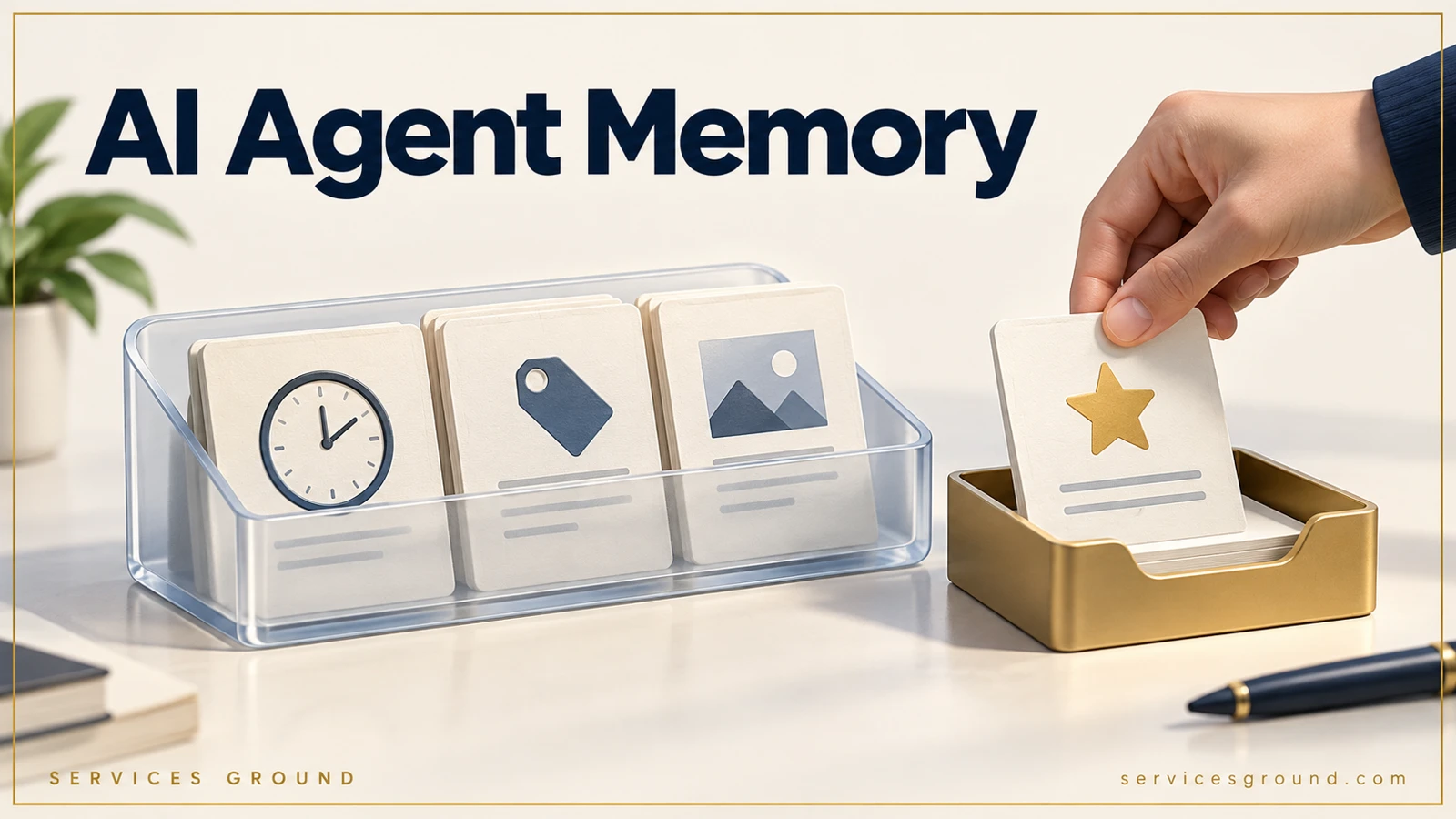
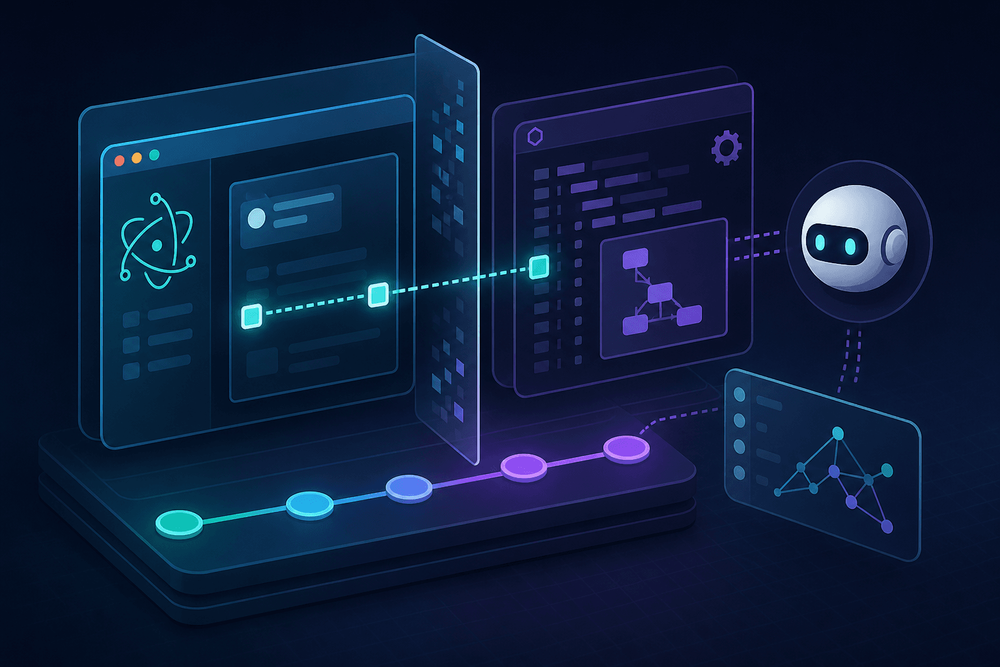
Writing on his own site, Kevin Liao characterises those plugins as systems that extract snippets from past conversations and retrieve semantically similar matches, potentially without enough context or currency. His alternative, Operator Memory, keeps project instructions, specifications, decisions and research in Markdown files that agents consult before working and revise afterwards. Liao's case rests on architectural reasoning, implementation examples and more than a year's personal use. Operator loads a small catalogue to direct agents towards relevant material, while codebase indexes guide targeted exploration. Liao argues that documentation should preserve design intent that source code cannot explain, citing an intentionally lean Claude Code adapter whose main logic sits in a shared CLI. He recommends rewriting stale statements rather than accumulating corrections, and says Git makes this knowledge reviewable and portable between coding tools. For engineering teams, the proposal shifts continuity between sessions towards maintained project records, although occasional manual cleanup remains necessary.
The most revealing detail is the Claude Code adapter that deliberately stays below 100 lines. Anyone reading its source can see what it does. They can't necessarily see why Liao resisted putting more logic there. A coding agent asked to add a feature might quite reasonably push functionality into the adapter and call that a tidy refactor. It could work perfectly and still violate the original design. That makes architectural intent an unusually valuable kind of project knowledge. Liao's approach of keeping decisions alongside the work, in ordinary Markdown, gives the next session a reason to preserve boundaries that aren't obvious from tests. I particularly like the idea that a coding agent should inherit the reasoning behind earlier decisions, including the trade-offs someone deliberately accepted. Otherwise, every new session becomes an opportunity to revisit settled arguments with the confidence of someone who wasn't there. There's a catch in the update loop. If the same agent changes the implementation and then rewrites the documentation to match, a misguided change can acquire its own justification. Git can expose the edit, but someone still needs to notice that a design decision has quietly become a description of whatever the latest patch happens to do. I'd treat architectural rationale as something an agent can propose changing, with human review before rewriting the original reasoning. Otherwise, the project risks accumulating excellent documentation explaining how it gradually forgot its own principles.
Four-hour Claude Code Opus 4.8 session attempting to make an HP Laser 1008a print from macOS
The printer speaks Samsung-derived SPL3 rather than PCL and lacks a usable Mac driver. Kuber shares the transcript records unsuccessful generic-driver, SpliX and AirPrint experiments, followed by direct USB tests. A clean print finally comes from HP's rastertospl encoder, run through a Linux container, with the output confirmed by a photograph. Claude then wires the encoding step into CUPS, a Colima Linux virtual machine, a privileged USB-writing service and an installer, aiming for ordinary Cmd-P printing across restarts. The shared session includes a working print through that queue, startup-service checks and publication of the project under an MIT licence. An adversarial model subsequently points Kuber towards SpliX 2.0.2, which had recently added HP Laser 10x support. The transcript documents a working workaround, while leaving reproducibility on other machines and actual post-reboot printing unverified.
Reverse Engineering is now everywhere! So if you search for "REA" - Reverse Engineering Anything and you'll find even the PS5 stuff... But! The moment that should make engineering managers wince is this successful test print. It proves the printer can work, but it also launches a surprisingly elaborate solution: HP's Linux codec inside Colima, a privileged USB daemon, a CUPS queue and startup machinery. Claude was resourceful, and Kuber got the outcome he wanted. The stack was also a lot of machinery for one sheet of paper. The linked GitHub repository now says the team found a ten-line SpliX patch correcting a 300-dpi page-header mismatch, then eliminated the Linux VM and proprietary codec from the runtime. Suddenly this becomes a story about diagnostic reference points. Getting HP's encoder to print gave them a known-good stream to compare against SpliX. That comparison exposed the header geometry error, rather than a fundamental inability to encode the page. I wouldn't dismiss the first solution. A working workaround often creates the evidence needed for a cleaner one. What concerns me is how often Claude declared the problem settled before a physical printout, and how easily the container architecture became the answer once it worked. Kuber's later adversarial review was therefore more than ceremonial. It challenged the design after the acceptance test had passed, reopening an alternative that could eventually simplify the entire implementation.
Useful threat model must specify assets, adversaries, attack routes, defences, dependencies, assumptions and deliberately accepted risks

Security engineer, Soatok Dreamseeker, builds a seven-question checklist and recommends mapping relationships between components rather than treating threats as isolated entries. His examples include an abuse-reporting vulnerability in encrypted messaging caused by violating cryptographic assumptions, alongside a key-transparency threat model from his Fediverse work. Soatok criticises Matrix's published threat model for listing attacks without documenting assets, relationships or key-management risks, while noting that Signal does not publish a comparable model. He uses passkey-based authentication and distributed messaging to show how modelling can shape system design. A longer examination of post-quantum cryptography argues that objections to standardising non-hybrid ML-KEM confuse different failure scenarios and overlook organisations that need a formal RFC, even when hybrids remain the recommended choice.
This guide arrives surprisingly late, in the argument over a non-hybrid ML-KEM RFC marked Recommend=N. Opponents object as though giving an algorithm a standards identifier amounts to telling everyone to deploy it. Soatok points out that the hybrid option remains recommended and that organisations bound by formal standards may need the identifier anyway. A minor metadata field becomes the difference between a security objection and a practical deployment constraint. Then he separates two clocks. Before a cryptographically relevant quantum computer exists, adding classical ECDH to ML-KEM can cushion a failure in the new algorithm. After that point, ECDH offers no such protection against archived traffic. If the fear is a failure of lattice-based cryptography in that later world, his deliberately cumbersome ML-KEM + HQC + ECDH combination exposes what genuine algorithm diversity would demand. The threat changes; so does the meaningful hedge. I like that threat modelling can make a heated cryptography argument behave like an engineering review. Write down the attacker, the time horizon, the precise failure and who would be affected. If those details don't survive being written in ordinary language, a louder mailing-list post probably won't improve them. The most useful output may be the uncomfortable admission that two people shouting 'secure' are solving different problems.
AWS vice-president Francessca Vasquez says the company is committing $1 billion to a new Forward Deployed Engineer
Amazon will embed thousands of engineers with customers. Teams will use agentic AI and the AI-Driven Development Lifecycle to build production systems alongside customers' business, engineering and security staff. AWS claims this approach can shorten deployments from months to days and points to work with organisations including the NFL, Ricoh and Southwest Airlines. Francessca says customers should leave with operational independence, including trained engineers, runbooks, architectural documentation and systems deployed in their AWS accounts. A semantic layer connects enterprise data and generates a governed, versioned knowledge graph for agents to use. AWS also promises partner training and support, emphasising shared business outcomes rather than billable hours. The model targets organisations moving beyond AI experiments, particularly in regulated sectors where production requirements and security constraints shape deployment.
This $1 billion buys a lot of forward-deployed engineers.. a lot a lot! But it doesn't automatically buy a way for thousands of them to deliver consistently! AWS is unusually explicit about the missing middle: an AI-Driven Development Lifecycle, purpose-built agents and a semantic layer that can carry customer context throughout a project. Those details are more interesting to me than the investment figure. AWS recognises that putting good engineers inside customer organisations is only the first move. Everyone wants FDEs now, but too many organisations are still handing them a laptop, a model API and a heroic amount of ambiguity. The 'skills' matter, of course; so without a shared framework for discovery, integration, validation, deployment and reuse, every engagement starts with a fresh set of problems. You can hire more FDEs, but you can't hire your way out of rebuilding the delivery process each time. That's precisely why, at Hitachi, we've been building the tools and framework for FDEs that we call OFE. The idea is to give engineers a repeatable way of working, supported by reusable capabilities and accumulated knowledge, while retaining the flexibility to solve each customer's particular problems. FDEs bring the expertise and proximity to the customer; OFE is intended to give them the machinery to deliver effectively and consistently. AWS is making a billion-dollar bet on the people. I think the bigger opportunity lies in equipping those people properly. The organisations that succeed won't simply have the largest FDE teams, but they'll have figured out how to make each deployment easier, faster and more repeatable than the last.
My Week in AI
- Code Review is now generally available | claude.com
- Introducing Muse Spark Open, The Most Capable US Open‑Weight Model to Date | research.meta.ai
- Microsoft-Decision-1 Our model for fast decision-making | commandline.microsoft.com
- Bringing local models and sandboxed tools to Windows and GitHub Copilot | commandline.microsoft.com
- Reverse engineer anything with agents, from app behavior down to native binaries. | github.com
- GPT-6 and Intelligent UI for everyone | openai.com